

Thank you to Zondervan and For the Love of Women for sponsoring this post
Ever been told, “sexism is a thing of the past?”
Or maybe you’ve heard something like this from your brother, your dad, your co-worker, your favourite podcaster—or even your sister:
“Sure, people discriminated against women before. But right now it’s men who are under attack! It’s men who can’t get ahead, because of the world is made for women!”
And you now they’re wrong, but you don’t know exactly what to say. Of course things are easier today than your grandmother had it. Do you really have anything to complain about? Do you really want to seem like you hate men or something?
But yet, you feel this deep unease. You know instinctively that something is wrong. You don’t get into a car without checking the back seat first. You always sit near the bus driver on the bus. You walk with your keys in your hand. None of the men you know do this. But you’ve been doing all of this since you were 11.
And there’s so much more…
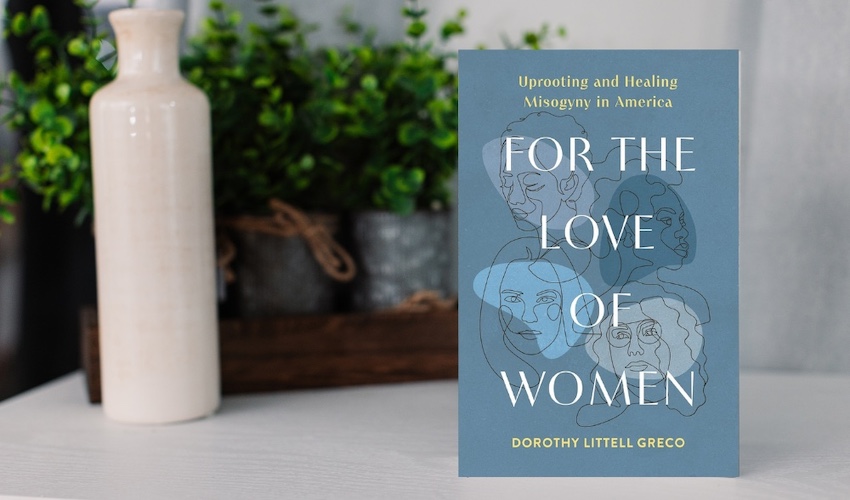
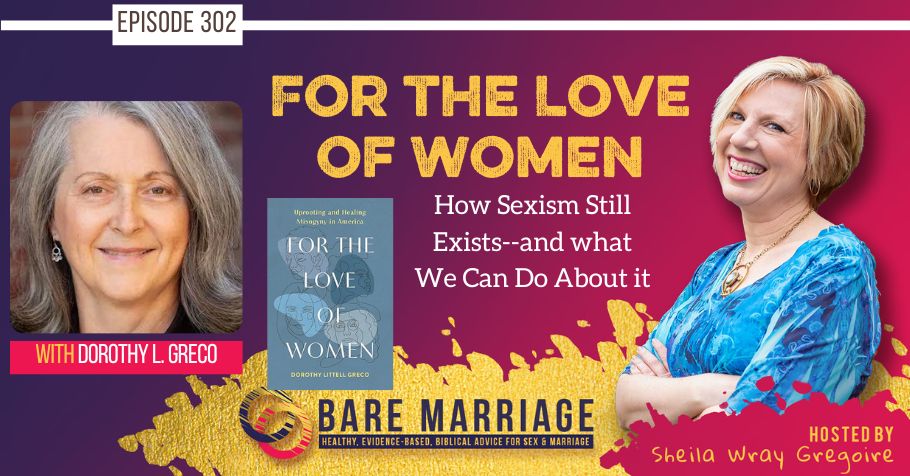
This week, a new book launched that helps us make sense of all of this: Dorothy L. Greco’s For the Love of Women. She details how sexism—or misogyny, the hatred of women—is alive and well in our media, our health care, our government, our business world, our treatment of sexual assault, and, of course, our churches.
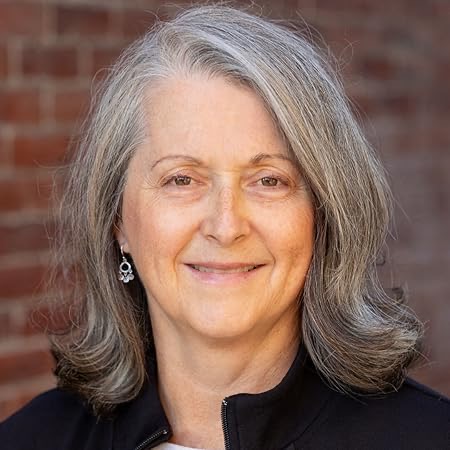
Because I’m now in my sixties, I’ve had a great deal of time to consider the many ways misogyny has affected my relationship with my body.
As a twelve-year-old, I remember feeling absolutely horrified when a friend whispered that my new boyfriend was going to try to get “up my shirt” at her party that night. I had no interest in having him touch my breasts, but I also understood what was expected of me. I strategically blocked him from his goal by making sure we were never alone. He broke up with me soon after.
That summer, I was standing on the swim-team dock, dripping wet, between laps. My toned body was barely covered by a thin layer of blue nylon. The pride I felt in my athleticism was instantly subsumed by self-consciousness and shame as the boys standing on the beach started critiquing my female teammates and me. I wondered if my body passed their scrutiny but also felt furious that they were brazenly deconstructing us.
I remember walking to my high school football game in my drill-team miniskirt, cars slowing down so male drivers could gawk and make crude comments. That was the year I decided to get a pixie haircut and started wearing what’s now referred to as “gender neutral” clothing. I intuitively knew that de-emphasizing my femininity would create a bit of a buffer between my body and male desire. I was strong, but not strong enough to protect myself from a man who felt entitled to my body.
These events were more than fifty years ago. Though there are now more laws protecting women and there’s more awareness about sexual harassment and abuse, it feels like little has changed regarding male entitlement and broken masculinity. If anything, it’s gotten worse. I can’t recall a time when it felt so dangerous to be a woman.
Consider some of the ways misogyny manifested in the US between 2016 and 2020.
An overtly misogynistic man who bragged about—and has since been convicted of—sexually harassing and abusing women was elected as president of the United States. Trump was certainly not the first president to engage in sexually inappropriate criminal behavior, but we can track how quickly culture has shifted toward greater acceptance of powerful men mistreating women by comparing the public outcry regarding Bill Clinton’s scandal (1998) and public support of Trump. Not only was there a notable lack of outrage regarding Trump’s behavior: men and women seemed to excuse or even celebrate it. When men at the top of an organization engage in and promote misogyny, it signals to other men they can get away with it too.
Thanks to New York Times reporters Jodi Kantor and Megan Twohey, the world learned one of Hollywood’s dirty secrets. Director Harvey Weinstein had sexually assaulted, raped, and threatened more than eighty women, most of whom are now well-known actresses.
In 2018, the trial against the USA Gymnastics team doctor Larry Nassar came to a dramatic and highly publicized end. Nassar was charged with abusing more than 156 gymnasts; the youngest was six years old.(1) During the final days of the trial, Judge Rosemarie Aquilina allowed the victims to address Nassar. Their courageous and heartbreaking statements invited us to enter their pain and mourn with them.
Next, Dr. Christine Blasey Ford testified about being sexually assaulted decades earlier by US Supreme Court nominee Brett Kavanaugh. The results of her testimony were like Anita Hill’s: Ford’s integrity was questioned, she was publicly maligned, the nominee denied everything, and was ultimately confirmed by the Senate.
And we must not forget the millions of women who were raped and sexually assaulted during that same time span in the United States.(2)
All women walk around with an awareness of our bodily vulnerability. Every. Single. Day.
We know we could be overpowered, raped, and possibly impregnated. Our bodies can be such a liability that they sometimes feel more like a burden than a gift.
We have to constantly evaluate whether our clothing is appropriate, if the place we parked is safe or if we’ll need an escort, if the male boss can be trusted when he requests an after-work meeting, if our “no” will be respected. If we’re in a relationship, there’s a standard of sexiness we must uphold while not transgressing the invisible line that might “cause” our brothers to stumble. What men want and expect of us can feel impossible to achieve. Honestly, it’s exhausting.
When we fail, shame is always waiting in the shadows. Shame about our breasts being too small (or too droopy) and our hips being too big (or too boyish). Shame about the way our bodies smell during our cycles (which is due to the mineral content of the blood and the body’s unique biome). Shame about body hair. Most of the critiques we endure aren’t because our bodies are flawed but because they don’t align with the surgically or digitally sculpted bodies some men now expect thanks to pornography. (The desire to meet men’s idolatrous expectations helps to explain why so many women choose to have risky and expensive cosmetic surgeries such as Brazilian butt lifts, breast augmentation, and labiaplasty.(3))
And there’s an additional layer.
Women are told—directly and indirectly—that because men’s sexual needs are more important than ours, if we want to keep our partners happy and sober, we’ll need to sublimate our sexual desires and emotional well-being so that we can please them. Hence faking an orgasm. (I contend that women wouldn’t go this route if men were as committed to pleasuring women as they are to achieving their own climax.) One of the main problems with husbands viewing their wives as the antidote to their sexual addictions or ongoing anxiety is that women end up feeling diminished and used. This is not what God intends for us.
Taken from For the Love of Women by Dorothy Littell Greco.
Copyright © 2025 by Dorothy Littel Greco. Used by permission of Zondervan. www.harpercollinschristian.com
(1) The actual number may exceed 500 victims. Juliet Macur, “Nassar Abuse Survivors Reach a $380 Million Settlement,” The New York Times, Dec. 13, 2021.
(2) “Victims of Sexual Violence: Statistics,” RAINN, accessed April 17, 2025, https://www.rainn.org/statistics/victims-sexual-violence.
(3) I am referring to nonmedical, non-reconstructive plastic surgery here.
I’m so grateful for Dorothy for putting all this information in one place.
It’s a great read—I loved the media and business chapters especially. Listen in to our podcast this week—and be sure to pick up the book!
And let me know: When did you first clue in to misogyny? Do you have a story? Let’s talk in the comments!





When I was 13 years old and in my first year of junior high, male classmates made sexual comments about my body even though I dresses modestly. They made passes at me. Female classmates would tell me that I was allowing them to and my getting upset egged them on. It didn’t matter that I would kick them in their private area, these boys would still continue. By the middle of my 7th grade year, I finally told a teacher and had to take this issue to my assigned guidance counselor, who happened to be man. He didn’t take any action, so my teacher, a caring man, told me to go to one of the female counselors who finally did something. But that something involved going to the principal. All she did was call the boys’ parents and for a while they left me alone. It sucked that I felt I had to resort to violence such as kicking these boys in their private areas and slapping them.
From then on, I just stayed silent until my junior year. By that time I lived in another state and still dealt with some form or another of sexual harassment by boys. At least, action was taken this time and I felt safer.
As for dating throughout my adult life, I didn’t often feel safe around men, even ones from church.
I sur didn’t feel safe in my first marriage. My ex felt he was entitled to my body at any time he desired so I didn’t sleep well for most of our marriage.
The way these boys and men acted, I don’t know if they “hated” women. I know they had an entitled mindset and were selfish. Maybe they learned it from their fathers or other male figures in their lives.
I also experienced internalized misogyny from other women. Not sticking up for me when I was harassed by male classmates and telling me not to react to their behavior. In women’s Bible studies, the teachers pushed patriarchal mindsets always reminding us that our husbands should be in charge and in order for God to bless us, we needed to fall in line with what they believed God’s word to be.
The first time my body was noticed in a sexual way (that I was aware of) I was 12. I’d sat down carelessly on the bus and my long, full skirt had ridden up to reveal most of my thigh. I hoped this gaffe would go unnoticed by those around me, but I wasn’t so fortunate. The seventh grader across the aisle – who was a classmate, but older and much more worldly-wise – slid into my seat and began propositioning me for sex acts I didn’t know existed, while I begged him to stop and the other students on the bus howled with laughter. I felt dirty and defiled knowing someone thought of me that way, and guilty for my carelessness in sitting down in a way that revealed too much leg. I was sure my parents (who were still deep in the clutches of Gothard’s teachings on modesty and who’s at fault if someone is assaulted) would confirm that yes, I was to blame…so I never told them. Still haven’t, decades later. Instead, I modified my life. Painstakingly planned my day, repacking my backpack after each class so I would be strictly grab-and-go at dismissal and could nab the seat behind the bus driver (I knew she’d protect me if she could see and hear what was going on.) I jettisoned skirts from my school wardrobe, no longer trying to look pretty or feminine, and no longer risking any part of my skin showing.
It was about six months after this that a channel we frequently watched started playing reruns of The Young Riders, a fictionalized account of the Pony Express. One of the riders, Lou, was actually a girl named Louise who’d decided she would be better able to work and earn money to get her siblings out of the orphanage if she went as a boy. In a later season, it’s revealed that she disguised herself after being assaulted. And I never really put this together, but the reason Lou was my hero wasn’t just that she was a strong character who worked hard and proved herself among the boys – it was that her self-protective methodology made so much sense.
I wish I could tell my preteen self that it wasn’t her fault, that the guy was a creep who was out of line. I wish I could advocate for her, take her case to the administration and not rest until the guy got real consequences for his inappropriate behavior. I wish I could tell her that unwanted attention isn’t a reflection of her worth and certainly isn’t anything she deserved. I wish I could protect her, so she wouldn’t have to work so hard to protect herself.
So yes, I can relate to changing my appearance to try to avoid male attention. Decades later as my daughter enters that age bracket, I’m saddened that things aren’t really better. But she will have a mama bear who takes no nonsense and will teach her to do the same.
“When men at the top of an organization engage in and promote misogyny, it signals to other men they can get away with it too.”
YouTube’s Extra SciFi Channel called this “Rule by Vice” in their episodes regarding Dune (by Frank Herbert), specifically as the ruling style of Baron Harkonnen. The Baron’s behavior sets the example for the entire House, what is permitted, expected, and compulsory.
” If we’re in a relationship, there’s a standard of sexiness we must uphold while not transgressing the invisible line that might “cause” our brothers to stumble.”
Another example of “Tyranny of the Professional Weaker Brethren”, the Christianese version of “Tyranny of the Most Easily Offended”.
When I was about 8, I was standing next to my teacher’s desk, listening to her read a long passage. As people do when standing, I started to sway side to side. My hands happened to be folded in front of me (read: near my crotch). As I swayed, the back of my hands rubbed on the edge of the desk. I couldn’t quite name the feeling. It wasn’t a scratch, but it was firmer than a pat. I kept swaying, trying to find a name for the sensation on the back of my hands. My teacher looked up and said, “Don’t do that. A man might think you want to do something.”
I wasn’t sure what “do something” meant, but I knew it referred to things done by adults and that involved crotches. I was confused because 1) no man was in the classroom and I couldn’t think of a time when I would both be near a man and near a desk, 2) why would an adult man think an 8-year-old girl would want to “do something” with him, and 3) why would my teacher think an 8-year-old girl should have influence over what an adult man thinks when we were taught to always obey the adult, including in our thoughts, because they always had our best interest at heart (except for the mysterious men who would “attack” us).
That wasn’t the first time I had been told that allowing my body to respond to the environment was unacceptable, but it was the most confusing because in my mind, only in that very specific context would I be moving like that and once I figured out the name for the sensation, I wouldn’t have a need to move like that again. It actually took me a beat to figure out that my teacher was thinking about my crotch when I was thinking about my hands. That’s also when I started to realize that to the adults, *everything* related to females connected back to whether or not it could be interpreted as enticing men to sex.
It’s so interesting how these little moments are so formative, aren’t they? I can think of moments like that too. And I often hope that I’ve not inadvertently given moments like that to kids!
I was in my mid teens when I found out what ‘mastectomy’ meant, and my first thought was ‘I want one’, because I’d already realised that no amount of baggy jumpers and hunched shoulders could hide my breasts and as long as they were visible, they would be cause for judgement or objectification. No fifteen-year-old should ever have to view major surgery as the only way to be free.
I really think that these Christian churches don’t realize that they are causing more gender dysphoria in youth (or making it worse) than the actual trans adults that they think are pressuring youth to transition (when in my experience most of them I met IRL only think you should medically transition if you feel it is right for you and your dysphoria is so bad it outweighs the risks and you are no less of a man/woman if decide not to or pick and choose what you do to transition) when I think with all of this stuff about modesty and strict gender roles probably is the cause for a lot gender dysphoria.
Growing up, I would often say I wanted to be a boy/wished I had been born a boy, and it was a direct result of both the limitations put on girls (Girls shouldn’t like climbing trees or building camps, girls should do embroidery not woodwork, girls should only be interested in topics like fashion and not worry about ‘serious’ subjects which are for boys only, a woman’s only purpose in life was to marry and have children) and the objectification and assault which I’d already realised was a ‘normal’ part of life for girls – and which somehow, was always ‘our fault’, regardless of what we wore/did. I know some people want to transition regardless, but I do know two young people who have transitioned because of hating having to be ‘girly’ and feeling safer as a boy. And I do wonder how much of that is genuine gender dysphoria and how much is wanting to escape from the pressures the surrounding society puts on them because of gender.
I think there can definitely be a lot of that. Especially with abuse survivors. You feel so vulnerable!
Angharad, when I was 13, I wrote a novel exploring this very theme. The protagonist was a young woman who decided to “pass” as a man, creating a whole new identity, in order to live a full life. She went from being frustrated and rejected to being a popular and very successful “man” in career and life.
But then, another young woman fell hard for this “wonderful gentleman” precisely because “he” was competent and confident, yet respectful to women both personally and professionally. This main character, who despite passing as a man identified fully as a hetero woman, hated the thought that “he” might be leading people on, but also didn’t want to abandon “his” new success in career and life. Eventually, “he” couldn’t handle the emotional pitfall being created, and decided to leave town to start a new life.
Kind of sobering that at 13 I already felt this so deeply.
Oh my goodness! 13-year-old you was fascinating!
So true!