



We need to listen to the stories of missionary kids.
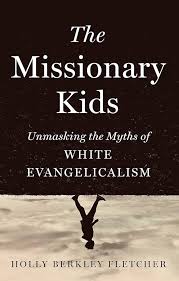
Holly Berkley Fletcher released an amazing book called Missionary Kids that I read all in one sitting. I was riveted.
Holly grew up as a missionary kid. And she interviewed a whole bunch of missionary kids, some who had good experiences and some who had bad and some who had everything in between, to see the commonalities, and to see what we can learn from them.
In many ways, the stories of missionary kids are the stories of wider (white) evangelicalism as a whole (we explain in the podcast why it’s unique to white evangelicalism!). And it explains why the church is where it is right now.
I loved this book and this interview, and found it so insightful!
Or, as always, you can watch on YouTube:
Timeline of the Podcast
00:00 Introduction: What Missionary Kids Can Teach Us
02:47 Meet Holly Berkley Fletcher: From CIA Analyst to Missionary Kid Advocate
06:43 Why This Book Needed to Be Written
09:47 Why “White” Evangelicalism? The Race Question
13:31 The Trauma of Dangerous Places and Boarding Schools for missionary kids
19:26 The supremacy mindset of American evangelical theology in the mission field
24:29 The burden of missionary kids who aren’t allowed to tell the truth about their lives
29:28 The Grief and Loss That Defines The Missionary Kid Experience
33:13 Gender Dynamics: Girls in the Bubble
42:09 What Good Missions Could Look Like Today
51:43 How Abuse on the Mission Field is Enabled
58:13 Closing Thoughts and Resources
Key Talking Points
- Missionary kids as credible witnesses: Holly argues that MKs are like “roadies for the band” – close enough to see clearly, making them ideal sources for understanding the missionary field’s blind spots
- The race factor in missions: The Southern Baptist International Missionary Board literally started to defend sending slaveholders as missionaries, revealing how race has always been central to American missions. The impact of this is still seen in missions today.
- Idolization of missionaries creates unhealthy family dynamics: When parents are celebrated as spiritual heroes, children can’t express emotional needs or tell the truth about their struggles without seeming disloyal to “the cause”
- Reckless endangerment justified by faith: Missionaries take children to dangerous, war-torn places where they stand out and become targets, requiring government resources for rescue while being celebrated for their “faith”
- Universal grief and loss: Regardless of positive or negative experiences, every missionary kid grows up with profound grief and dislocation, never fully belonging anywhere
- Purity culture exported and amplified: American evangelical teachings about gender and sexuality get exported to patriarchal societies where they do even more harm, putting Jesus’ seal of authority on oppressive structures
- Better missions models: The default question should be “how can we NOT go?” – focusing instead on empowering local believers who already love Jesus and know their communities
The wider discussion about missions is about evangelicalism as a whole
Do we see ourselves as saviours? Do we think one expression of Christianity is the answer for everything? Do we think that God wants us to risk our children’s well-being, and our own, routinely?
They’re thorny questions without easy answers. It’s all nuanced. But the older model isn’t working, and when we listen to missionary kids, we see why.


Things Mentioned in the Podcast
JOIN OUR FUNDRAISING CAMPAIGN!
Help us raise money to fund our research, our new podcast docuseries, and our translation projects! Give through the Good Fruit Faith Initiative (tax deductible within the United States) or join our Patreon!
TO SUPPORT US:
- Join our Patreon for as little as $5 a month to support our work
- And check out our Merch, or any of our courses!
- Give to the Good Fruit Faith Initiative of the Bosko Foundation
- Join our email list!
LINKS MENTIONED:
- Check out Missionary Kids by Holly Berkley Fletcher
- Holly’s Substack: A Zebra Without Stripes
- Holly on Blue Sky
- Threads
- Etsy
- Our book She Deserves Better
Do you have experience with missions? Have you seen some of the things Holly talks about? Let’s talk in the comments!
Transcript
Sheila
What can the experience of missionary kids growing up on the mission field teach us about what it means to be a Christian and an evangelical in today’s world? Welcome to the Bare Marriage podcast. I’m Sheila Wray Gregoire from BareMarriage.com where we live to talk about healthy, evidence based biblical advice for your sex life and your marriage and sometimes our mission, really doesn’t make sense without taking a look at the broader context of the evangelical church and what it means to follow the gospel, to live out the gospel, to really have your life sold out for Jesus.
And so today, I am so excited to bring to you an interview that I did a while ago, with Holly Berkley Fletcher on her new book, Missionary Kids. And she talks about growing up as a missionary kid at a place where I’ve actually visited the Rift Valley, in Kenya, and all kinds of interesting things that she gleaned as she interviewed other missionary kids she invites us to take a look at faith in a new way and the gospel in a new way.
And I thought as we’re gearing up for Christmas, now is a great time to think about what does it mean for us that Jesus came into the world? What is the mission and what is the message that we want to give the world? And are we doing that in a way that’s healthy? So I’m so excited to share this interview with you.
Before I do that, I just I just want to say, you know, our family has been really involved in missions our whole life. Really. And more recently, we started, we started going to Kenya back in 2006, I think was the first time my mother’s got about 12 times, I think, and we’ve been we’ve been partnering with Kenyans on the ground who are actually doing some amazing work, and we’re trying to help them by bring supplies and bring some of our expertise, but also learning from them on how they reach their community.
And I’m always trying to think about how we can do this in a healthier way, where it’s not just, you know, white people going in to save, because that really isn’t the point. But instead, you know, we just have been so blessed in North America. We absolutely have been blessed in material ways. And when we can share some of that with people who don’t have as much access to, to real, tangible wealth.
I think that’s part of being God’s hands and feet and so, you know, I just I just want to invite us as we enter this Christmas period to think about that, you know, what does it mean to share the gospel? What does it mean? Like what is the message we’re trying to get out there? How can we be Jesus hands and feet?
And what are the ways that we may have gotten this a little bit wrong? So I hope you enjoy this interview with Holly.
This is going to be a fun one. I am joined by Holly Berkley Fletcher, who is well, she was a CIA analyst. She grew up as a missionary kid in Kenya, and she’s just written an amazing book on missionary kids. And Holly, I’m so excited to have you here.
Holly
Oh, thanks for having me. I’m really honored to be here. Yeah.
Sheila
Now, I read an early copy of your book and just loved it. I thought it was so insightful because you know what? You were taking the plight of missionary kids, which is not uniformly bad like that. And you really honored those missionary kids. Some. And so.
Holly
I hope I did.
Sheila
Yeah. Like, you know, a lot of missionary kids end up on the mission field. Some end up going without contact with their parents. You know, like, it’s huge, it’s a huge spectrum. But you said that it’s really a microcosm of what’s happening in white evangelical Christianity. And we need to understand that, especially in the American context.
So, yeah, great book, and I’m ready to dive in.
Holly
I grew up with some Canadians too, but I kind of, deliberately, focused on the Americans because I do think and I and we’ve had, I, we’ve had conversations about this before. I do think the American evangelical culture has been, has had such an influence on everything else. And so in the mission’s world, American, the American mission’s movement has really been the dominant frame for missions and continues to be.
Now. So I did grow up with lovely Canadian missionary kids. They tended to be saner and better adjusted and frankly, so.
Sheila
You know, and you were so you were in Kenya. You grew up in Kenya. How old were you when you first were?
Holly
Eight years old.
Sheila
Eight. Okay. And how much time did you spend in the States in, like, between 8 and 18?
Holly
Yeah, not a whole lot. We tended back in those days. Usually people went on yearlong furloughs, but thankfully, my parents decided not to do that, and we just came for, like, several months at a time. So. And so I did, a little bit of public school in eighth grade and a little bit of public school in, 11th grade. And that’s pretty much it. So which again, for the time now, that’s more normal to do shorter furloughs like that. But back then it was not usual. So.
Sheila
Right, right. And I, we actually have a little bit of overlap because one of the things I loved reading your book is you’re talking about Rift Valley Academy in, in Kenya. And my kids almost went there really, in the same time that you were. Well, because we had been accepted, to go serve at the hospital there in Kajabi.
My husband was going to work on staff for a year. So we were only going to go for a year, but we really wanted to give the kids an experience. And he had furlough from work. We had, like, we had everything in place. And then I have never had God so clearly say, don’t go.
Like all kinds of things that happened that were bizarre, like our acceptance package arrived, burned
So, like, we got this package from Canada Post. It was in the sealed package, and they said we’re sorry. Your package was in the mailbox that was burned. And so here is what remains in these centers. And every time we were talking to the missionary organization, the phone went dead. And my phone never went out.
Like, it was just it was just thing after thing after thing. And we are just different things that happened. So we didn’t end up going. And it was so funny because when you were writing about Rift Valley Academy, it’s like, oh my goodness. Like my kids could have been there right around the same time.
Holly
It would have been an experience for them. Not for sure. Yeah.
Sheila
So we did end up in Kenya on more short-term things, but not for a whole year. So yeah. Okay. So tell me why when you write about missionary kids and I like I said, I do feel like you really try to do this carefully, but so many people have talked about the plight of missionary kids lately, and it’s not uniform. Yeah, right. Like, some people end up really great, and some people end up really struggling. And you were trying to say, you know why you think they’re struggling. And so why, why do you think this book needed to be written?
Holly
Well, it started with me just grappling with my own story, which was, on the whole, positive. But what I, what I’ve realized as I got older is that I had sort of put it in this sort of box of, oh, this is, this is all good and hadn’t really examined, in depth in terms of the impact, on my life.
And then I started making the connections between, you know, some of the negative aspects of what I grew up with and how the missionary enterprise has really been idolized within American evangelicalism, in particular, and I’m a historian. So I started to look at kind of the history of that and, and the experience of that and the reason missionary kids, it’s not so much that I think, missionary kids just on their own accord are just, you know, fascinating and important for everyone to know about. Although we are.
Sheila
They are fascinating. Your stories were so compelling, I loved them.
Holly
I was interested in missionary kids, really as a, as a credible source on this world. People, I make the analogy, roadies for the band. So they’re like, they’re not the stars. So they have their bought in and less sort of captivated by their own mystique. But they’re close enough to the action that they can see. They can see it clearly. So as a source, I just think it’s hard to beat missionary kids in terms of looking at the missionary enterprise and its real blind spots, which are emblematic of white evangelicals. White evangelicalism has blind spots. And then just the sort of mystique around the missionary enterprise and what that has meant for white evangelicals, as a whole.
Rebecca
Do you know how the messages that you heard in high school affect you today
Well, like always, we did a study on it.
Sheila
Our book, She Deserves Better. It’s based on the study of 7000 women to find out how experiences in church as teens affect them today. And if you were still dealing with purity, culture, baggage, and garbage. This book is kind of like reparenting you and hearing the stuff that you should have heard then, but especially if you are raising daughters, get hold of. She Deserves Better
Rebecca
Because really. We all deserve better.
Sheila
Check it out. The link is in the podcast notes.
Holly
So that’s kind of it in a nutshell, how it came to be.
Sheila
And I want to pause for a second, because I know whenever we talk about this kind of thing, I get listeners saying, why are you talking about white evangelicalism? Why not just evangelicalism? So do you have an answer for that?
Holly
Well, in the case of the missionary enterprise, it’s essential, because race has been such a big part of it. A lot, you know, in the whole story. And you really do have to look at the full story and the full span of the missionary enterprise, and continues to be, you know, like, even though, for instance, in the United States, I can’t speak to Canada, but in the United States, you know, if you look at data on religious, sort of adherence and practice, black Christians are way more devout and active than white ones.
But there are. So there are almost no black Americans who are missionaries. So it really continues to be something that is, is connected to race. So, I mean, just the example that I always come back to is, you know, the largest, most successful, you know, most supercharged missionary enterprise in human history is the Southern Baptists. It’s Southern Baptist International Missionary Board.
There’s really no comparison to it in terms of influence and impact. And it literally started because the National Convention would not appoint slaveholders as missionaries. So this missionary, this mission board literally started, in defense of slavery so that it could send white people to minister to people of color, while at the same time holding them in slavery.
And to me, that is just such a profound statement of the place of race and missions and the place that always functions and continues to function in missions where, you know, we don’t want to deal with our issues of race here at home. So let me let me go somewhere else and sort of act it out on a stage in which I have more, you know, I have all the power and I sort of define the parameters and I define the morality.
And that has been the case, in missions like from the beginning. And I, you know, obviously there’s been a lot of change and a lot of progress, with how missions are conducted. But I still see it, for sure, you know, just in my own attitudes, as a missionary kid and growing up in Africa and then coming back to the United States, how I perceived, you know, African Americans versus Africans and sort of learned about race in America, thinking that I knew everything about race because I grew up in Africa.
Sheila
Right. That’s why it is so interesting. And I do think it is like white evangelicalism, in the U.S. is different, I think, than in other countries. In Canada, our evangelical churches are not quite as racially segregated. They still are, but especially in the big cities, if you go into any big evangelical church, you’ll see a very big cross-section, multicultural cross-section, which we didn’t find in the US.
That was the most jarring thing for me when I started speaking in the U.S. and doing speaking engagements is everybody was white. I was not used to that in Canada, my audiences would not be white. So yeah, yeah, yeah.
Holly
Well the history is different, right? And the history of Christianity and its connection with race and issues of racism is definitely different in Canada I would think.
Sheila
Which doesn’t mean Canada doesn’t have our own issues, especially our Indigenous population. And, and our history with Africville. And yes, we definitely have our own issues. So, okay, so I want to go through a bunch of the issues that you brought up, that missionaries go through and, and what that says about, about evangelicalism.
And one of them was, is the trauma of living in dangerous places. Right. And how as a missionary, you will take your children to war torn places, to places that are not safe. And you’re lauded for it?
Holly
Yes, absolutely. Absolutely. That is, I have always worked for the U.S. government for almost 20 years, too. I have a completely, I have an additional layer of perspective on this issue, you know, and I like to say that that the Lord speaks through the state Department travel warnings, you know, like maybe that’s God speaking to you.
But, you know, I know from working in government that when Americans or, you know, I’ll be again, I’ll keep it to the American context, because that’s what I know. When Americans, you know, go as, as missionaries or as tourists or in any capacity to these countries that are not safe and they, you know, invariably some of them end up getting kidnapped.
That happens a lot in West Africa, actually, during my time, there are multiple missionaries who were kidnapped. And in the areas of terrorism in West Africa, you know, that necessitates the full government, like the amount of effort and additional lives risked, because then the Seals go in and it’s a whole thing and it’s like it to me. It’s selfish in a way.
You’re going into a place where you are going to stand out like you, there’s no way you can blend in. You’ve already been warned that it’s dangerous. And you’re basically just, you know, kind of putting your faith in using your faith as a badge of honor, that in a way that’s actually quite reckless and endangering others.
And certainly the children are definitely some of those others. And I talked to many MKs, who really grew up in dangerous situations. I continue to meet MKs. I just met another one, recently who was growing up in a very dangerous part of Africa that would definitely be on the State Department warning and, yeah, I, I was just like, well, you know, DON’T, STOP IT
Sheila
Yeah. And then as a child, you have to travel by yourself to the boarding schools.
Holly
Well, yeah, I mean, a lot of obviously it depends on the family, but. Yeah. So I didn’t because we lived in the country, we lived just a few hours away. So my parents would take us back and forth just by car. But some kids came from other countries and still come from other countries and travel, you know, a long way across multiple countries at young ages.
The school then, you know, obviously makes arrangements to pick them up and, and all of that sort of thing. But yeah, they travel alone at young ages. Again, you’re at, if you go to a boarding school, you’re at school, sometimes at a very young age. And, you know, dealing with issues that I think about people, now that I’m a parent, it’s kind of given me a whole new perspective of like things that, oh, well, I did that by myself and I, I would never assume that my child would be able to do that by myself.
You know, things like talk about like, women like things like, your periods and like puberty and like dealing with things like that or health concerns, you know, and you don’t have. At least I didn’t have anyone. I felt like I could talk to or, you know, help. So I depend on my peers. Well, what do they know?
You know what I am saying, and talk about, like, a lot of misinformation about sex and puberty and all of the issues that that you write about. So there’s just many examples of, you know, and it has changed over the years. People are sending their kids to boarding school less often. They are sending them less young.
And then parents, I think missionary parents are just generally more aware of you know, like, you can’t just put your kids on a shelf and then go serve God and then come back and get them later. Like, you actually do have to continue to be a parent. I think that’s much more prevalent now than it used to be.
But I talk to young MKs too, and a lot of them just really articulated a sense of, you know, like, I’m like, I’m secondary here. Like I, you know, I could potentially even be an obstacle and a bother here. And so I need to handle my own business. And I think that attitude is still fairly prevalent among missionary kids.
Sheila
And I remember watching a documentary a couple of years ago of some of the horrific abuses at one of the boarding schools, missionary boarding schools in Africa, and how the kids were always told, your parents are doing such an important work, so you cannot stand in the way. And so you have to only say happy things when you write to them, because you can’t get in the way of their super important work.
So there you are, you’re seven years old, you’re being abused at this boarding school, and you have to pretend to be happy because otherwise people might go to hell or yeah, you know, your parents’ witness will be ruined. And that’s a terrible thing to put on a child.
Holly
It is. And I, I think you’re talking about, All God’s Children, about mom, you know, West Africa, which was a long time ago. And obviously, there’s been progress. And I will talk about that in the book as well. There’s been progress and change, but I think one of the things that came out to me, especially doing historical research, is just, you know, cultures are changing at a glacial pace.
And even when you change like policies and practices and even with greater awareness, like there’s this residue that’s, that’s still there and that you’re that and, and I think children can still pick up on some of this messaging, that is there like there, you know, just how I mean, it’s just to be honest with you, as a child and looking back now, I mean, it was unnerving to go into a church, with my parents, by the way, both in Kenya or here.
It was a very similar experience. And just see everyone just almost, like, fall all over themselves, you know, like lauding them and oh, come sit at the front and like, you know, every there’s very special and let’s here, let’s hang on there every word. What do they have to say to us? They know, you know, they’re close to God.
They’re sort of in some sort of different spiritual league. It really is not healthy, for them, frankly. But then as a child, it warps how you think about them. And how you, how you have conflict with them or can have conflict with them, or you know, where and how you think of yourself in comparison to them.
It’s just it’s not normal. And I don’t think it’s healthy.
Sheila
Yeah. Because there’s a different sense, like people who work overseas as part of the State Department or, you know, maybe you’re with a company that’s doing research overseas or you have, you know, a temporary placement overseas that is different than if you are a missionary because a missionary is like the pinnacle right of faith in North America, because you’re giving up everything to go and serve these people who need you.
And you are answering the call and you’re, you’re giving your whole life. And that has been what is seen as the pinnacle of evangelicalism. In fact, that’s really the, the, the force behind evangelicalism.
Holly
Right? Even though you’re an evangelist, you’re carrying out the Great Commission and, yeah, all the news and so on and so forth.
Sheila
And I mean, I like I think that there is and maybe we’ll get to this later. I think that there can be a lot of good in those of us with more money and with more education going and helping people who don’t have that. But sometimes the way that we have, the way that we have approached this has really been. Yeah, like, I am the better Christian and I’m here to save you as opposed to I, you know, I, I, I want to partner with you and help you.
Holly
Yeah. Well, it’s kind of implied in the model, right? Why else would you have come all the way over and especially, when you see missionaries continue to go to places where, there’s already like sub-Saharan Africa at this point is way more devout than the United States. Yeah. And so, I mean, it’s one thing to go primarily to do aid work or something like that.
Although I think there’s some there’s some problems there too. And the mindset there as well. But on a spiritual standpoint, as evangelists like, it’s basically implied that, well, my, I know how to be a Christian. You may think you’re a Christian of some kind, but I’m here to give you the correct version or something like that.
It’s just implied in the model, you know, that superiority.
Sheila
I remember, the couple that we knew was trying to raise money to go be missionaries in a European country, which shall remain nameless, that is very Christian. But it wasn’t our kind of Christian, and I just I was like, no, you just want to go live there being an amazing place to live. But I’m not as well.
Holly
I mean, actually, I again, I assume that, the sort of evangelical theology of, of salvation and all that is, is correct, which I won’t, you know, I won’t get into all the ins and outs of that. But assuming that’s correct. I mean, you could, you know, Europe is far more secular, you know, than, say, sub-Saharan Africa, you know, or what about Latin America?
You know, they’ve got Catholicism. That was early on ruled, like, not adequate or my favorite is Ethiopia, which has one of the oldest branches of Christianity, you know, like dating back to like 1700, 1800 years and but, but it’s not the correct one, so. And the Ethiopians are, you know, I have been to church there, to the Orthodox Church and people are, you know, people who go to church, they’re serious about it.
But it’s not, you know, it’s not our version. So.
Sheila
Right, right. You said I want to read a quote from the book. You said it’s one thing to have flawed parents who sometimes make choices that hurt you. We all have those. But it’s another thing to be told by everyone around you, the entire culture in which you are raised, that those flawed parents aren’t flawed at all.
To be told that they are, in fact, saints carrying out the will of God, and that any pain or suffering you feel as a result either doesn’t exist or is too upsetting for others to acknowledge. Yeah, and that’s a lot of what I saw on, on your pages and in the many stories that you shared. Again, both good and bad, like missionary kids had good experiences and bad experiences, but even the ones with good experiences, there was still this tendency of feeling, I can’t tell the truth about what is happening in my emotional life, what is happening with my parents. I have to keep it all inside.
Holly
Yeah, yeah. Again, I hope that’s changing. I think there’s indications that that will change. But I will say, and honestly, I expected in my interviews when I interviewed younger people, I thought there would be a more market change in that experience. And I, I can’t say that that was the case. Obviously, a different family. The family matters a great deal, the type of parenting and, and all of those things, there’s a lot of variables, of course, that go into that.
But again, the culture is undergirding all of that and the sort of system and ideology is undergirding all that, and it and, and again, that has a whole history and there’s as, as we’ve said, like there’s history there’s a lag there. History lags, present day efforts. To change and the impact of history, there’s a lag there.
Sheila
Because if what kids really need is unconditional love from their parents and the ability to tell the truth in a kid, you can’t. Kids need their parents to be attuned to their emotional needs, and parents can’t be attuned to their emotional needs. If you can’t even express what you’re needing or feeling because of somehow being disloyal or, you know, abandoning the cause.
And if you grow up in a culture where there is this calling of your parents to put something before you, then, how can you be honest? Right?
Holly
Yeah. Or just and honestly how? And the parents themselves, you know, are just dealing with their own struggles. You know, I think how, you know, how sort of I don’t know if humiliation is the word, but you stand up in front of your church and you’ve declared that you’ve had this calling from God to go to wherever, some difficult place, and you’re celebrated for that. And you raised it, in not the Southern Baptist case, it’s a different model. But in many models, you raise all the support and people are literally funding you, and people are sort of celebrating you and living, you know, vicariously through you. And your faith is, their faith depends on yours to some extent. They’re not. Maybe they’re not able to do that, but they’re sending you and you’re sort of a vessel of their faith and all of that is riding on you.
And then you go there and then, you know, things go awry. You’re miserable. You’re depressed; your children are having problems. You’re there’s health issues. Health issues are generally more easily explained, like physical health. But the rest of it is like and then, you know, I, I, we saw a missionary sort of slink back to the United States and there’s like a lot of shame in that.
And the way people would talk about them on the field and the way they would sort of, you could sense it in, in how they felt about themselves and their children. Like, that’s a lot to carry you know, a lot to carry.
Sheila
Yeah. So and again, you know, I’m not saying and we’ll, we’ll talk about this in a minute that there is no role for people living overseas. I think there can be. But this model where I am called to go save a country which is already more Christian than the one I’m coming from. Right. And, I’m going to uproot my children to do that.
We just we I think I think it is worth examining that. I think it’s worth examining that even though I know so much of our evangelical church is built on it, I think that it is worth examining that and listening to the kids who have lived it out.
Holly
Yeah, definitely. And frankly, as I also talk about the book and as we mentioned, a lot of these kids go on to be missionaries. And I think that’s a big engine of the, of the, the perpetuation of the system, too, as I talk about is the, the children. I think the one thing all missionaries experience is good, bad, positive, negative.
If there’s one thing that defines the missionary kid experience, it’s grief and it’s loss and it’s you grow up in this, in a home that you really can’t claim, on a, on a cultural level, on an, on an emotional level, like, you’re never really part of it. It’s not like an immigrant family that moves, and then that’s their permanent home, and then they assimilate and their children are basically rooted and grow in that area.
You’re never that was never the intention with this. And so you never really have this identity, and the sense of belonging that is transferable. And the grief and dislocation of that is, you know, again, it’s not for some people, you know, sort of get over it, but it’s there for everyone. And I think if people are honest, which they’re not, a lot of the time, that’s a big reason why people go back.
Sheila
Yeah.
Holly
As missionaries
Sheila
So you I mean, I’m, I’m talking to you now. You just got back from a month-long trip to Kenya. You grew up in Kenya. You love Kenya, but you’re not Kenyan, and you never will be.
Holly
No. Makes me. Actually, it makes me, I. Can you change the Constitution in 2010? To where you can be a dual citizen if you’re born in Kenya or I think there’s. I forget how many years you would have to live there to be able to apply. But I have, you know, people I grew up with who were born there, and they could claim citizenship if they wanted to.
And I’m just so envious of that. Like, if I could be a dual citizen, I would, I would definitely do that. Like, it’s just instead I’ve just got this bracelet that I wear that has the Kenyan flag on it, you know what I’m saying? It’s Yeah, it’s an un. I call it unrequited love, you know?
And sometimes going back makes it worse. Like, you’re kind of living your normal American life and, you know, and you’re doing. And then you go back and then you have. Every time I have to leave, it’s like another. It’s another grief.
Sheila
So and so much of what missionary kids go through is grief because you’re leaving, you know, the, the, the boarding school. And I know not all kids go to boarding schools anymore, but you have close friends you were with for years in boarding school. You leave that behind. But then you also leave your parents behind when you go to university and when you return to the U.S.
Yeah. Your life is never all together.
Holly
Yeah. No, no. And it goes to the deep level of identity because I think for missionary kids, because they’re not really part of the place where they’re growing up, you know, it’s rooted in such a specific context of belonging. You know, like it’s not Kenya, it’s not America. It’s this little world that’s somewhere in between.
And you can’t, again, it’s not transferable. Like, you know, it’s not transferable. So I think that’s the root of a lot of grief. And, some people never like to talk to people who are in their 70s, who are still not over it. Like they’re just they’ve never gotten over it. So I think that’s kind of the centerpiece of the experience.
Sheila
Yeah, yeah. Okay. Let’s talk about gender because you talked a little bit about that gender, ethnicity, kids. And one thing that you said was that one of the epiphanies is, are your words. I had it interviewing MKs, and realized the bubble was far more extreme for M.K. girls than it was for boys. I always had a sense of this as a child, but the MK boys just seemed more African, more authentic somehow than the girls did.
So when MK boys told me stories of exploring the woods or helping herd cattle with local cohorts, picking up language as easily as if it were wildflowers and open fields, we girls played inside alone in English with our sisters or other MK friends?
Holly
Yeah, yeah, I didn’t realize that until literally writing this book. And now it’s like. It’s like ding ding ding ding. And, you know, and there’s and there’s practical reasons for it, of course. In, in a lot of, certainly in Kenya where I grew up, you know, women are, you know, domestic violence and rape and sexual assault, women are not afforded, equal rights.
There’s no good legal accountability. There’s not a good rule of law system for certainly not for prosecuting, like sex crimes or things like that. And then there’s the other. As a white person, you stand out like a sore thumb. There’s frankly a colonial mindset that attributes greater beauty to white people or a white woman. A white girl is like, I can’t tell you how many times like my dad was offered, you know, cows to marry me kind of thing.
So you’re, you’re vulnerable. You’re definitely vulnerable. as a girl in some of these places. So it’s not without cause. But it is, I think, a disadvantage. You don’t. There’s a layer of experience that’s just not as accessible to girls. Yeah.
Sheila
And then you talk about how in the boarding school, you got all the purity culture stuff, and you were, you were telling a story about how, the big, the only big thing that you were taught was about, a woman who was pure was priceless China. Or else she might become a ceramic mug or a Styrofoam cup, which is Dannah Gresh.
This is Dannah Gresh that you talked about over and over and over again. This is Dannah Gresh, Secret Keeper Girl Material. So that made it all the way to Rift Valley Academy.
Holly
That actually came a bit after me. So I’m Gen X, and I feel like for Gen Xers, it was definitely there, and it was definitely the teaching. I think what came later was all this sort of ritual and infrastructure and sort of curriculum, like it was sort of formalized for millennial girls. So I didn’t get quite the full, full, you know, curriculum, purity culture curriculum that the girl that told me about that, did.
But we certainly had the whole, like, the dress code. I talk about the swimsuit inspection, in the book, where, you know, our dress code as girls were obviously very much scrutinized. We had our skirts measured. We had to get our bathing suits for the senior beach trip literally inspected before the trip, and we had to parade around in our swimsuits and do, like, calisthenics and bounce around to meet, you know, nothing looked, to, you know, buxom there.
So that was all there was. It was more implied than formalized. What came later? But that the woman I spoke to told me about that and her story was really tragic because she was then later, assaulted, and all of this, all of these sort of these ideas and these symbols and rhetoric sort of came crashing down on her in the wake of that.
Sheila
Yeah. And I think this is something that people may not understand is that when American evangelicalism has these really toxic messages about gender and sexuality and marriage, they get exported to the Third World, where they can do even more harm.
Holly
Yes.
Sheila
Right. So you have this mission of going into a patriarchal society with the message of Jesus, which should bring freedom, but instead what you’re told is, no, this patriarchy that you’re living under, it’s God ordained. And so we’re going to keep it and we’re now going to put Jesus’s seal of authority on it. And we’re going to continue to blame women when they get raped, you know.
Holly
Absolutely. And I, I, I don’t know if it’s in the book or not, but I had some missionaries, and they were older missionaries, to be fair. But we were taught I was, you know, just chatting, visiting with them. I was an adult, but back visiting and chatting with them and they just sort of, matter of fact told me that there was a woman in their church that had been, sexually assaulted and got pregnant and they made and then they had her apologize to the congregation.
Sheila
Oh, my goodness.
Holly
For her, because she let him in her house and she shouldn’t have done that. And then she got pregnant, and I was like, wait, what was her name? Hey, like, what? You did what? And they just were like, there was no hint of you know, like, maybe this wasn’t the right thing to do. It was just like, very matter of fact, I will of course do that.
And then they were very proud of the church for, you know, rallying to her side and helping raise the baby. But still, it’s like she shouldn’t have to do that. You know, that shouldn’t have been part of her story.
Sheila
I think too when I think. And I’m probably going to do another podcast on this next month because this is, this is near and dear to my heart, but I want to get your take on it.
It seems to me, too, that the people who do go on the mission field tend to be more conservative and more fundamentalist. Is that necessarily true? And so they’re more likely to bring a lot of these toxic books, toxic, you know, purity culture stuff with them and maybe haven’t deconstructed as much.
Holly
I’m not sure how it would break down. I wouldn’t I think the people that sort of go on more short-term stance or kind of these, certainly these sorts of more advocacy groups, they sort of go in there for these. They I know, like a lot of authors go and hold big, you know, speaking tours and things like that.
The career missionaries, so, so I would sort of not I was sort of break out the sort of toxic gender things with more with the word sort of conservative, because most of the missionaries I know in many ways have a more, like, for instance, I think most of the ones I’ve talked to of late really don’t like Donald Trump.
For instance, but theologically they’re still very conservative. I would say, they’re maybe not as influenced by some of the cultural trends in the United States, on this front. So I think I, I’m not sure how it would break out, because I don’t think a lot of things that tend to align here in America, I don’t know that they necessarily align in the missionary community.
Yeah. And then I know, you know, missionaries’ kind of run the gamut. I know some that are just like, really extreme and a little bit kooky and, and then I know some that are actually, you know, very expansive in their mindsets and very intellectually curious and theologically more flexible. So I, you know, I’ve met all kinds.
I don’t know how I would speculate as to how it sort of breaks out. And then just the interesting thing about the school that I went to, Valley Academy, it’s run by an interdenominational mission. And even on the faculty itself, we had like there was a spectrum overall, it was very conservative, you know, but there was definitely a spectrum.
And in fact, it was my Canadian dorm parents who were really the subversive forces in my life. They were the ones that started, poking some holes very subtly and in some of my and some of our mindsets on gender. In fact, I remember they had a friend of theirs who was an ordained woman pastor.
And, I mean, my mind was just like, blown.
Sheila
So I got to love that. I wanted to work at Rift Valley as a dorm parent for a year. So anyway, we ended up there. Yeah. We didn’t end up there.
Holly
You would have caused a lot of trouble, I’m sure.
Sheila
Yes. And that’s probably one of the reasons we didn’t end up there. I don’t think it would have been a good fit, but,
When you think of missions today, what are the good sides of it, or are there any good sides of it?
Holly
Absolutely. I mean, I think that there’s as many varieties of missions as there are individual people on the mission field. And, I know people doing a lot of good work, and I know people who are, frankly, living a kind of boondoggle lifestyle where they just want to live, where they want to live. And it’s not really clear what they’re doing there.
Just to be honest. And everybody knows that these people exist. I think the, I think one thing that missions should do, and in some cases are doing is the first question would be not how can we go and how can we send, but how can we, empower, you know, people already there, people that already, you know, that are already there, they’re already, you know, love Jesus.
They already have the heart to help their own people, or maybe neighboring peoples and countries, like, how can, how can we empower locals? I think that should be. And sometimes that might entail having a missionary, an American in place. But I don’t think that should be the go-to answer. And then the other question would be, you know, how can we sort of remove, get our cultural baggage out of the way?
And, and honestly, at this point, that’s almost impossible to do because I call it a there’s been kind of a boomerang effect where, American evangelical culture, not just theology, but like everything the books, the movies, the whole thing, has so has had such an impact on these cultures and societies that then what comes back to us, as you know, Kenyan Christianity or Nigerian Christianity is so much American as well.
And I don’t know how I don’t know how you disentangle that. But, you know, there should be some consideration to, you know, trying to disentangle, okay, what is, what is faith? You know what Christianity is and what is Americanism. And, to have conversations about that with people there as well, because I think that’s a big part of it.
I would just recommend this book, I read, called Adjust Mission by Mekdes Haddish. It came out a couple of years ago, and she is an Ethiopian American who has been involved in American missions alone, for a very long time and is and is someone who is trying to sort of help reshape and reform that world.
And so her book is really good, in terms of what a just mission and a more equitable mission, might look like. But really, I think we need to be the default instead of like, how can we go? Should be like, how can we not go? Maybe, how can we empower people who are there and who want to serve?
Sheila
Right
I bet you have been totally inundated this week with emails about Giving Tuesday, because two days ago was Giving Tuesday, the day where all these charities and people that are trying to raise money are telling you, hey, would you consider us? And so I just want to add to the noise and hopefully break through the noise, because I am talking to you personally, you who listen to our podcast every week, you who support what we do, you who are totally on board with our mission about changing the evangelical conversation about sex and marriage.
Would you partner with us in a tangible way? We are raising money as part of the Good Fruit Faith initiative of the Bosco Foundation for getting the information that we share here out to new audiences in new ways. So we’re raising money for some different editions and translations of our work this year. We want to continue to do academic papers so that that will influence how future seminarians and pastors and counselors are trained and academics and more.
We want to create some podcast documentaries. We have some great ones coming in 2026, and we want to keep that momentum rolling. We want to get some upgraded video presentations done. Just things that can make us more effective to reach outside of this bubble to people who haven’t heard of us yet. And so if you have money that you are considering giving at the end of the year,
Would you consider giving some to the Good Fruit Faith initiative of the Bosco Foundation? Any amount is great if you are in the US, it is tax deductible. If you are not in the US, you can also join our Patreon group, and you can get access to our Facebook group. And that’s another great way to get us some funds too.
So we have the links to those things in the podcast notes, we would be so honored to be part of your giving this year. And so if you support what we do, will you join with us in a tangible way?
Thank you so much.
I know one of the things that we did, we’ve been to Kenya several times on short term things. But there’s a Kenyan man, a couple, who have run a children’s home and started it, and we’ve been involved in that, under him. So we go, they set the agenda, you know, and we’re, we’re there to support them.
And now we’ve moved on to another one that a friend of ours who’s Kenyan but in Canada has, has started another program to train girls, high school girls and give girls scholarships to universities, but train them in jobs, etc., etc. so that they can actually earn a living. So she’s running it like our Kenyan friend is running it, and then we’re just going to be to help her in what she needs done, as opposed to going and telling her how to do it right.
Because what do I know how to do? I don’t know what it’s like.
Holly
Yeah, exactly. Exactly.
Sheila
Yeah. And I think yeah, I think that is a better model. And there are the, the, the, the faith of the Kenyans that I met is incredible. Like it’s, it’s deeper. It’s richer I think in a lot of ways than most of the Canadians that I know. And they had a lot to teach me, especially about prayer.
Holly
Absolutely. Yeah, I, the Kenyans, Kenyan, I mean, sometimes you see in Kenyan culture, you know, some of the unfortunate things you see in American culture of where it’s like the politicians, for instance, are all very devout, you know, they’re very devout and yeah, they’re stealing money. And, you know, there’s definitely a, you know, an export of the whole televangelist, Model, and personality in Africa. There’s no question about that. But the culture, people are very serious about their faith and its practice. And it’s a big, big part of, people’s lives.
Sheila
Yeah, yeah. Okay I want to read some stuff you said at the end when you were kind of summing up the book, you said, when it comes to winning the world for Christ, it doesn’t have to be us anymore. If it ever did, we might consider that American Christians aren’t indispensable. We might consider that we never have been.
But the biggest reason I think American evangelicals are reluctant to loosen their grip on missions is because missions are too integral to their own identity. One reason that missions and secular aid are so expensive is because mission boards continue to send Americans overseas well past the point in time that this is necessary. Okay, so what do you mean when you say missions are two integrals?
Integral? I don’t even know how you say that word. To people’s identity.
Holly
Yeah. Again, you have to go back in history and look at sort of the history of American Christianity and, and really how it’s all mingled with a sense of national, sense of identity as well, the whole manifest destiny. You know, spreading, American, American values and government and economy, you know, across the United States and then around the world, the city on the hill, all of those things that are actually deep in being an American and in some cases, obviously there’s a lot of terrible cases Manifest Destiny, removing the Indians, all of those sorts of things.
But there’s also some positive indications of it. American democracy, you know, has been a model, for many, around the world and American liberal, you know, small liberal values have, have been, you know, a beacon of hope in modern history for sure. So I don’t I don’t think it’s all bad, but I think when you mingle that with a sense of sort of, Christian identity and you sort of spiritualize it, then you get, you know, the whole Christian nationalism thing and the mindset of, Christian nationalism domestically, you can see a parallel certainly in history with, missions, you know, the sense of we are this, sort of superior privileged people. You know, it is our sort of mission and privilege to, to spread our superior faith, to sort of use the government to our own ends, to sort of go around the world with our superior faith and values.
You can, you can see the parallels there.
Sheila
Right, right. Okay. Well, as we’re ending, if there is one story that really stands out to you from your book, one story that sort of haunts you or that you keep thinking about from the missionary kids that you interviewed?
Holly
Yeah. Well, in the first part of the book, I interviewed a young woman who grew up very isolated in West Africa, with no other real missionaries around. And she, she, you know, she spoke of it very fondly and, and, you know, there was clearly grief and a loss there. But then as I was ending the conversation, I always usually if people wanted to talk about abuse or sort of negative trauma aspects, it would come out earlier in the conversation.
But I always sort of left some space at the end to just say, you know, is there anything that, you know, we didn’t talk about that, that you want me to know, you know, is there any sort of trauma you experienced or abuse that you experienced or witnessed or just to kind of, you know, leave some space there?
And she hesitated. And then she told me that her dad was a pedophile and that she, all of her siblings had been she and all her siblings had been abused, that they didn’t actually remember that, and she didn’t know why he had confessed to it. And she didn’t know why she didn’t know.
I have another friend who was abused who dissociated and didn’t remember it for many years.
And, and then it sort of came up later in her life, so she didn’t know if that was the case or if they were all just so young that they didn’t remember it. And then I asked her if, you know, he had abused local children. And she was like, I don’t know. But given all that I know, I think it’s probably very likely that he did, because missionaries in a lot of these contexts are beyond, you know, they’re beyond peer policing.
They’re not really part of communities, that can hold them to account. They’re beyond good legal systems and structures that combat these things and deal with them adequately. So that’s one of the issues that I talk about in the book is just the sort of context and, you know, that missionaries go into and how abuse can easily happen and, and be covered up.
And so her because I didn’t see it coming. Her story always stays with me because it literally took my breath away.
Sheila
I think they always say that if you were a pedophile in North America, where would you go? And the answer was you’d go to a church because there’s easy access and if you wanted to get complete access, you’d go on the mission field.
Holly
Yeah. And I even heard from some missionary kids, who, who knew who had people in their missions. Not very reputable missions, I will say. But whoever had already had allegations and like literally went to the mission field, like fleeing investigations and allegations. So again, not very, not reputable, mission organizations, but, you know, there’s a lot of these just like briefcase kind of or a lot of independent missionaries.
I mean, literally, if you have any, you know, if you can slap missions on something and convince people that you’re going to go be a missionary, I think people are too willing to just, you know, support that and without asking a whole lot of questions. So there’s a lot of independent missionaries of dubious, you know, value and, and accountability.
There’s a lot that goes on in the mission field that is wonderful and good. And then there’s a lot that is, you know, not so great.
Sheila
Yeah. Yeah. And I think we could all do better if we realized God doesn’t need us in particular. Like this is
Holly
We’re not the heroes of the story, right? Of the story.
Sheila
We’re part of a global church. And yeah. And how can we see ways to support one another without elevating our own, our own importance? And that’s a hard thing to learn, especially when it’s something.
Holly
We all want to feel like heroes. Right? We all like that.
Sheila
We do. And there are, like you said, some good things. A lot of mission agencies do not require you to send your kids to boarding school anymore. A lot of them used to require you to send kids away at six. Yeah. First grade.
Holly
Yeah. No, they haven’t required it in a long time. But obviously it’s, you know, still something that is done. I think boarding school is actually for older kids and can be really beneficial. I think for younger kids, it’s really damaging.
Sheila
So, and lots of places discouraging you from going if you have younger children, they are bringing you home if your kids have certain diagnoses now. So they are trying to be more proactive, I think. But it’s just a conversation we need to keep having and we need to listen to the missionary kids because like you said, they’re just they’re the roadies.
They see what’s happening. That’s right, that’s right. Yeah. So let’s carry the baggage. What is that? What is the subtitle of your book? I always forget.
Holly
Unmasking the Myths of White Evangelicalism.
Sheila
Missionary kids unmasking. Right. Yes. I always forget my own subtitles too. So this isn’t personal. I can never remember my own subtitles. So we will have the link. So we’ll have the link to Holly’s book, in the podcast notes and to the one you just mentioned. I’ll link to that as well. And where can people find you?
Holly
I am just probably annoyingly everywhere, as I try to write this book, but I’ve got a Substack that’s at the same place, A Zebra Without Stripes, and I write about all kinds of things. I’m on Blue Sky, I’m on Facebook, I’m on Instagram and Threads. Although I hate Instagram, really hate it, but I’m trying. Yeah.
Sheila
Okay. I will link to some of those in the podcast notes.
Holly
I do art, I’m on Etsy. I’m everywhere, I’m everywhere.
Sheila
Everywhere. Okay, well thank you Holly, I really appreciate it. Good to talk to you.
So grateful to Holly for joining us for that. And again, please find the link to her book and her Substack in our podcast notes that you can go look her up and get Ahold of missionary kids. It really was a wonderful book.
And so as you were gearing up for Christmas, you know, keep those things in mind, like, what are some of the ways that we’ve gotten the gospel a little bit off kilter? What are some of the ways that maybe we haven’t seen the ramifications of what we’ve been teaching, and how can we do this in a healthy way so that Jesus really does remain front and center?
So, Hoping that gives you something to think about. And remember again, if you do have some money that you are willing to spare, we are actually raising money for our Swahili edition of the Great Sex Rescue in our fundraising campaign this year. This year, because we do hope to go back to Kenya next year and bring, and mentor and teach some of the young women so that they can go back and teach in their own communities.
So, we want to give them some helpful resources to do that. So if you want to be part of that project and help fund so many of our other things that we’re trying to raise money for this year, our Spanish translations, new podcasts, documentary series, our academic papers and more. Would you consider giving to the Good Fruit Faith initiative of the Bosco Foundation even just $10 a month would help us tremendously. Or a one-time gift would be great. So you can find the links for those in the podcast notes, and we’ll see you again next week on the Bare Marriage Podcast. Bye bye.







My husband knew an old lady who was a missionary kid who lived in Japan most of her life. He didn’t really think any of it and just thought it was cool she spoke Japanese.
I notice in a lot of Japanese media they like to criticize organized religion and if there is a large religion (often Christian coded) there is almost always a lot of corruption in it. It makes me wonder if it is because of the bad experiences with missionaries the people had throughout the years in Japan and them seeing all the corruption in these organizations both in the field and how they are back home domestically and calling them out for it because I think at this point they have every right to think that.
I really enjoyed this podcast as I also am an MK having spent most of my years up through my freshman year of high school in Southeast Asia. This included attending a boarding school for my freshman year of high school. I realize that a single data point does not a trend make. My experience was not that which was talked about on the podcast so I thought I’d share a few thoughts…
1. I don’t think all missionary organizations are “created equal”. My parents were with an organization whose goal is to translate the Bible into unique and distinct languages. In the country where I grew up we had over 220 unique languages. The process for doing this work has changed over time to include more local translators. Having God’s word in your heart language is so critical for truly having a vibrant relationship with God. I’m proud of the work my parents did and how they helped the local community where we lived.
2. Personally, I was blessed with parents who admitted their own faults and loved me unconditionally. My experience may be due to the fact that I was able to live with my parents up until I went to boarding school for my freshman year of high school. I will also say that my parents were not one to follow some definition of “evangelicalism” but rather lived their lives based on what the Bible says. They both loved God’s word dearly and desired to grow in their relationship with Him.
3. I do agree that as an MK, I don’t feel connected to the country where I grew up nor do I feel really connected to the US where I now live. That being said, I would not trade my MK experience for one where I grew up in the same place in the US. My ability to relate to other cultures, my world view and so much more would be so stunted if I didn’t have the childhood I did.
I just wanted to share that there are some of us who had, on the whole, a very good experience.
I’m really glad this conversation is being had. It always seemed to me that if a missionary posting put a spouse or children in danger or caused significant hardship for people who did not initiate the “calling” conversation, then there’s a very good chance that God did not call the person to be a missionary there, but rather the prestige of being a missionary in a hard place did the calling.
I don’t fault a lot of missionaries. The church is really bad at confusing status decisions with God’s calling, and it’s really hard to dispute someone who says God called them. How do I know what’s going on between you and God?
And yet, how often is God actually calling parents to take a disabled child who uses a catheter to a remote place with no running water or a pregnant woman to a place where the house is in constant danger of being hit by a missile? Or a husband to take his wife to a place where she can’t work or drive or safely leave the house without his escort when she doesn’t really want to go? If that’s what we think makes God happy, then I think we need to read the Bible again. I see a God who constantly cares about people with power taking care of their families, rather than creating hardship for their families. That one passage about leaving behind mother and father, etc. shouldn’t overrule all the other passages about taking care of the people who depend on you – the passages somehow need to work in coordination.
In my church (RCC, aka “Romish Popery”), missionaries are normally singles/celibates because of the danger/conditions in the field. Plus the additional overhead and support. Plus a single missionary is much more flexible and mobile, and have no family in-country that can be threatened.
Oh I really want to read this book!
It was really good!
When I was church-searching in the mid-Eighties, one of my stops was a local Mega associated with Chuck Swindoll. As I was in my twenties and single with a recent bad breakup, I got involved with their singles group. Hoo boy…
Remember “Icebreakers”? Starting a singles group meeting by having everybody do something stupid?
Well. this Icebreaker was a question: “If you weren’t you, what would you be?”
Everybody else in this “small group” were GUBAs (“Grew Up Born Again”); I came from a background of SF litfandom, FRP gaming, and proto-anime, proto-furry, and comics fandoms. I said the first thing that popped into my head when I heard the question. (Note the TV alien-invasion miniseries “V” had aired within recent memory.) The small-group round table went like this (guess which one was me):
“Pastor.”
“Missionary.”
“Pastor.”
“Missionary.”
“Pastor.”
“Missionary.”
“Pastor.”
“Missionary.”
“Pastor.”
“Missionary.”
“Missionary.” (one of the GUBAs Dared to be Different)
“Either a Skunk or a man-eating Iguana.”
My welcome there cooled considerably after that.
The moral of the story is that MISSIONARY is one of those Uber-Christian Prestige postings that make you more Godly and Spiritual Than Thou.
It’s the Heresy of Clericalism, i.e. that only Clergy and Religious (Priests, Monks, Nuns, Pastors, MISSIONARIES, Worship Leaders, Full Time Professional Christians) matter and Laity (all the rest of us) can go to Hell.
Interesting how both of you mention Kenya. Back in Victorian times, “Darkest Africa” was THE Prestige Posting for Missionaries.
It’s absolutely heresy, and one of the biggest problems with the church today. I hope you had the wisdom to avoid that church.
(Funny story though)
Oh,I’ve got a lot of funny stories with dark undertones like that.
Also on the subject, do you know the Rudyard Kipling poem “The Sons of Martha”?
Don’t know if this blog allows embedded links in the comments, but the poem tells how the unsung “Sons of Martha” work and build and maintain and guard the infrastructure that allows the “Sons of Mary” to sit and quietly Contemplate “having chosen what is better”
“Man-eating iguana” made me spit my coffee. I love how the other answers were are bland boring christianese, and then you chimed in with…….”man-eating iguana!”
HAHAHAHA!
I’m looking forward to listening to this one, as a parent of MKs (I hate the M word but will use it since you have). I have a few initial thoughts just from some of your talking points:
– 3 and 4 are well known historical issues and would be very rare today (which of course doesn’t excuse the fact that they ever happened at all). Those issues were drilled into us in our training, and I imagine would be for any reputable sending org. I do think the danger factor is often exaggerated by people who have never been to the developing world and have no idea what it’s like. But obviously that varies from place to place and there are some countries where taking a child would be very hard to justify.
– 5 is a real issue, but exaggerated I think (at least in that brief summary). Yes, any one whose parents move during childhood will experience some grief and loss, regardless of the reason for the move. How the kids handle that depends largely on how aware and sensitive their parents are. I know quite a few adult MKs/TCKs who are now serving overseas one way or another with their own family – so I can only assume their experience was pretty positive. I do know one family whose kids had a really tough upbringing, but that was because their father was an abuser, not because he was a missionary (I never met the father, but I hate to think what damage he did in his host country, knowing how much he harmed his kids).
– I get what you’re saying re ‘how can we not go?’ but again I think it’s overstated. It’s always about partnership. Just sending money to enable the local church (if there is a local church) to do whatever needs doing sounds nice in practice, but doing that without accountability is dangerous and accountability requires relationship which means people have to meet each other! I think you/your guest may be setting up a false dichotomy.
(I realise your talking points are very summarised and you may have already covered some of that nuance in the podcast).
I know there’s always a tendency for parents to want to give their kids what they didn’t have rather than what they did, but I’m honestly pretty jealous of the situation my kids get to grow up in compared to mine. They will have so much more maturity and wisdom compared to me at the same age because of the rich experiences they get to have, exposure to multiple cultures etc. And for everything in the local (host country) culture that I’d rather they didn’t have to see at their age there’s something at home I’m pleased they’re a little removed from (materialism, consumer church, I could go on…). None of that is to minimise that there are hard times that we have to support them through as best we can, of course.
If anyone’s interested, here are a couple of great resources on raising kids cross culturally:
https://www.tcktraining.com/
https://www.tanyacrossman.com/blog/targeted-tck-care-is-effective-tck-care
I agree that the missionary focus needs to be on local churches and their members. It’s 2025—the vast majority of people have either heard about Jesus, or have more urgent survival needs. I also think that, globally, the focus should be on promoting religious freedom as opposed to promoting one belief system. Evangelism has destroyed so many cultures and religions and killed millions of people. Uncontacted tribes in particular need to be left alone because they lack immunity to our most common illnesses.
Thank you for pointing out these things.
I’m not sure if website URL’s are allowed, but as an example of somebody who seems to be doing it right check out “Love for the Least” recently interviewed at virtueonline.org. They are into facilitating new believers bringing new believers and their primary metric is “generations”; someone saved influences someone else to be saved influences someone else.. Likewise congregations spawning daughter, granddaughter, etc congregations. The big thing is facilitating the locals on the locals terms and it seems to be working.
I’m a white American working in South Asia now in a country with about 1-2% Christian population (actually, I’m an MK teacher). This conversation was very interesting to me and I plan to read the book. Fortunately my org highly prioritizes international teams, so I have teammates from Ethiopia, Bolivia, UK, Japan, China, etc. This helps prevent American cultural lenses being foisted onto those we’re working/sharing the message with. We also prioritize partnering with local churches and working alongside them and learning from them, trying our best not to steamroll them with our ideas. Having worked in this part of the world for 12 years, I’ve shifted my worldview quite a bit, especially after living with an Australian who challenged my views on government, universal healthcare, and all sorts of things I thought were ‘Christian’ ways of voting and living. Whereas the IMB workers I know tend to still live and breathe America, because they continue working alongside other Americans and love their guns and huge SUV’s that scream privilege. They view the world with the conservative narrow worldview that I used to have, despite living in a completely different culture for years. I try not to judge them but I definitely see the value of working with teammates from other nations. South Korea sends more workers now than any other nation. Unfortunately, I absolutely see American theology being exported everywhere; most South Korean pastors have studied at seminaries in the States where they learn Reformed theology and patriarchy. And my now husband from Hong Kong remembers reading I Kissed Dating Goodbye in Hong Kong along with lots of other American Christian influences. This conversation definitely needs to be had!
I think we might be in the same country (and our kids’ school needs a new teacher if you’re thinking of moving!)