

Why is it that the worst messages are often shared by women?
Why is it that it’s often social media accounts run by women, and books written by women, which are the most adamant about preaching obligation sex, women’s unilateral submission, women having subordinate roles, men’s sexual entitlement, and more?
I’ve got two theories–and quite often these theories intersect. First, for many women it’s a way to make sense out of their own confusing lives. And second, these women get a lot of accolades and status by supporting harmful messages that benefit powerful men.
Let’s look at them in turn!
1. Giving advice is a way of coping with bad relationship dynamics
A recent article in Christianity Today by Kelsey McGinnis talked about how there will never be a “Christian women’s circuit” the way there used to be. We used to have mommy blogs that appealed to a wide range of Christians. Large conferences, like Women of Faith, drew Christian women from all walks of life. A writer could get famous from this platform, like Jen Hatmaker, Ann Voskamp, or Lysa Terkeurst.
But such platforms don’t really exist anymore, as things have tended to become more tribal (I don’t necessarily think this is a bad thing; I think we had to start calling out the problems in evangelicalism).
One particular quote from that article stood out to me:
When I started blogging in 2008, I was in this tight group of other Christian women bloggers.
For a time I even was part of a team that blogged at a website Candace Cameron Bure owned! We all cross-promoted each other’s stuff. But what I noticed about the other women is that they all preached submission pretty hard. I didn’t come out as fully egalitarian (although I always was), but I did try to suggest that people could see things differently, writing about how it’s possible to respect your husband too much; that Jesus wants us to be iron sharpening iron, even in marriage, and more.
When I look back at the women who formed these tight groups, I would estimate that over half are now divorced (and remember that the divorce rate for first marriages is closer to 33-38%). For that many women to be divorced in the last 10-15 years is actually quite large. I don’t want to name them, because that’s not the point, but you may know some of them.
Most of the divorces fall into three categories:
- they were in abusive marriages;
- their husbands were porn addicts and it eventually became unsustainable;
- their husbands left them for other women or because the husbands themselves were unstable or a problem.
Why were all of these women writing copious blog posts talking about the joy of submission and how to keep your marriage close if they were having difficulties? Because writing content makes you feel like you have some control. Like you can actually change something. Like you’re relying on God.
When you’re not happy, but you can write about how God is all you need, it can feel empowering (even though you’re essentially gaslighting yourself). And telling others what to do can make you feel like you’re super close to God and that He approves of you (and many of these women’s blogs got very large), and that can make you feel like He’s going to bless you.
We see this in so many authors of books too:
- Stormie Omartian says in Power of a Praying Wife that her husband had uncontrollable rages
- Dannah Gresh was writing books telling girls, preteens, and children the importance of modesty and covering up, and promoting purity culture, while her husband had a bad porn problem
- Elisabeth Elliott was writing books on submitting to your husband while she was in what looks like an abusive marriage, according to biographers
And I can go on and on. Tia Levings has even written a book about how she had a huge blog while she was also being abused!
When we see content creators, like Katie McCabe, that we talked about a while back, creating content about the importance of giving your husband respect and sex, I think it’s important to keep in mind that many women who produce this content are trying to make sense of a very disappointing marriage, and trying to convince themselves that this is normal and that they can change it. We’ve seen it before; we’ll see it again.


2. Creating this Content gives these women status
Dorothy Patterson, the wife of Paige Patterson, who was the President of an SBC Seminary, was, by some accounts, the more forthright and confident of the two. But she spent her life lecturing women about how to submit and be small. And she had women following her like puppy dogs. She was invited on the speaker’s circuit. She became quite famous, all while lecturing women on staying small.
Female authors who have been willing to toe the party line and preach that women needed to give men unconditional respect have often seen their books become best-sellers, and been invited to keynote at some of the largest conferences, like the American Association of Christian Counselors (even when they have no credentials to do so). Shaunti Feldhahn produced poor research not done to academic standards that parrotted the ideas in Love & Respect, and she was feted across evangelicalism. Stormie Omartian’s books sold in the millions. So did Shannon Ethridge, when she wrote for the Every Man’s Battle series.
When women preach messages about women taking their proper place below men, they are often given invitations, stages, book contracts, awards. It can be very lucrative!
But when women do what we here at Bare Marriage have done, they’re often blacklisted from the large Christian media sites; they’re blacklisted from the large conference circuits; they’re squeezed out (thankfully that hasn’t worked for us because the grassroots have taken over!).
It shouldn’t surprise us that women create some of the worst content
It can help them grow a platform relatively quickly, and get loyal followers, especially men (and hence it’s not surprising that the comment sections for some of these big creator accounts are largely male). It helps them make sense of their own unhappiness. It gives them a purpose and makes them feel like they’re doing something and God is building it and blessing it.
But it’s not healthy.
We found in our survey for our book She Deserves Better, for instance, that the women who still believe as adults in the modesty messages are far more likely to have worse marriages and husbands who use porn (we talked about it in this podcast a while back). They are 55% more likely to say their marriages are abusive. These women are often not coming from healthy places.
The Marriage You Want is HERE!
It's time for HEALTHY and SAFE marriage advice!
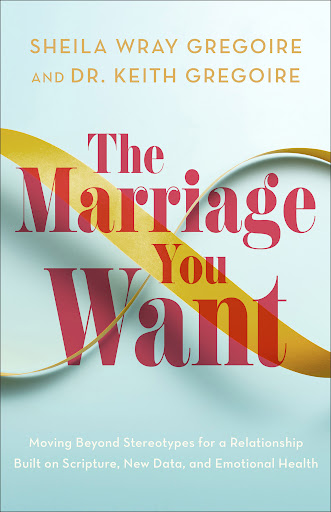
It's time for a marriage book that doesn't leave you defeated or guilty--but instead leaves you empowered, hopeful, and excited.
It's evidence-based. It's got tons of charts! And it's fun.
Available in audio, ebook, or paperback, with an accompanying study guide, let's talk about the things that actually go into making a great marriage, rather than the things that evangelicals have tended to stress that all too often harm.
Together, we can change the evangelical conversation about marriage!
What should we do about these content creators?
When you see women who create content telling others to have more sex and to respect more, know that this is the kind of content you don’t want to spread. So here’s what I’d do: leave one comment, maybe, pointing to a healthy source and explaining why the message being given is hurtful, so that other women who follow can see it. And then, after that has run its course, block, or at least mute. Make sure they don’t get more engagement.
Remember that even if you don’t like or respond to a post, if you stop and take time to watch a reel, even just to get angry about it, you drive up the engagement for that reel and that content creator. So if you want a content creator to shrink, block them so you don’t inadvertently increase their reach.
Let’s leave these people behind. In many cases they deserve our empathy and compassion, but certainly not our attention.
And in ten years, when many of them are divorced, let’s make sure we’re all still here, creating good content, so they can come and heal.

I think there is a third reason. People respond to suffering in two completely opposite ways. One reaction is “I want to do everything I can to prevent other people suffering like this.” The other reaction is “If I had to suffer like this, then everyone should have to suffer the same way.”
My mother was raised by an abusive father and was abusive to me in turn. As an adult, I gradually realised that her behaviour was abnormal and I didn’t have to put up with it, so I started setting boundaries. She came right out with it and told me that since she had to put up with control and abuse from her parents until she married, I should have to put up with the same.
I think some of these bloggers have a sneaking suspicion that there might be a better life out there, and that they have missed out on it – else why are they so hysterical in their denunciation of any woman who doesn’t agree with them? Rather than admit they’ve taken the wrong path and do what they can to keep the next generation from following them, they’re doubling down on their teaching to try and control those who still have a chance of a different life. They resent seeing other women enjoying opportunities that they didn’t get to have. It’s so sad that they have chosen to respond in a way that causes still more suffering to others, instead of doing what they can to protect others, even if it’s too late for themselves.
I also wonder how many are actually clueless that this message doesn’t work? We have talked before about how many complementarians are functionally egalitarian so many aren’t practicing what they preach. Others are just too new in their marriage, people who have been married for 20 minutes can’t really speak to how this teaching is going to play out 20 years and 3 kids down the road.
One time at my church, one of our missionaries was giving the message on Mother’s day. He of course was singing the praises of his wonderful mother but he made a comment that gave me pause. He mentioned that after his father died, his mother just blossomed and grew to be such as big vibrant person…..he seemed completely clueless to the fact that it should not have required his father to die for this to occur. The ability to just be clueless astounds me.
Oh, wow! Yes, that is very telling, isn’t it?
I think you’re on to something. The message is preached with such full chested confidence. And then it’s reinforced with messages like “if you disagree you’re rebelling against God” or “if it’s not working, it’s because you’re doing something wrong not because the teachings are wrong. The teachings can never be wrong because they come from God.”
I grew up in a fundamentalist house. I had a front row view to all of the dysfunction in my parents’ marriage. You would think this would make me question what I was taught at church. Unfortunately, I was the eldest daughter/compliant child. I soaked up all the indoctrination. And I believed the lie that my parents’ marriage failed because they just didn’t do it right (a sentiment my mother still believes). So when I got married, I was aware that I didn’t have a good model for a healthy marriage. So where did I turn? To all the evangelical resources. I read them studiously and was determined to “do it right.” I was going to succeed where my parents had failed.
We can all guess where that left me.
The only difference is that I didn’t have a platform.
These content creators, especially the young ones, might believe the message, not have enough life experience to think critically about it, and desperately want it to work. The older content creators don’t have the excuse of youth or naivety.
Yes, I think they likely do believe it. And so they’re trying to make sense out of why it doesn’t seem to be working, and convince themselves they just need to try a little harder!
Oh, that’s a really good theory! Because if other women don’t have to put up with it–then they have to confront the fact that they’ve largely wasted a big part of their life for no reason.
“If I had to suffer like this, then everyone should have to suffer the same way.”
Which is why women in cultures practicing Female Genital Mutilation are often the most pro-FGM regarding the next generation.
Same with Honor Killings; often the women carry it out or push the men into it.
It’s the generic reason behind hazing in general:
“I didn’t have it easy, WHY SHOULD THEY?”
One thing I really don’t like about most homemakers on YouTube and other places is that they are always married to these rich men or they make a lot of money from their content so they are able to do all of these frivolous things. This is totally unhelpful for me, a homemaker who does so because she can’t work due to disability and is living off the SSDI of me and my husband plus his part time minimum wage job. I really wish there were more channels that talked about homemaking on a shoe string budget. Most of these “tradwife” influencers just constantly reek of privilege and I have a hard time relating to them as someone who is a housewife not by choice but due to disability.
I will say the one cooking channel I really like is Dollar Tree Dinners. This is the content I want.
Great point!
Have you tried the Everyday Cheapskate website? Mary Hunt is open about being a Christian, though it is not a specifically Christian blog, and I love her ideas.
I will have to take a look! Thanks!
If you have YouTube access, check out the following channels:
* “Great Depression Cooking” (actual recipes from The Great Depression, when money was tight all over).
* “The Wolfe Pit” (cooking on the cheap).
* And maybe “Grandma Feral” (I think it’s similar to The Wolfe Pit, but more from a DIY rural angle).
I also have a few “Bachelor Survival” recipes of my own dating from back when I was starting out and money was tight.
again thank you! I have also been really liking dCooking the Books since a lot of vintage recipes she features tend to be inexpensive and also Life of Boris who does a lot of Slavic cooking videos on a budget. He has been dealing with a lot of financial troubles the past couple years because of the Ukraine war so I recently bought his cookbook to help support him.
Two other channels that might not be as helpful in your situation but are definitely interesting are “Townsends” (18th Century American colonial) and “Tasting History” (reproducing recopies from ancient through medieval through Victorian times).
I discovered the best pasta sauce recipe (Spaghetti al Boyardi, the sauce that launched “Chef Boyardee”s career a century ago) on the latter and modified it to use modern canned crushed tomatoes insteadof the “really from scratch” of the original.
I love how you wrote “they deserve our empathy and compassion, but certainly not our attention.”
Andrea Dworkin, the “all sex is rape” radical feminist, wrote a book called Right-Wing Women, in which she shows nothing but compassion for women promoting patriarchal messages, from Anita Bryant to Marylin Monroe. Nobody expected Andrea Dworkin, generally known for her rage, to take such a stance. Her assessment was: these women are just doing their best to survive the patriarchy. Then she makes the reader feel compassion by telling the details of the abuse both of these famous women suffered from men. Anita Bryant eventually divorced her abusive husband and the Christian world dropped her like a hot potato.
I had my own feminist rage against Elizabeth Elliot, as a naive college student, only to find out 20 years later about the suffering she endured in exchange for promoting the patriarchy. Beth Allison Barr doesn’t use this phrase in her books, but I’ve heard her say “patriarchal bargain” in interviews. It is a term coined by a Turkish feminist scholar in the 1980s to describe what women like Elliot, Dorothy Patterson, and others do.
Yes, patriarchal bargain is a great term that encompasses so much! And I do think we should have compassion for them. I think about Tia Levings’ story a lot, and how she was just desperately trying to make sense of so much.
“Shaunti Feldhahn produced poor research not done to academic standards that parrotted the ideas in Love & Respect, and she was feted across evangelicalism.”
This signals a much deeper issue. Shaunti took the easy road: produce comical “research,” write a book that conforms to all of the evangelical tropes, get famous.
Doing things the real way means that failure is a real possibility. Most good research results in a null result. Maybe it even shows the opposite of what you want it to show. Doing good research requires a deep understanding of proper statistical methods, finding a representative group, being your own worst critic, and being okay with whatever the results show. Once you have gone through all that, maybe no one cares about what you write.
It’s not just about the money and status; it’s about faking status. Shaunti gets to play dress-up as a “Harvard trained researcher,” when in fact, her work is just terrible, lazy, and harmful.
Knowing deep down that she’s a fraud, she projects that onto other women.
I just got done watching a video showing the essay of the young woman in Oklahoma who turned in a failed essay about gender roles to her professor and managed to get her professor suspended because she complained that it was because she used the Bible and she happened to have a mom who was a lawyer who sided with her.
After reading the essay, she cites absolutely nothing actually from the Bible and constantly contradicts herself, doesn’t understand what a stereotype is and there is such thing as a positive stereotype, and so many things, but the biggest thing is she doesn’t cite anything and many Christians in the comments pointed to places in the Bible that refute her claims.
I can tell after reading her essay I wouldn’t be surprised if she was very sheltered and her mom saw this as an opportunity to grift and bully her “woke” and trans professor and what not.
I want to talk about that essay in an upcoming podcast! It was so childish and badly reasoned, and it’s evidence that so many Christians have no idea how to think.
It really bugs me when people don’t understand that understanding an argument is not the same as agreeing with it. A course paper or essay is for you to demonstrate your grasp of a topic, not whether or not you believe that topic is true.
Angharad, your final statement took me a long time to learn because “don’t lie” was so deeply ingrained in me and the definition of lying, along with lacking integrity, was doing or saying anything that was opposite to what you know to be true. That means that objectively explaining the processes of evolution, for example, is not acting with integrity and is also lying if you don’t believe evolution is a valid explanation. I no longer think like this, but it was a confusing road to travel. Six years of higher ed and increased exposure to people different from my background is what made the difference for me, along with a learning mindset.
I just heard about this on the Tim and April podcast. I used to be a writing tutor at my local college and informed students that in writing an argumentative essay, they have to back up their opinion with three different, scholarly resources, not the first three hits they find on Google. And they also have to argue the other side as well with three resources to support their opinion and contrast. You cannot write a good, quality essay based on opinion. Unfortunately that’s what many evangelical authors do. They don’t back up their opinions with research.
And let’s not forget the biggest cudgel of all, no matter what else anyone may say:
Since Men of Gawd have said that this is the way marriage and society must be, then to go against it means sinning against God! And such sinners may not even be akshual Christians! Which means they’re on the direct route to hell!
We’ll just ignore all those pesky “one another” verses, and, oh, let’s also ignore that whole “do not lord it over others” thing. That dude clearly was out. of. touch.
If you disagree with a man, then you disagree with God!
Wow. I wish I was that good and holy and noble, but I’m not.
“If you question what I say or do
YOU REBEL AGAINST THE FATHER, 1OO!:\”
— Steve Taylor, “I Manipulate”
Angharad posted somewhat what I wanted to say. I had someone close to me always giving unsolicited advice from Bill Gothard’s seminars. I often thought her wanting me to be submissive was a reaction to being forced into that position herself.
I think you’re describing evangelicalism’s flavor of the patriarchal bargain.
“Because writing content makes you feel like you have some control.”
Several years ago there was a Y2K-era dialog exchange from Nickelodeon’s “Rugrats” that went viral as a meme:
“What are you doing?”
“Making chocolate pudding.”
“It’s 4 o’clock in the morning. Why on earth are you making chocolate pudding?”
“Because I’ve lost control of my life.”
One influencer that somehow keeps popping up in my pinterest feed is calling herself the “transformed wife” I clicked on one with a title that had made me think it was egalitarian, but it was not. Can’t remember any of the post titles bc i hid them immediately, but they were all horrible messages, with no research cited whatsoever. She really said it with a hateful tone to anyone who would disagree with her, too. ☹️
Yes, that’s who we call She Who Must Not Be Named!
It’s sad that women are being treated so badly and by men who are supposed to love them like Jesus loves the church. I am glad I know women deserve respect, love and a healthy sexual relationship with their husbands. I pray in the name of Jesus for all women to be protected and safe, to have men that will love and respect them in marriage and before marriage. I thank God that I know women are worth more than the world portrays. Jesus died for both men and women, boys and girls. When you look at our values from God and Jesus we are both worth more than we will ever know. I believe the division between the sexes is the work of the devil in the church. He wants to destroy healthy christian marriages by removing healthy sexual relationships. Thank you for fighting back, God bless you and all who read this.