



Complementarians often use pretty words to obscure what they believe.
They say things like “men are meant to be the protectors!”, or “men bear the burden of responsibility” or “we are all equal, but we just have different roles.”
But when you break down what they’re actually saying and meaning, you see the danger and the selfishness inherent in the doctrine, as well as how it completely distorts the gospel and our relationship with Christ.
I’m often asked to put in one podcast all my arguments about something, so that people have one podcast to send people to. And so today we decided to film this one, taking on all the arguments about complementariansim, and showing how shallow they really are.
And clips from Matt Chandler, John Piper and Josh McPherson feature too!
Or, as always, you can watch on YouTube:
Timeline of the Podcast
00:00 Intro to Complementarianism & what we’ll address
03:39 “Equal Value, Different Roles” – Why This Makes No Sense
16:16 What do Complementarians Really Think About Gender Differences?
27:21 Matt Chandler’s False Spectrum Between Patriarchy and Egalitarianism
30:51 “Servant Leadership” – Which Word Matters More?
37:15 What Does Submission Actually Mean in Practice?
44:41 The “Burden” of Making Final Decisions
51:01 Is Marriage Really a Picture of Christ and the Church?
54:55 “His Headship is for Your Protection” – Really?
1:02:01 The Two-Headed Monster Myth & Closing Thoughts
Just because it sounds pretty doesn’t mean it is.
When you hear complementarians try to describe how “beautiful” their theology is, ask about it in practice, as we did hear. Break it down. What, exactly, are women called to do? What is submission? What is she to do if he’s being mean or unreasonable? What if he’s being abusive? How does this work in practice? How does she get to have a relationship with God? Is she following her husband or Jesus? What if she hears Jesus telling her something different–whom should she follow, if it’s not a sin issue?
In other words, let’s stop arguing “different roles”, and let’s take it down to the nitty gritty. Because when you pull back the curtain, the ugliness is apparent!
Key Talking Points from our Podcast on Complementarianism
- “Different roles” is a euphemism for hierarchy – Complementarians claim men and women have different but equal roles, but there are only restrictions on women, not men. This isn’t about roles; it’s about restricting women.
- Complementarians don’t actually talk about real gender differences – When they discuss gender differences, they only talk in terms of hierarchy (leading vs. submitting), not actual differences between men and women.
- “Servant leadership” prioritizes leadership over servanthood – The emphasis is always on men leading, never on them serving more. Jesus commanded us to be servants, not servant leaders.
- Submission teaching puts husbands between wives and Jesus – When women are told to follow their husbands even in non-sinful disagreements, it effectively makes the husband’s will equivalent to God’s will, which is idolatry.
- The “burden” of final decision-making actually benefits men – Despite claims that male headship is a burden, research shows men in hierarchical marriages do great while women’s health and wellbeing suffers.
- Hierarchy doesn’t protect women; it harms them – Statistics show more abuse in hierarchical marriages than egalitarian ones. The most patriarchal societies are the most dangerous for women.
Just released!
For the Love of Women: Uprooting and Healing Misogyny in America
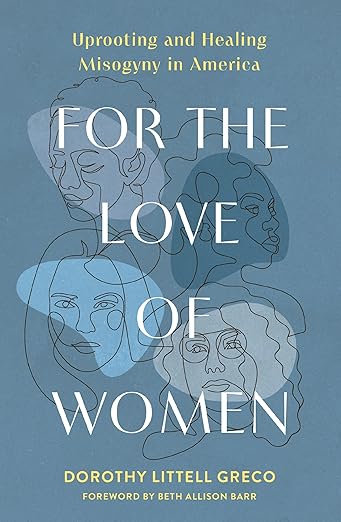
If you've ever been told, "sexism is a thing of the past; women are equal now. Stop complaining!", then you need this book!
Dorothy Greco goes over how misogyny is present in health care, business, the media, our relationships, and of course the church. She puts words to our experiences, and points the way forward.
Things Mentioned in the Podcast
THANK YOU TO OUR SPONSOR
Order Dorothy Greco’s book For the Love of Women which just launched this week!
TO SUPPORT US:
- Join our Patreon for as little as $5 a month to support our work
- And check out our Merch, or any of our courses!
- Give to the Good Fruit Faith Initiative of the Bosko Foundation
- Join our email list!
LINKS MENTIONED:
- “The Marriage You Want” book on Amazon, or get the curriculum and video series from Baker Books
- “The Bible vs. Biblical Womanhood” by Philip Payne
- “How God Sees Women” by Terran Williams
- Rebecca Groothuis essay on “Equal in Being, Unequal in Function”
- Previous podcast episode on John Piper’s “harsh husband” advice
What “pretty” language have you heard to obscure complementariansim? Let’s talk in the comments!
Transcript
Sheila
Welcome to the Bare Marriage podcast. I’m Sheila Wray Gregoire. We’re from Baremarriage.com where we talk about healthy, evidence based biblical advice for your sex life and your marriage. I am joined today by one of my favorite people, my husband Keith. I mean, you’re kind of here, but, like, I really, really love my daughters too, so it’s always hard to say who my favorite is.
Keith
Not a competition. It’s not a competition.
Sheila
It’s not a competition. I love him very much, and we’re going to have a great conversation today. Okay. One of my other favorite people a couple of weeks ago, I did a podcast with Rebecca, our daughter, on the euphemisms that we use in evangelicalism about sex and how often those euphemisms are obscuring something which is pretty ugly, like sexual assault or other things. And it’s, it’s really bad. And people were saying, hey, can you do a similar podcast on the euphemisms that people use about complementarianism?
Keith
Yes.
Sheila
Yeah. And how they make it sound so lovely, but they don’t say what it really means.
Keith
Well even complementarianism is a, is a euphemism, right?
Sheila
Right. Which we’ll get to in a minute. Don’t spoil it yet. Yes. And so. And so that’s what we’re going to do today. Before we get started, one way that you can really help us is if you’re watching on YouTube, will you click the like button and hit subscribe because it tells the algorithm, hey, people like this, and then they’ll keep coming.
And if you’re listening on your podcast app, please rate the podcast five stars wherever you listen and subscribe as well so that you don’t miss a marriage podcast. And another way that you can support us is by joining our Patreon group. For as little as $5 a month, you can get access to our Facebook group, which is super fun.
Or as we’re heading into the end of the year, if you have some money, that you still have left to give to charitable giving, would you consider us to because we are raising money, to do more translations of our work, to help some people on the mission field, to get our work into more peer reviewed journals and so much more.
We’re doing some podcast series and more, and we’ll, we’ll have a lot more information about that coming in a couple of weeks. But if you would like to give to that, it’s the Good Fruit Faith initiative of the Bosco Foundation, and it is tax deductible within the United States. And the link is in the podcast notes.
Sheila
All right hun.
Keith
Wow
Sheila
Are you ready? Okay, so what I thought we could do is talk about the way the complementarians talk about what they believe and complementarianism, for those who don’t know, is the belief that God made men to be an authority over women in the church and in the home, and some people believe in both. Some people believe in one and not the other. But it’s this idea that men were made by God to be an authority over women.
And we just want to talk about how that manifests itself. Now I want to tell you what we’re not going to do in this podcast is we’re not going to deal with the biblical arguments because we have done that on other podcasts. And, we’re not experts in that. Like we’re not Greek experts, although you do read the Bible in Greek, like the New Testament in Greek, which is super cool and kind of sexy, but anyway, so, so.
Keith
Woo, for all you Language nerds out there
Sheila
Yeah. But I’ll have some links in the podcast notes to some great books that you can get if you want to learn more about the biblical basis for believing that God created men and women to be equal co-heirs with him, and you can see things like, The Bible Versus Biblical Womanhood by Philip Payne. How God Loves Women, by Terran Williams,
Keith
no, How God Sees Women by Terran Williams,
Sheila
How God Sees Women by Terran Williams, and more. So we’ll have those on the podcast notes. Absolutely.
Keith
There’s tons of resources about it. So, the fact we’re not talking about that today, is not because it’s not there, it’s because we want to stick to the topic, which is euphemisms.
Sheila
Right, so let’s do the first one.
Keith
Because the whole thing is that if what they believe was true, why don’t they just say it. Yes, because they don’t say it. They say all these fuzzy things that make it sound warm and calm and great and it’s not that.
Sheila
It’s and they don’t even mean it. So the first one I want to do, okay, is God created men and women to be of equal value but different roles.
Keith
Roles is such a euphemism.
Sheila
Yes. And can I deal with this point, because I, I, this is my big point that I do on social media all the time. Okay. Our thesis is that complementarians do not believe in either equal value or different roles. So let’s start with different roles. If they believed in different roles, then there would be things that men can do that women can’t and things that women can do that men can’t.
But in complementarianism there are only things that men can do that women can’t. There are no things that, that, that, men are forbidden to do. And people will say, oh, but what about childbirth? As if they, you know, that’s a mic drop moment. No no no no no. Because childbirth is not a role. It is a biological function.
You can’t, you can’t say that because women have this biological function. Men get to have this social role. The only way those two would be analogies is if men pastor with their penis, which is like horrifying. Okay? Like they are not the same thing.
Keith
Your biological body does not influence how you pastor it, right? It just doesn’t
Sheila
It doesn’t influence how you lead, etc.. So so there aren’t different roles. I’m, here’s an example. I there’s, there’s a book series that I really love that we talk about in our patreon group a lot, Brandon Sanderson’s The Way of Kings. Okay. And in that there are genuine gender roles. Men tend to be the rulers and the warriors and women are the only ones who get taught how to read and write.
And they’re the scientists and historians and philosophers, okay? And men are not allowed to read or write, you know, so it’s like, it’s like there are things that women do that men can’t. And there’s things that men do that women can’t. That’s the idea of gender roles.
Keith
You’re not advocating that’s the way it should be. No. That would at least be internally consistent, right.
Sheila
That’s what, that’s what having different gender roles would look like. If there are things that women can do that men can’t and things that men can do that women can’t, but there aren’t there are only things that men can do that women can’t. Which means that it’s not about different roles. It’s about restricting women. Yeah. Okay. All right.
Now let’s do the equal value. Right. Do you want to do the equal value?
Keith
this idea that you can be equal but not be equal, it’s really really important. And the truth is that most of us see it and realize this is not reality.
Sheila
Like, yeah, you’re.
Keith
You’re supposed to be equal. But there’s things that, that I can do, you can’t. But we’re still equal.
Sheila
Yes.
Keith
People recognize that, that’s crazy. But so, the rules thing is a euphemism to paper over the fact that this is completely logically inconsistent. Yeah. So they say it’s not that they’re, you’re you’re totally equal in every way. You just have different roles. Right. So philosophically this doesn’t make sense the other way. These are a function.
Sheila
Yeah.
Keith
You have a different function. Right. And that’s what Rebecca Groothuis
Sheila
Yeah. So Rebecca Groothuis is, was, an incredible Christian, who started, who started a lot of the Christian feminist academic movement in the 80s and 90s. And she wrote this amazing thing, which I’m just going to read because she says it so well, I’m never going to say it this well, okay. But she explains why the unequal value thing or the equal value thing doesn’t make sense. So here’s what she says. And I will put, I will put the link to this essay that she wrote in the podcast notes too
Equal and being unequal in function is the theoretical construct to which traditionalists appeal in order to assert female subordination to male authority, and at the same time to affirm the biblical teaching that men and women are spiritually equal.
This is a crucial point, because the entire traditionalist agenda turns on the assumption that women subordination to men does not violate the fundamental biblical equality of women with men. If it can be shown that the subordination traditionalists prescribe for women entails an inferiority, not merely a function, but also of being, then the traditionalist agenda, as currently expressed, is internally incoherent. It contradicts itself.
Okay, before I read more, do you want to just explain that to people who may have gotten confused?
Keith
Oh my gosh, Well, first, can I just actually take a little bit of a sideline here? It sure is. The first thing is she’s talking about the traditionalist view.
Sheila
Yeah.
Keith
And that’s because she’s writing before they rebranded as complementarian.
Sheila
Yes, yes.
Keith
And this is what I was thinking about: a complementarian is a euphemism.
Sheila
Yeah.
Keith
Right. Because complementary, we compliment each other. We fill each other out.
Sheila
Yes. It’s comple with an E, like comple E not, compli I. Yes yes yes.
Keith
Comparare in Latin, which the word complete comes from, right. So we complete each other because we have different, you know roles. They say that we complete each other because that’s much nicer than traditionalist, because the traditional view through most of human history has been that women should not be allowed to do these things because women are inferior to men. Right? I mean, I’m not saying that’s true, but I’m saying that’s what was believed.
Sheila
Yeah.
Keith
For years and for centuries, women were considered defective men and considered less than they were considered not smart enough to do it. They were considered not capable enough to do it. And so therefore it makes natural sense. The problem is that nobody believes that anymore.
Sheila
Yes.
Keith
So if you say the traditionalist view, people see you’re just talking about the same sexism that we’ve had for our entire history. So they have to come up with a way that makes it sound nicer.
As so complementarian is the new word to describe this thing. So I think anyway. Yeah. I just think it is funny that she uses the word traditionalist
Sheila
Yeah. And so what she’s saying is like their whole argument is that yes women, women are subordinate to men in marriage and in the church. But that doesn’t mean women are worth less. And that’s what, that’s what that’s what, complementarians say. And she’s saying okay, but if it can be shown that you actually, that your, your whole theory is that necessitates women being worth less, then your whole theory falls apart.
Okay.
Keith
Because the complementarians of today reject the idea that women are intrinsically inferior to men, right? Ostensibly they do, yes. Although I think some of them.
Sheila
Yeah.
Keith
The way they’ve been talking recently.
They’re starting to show that they actually do believe women are inferior. Yeah. Which is another story entirely. But ostensibly the complementarians view is that women are completely equal. It’s just a different function.
Sheila
Hey there! Have you ever been challenged when you bring up some of the stuff we share on this podcast about how, hey, there’s no need to be so angry, men and women are equal now, and you know that’s not right, but you don’t know what to say. Well, thank you to the sponsor of today’s podcast, Zondervan Publishers, for publishing an amazing book that can give you the words and connect the dots for you.
Dorothy Greco’s For the Love of Women has just launched, and it’s such an incredible book
Dorothy Greco’s book shows how in all kinds of different areas of society, in business, in medicine, in the church, of course, in government and especially with sex, that women are set up often to fail. We have great obstacles that we’re facing, but we can overcome them. She points us to how and she gives us a way to answer people when they say, oh, but the sexes are equal now, so pick up For The Love Of Women.
You will love it just as much as I did.
Sheila
Okay. So here’s the rest of what she says.
I agree that it is possible for a person to be justly placed in a position of functional subordination, without being fundamentally inferior as a person, yet I disagree that this is what is happening with the traditional subordination of women, female subordination is very different from functional subordination. In functional subordination roles are assigned and accepted for the purpose of accomplishing a certain function, and with a view to individuals differing abilities and performing particular tasks. For example, someone may serve on a committee under the direction of a coworker who is otherwise her equal in a particular organization, or a person who wants to learn how to play the piano will accept the role of subordination to her music teacher
In female subordination, the criterion for who is subordinate to whom has nothing to do with expediency, or the abilities of individuals to perform particular functions. Rather, it is determined entirely on the basis of an innate, unchangeable aspect of a woman’s being, namely her female sexuality. Her inferior status follows solely from her essential nature as a woman regardless of how traditionalists try to explain the situation, the idea that women are equal in their being, yet unequal by virtue of their being, simply makes no sense. If you cannot help but be what you are, and if inferiority and function follows necessarily and exclusively from what you are, then you are inferior in your essential being.
Keith
Yeah, exactly.
Sheila
Okay. Now did y’all follow that? I know this,
Keith
So, that’s a, There are a lot of philosophical words there
Sheila
But let me, let me give you an example that can make, that can make this okay.
Keith
Can I, can I just because that’s what they do, the complementarians say okay? You can say you are subordinate to your boss at work, yes But you are not inferior to your boss.
Sheila
Yes. Right.
Keith
And they say, therefore, it’s the same thing.
Sheila
But here’s the difference. An employee can one day be a boss.
Keith
Yeah, absolutely.
Sheila
Or they’ll say, well, a copilot and a pilot are equal. Are you saying, you know, they’re equal? But yes, but a copilot can eventually be a pilot. And that’s why these arguments don’t work when it comes to women and men. Because no matter what happens, a woman can never be anything other than a woman.
And it is because she is a woman that she is considered functionally inferior and subordinate. And that’s the problem. If the reason that she’s subordinate is because she’s a woman, then being a woman does make you inferior. And that’s what they, that’s what they wanted.
Keith
Yes exactly, because the traditionalist view was women are inferior to men, therefore they’re barred from these positions. That is horrible. But it’s logically consistent.
Sheila
Yeah.
Keith
The idea that women are completely equal but still not allowed to do these things is logically inconsistent. It’s just their way. They just want to keep the things the way they are.
Sheila
Yes.
Keith
And not answer the question. That is, doesn’t that mean women are less than men?
Sheila
Yeah. And they’ll and they’ll go to the ends of the earth, of course, we don’t believe women are unequal. Like, like, just because people have different roles doesn’t mean that they’re unequal. But yeah, but in every other circumstance, those rules are based on. Yeah. Your function. Like, you know, whether you are a teacher, whether you’re an employer, like they’re not based on just because you’re a woman.
And I think if we were to see it as there was, that there was a brilliant experiment that a teacher did in her class where she declared that blue eyed children were superior to brown eyed children and the brown eyed. And it really threw everyone. And it went, it went viral, when it, when it happened. But it’s like, because if we say that, yes, you’re above me, but that means, that doesn’t mean that we’re not equal. But if the only reason you’re above me is because I’m a woman and you’re a man, then we are indeed not equal. Because I can never be anything other than what I am. Right? You know, and, and this is the thing is, like, they keep saying different, you know, different roles, but equal value. But what they’re really arguing for, which they don’t say, is hierarchy. What they’re arguing for is hierarchy.
Keith
The role is, one to rule and the other to serve.
Sheila
Yes. That is the role. And that’s, that’s, like that’s not that’s not actually a social role.
Keith
And different is a euphemism too because difference neutral.
Sheila
Yeah.
Keith
Right. But better and worse are not.
Sheila
Yes.
Keith
But the better role. The role with the more perks, the role that most people would want. Yeah. The role that the person in charge, not the person. Yeah. Not the person underneath
Sheila
Because I was talking about this on the Facebook page and a woman wrote this. I thought it was, I thought it was interesting.
She said I didn’t realize until I was an adult that this depiction of marriage was more of a social performance rooted in hierarchy than a natural, loving relationship between two mature adults. People will deny it, but if you strip away all the pretty descriptions that try to justify and soften the appearance of it, that’s what it really is. Underneath, a hierarchy. And people choose to interpret the scriptures they used to justify it without truly investigating the context and holding it up against other parts of Scripture, such as those that equalize every person in Christ.
Keith
Yeah, yeah. And that’s why I think we should call complementarians, hierarchists. Because. Because egalitarians are complementarian as well.
Sheila
Yeah.
Keith
That’s like the technical term.
Sheila
Well, this is the idea, that people don’t know. That’s what people don’t know, is that the term complementarianism was actually started by egalitarians back in the 70s, like they were they were describing how God created the sexes differently, but to complement each other and to and to show and to show in relationship different aspects of the Godhead. And so we need both men and women like we need both men and women’s perspectives, you know.
Keith
And the traditionalists went, communitarian. That’s a good word. We can co-op that.
Sheila
Yeah. Because it, because it, sounds nice. Right. And that’s the next, that’s the next point I want to use.
Keith
So all Christians are complementarians. There’s, there’s, complementarian egalitarianism. And complementarian hierarchicalists
Sheila
Yes. But I don’t use the word complementarian for egalitarian, it’s just because, it’s been so co-opted. But it was originally an egalitarian word.
Keith
But, but hierarchy is what it’s about.
Sheila
Yeah, it is just about hierarchy. Okay. That gets us to the next point, which is that complementarians claim that egalitarians say there’s no gender differences. And the reason we have to be complementarian is that we affirm that the genders are different. Okay.
So here’s a quote from, one of the quintessential books, that started the so-called complementarian movement, Recovering Biblical Manhood and Womanhood by John Piper and Wayne Grudem. All right. And it says:
at the heart of mature masculinity is a sense of benevolent responsibility to lead, provide for, and protect women in ways appropriate to a man’s differing relationships.
At the heart of mature femininity is a freeing disposition to affirm, receive, and nurture, strength and leadership from worthy men in ways appropriate to a woman’s differing relationships.
Yeah. So femininity is about affirming and nurturing your role to lead.
Keith
Yeah. Well, here’s the thing is, they’re using very positive terms. So they’re trying to make it sound really good. So the role of the men is to protect and to what was the other words they said about the men,
Sheila
Provide for and protect.
Keith
To lead, that’s a euphemism. Lead is a euphemism
Sheila
A euphemism. Yeah. Benevolent response. Yeah.
Keith
Okay. Provide, protect, lead, the woman, okay. So how am I supposed to relate to other men.
Sheila
Yeah.
Keith
Because they’re also supposed to be providers and leaders and protectors. Am I allowed to protect and lead and provide for them? Am I, am I not able to nurture, is that only a female thing.
Sheila
Yeah.
Keith
Like so it’s just crazy. So the idea that maybe men have a propensity for one way, women have a propensity for another way. Okay, how does that mean that, the one has to be subservient to the other?
Sheila
Yeah I know, and, and the, when they describe gender differences, this is this is also what’s so interesting is the only way that they describe gender differences is in terms of hierarchy.
Keith
Yeah.
Sheila
Right. So so men lead and and protect and provide which is, which is essentially a hierarchical relationship.
Keith
Those are all, those are not euphemisms. Those are kind of like dog whistles in a sense.
Sheila
Yeah. And women nurture the men to leadership. So it’s not actually about the things that they have found are, do tend to be some gender differences. You know, that women and men tend to go in certain. No, it’s just about hierarchy and, and and the, the and we’ll talk about the actual gender differences in a minute. But, but, they just talk in terms of hierarchy. Okay. And the, that is essentially what it means to be what it means to be a man is to be in hierarchy over a woman. And what it means to be a woman is to be under a man. That’s essentially what he’s saying. Okay.
Keith
And so they talk about differences, and that’s a euphemism for higher and lower.
Sheila
They don’t actually mean differences. They just mean leadership. And so I want to listen to this clip, from John Piper where he’s talking about this. Okay. So let’s just have a listen.
John Piper
In fact, I personally would say that the attempt by feminism to remedy the male abuse of women by the nullifying of gender differences backfires badly and produces millions of men that women cannot enjoy because of their own manliness and cannot endure because of their distorted, brutal manliness, doesn’t produce something beautiful. In other words, if we don’t teach boys and girls about the truth and the beauty and the value of their differences from one another. They will not grow up to be healthy, mature men and women. They will grow up dysfunctionally. And a generation of young adults comes into being that simply don’t know what it means to be a man and don’t know what it means to be a woman. And the cultural price for this is enormous.
Sheila
So the cultural price we pay is enormous Keith. Cuz like, we are paying a huge cultural price for our marriage. Yeah, yeah. But what I find so interesting is when you actually look at what he’s saying, he is not talking about gender differences, he is only talking about hierarchy. Right? When you get rid of hierarchy, then then cultural stuff.
Keith
And he talks about how mature men then are going to abuse the position of, authority over women, right? Just like, if you didn’t tell men in the first place that they have a God given right to authority over.
Sheila
Women, yeah.
Keith
Then maybe they wouldn’t abuse that. Yeah, yeah. So that’s the problem is not that we’re teaching people that when men and women should be equal. Yeah. Problem is that you are teaching men that being equal to a woman is a demotion.
Sheila
Yes.
Keith
That’s the problem.
Sheila
Yeah.
Keith
Like being equal to my wife and the two of us chasing after God together.
Sheila
Yeah, that’s.
Keith
Not good enough. Yeah, I’m not manly enough if I do. That, that’s crazy.
Sheila
And I just, I want to take this moment too, to say that, that he’s saying the cultural price we pay for egalitarianism is enormous. Okay. That’s actually, that’s statistically untrue. It’s absolutely statistically untrue. The, the healthiest countries are the countries where there are, where there is more gender, gender equality. In our studies for our new book, The Marriage You Want, we found that when couples are equal and don’t have someone acting in authority over the other and don’t have someone making the final decision, those couples thrive. As soon as you have the husband, having decision making power over the wife, those couples start to do badly. So they’re making all of these claims that simply are not backed up by science. Okay.
Keith
And the reason they feel right, is because they do. We do see men who are, you know, bums who just basically do nothing and leech off other people. That happens.
Sheila
Yes.
Keith
But the reason they do that is because they feel entitled to be able to do that. Yeah. You know, because we’ve taught them not to be partners. Yeah. We’ve taught them to be a leader or take your ball and go home. Yeah. That’s what Piper teaches people.
Sheila
Yeah.
Keith
It’s crazy. We taught men to just, that being, an equal with a woman. Yeah, is a good thing. Because God made us each to contribute.
Sheila
And how many times have we heard pastors say, you know, women, if you don’t let your husband lead, he’s just going to withdraw? Yeah, he’s just going to go to, you know, hang out with his buddies or go to work.
Keith
Men Be in charge. And if they don’t, they’ll go to video games where they can be.
Sheila
Yeah. It’s like, then maybe he’s not a good guy.
Keith
Maybe teaching them to be different, maybe teach men to be mature.
Sheila
Maybe teach men to be like Christ, like, you know, like like. So if he, if he won’t, if he doesn’t get to do whatever he wants, he’s going to pick up his ball and go home because that’s, you know, that’s essentially what it means. Then, then maybe he’s just a really, bad husband, like, this is, this is just crazy.
Sheila
I do want to talk for a minute, and I’m not going to spend too much on this about what they have found to be some gender differences. And I want to say that there aren’t things that are women that women do and men do like almost every trait across society is on a bell curve. And we’ve explained this in other podcasts.
We explain it a lot in chapter one of The Marriage you Want. But things like who has the higher libido? Who talks more, who’s more logical versus who is emotional, more emotional, etc. those things are all in bell curves. And there’s a lot of overlap for, for almost everything. So even if men tend to be more one way and women tend to be more another way, there’s often more differences between women. The two standard deviations between women and between men then there is, between the average man and the average woman. Okay, so gender differences on the whole are overblown.
Keith
But, but that does not mean we’re saying there’s no differences. Like that is a strawman
Sheila
Right. But also there is, there is one super essential difference, which is rooted in our biology, which is women are just simply more vulnerable than men are. Yeah. Okay. Like our, our, our experience of life is very different. We are more vulnerable to sexual assault. We are smaller, on the whole. We are not as strong. There’s an awful lot of women I know who are stronger than a lot of men. But like on the whole, women aren’t as strong as men. And every month, you know, a lot of women of child bearing age go through a lot of pain. We also get pregnant, which is very vulnerable. And then we’re nursing, which is very vulnerable. We give birth, which is incredibly painful. So these are all things that women do do.
And because women go through that, women have like, more of a need than men to make sure there’s community around us and that we are safe. And so women often do invest in relationships at a young age. And we are socialized to do that because it’s necessary for us to survive in a way that isn’t that it isn’t for men.
And so I think when it comes to being a man and a woman, I think, you know, what does that mean? I think women, women, do tend to be more cooperative. And they found that in societies where women have more power, those societies tend to be more cooperative, you know, but what men have is the privilege of not having to be as worried about these things, which means that I think godly masculinity is recognizing the privilege you have and laying down that privilege to help women and to lift up women.
And that’s what we see Jesus doing constantly, is laying down his privilege to help up, to help those around us. And I think, you know, God made men to not be as debilitated so that they could help those who are weaker among them, which is what Peter was talking about in first Peter, talking about the weaker vessel. I think, you know.
Keith
Because we’re supposed to work together. We’re supposed to be a team.
Sheila
Yes.
Keith
Yes, given the fact that you’re, you’re more vulnerable and you’re at risk. So I have the ability, to help protect you and that sort of stuff. So as a Christ follower, what am I going to do with that? Yeah, right. Am I going to demand your subservience to me? Am I going to demand that you submit to me? Like how is that Christlike?
Sheila
Yeah. Yeah. Maybe it just means you change diapers so that I don’t have to get out of bed in the middle of the night when we’re having babies, right?
Keith
Absolutely, well, like, this is the thing is, a lot of these people say, well, you know, you, you feminists want us to, hold the door for you and pick up the bill, but you don’t want to do whatever the stupid thing is that they are saying.
Keith
There’s. Right. It’s like, that’s really your mentality as a Christian. Like. So. So if my job is to protect and provide for you and I don’t get your subservience in return. Like, why does that anger you?
Sheila
Yeah. Right.
Keith
What does it anger you as a Christian? Because, you’ve, you’ve taken in this lie that men are supposed to be in charge of women.
Sheila
Right. Yeah. And the idea of protection, of providing. We’re not saying that. And please don’t mishear what I said. Like, I don’t mean that because women give birth, you know, they can’t get jobs or something like that. I’m not saying that. I’m just saying that women are vulnerable at certain periods of our lives and you know, it is best for women to be with their babies when the babies are born because of nursing.
And most countries have a lot of maternity leave policy, which is good. But having a man involved to help at those times, I think that’s really what it’s talking about, you know, and.
Keith
I’m just saying that because maybe God made you men, on the whole, slightly stronger or having less of these kind of issues that they deal with, for you to then think that gives you the right to be the authority over women. Like where is your head at.
Sheila
Yeah.
Keith
Like, how do you reconcile, that, with the one who, you know, laid his life down. The one who said, not so among you. Yes. Like, how does that jive? With be the servant of all. How does it, it doesn’t fit.
Sheila
No, it totally doesn’t.
Okay. I have another clip to play. The context is Matt Chandler, who is a megachurch pastor in the Southern Baptist Convention from, the Dallas area, I believe. And he is talking here, in a sermon about the differences between egalitarian and complementarian and complementarianism and why we should be complementarian and and again, he was making the point right before this clip, that egalitarians basically don’t believe in gender differences. All right. Which is not true. And so he’s, he’s putting up a straw man argument here. But let’s just listen
Matt Chandler
We we can see much good and much beauty and what the egalitarian is trying to do, but we feel like it falls short of the full scope and scale of the Word of God. Which is why we’re complementarians. So let me show you this, because we got to talk about complementarianism, because we’ve got our own issues. Right.
So let me put up a new slide. So here’s Complementarism. And what we’re saying in Complementarism is we are, distinct from one another but dependent upon one another. Right? Distinct and dependent. What we’re trying to do is we’re, we’re trying to move to this place where neither is over-emphasized and both mutually respect and understand.
Right. And so here’s how Complementarism will play out in its practicalities. Not it’s belief shoot around, a lot of people and say we’re, we’re complementarian but act far more like those in the patriarchy camp or they’re going to say they’re complementarians but actually work far more like egalitarians, right? So here’s, here’s kind of what we came up with.
And there are careful complementarians. Right. And they’re nervous about this issue. And you’re like, oh my gosh. You know I know, I know that’s just a gray area. So let’s just err on being conservative. But yeah, I can kind of see that in the text. I kind of see your point. But man, if we do that, this slippery slope, it won’t be long. We’ll be baptizing cats. And then what are we going to do once the church becomes that, right? They’re just nervous. We don’t want to be careful complementarians. We want to be convinced. We want to be convinced. We want to operate in the spaces that God has created. As we celebrate being distinct and dependent from one another. Right.
I just want to celebrate this and rejoice in this, God’s good gift to us. And so let’s.
Sheila
What do you first notice about this before anything else?
Keith
Oh yeah. Like your spectrum. Like it’s a spectrum.
Sheila
Right, right.
Keith
And we’re in the happy middle, right? It’s like you can be in the happy middle of any spectrum if you choose where the points of that spectrum begin and end.
Sheila
Yeah.
Keith
Right. And like, if you want to be seen as a moderate just pick the right points.
Yeah. So, on the one end you have men being in charge and patriarchy and on the other end you have no one being in charge. Men and women together in egalitarianism. And then as complementarianism in the middle, do you see anything wrong with that? People, like the spectrum doesn’t go between egalitarianism and complementarianism. Egalitarianism is already the middle.
The opposite of patriarchy is not egalitarianism.
Sheila
No, it’s matriarchy, but it’s not even, it’s not even matriarchy, because studies have shown that in cultures that are more matriarchal, they don’t, they’re not hierarchical in the same way. They’re much more cooperative. So it’s like, it’s not even like that. But egalitarianism is already the middle. And yeah.
Keith
By definition, If you’re talking about hierarchy and who is in charge of who.
Sheila
Yes. Right.
Keith
The one extreme is the men are in charge of the women.
Sheila
Yeah.
Keith
The other extreme is the women are in charge of the men. That’s just logical. In the middle where they both have equal say is the middle.
Sheila
Yes. Right.
Keith
So for you to pick complementarianism in the middle because you just make this egalitarianism the anchor point of the extreme other side. It is crazy, it’s just silly.
Sheila
Yeah. Yeah. So it is very silly. Okay. All right. Next one is and this gets more into the concept of design okay.
Keith
So design’s a euphemism.
Sheila
Yes. Yes. Men were designed to lead and women were designed to follow. So we’ve talked a little bit about equal value. But this is actually like in our essence that God designed, you know, mentally.
And here’s what Desiring God has said about this. So John Piper, he said, God has designed men for Christ-like servant leadership, and God has designed women to honor and affirm her husband’s leadership.
Again, that’s just so silly. Like, so the essence of being a woman is to affirm that I am under a man like this.
Keith
So like what about women who aren’t married? Like how are they going to fulfill their role? Are we going to talk about servant leadership as a euphemism?
Sheila
Yes. Please do, please do. Right. Yeah. No, that’s now that’s now.
Keith
Servant leadership is a huge euphemism. Right. Okay. What he’s saying is that, is God like it’s. What is he really talking about? He’s talking about being in charge.
Sheila
He really is. Yeah.
Keith
But, Servant leadership sounds so much nicer. It sounds so beautiful. Right. Because Jesus did tell us to be servants.
Sheila
Right.
Keith
But here’s the deal. Let’s take the word servant leadership, And if I say to one of these people.
Sheila
Yes.
Keith
In one of these complementary spaces. You know what? I just try to be my wife’s servant.
Sheila
Yeah.
Keith
Every day I get up, I think, how can I serve my wife? I just wanna be your servant. Their hackles would rankled a little bit.
Sheila
Right? Yeah.
Keith
Because men are supposed to lead, men. Men are supposed to lead, right? Yes. Servant leadership. It’s very clear which of those two words is the more important word. Yeah. Right. Like if I said I am a servant leader to my wife, they’d all be calm.
Sheila
Yeah, yeah.
Keith
I’m leading because the lead is the important thing. But here’s the thing. Jesus didn’t tell us to be servant leaders.
Sheila
No. Right.
Keith
That the command is to be the servant.
Sheila
Yeah.
Keith
So if the new added word leadership becomes more important than the word that Jesus actually spoke, you’re probably off track. Right. Because the whole point is not leadership. The Bible never tells men to lead their wives anywhere.
Sheila
Yeah. There is no command to men, to lead. Yes.
Keith
And they read that into the word head which they use as a euphemism for leading. Right. Which is not what it’s meant to be.
Sheila
And it’s not and it’s not there in the Greek, there’s.
Keith
Read into the Bible and they have the gall to say that we’re reading our feminism into the Bible. Yeah. Because we think that men and women should be considered equal.
Sheila
Yeah. Just like Paul said. Yes, exactly, exactly.
Now here’s where things get really interesting, okay, is that you will hear these sermons about how beautiful this picture is of the leadership that men gave the servant leadership. And it sounds really lovely.
Keith
But I think people who are leaders, should be servants. Yes. For sure,
Sheila
Yes, but what does it actually mean in practice? And that’s what they will never, you’ll never hear a sermon on. Like what the nitty gritty of this actually means when when marriage is rough, they just simply say, no, no, no, you’ve got to lead and just gotta follow. But, but then, when you look at specific instances of advice, you hear stuff like this.
And so here is a podcast that John Piper did answering the question of what do I do with my harsh husband? And I’m only going to play the very last bit of it. But throughout this article, and Rebecca and I did a podcast just on this, like a couple of years ago. I’ll put a link to it in the podcast notes, but he’s telling her that, she has to speak kindly to him.
She can’t tell anyone else that he’s being harsh because that would be disrespecting him, etc., etc., etc. And here is the finale of what he says.
John Piper
And then finally I would, I would say, if he indicates a sense of openness to talk about this, and then you can explain your feelings more fully. You can ask for what you long for and maybe explain why it would be so happy for the relationship, if, if he would be less harsh in these several ways. And if you both feel stuck after a while, it is perfectly biblical and right to seek help from close friends, or even if it comes to that, from a wise Christian counselor.
Sheila
Now, I want you to notice a couple of things that he said at the end. He says if he indicates a sense of willing openness to talk about this, then you can explain your feelings more fully. So you can’t explain your feelings unless he’s open to it. And then if you both feel stuck, then it’s okay to seek a counselor.
So she cannot seek a counselor on her own. So she is with a harsh husband. She can’t tell anyone about it. She can’t do anything about it unless he is willing to do something about it. That, in his mind, is what servant leadership means. Is that because he is in leadership over her, even if he’s not being a servant at all, if he is being a bully, she still must be subordinate to him and not like, challenge him at all or not say, hey, this isn’t fair.
Keith
Yeah, I see the point of this. The euphemism is that he’s supposed to be the servant leader. But that’s just the way to make.
Sheila
It look nice. Yeah.
Keith
Because even though he’s not a servant leader, he still gets to be the leader.
Sheila
Yeah. And that’s what they’ll say. Like John Piper also famously told women and we’ve played this in the podcast, we did in the Danver statement that, you know, that you should just endure getting smacked around for a night. Right? So you should just endure abuse if you need to. Yeah, yeah.
Keith
So servant.
Sheila
Yeah.
Keith
Is the Trojan horse. Right. Which lets in the real thing which is the leadership. And the leadership can be whatever you want it to be.
Sheila
Yeah.
Keith
Like it’s supposed to be nice, but it doesn’t have to be because these people always counsel women to go back to their abusive husband. Yeah. To whatever they say. This is not the case. I think the thing is funny. It’s like, what does it mean to be, you know, what do these things mean? And it means, what it means to be a leader. And it can be as far toward patriarchy as your church will let you.
Sheila
Yeah. Right. Yeah.
Keith
Like it, like it’s, there’s no happy middle ground between patriarchy and egalitarianism. Like whatever Matt Chandler says.
Sheila
Yeah.
Keith
It is, it is like you’re going to be drawn like the church is going to get pushed as far as it can. If you get a real patriarchal pastor in there, he’s going to push it as far as he can. The only way to protect yourself is to just believe from the very beginning that God created men and women equally, like we both have a role to play and neither our voices should be silenced. Yes end of story
Sheila
Yes Okay, so then what does it mean to lead? What does it mean for her to submit? Okay, so, pastors are always saying this isn’t bad for women at all. So I want to play a clip from pastor Josh McPherson. This is from a couple of years ago. So he doesn’t have the famous beard that he has now on all of his Instagram things.
Sheila
But, but let’s just, let’s just listen to this
Josh McPherson
Submission from wives to husbands is not all women submitting to all men in general. And never does Paul say all women are to submit to all men in general. It is always specific from a wife to a husband. 2. Submission is not for weak women. We’ve seen Jesus infuse submission with great dignity and strength. It takes someone filled with the Holy Spirit, like Jesus, to fully live out this role of helper, God’s given the wife. Submission is not a wife, Stop, Stops thinking for herself. If you as a wife hear me say, submit and interpret I need to stop thinking, bad translation. You’ve been given to help your idiot husband and to help your idiot husband. You need to think, he needs help. I need help and we will not be helped if you don’t think.
Submission is not the ceasing of your thinking. Submission is not mechanical, blind, cookie cutter obedience. Submission is not demeaning, degrading, dehumanizing. Submission is not putting the husband in the place of Jesus. Get this, it’s God. Christ, husband, wife. Your submission to your husband is an act of submission, ultimately to Jesus and the father, right? So if your husband, like an idiot, asks you to watch porn with him or your husband like an idiot asks you to stop going to church with him or your husband like an idiot, asks you to do anything that would be out of line with Jesus’s command in your life. You have an obligation to lovingly, but firmly, disregard your husband’s instruction for sin and obey and follow Jesus. That’s a difficult road to walk. Requires nuance and still the spirit in community, because it’s hard to do in a respectful way, in an honoring way, a loving way. But you cannot let your husband lead you into sin.
Keith
Okay. So, like, I hear a lot of what submission is not.
Sheila
Yes, yes.
Keith
Never clearly saying what it is, again. Because like I said, the point is to be able to push it as far as you can. Right. And we don’t. And when we realize we’re getting pushback as women are going, that doesn’t sound like equality at all. They kind of hold off there until we can wear them down a little bit and push a little further.
Sheila
Yeah, I’m.
Keith
Being a bit cynical. Oh, this is a little bit harsh.
Sheila
Yeah.
Keith
I don’t think most men are trying to subjugate women. I, you know, I think because it’s happening. But I just worry that when you start, these kind of ideas are so toxic that once they get into you that you’re just going to push you further and further away. I mean, and it’s going to be, it’s going to be pushed away from even the truth of the faith.
Like he’s talking about how, you know, women aren’t supposed to submit to their husbands if they caused them to sin. Right. And he’s actually talking about the woman submits to the husband as part of submitting to God.
Sheila
Yeah. Right. And yet.
Keith
She has a hierarchy like God,
Sheila
Jesus.
Keith
The husband, the wife.
Sheila
Yeah.
Keith
Like that is crystal clear. The theological problems of that are so hideous. So the idea that a wife is supposed to serve her husband, as he does servant Leadership. That’s a euphemism masking. Theologically. Completely heretical.
Sheila
Yeah. It’s a heresy. It’s a heresy because it’s saying that Jesus is under God.
Keith
Jesus is under God the Father.
Sheila
Yeah.
Keith
Like, like Jesus is under the Father. And, and then, the husband is under Jesus.
Sheila
But is closer to Jesus than the wife is. Yes.
Keith
This is a spectrum from God the Father down to a woman. Yeah. Like, is that really the case? And how does the idea that he is between her and Jesus, how does that not contradict that there is no mediator between you and God.
Sheila
Yeah.
Keith
How does it not? That’s crazy.
Sheila
Yeah.
Keith
And so when you spell it out like that, it’s clearly obviously wrong. And it’s rare they slip and make it that evident. Because. They talk about these euphemisms like servant leadership. And yeah, she’s she’s, not she’s not idolizing her husband. She’s just submitting to him as he submits to God.
Sheila
Right.
Keith
But it’s like well that he’s your idol because he’s the route that you get to God. You serve God through serving him. Yeah. That’s idolotry.
Sheila
Well, let’s, let’s let’s bring this down a little bit more. So he says that, obviously you don’t follow your husband into sin. Okay.
Keith
But what then, what does he say?
Sheila
Yeah, but but but but then. Yeah, that’s a whole other point. Okay. We’ll make that point first. We’ll make that point first. But then look at how she’s supposed to handle that. So he is saying, hey, watch pornography with me. And she now has to honor him.
Keith
And she’s okay to say no.
Sheila
Right?
Keith
She has to do it in a very specific way. Yeah. You just can’t leave it at.
Obviously she doesn’t watch porn with him. No, because she has to be reminded.
Sheila
That she is under him when he is sinning. Yeah.
Keith
That even when he is sinning, she’s under him. That’s more important.
Sheila
Yeah. And what did he say? Like she’s got to be. She’s got to be honoring and she’s got to be respectful. Like it’s, like, she has to jump through all of these hoops to just simply say what she thinks, which is ridiculous.
Keith
And John Piper has one too, where he talks about a wife’s submitting to her husband when he wants, in case of abuse
Sheila
No, A threesome it Was the threesome. How she has to be kind and yeah,
Keith
Just like the fawning. Yeah, kinda like. And it’s just like, that is not what they think a Christian man wants from his wife.
Sheila
Yeah But I do want to talk about this idea that, as long as he’s not sinning, you go along with him, and this is the problem, okay? Because yes, people will always say, well, obviously you don’t follow him into sin.
What if it’s not a sin? What if it’s like he feels called to, put all of their money into this risky business venture? Or what if he feels called to uproot the family away from a support system and move to a different other place? Or what if it’s that he feels called to switch churches and she doesn’t? And what if she’s hearing something very different from God?
Okay, then in that case, she is being told to follow him and that in following him, she is following Jesus. Yeah. So what? That is essentially saying that Jesus’ will is whatever the husband’s will is. So Jesus is subordinating his will to the husband’s will.
Keith
Effectively.
Sheila
Effectively. Because if she follows him regardless of what he’s doing, because in following him, she’s following Jesus, then Jesus is under the husband, because now whatever the husband says is there for Jesus’ will for her. Yeah. So the husband’s will is about Jesus’ will to do this.
Keith
I think we shouldn’t do this. You, my husband, think we should, We’re at an impasse. I have to follow Jesus by following your lead.
Sheila
Yeah
Keith
I feel like I’m being told by Jesus. Not. But I’m being told by you, Yes. They are very clearly saying the tie break goes to the husband, and I need to follow his guidance. Yeah, that is subjugating Jesus’s will to the husband
Sheila
Yeah. And that is idolatry. That is, that is teaching women that they are to violate which, which, which commandment is it? The second I think yeah, it’s I think it’s the second. But yes. Yeah. That they are to violate a commandment. Okay. Again.
Keith
So, and all of these things are about there, they think it sounds so nice.
Sheila
Yes.
Keith
Right. Submission is not turning off your brain. Yeah, well, it kind of is.
Sheila
It kind of is. Yeah.
Keith
Well it kind of is If I have to say. Well, I really feel that he is telling me this, but my husband is saying something else, I have to turn my brain off.
Sheila
Yeah. And if I do feel strongly about something, I have to say it in such a weird, convoluted way, too. It’s like it’s crazy. Okay, let’s move on to the next one. All right?
That God calls men to bare the burden of responsibility.
Keith
Burden is a Huge, huge.
Sheila
For the family. And don’t women understand the burden that men have? Okay. Yeah. Here’s something that, John, here’s John Piper.
Ultimately, the husband is the one who pays the price for his decisions that he makes on behalf of the family. Right. So the husband is going to make the decision and ultimately he pays that price and he’s going to be responsible.
Actually, the husband makes a bad decision. It’s the wife and the kids that are going to pay the price the most. Right. Here’s what they say in Recovering Biblical Manhood and Womanhood.
Keith
Yeah.
Sheila
Again by John Piper and Wayne Grudhum, mature masculinity accepts the burden of the final say in disagreements between husband and wife, but does not presume to use it in every instance. Wasn’t that kind, in a good not every instance, yes. And in a good marriage, decision making is focused on the husband, not God, the husband. But it is not unilateral.
He seeks input from his wife and often adopts her ideas. This is implied in the love that governs the relationship, in the equality of personhood, implied in being created in the image of God, and the status of being fair fellow heirs of the grace of life. Unilateral decision making is not usually a mark of good leadership, but it might be, you know, you’re not usually, but it could be. It generally comes from laziness or insecurity or inconsiderate disregard.
Now, to be clear, we measured the effects of what happens when the husband makes the final decision, even if he seeks input from his wife first. And we found that divorce increased to 7.4 times and marital satisfaction plummets. John Gottman found something very similar a divorce rate of 81%.
This is absolutely toxic. Yeah. Absolutely toxic. But let me just talk about
Keith
They used the word burden. It makes you feel sympathy for this poor person who has to rule over you.
Sheila
Yeah, yeah. And to be honest, I actually think that good guys like very good guys who are raised in complementarian do feel the burden of this because they’re like, oh my gosh, everything rests on me. God holds me responsible. That is a terrible thing to put on men like, no, God created a woman so that you don’t have to have the whole burden rest on you like, for pity’s sake. But here’s the thing if it truly were a burden to get your way when you want to get your way, because that is essentially what it means, right? To get to make decisions when you disagree. Then we would see that show up in surveys. We would see that in couples that practice this, men do worse than women because they carry this tremendous burden.
Right. We don’t see that at all. In fact, there is a survey, a study out of what’s it called? We quoted a lot by Holman, but what’s it called, like, stratified sexism, I think, in churches. And they looked at churches where, it’s egalitarian or churches where men are in charge. And they found that in the churches that are egalitarian men, women both have better health benefits than the general population.
But as soon as you put men in charge of women, the health benefits for women of religiosity disappear. Yeah, but for men, they don’t. Men do great. And this is the thing this is and this is what multiple surveys have found, is that men in these relationships do great, women don’t. So if it’s such a burden, why are we seeing men benefiting from it?
And women not.
Keith
Well. And the thing too is it. It’s a euphemism because it sounds better than I want to be in charge.
Sheila
Yeah.
Keith
Because we say, well, it’s such a burden. Let’s make decisions together.
Sheila
Yeah.
Keith
Let’s both seek God’s input, and together we make decisions together. Yeah. They will be up in arms. No no no no no no no. Don’t take my burden.
Sheila
Yeah, yes I like my burden I like my burden.
Keith
Yeah it’s not, it’s just burden is the word they use. Yeah. To make it palatable. It’s crazy because there is no reason why you and I can’t make decisions together
Sheila
I know, and that’s what a lot of them say too, is. Oh, well, if you don’t have someone being the tiebreaker, then what are you going to do when you disagree? And it’s like, buddy, you figure it out. Like, we’ve been married either for 30, 30, 34 years, almost.
Keith
It will be 34 next month, wow.
Sheila
And we make decisions together. It’s not a big deal.
Keith
Well, and there’s times where I’m leading because it’s an area of expertise for me. And there are times you’re leading, because it is an area of expertise for you.
Sheila
Yeah.
Keith
And we go back and forth and we use our strengths because God made us different.
Sheila
Yes, yes.
Keith
And we each contribute our differences, are 100% of me, 100% of you. It makes it great.
Sheila
Yeah.
Keith
This is what I hate. All these euphemisms are just masking that what they’re actually doing is telling you to be less, because you’re the wife. Yeah, you need to tone it down and summit in the background. Not all the way, because that would be patriarchy. And we’re not patriarchs. Yeah, right. Yeah, but. but enough that I’m comfortable.
Yeah. And that’s crazy. I want you 100%. I want everything for you, you can bring me this relationship. Yeah. That’s what egalitarianism is. It’s. Yeah. You and I are changeable.
Sheila
No.
Keith
Gosh no
Sheila
No.
Keith
It’s just that, I’m not over you. Yeah I mean it’s they talk about that the man is the head of the house.
Sheila
Which is nowhere in scripture by the way.
Keith
That is not in Scripture, it’s just the man’s head of the woman. It doesn’t mean.
Sheila
Close, the closest thing to head of the house, in Scripture is actually referring to women.
Sheila
That the wife is the xo. The
Keith
The Oikos despoites
Sheila
Is yes.
Keith
That the despoite of the oikos, which is house, in Greek.
Sheila
Yes. Yeah.
Keith
But the point is that, you know, the man is the head of the house. That’s not in there. The head of,the man is the head of the woman, is there. But again, that doesn’t mean like what you think it means, I mean, it really doesn’t mean that. But they read that in. Egalitarians, we have a head of our house
Sheila
Yes.
Keith
It’s Jesus.
Sheila
Yeah.
Keith
It’s not me. Like you and I both fall after Jesus. He’s the head of our home. And so it makes me so mad when these complementarian people say that people who are egalitarians don’t follow Jesus. It’s like I follow Jesus. That’s who I want to be in charge of our house. I want to submit to you because Ephesians 5:21 says submitting to each other, which they completely ignore.
Sheila
Yeah, right. Yeah.
Keith
It’s just you know, and I’m sorry I get off topic, but
Sheila
But the other thing about, how we both follow Jesus is, in their minds, women actually get a demotion when they get married because a single woman is allowed to follow wholeheartedly after Jesus, but once she’s married, she has to follow after her husband. So her relationship with Jesus fundamentally changes when she’s married, whereas an egalitarian woman, it doesn’t change at all. I’m still totally focused on Jesus, right? It’s really, really weird.
Okay. Next one is that marriage is a beautiful picture of Christ in the church.
Keith
Oh yes.
Sheila
Yes okay.
Keith
Yeah. Their version. Yes. The leadership submission is a beautiful picture because I believe that marriage is a beautiful picture of God and the church, Paul uses the illustration.
Sheila
Yes.
Keith
But they, they’re saying it in a way. That’s not the way that I would say it.
Sheila
Yeah.
Keith
It’s a euphemism for something much more sinister.
Sheila
Yeah. Because here’s what happens. Right. Like they’ll like if I say, if I say referring to the Ephesians five passage, that head doesn’t mean authority. They’re like the Greek word for head, that doesn’t have a connotation of authority. It’s more like a source, like the beginning, like taking initiative, which I think is what men are to do.
Because women are weaker. Men have to lay down their privilege and take initiative to, to help women. Kind of like that’s what it’s all about, right? To work together. Yes. But if I say head doesn’t mean authority, they say, oh, so you’re saying Jesus isn’t in authority over the church, right? Because they take Ephesians five and they see in every way that Jesus is to the church, husbands are to wives.
Keith
They don’t say that.
Sheila
No, but, but, in these conversations.
Keith
Because if they said that, everyone would go, wait a minute, because Jesus was sinless and my husband’s not sinless. Yeah, Jesus was all powerful, my husband is not all powerful.
Sheila
Jesus saves you. My husband is not my savior. Yeah, they do sound like they do. But yeah.
Keith
So if they said it in bold terms like that, it would be obvious that that’s theologically correct, right? The euphemism I’m saying is that it’s a beautiful picture of Christ in the church, so that the situation they can bring the submission of the wife in and say, it’s just like the church submits to Christ.
Sheila
Yeah. Yeah. But the husband isn’t Jesus. And that’s and that’s really important.
Keith
And actually a funny thing is if you think about it actually to this because they say that the husband is supposed to be a servant leader and the wife is supposed to be a submitter. And yeah, and the biggest problem today according to them, is that women are not submitting enough.
Sheila
Right.
Keith
And there’s tons and tons of stuff about women not submitting. I do not hear a lot of sermons about men not being servant enough in their leadership. All I hear is men not leading enough. Like that’s all I hear. I don’t hear men need to be more serving. Yeah. I don’t ever hear that. Maybe I’m missing something but that’s the case.
But I hear a lot of women being bashed about not being submissive enough. Well here’s the deal. In the picture of Christ in the church. What is the most accurate representation of that though we are faithless he is faithful.
Sheila
Yeah. Right.
Keith
Jesus is always faithful no matter what we do, when we were still sinners, Christ died for us.
That’s the image. So if you really believe that in this world it’s rampant with women not submitting properly.
Sheila
Yeah.
Keith
Your response should be to tell them and to serve more. Because that would be the most accurate picture of Jesus in the church.
Sheila
Yeah. Yeah.
Keith
No. It’s not about reflecting Jesus in the church. It’s about keeping women where they want them.
Sheila
Yeah.
Keith
And using whatever Bible passages and theoretical ideas they can to get that to happen. And again I don’t think they sit down and go, how can we subjugate women this week in twirling their mustaches? I don’t think that’s happening. I think it’s because historically, men have been in charge of women. Right? Like it was only 50 years for women to have their own bank accounts.
Sheila
Yeah, right. Yeah.
Keith
And so they’re looking back. And that’s in my lifetime. Right? Yeah. So they’re looking back to this other time which feels comfortable. And, and that’s the way things have been. And I’m nervous about, you know, giving women more power in the church because of what will happen. Will the church change and they’re nervous about those things. They want to keep things the same. But you’re, you’re hurting people by doing that. You’re hurting.
And when you start masking things and saying it’s a beautiful picture when a woman submits herself to an abusive husband.
Sheila
Yes.
Keith
You’re lying. Don’t say that. That’s wrong. So stop using these euphemisms to say it for what it is, which isn’t that people go yeah I know that’s not what we should do. We need to find another way to do this that is healthier.
Sheila
Yep yep yep, Okay. And here’s the final one. All right? His headship is for your protection.
Keith
Right?
Sheila
Right. So, the reason that he has been given this headship is so that he can protect you women. And that’s what it means. But when you actually break it down, what does, what are they actually saying?
Keith
Well, there’s two things there.
And I think the first thing is, is in the physical realm. And then there’s the spiritual realm. I think that, I think there’s two levels to that. So in the physical realm, men are bigger and stronger. So he’s supposed to protect you?
But then the thing is, what about the husbands who hurt their wives? Yeah, right. Or men who hurt women in general? Like the sexual abuse yeah standard.
Sheila
Lots of people ask me how they can support what we’re doing in changing the evangelical conversation about sex and marriage, and I want to give you two quick ways. One is our patreon group that we pretty much always mentioned on this podcast, but the other for people who have a little bit more money they want to invest or some money that God has said, hey, I want you to use this to seed the kingdom.
The Good Fruit Faith initiative of the Bosco Foundation supports what we do. And when you donate money through the Good Fruit Faith initiative, it helps us do things like write more academic papers, create podcast series that we’re hopefully going to be launching next year. Gets our work into other languages and more
Rebecca
And if you live in the United States of America, you will also get a tax deductible receipt for your charitable giving.
Sheila
So please take a look at, join us. We’re specially looking for monthly donors who can give even as little as $10 a month. Do you realize that if everybody on our newsletter list gave $10 a month, we would be making $450,000 a month?
Rebecca
That’s wild. Oh my word. Focus on the family would be quaking.
Sheila
Exactly. So please, will you give us some money and help us do what we do on a bigger basis.
Yeah. Because if this was true, if men being in authority of women actually protected women, we would see less abuse in marriages that practiced hierarchy and more abuse in marriages that didn’t. We do not. We see the opposite. There was more abuse in hierarchical marriages than there is in egalitarian marriages. Putting men in hierarchy over women does not protect women.
It makes them more vulnerable and it harms them. And it’s just crazy to even argue this. Like the stats are so astronomically on one side for this. And and you’ll see it the more patriarchal society gets, the more of this abuse of women.
Keith
Yeah, the more dangerous for women. Again, it’s like his headship is for your protection, right? It’s a euphemism, right? I mean, basically, it’s what kind of protection we’re talking about here. Yeah. I mean, this is like this, you know, nice life you have over here, it would be a shame if something happened.
Sheila
Yeah, I know that some sounds like. Yeah, yeah. It’s like.
Keith
Put me in charge or else it’s not gonna be good for you.
Sheila
You. Yeah. I mean.
Keith
That’s like, I don’t think that they really mean that, but it’s like, how is it for your protection? Yeah. How is that better for your protection than saying, men and women both have equal value and their voices should both be heard. That is more protective.
Sheila
Yep. Right.
Keith
Yep. And then the spiritual thing is so incredibly fraught with theological problems. Yeah. It’s the whole umbrella thing.
Sheila
Umbrella. Yeah I remember the umbrella that Gothard had which makes no sense because like it had the umbrella for God and or Jesus and then the husband and then the wife and the kids. And it’s like, if God’s umbrella worked, why do you need any other umbrellas, is like, why is there rain following? It’s like, it makes no sense.
Keith
Because I have heard people in these circles say, like, you talk about the woman, who gets married, has a demotion thing. You said, well, no, no, no, no, before she’s married, she’s under her husband, no, her father’s authority. So, all women need a head, right? To protect them.
It’s your dad until you get married, then it’s your husband. Yeah, and that’s the spiritual. And I happens, say it’s in the spiritual realm, right? Right.
Like you’re vulnerable if you’re not under your head. So you, by standing up for yourself and having your own opinions and not fully submitting to your husband, you’re now opening yourself to satanic attack.
Sheila
right? Right.
Keith
But what does that mean? So here we are in a situation. You and I are husband and wife, and you feel very strongly that God wants us to do X and I feel strongly that God wants us to do y. And you really, really feel what God wants you to do. But I’m saying y and they’re saying that if you don’t knuckle under and submit and do y with me, that you’re going to be attacked spiritually.
Sheila
Right.
Keith
Think about that. Like what if you’re right, what if the woman is right in that situation we should be doing the things she wants. Right. You’re saying it doesn’t matter. Satan’s gonna be able to get at her because she didn’t submit to her husband. So no matter what the issue is, the submission of the husband is the most important thing of all.
Sheila
Yeah. Yeah. It’s not doing God’s will.
Keith
And you will open yourself to satanic attack. Trying to follow the will of God as best as you can discern through the Holy Spirit.
Sheila
Yeah.
Keith
Do we really believe that? Yeah. It’s insane. It is insane.
Sheila
Yeah. No. And then they’re saying that women’s spiritual protection comes from their husbands. It doesn’t come from the blood of Jesus. Yeah. It doesn’t come from the fact that she’s indwelt with the Holy Spirit. You know, it doesn’t come from God. Her spiritual protection comes from her husband and yeah, it’s just so, so somehow she is not as fully saved as her husband is then, because his spiritual protection, he just has spiritual protection already.
He’s higher up. So he has more protection from Jesus than she does. And so if you know, her spiritual protection does not, does not come from God, it comes from her husband. So she does have in that in that whole belief, she has a mediator between her and God, which Paul expressly wrote in Timothy, that that is simply isn’t true. None of us have mediators. Yeah.
Keith
And it’s so unnecessary. So are there, are there more.
Sheila
Okay. Just really quick, I just want to read this, this whole idea that women are protected when men are over. I don’t, I don’t know if everyone realizes how much in evangelicalism women are told to submit to abuse. Yes. And abuse. I just want to read something. An excerpt from Debbie Pearl’s book, Created to be His Helpmate.
She says you will surely wonder why is it the will of God for the underling to suffer at the hands of unjust and perverse authority? Two reasons are obvious, one of which we have already stated. First, the chain of authority must remain intact, even to the point of allowing some abuse. And the other reason is introduced in verse 20, to the glory of God.
And she goes on to say, how being abused brings about the glory of God because you’re suffering. So again, the emphasis here is that the chain of command stays, that that is the important thing. They don’t come out and say this, right, like you’re not going to hear a pastor say that. I mean, yeah, Debbie Pearl says it in her book, but she’s a wacko.
Keith
But say you believe like that, right? You don’t believe that. We believe this. Insert euphemism here
Sheila
Yeah, right.
Keith
Yeah, but it’s like that euphemism is hiding that. That is where these thought processes all naturally lead.
Sheila
Yeah, yeah. Because if you see it as a, as this, as this authority of protection, then that is where it naturally leads. Yeah. And because they’re not. Yeah. That is just where it leads okay. And then finally, just finally people will say that, you know, you both can’t be leaders or you have a two headed monster. And Emerson Eggerichs said this in Love and Respect. You know, how it just simply is is impossible to have two leaders think together.
Keith
That’s called dysphemism.
Sheila
Yeah.
Keith
Because, euphemism makes things sound nicer. Yeah. So it’s when you make something sound worse it’s a dysphemism
Sheila
Right.
Keith
So what they’re saying is that the idea of two people, living in full equality, trying to run a household together under God.
Sheila
Yes.
Keith
Is a two headed monster. Yeah. Like that’s insane.
Sheila
Yeah. Because you know what? And this is what I really want people to hear. The vast majority of Christians do that. The vast. But even those who believe in complementarianism, they don’t practice it. The vast majority of Christians function as equals as they do really well when they do that. It is only when you put the doctrine of complementarianism into practice that we see things going really badly.
So there are a lot of people preaching complementarianism who actually act out egalitarianism, and they do really well. And so here’s our plea. Okay. Why are you acting on a doctrine that harms people? Why are you trying to give this great PR for complementarianism? See, it doesn’t mean that she gets rich, if she doesn’t use her brain.
It doesn’t mean that, she just obeys him in everything. No, it’s for her protection, you know? It’s it’s. He bears such a burden. Like we’re using all of these words to make it sound so pretty. When at the end. What they’re really saying is that she follows her husband, not Jesus. And that Jesus’ will is subordinate to the husband. And the husband gets what he wants. And that’s not of Christ people. It is not of Christ.
You can use all the pretty words you want, but it isn’t of Christ, really isn’t. And you know, I, I wanted to do this podcast because I’ve been asked so many times to just do one podcast that goes over everything to do with complementarianism, so that they can send that they can give it to their husbands to listen to.
So, you know, if you’ve wanted your spouse to just understand what we’re trying to say, then maybe you can give them this one podcast, too. We will link to some of the other ones, we’ve talked about different aspects of this, and our one on the Danver statement was really good as well.
Keith
Because I think that a lot of men are trying to obey God as best as they understand, and they feel that, yeah, leadership is God’s command to them, right? Right. They want to be like these deadbeats who don’t participate in their marriage. Yeah, they’re good men. Yeah, but that is not like Paul was talking to a time period where women had no rights.
Sheila
Yeah.
Keith
And he said, submit to each other in love, wives to your husbands. Because it’s like, duh. That’s what was happening back then. So to use that verse to put women back to ancient Rome right. It’s a misuse of that verse. Yeah.
Submit to one another out of reverence for Christ. Wives to your husbands. So the husband and wife are supposed to submit to each other? Yes. You as a man, bring your leadership skills and she brings her leadership skills too. She’s an Azarcanairdo, a help in the sense of strong help. Yeah. The way that God is a help equivalent to you.
Yeah, that is perfectly biblical. And you can be a good, godly man. And using all your skills, leadership abilities in your marriage with your equal wife, using all of her skills and abilities and intelligence and strength, and the two of you together are seeking to follow Jesus. That is what Paul was talking about. The reason Paul said wives submit to your husbands. And then it goes on for like eight verses. I can’t remember how many verses
Sheila
Yeah.
Keith
Telling men, is because in that time period, men were in authority over women Bible like defacto. And he was saying, that’s not the way Christians are supposed to be. Yeah. Societally over your women put yourselves lower.
And what we have today is people using the same verses in a, in a place where men are supposed to be equal to say, men, put yourselves over. That is the exact opposite of what Paul was trying to do.
Sheila
Yeah, yeah. And.
Keith
Anyway, if you’re one of those guys that is not convinced and you still think a bunch of us, you know, egalitarian guys are wimps. You know, we don’t make decisions. Listen, I, I’m a physician, okay? I spent most of my life doing acute care Pediatrics. Yeah. Have you guys seen The Pit? Okay.
Sheila
Yeah. Great show, great show.
Keith
That’s my job, that’s my job like life and death decisions in a moment. I don’t have a problem making decisions. I don’t have a problem showing leadership. And the reason I don’t feel that I’m the leader in a relationship is because I don’t feel that’s healthy. And I don’t think that’s what God calls for us. Sheila has skills too and I want all of those forward. And so that, to me, is the best way to follow Jesus and His commands. And I think it’s a perversion to say that the man is the leader and the wife is the servant. Yeah, men are supposed to serve too not be servant leaders. They’re supposed to serve. That’s what Jesus commanded us to do.
Sheila
Yeah. Okay. And that’s how you get good marriages. So if you want to see what this looks like,lived out in your marriage, please take a look at our new book, The Marriage You Want. It goes through all of the different stats on how to get a marriage that’s actually fulfilling, that you love what you feel close and known and intimate, and your sex life is great and all that wonderful stuff.
The charts are so much fun that there’s a curriculum that goes along with it. There’s a study guide, there is a video series so that you can go through it in your church. And let’s change the conversation, people. Let’s show that there’s a different way to do marriage that is not about hierarchy, but is instead about living out Jesus in your everyday life.
It’s a beautiful picture. It really works. So check out The Marriage You Want. Check out our curriculum too. And thank you for joining us in the Bare Marriage Podcast. Thank you for listening to this conversation. I hope it helped you. And I will try to remember to put all the things we noted in the podcast notes, too.
Okay. See you again soon. Bye bye.







I thought the discussion around “functional submission” was interesting. Would it fit with that concept to say that men and women are equal, but since one of the functions of marriage is to emulate the relationship of Christ and the church that in the role of wife, which represents the church, the woman is in submission to her husband who is in the role of Christ? I know that only men can be husbands and only women can be wives, so maybe that’s where the problem is. But if we look at the Levites they were selected to serve as priests and none of the other tribes were, but apparently God didn’t consider that unfair, so maybe only certain people getting to serve in particular roles is only wrong according to modern sensibilities. Just trying to process through how to think about this.
That could be, bur Jesus also served the church. Also, emulating the relationship is one thing, but saying that husband has the role of Christ may be a bit too much. I don’t see myself as the “Christ” of my family, for example.
Yes, that would be idolatry and blasphemy, really. An analogy is simply an analogy. It isn’t saying that husbands are like Christ in every way; it is saying husbands are to be like Christ in the way He sacrificed Himself to lift others up. That’s it. That’s the message.
” An analogy is simply an analogy.”
Not to someone to whom every single word of SCRIPTURE(TM) is FACT, FACT, FACT.
What is your basis for the assumption that “ one of the functions of marriage is to emulate the relationship of Christ and the church” placing the woman in unilateral submission to the man?
I’ll guess Eph 5:21-33 since that passage is, I believe, the primary source for this understanding. But to read it that way ignores:
1) v21 directs readers to mutual, not unilateral, submission, with no reference to gender or marriage
2) vv25-29 describes in detail Christ’s humble, self-sacrificing attention to the needs of the church. In other words, it depicts Christ *submitting* to the church! It directs husbands -in much more depth than the directive to women- to behave the same way towards their wives.
3) Paul never says that emulating the relationship of Christ and the church is “a function of marriage.”In context of his argument, the “function” of the relationship of Christ to the church is to illuminate how believing spouses ought to treat each other, not the other way around.
I can’t think of any other NT passages that come closer to supporting the belief that modeling the relationship of Christ and the church is “a function of marriage,” or that either of those relationships are meant to involve unilateral submission anyway. If I’m missing some, go ahead and remind me. But this is a huge theological assumption with profound implications for people’s lives. It can’t be taken as a given.
Christ is described as “savior of the body”. How is the husband “the savior of the body”? He loves his wife as himself in which the wife submits to that love-never authority. The husband lifts up the wife to his level. Just as Christ came down to our level in the incarnation so he submitted himself to death so we could be resurrrected along with him as one. The husband and wife become one.
Graham, I respect your desire to think this through and to look at everything in the Bible that might relate to this issue. And the Levitical priesthood is something I have heard used to defend complementarianism, so I agree that we need to ask ourselves whether and how it might relate to male headship. Is it analogous? If the office of priesthood was ordained by God to be dependent upon one’s genetic make-up, then why not believe He ordained the leadership role based on genetic make-up, i.e. maleness?
I don’t believe I have a complete answer to offer (though I am confident that one exists, as the overwhelming balance of Scriptural evidence supports egalitarianism), but I do have two thoughts on the question you raise about the Levitical priesthood. One is that the priests were not in authority over everyone else the way kings would have been. They had functions to serve in caring for the temple and overseeing all of the sacrifices and so on. In that sense, it could possibly be called a role. It was a job with a very specific list of things they had to do. (Does anyone else want to chime in here?) And, unlike men and women in a complementarian world view, there were things that the Levites were NOT allowed to do, especially to own land. That one tribe had no land in Israel, no tribal inheritance (though they were provided with a few cities in which to live). I don’t think I have a great understanding (yet) of why God set things up this way for ancient Israel, but the Levitical priesthood is different from complementarianism in significant ways. Complementarians say that men can do anything at all, but women are restricted to doing only some things, and those things must be subordinate to men. Thus, male headship and female subordination are not roles; they are simply a hierarchy. In ancient Israel, the Levites did priestly things and everyone else did everything else, and the priests were not in authority over everyone else. It was “complementary” and not hierarchical.
But the second thing I want to mention is something I just came across today from someone on Substack I just discovered (through Sheila’s recommendation}: Your Sons and Daughters Will Prophesy: New Creation Musings, a blog by Bobby Gilles. In his review of Carmen Joy Imes’ newest book, he says this: “I was intrigued by her discussion of Samuel, who wasn’t ‘supposed’ to be a priest (since he is not from the tribe of Levi, but Ephraim). I’d never noticed that 1 Chronicles literally writes Samuel into the tribe of Levi, introducing his father, Elkanah, as a grandson of Levi, although he is not (1 Chron. 6:25-30). The Chronicler’s theological reason is that ‘God is not limited by our family line. He raises up who he wills.’ ” (https://bobbygilles.substack.com/p/is-the-church-still-relevant-necessary)
That intrigued me, so I looked a little on the Internet and discovered this on Bible Gateway: “However, some non-Levites performed priestly functions on occasion: the son of Micah an Ephraimite (Judg 17:5); David’s sons (2 Sam 8:18); Gideon (Judg 6:26); and Manoah of Dan (Judg 13:19)” and this: “In earliest times sacrifice was not the sole province of a priest, e.g., Cain and Abel (Gen 4:4), Noah (8:20), Abraham (12:7, 8), Isaac (26:25), and Jacob (35:3, 7). Heads of families performed priestly functions before the building of the Temple (Judg 13:19; cf. Job 1:5). It was true of a judge (Judg 6:19ff.), a prophet (1 Kings 18:30ff.), and a king (2 Sam 6:17; 1 Kings 8:22, 54ff.). It appears that priests were connected with specific shrines where they transmitted the will of God by oracle and offered sacrifices (Judg 20:18, 27; 1 Sam 1:3ff.). At this time (premonarchical) the priesthood was not exclusively Levitical (Judg 17:5, 7-13). In the early monarchy, references show non-Levitical priests were present alongside the Levitical order. Two Levitical families existed in the judges’ period: that of Dan set up by Jonathan, grandson of Moses (Judg 18:1-4, 14-20, 30) and that of Shiloh, occupied by Eli and his sons, descendants of Aaron (1 Sam 1-4; 22:20; 1 Kings 2:27). Probably some not of Levitical descent were joined to the tribe of Levi (Deut 33:8, 9). It was true of Samuel. He was an Ephraimite by birth (1 Sam 1:1ff.), but ministered as priest in the sanctuary (1:27, 28; 2:11, 18; 3:1); so the Chronicler considered him as a Levite (1 Chron 6:16-28).” (https://www.biblegateway.com/resources/encyclopedia-of-the-bible/Priests-Levites)
What this boils down to (in case your eyes are already crossing trying to follow all of this) is that being a priest was a role, not a position in a hierarchy, and even then it was never exclusively restricted to the descendants of Levi, as God can (and did) call anyone he wants to perform any function he ordains, And I would say that that this is also true of men and women today.
Another thing about the Levites. They were totally dependent on others to supply their food and other survival needs. That means if you want to put Levites in hierarchy over the other Israelites, then the people most in charge are the most vulnerable. That would mean that in complementarianism, the man should be completely dependent on the woman for his food, shelter, money, etc. The correlation between Levites and patriarchy doesn’t make sense.
Thanks for sharing. Those are all helpful thoughts.
Except we are all a part of the “priesthood” now, per 1 Peter? Also, I just think my issue with interpreting Ephesians like that is that it just gives way too much weight to a simple analogy. It’s a powerful analogy, yes, but an analogy all the same. Paul is trying to give a vision of the wonder and mystery of spiritual realities and high callings in Jesus, not institute male/female hierarchy between a husband and wife. If anything he was encouraging men to set aside their power and authority in order to love/serve their wives.
Exactly, that’s the point of Paul’s writings–that those with power are to model Jesus, who set aside His power in order to lift others up. That’s what masculinity is.
Great podcast guys – thanks.
I’d add that in many complimentarian marriages the woman manages the household and the children in MANY ways…if looking at it honestly one might say that she takes the LEAD on rearing the children, caring for the house, caring for the families nutritional and hygienic needs, planning socially for the family, etc. But, since these things are seen as feminine jobs they are not considered leading. It is only when the woman is putting in most of the effort regarding the spiritual growth of the family or the finances that the church sees her as overstepping and/or the man as not doing his job. So, are they even talking about leading or are they really talking about who has veto power and the trump card?
That’s absolutely true! When women take the lead it’s not called leading. Even though she is!
Yes, good point!
I suppose for the purposes of this podcast you guys focused on the middle-of-the-road complementarians. But I wish you could’ve followed up Keith’s comment about how some people are starting to show they actually *do* believe women are inferior.
Here in the US there has been a lot of hand-wringing in certain circles about the fact that young women voted so overwhelmingly for one party in our recent elections. I’ve heard public comments from pastors saying this is evidence that women aren’t suited to participate in the democratic process and we should go back to the “good old days” of household (ie male only) voting. They try to make it sound nice but they are really saying a fully mature woman is just not really an adult to the same extent that a man is.
It’s all very predictable. I don’t recall the stats, but polls a few years back showed that in the US evangelicals were the group far and away least comfortable with the idea of a woman president. John Piper has said he doesn’t think women should have jobs that involve telling men what to do. Whatever anyone says, it is logically very difficult to confine the subordination of women to one sphere.
My take is that if soft comps genuinely believe women are essentially equal and that men are supposed to protect others, they need to clean house. *Men* need to stand up and say, ‘hold on, women shouldn’t have to justify their right to vote.’ *Men* need to make a logical case defending women’s rights from the extremists in their own camp.
I’m amazed that anybody would question someone’s deserving right to vote just because they voted different than you. You may think that they’re an idiot but remember, they think that you’re an idiot, too. The trick is to sell your message to them instead of demonizing them. All elections, whether local, state or national have four issues, money, food, shelter and safety. You’ve got to communicate how you’re going to meet those needs better than the other guy.
“Complementarian” is just Christianese for “Manosphere”.
“Just like Andrew Tate and Wes Watson, except CHRISTIAN(TM)!”
I think the hard core patriarchy is defeated by the same arguments really.The idea that women are “less than” is simply not supported by Scripture. And I think that anybody who truly has ears to hear will hear it. But I’d rather address the middle of the road who make it sound like they actually care about women, and show how their theology isn’t true. The other is just so blatantly unbiblical, and if people think it’s biblical, it’s because they want to, not because they’ve been convinced. And you can’t really argue with someone who wants to believe it.
What tipped me over into being fully egalitarian was Rebecca Merrill Groothuis’s chapter “‘Equal in Being, Unequal in Role’: Challenging the Logic of Women’s Subordination” in the book “Discovering Biblical Equality.” I could appreciate how biblical passages are used to support both sides of the debate, but it came down to logic and basic theology. I think complementarians often focus on roles in terms of harmony in marriage and structure in churches, which are good things. But they’re inconsistent in how they define roles and how authority applies to all men and all women. If they’re pressed, even moderate complementarians have to admit that women must be inferior (weaker?) somehow, or God’s prescribed order is purely arbitrary.
Roles of authority and leadership that are generally acceptable today are usually temporary, limited to a certain sphere, based on personal qualifications and effort, and have some organizational or legal oversight (HR, boards, elections, etc.). At least in my culture, marriage and church leadership are the only places where lots of people openly accept permanent authority based only on biology.
Yes, Rebecca Groothuis was a gift! That was so good.
This isn’t necessarily exactly what you are looking for but I got tired of hearing husbands are the “strong, silent type.” I know there are introverted men who don’t wish to say much and I can respect that, but at some point, particularly in a marriage, a husband must talk to his wife. (If he doesn’t plan to talk to her, that should be reflected in their dating relationship at the very least so she can make an informed decision to marry or not!)
“Strong, silent type” often = emotionally underdeveloped.
‘I got tired of hearing husbands are the “strong, silent type.” ‘
Reality is not a John Wayne movie.
Yes, that’s absolutely true, and Emerson Eggerichs saying that men don’t want women to talk is a perfect example of this.
Thank you so much for this episode! I am really grateful for your work here at Bare Marriage. Since July, I have read, The Great Sex Rescue, She Deserves Better, and the Marriage You Want, plus have listened to your Friday round ups as well as about 200 episodes of your podcast (I work in manufacturing and can listen to podcasts all day at work). My mind has been transformed and my marriage has improved immensely because I’ve applied the information you all bring to the table. Keep up the good work!
Oh my goodness! That’s amazing!
Translation of “Complementarianism” (one syllable shorter):
“BOYZ RULE! GURLZ DROOL! GAWD SAITH!!!”
That’s pretty accurate!