


Recovery from obligation sex begins with understanding autonomy and consent.
It begins with understanding it was never God’s will for one person to use someone else’s body for their own pleasure/emotional coping mechanism, without consideration of what this was doing to the other person. It begins with understanding that sex was supposed to be something mutual, intimate, and pleasurabe for both, not an entitlement.
Understanding the truth is a huge part of recovery, and you really can’t recover without doing that work of deconstructing your beliefs first.
Obligation sex is what often kills a woman’s libido; wrecks her ability to orgasm; makes sex feel dehumanizing, and leaves you feeling empty. And all of this is true even if the women alone believes in obligation sex and her husband doesn’t (though it’s obviously so much worse if he also believes that he is entitled to her body).
Obligation sex changes the very nature of sex, and you cannot recover to have a good sex life until you competely reject the perverted aspect of it.
So if you’re still struggling with it, here are some posts and things that can help:
- 1 Corinthians 7 doesn’t mean she can never say no
- 10 Things to Know about Obligation Sex (the post and the podcast)
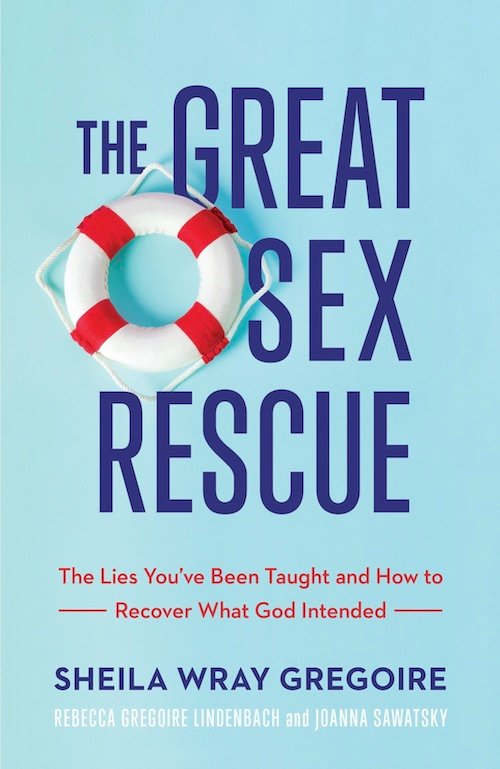
- Our book The Great Sex Rescue (you really need to read this!)
But here’s the hard part:
Just because you intellectually reject obligation sex does not mean your emotions reject it
So much of our actions are based on our emotional reaction to something, not our intellectual reaction to that thing. You can know that you’re perfectly safe at the top of the CN Tower in Toronto, for instance, but still feel dizzy and not be able to look out the window at everything so far below. Our brains are designed to keep us safe, and when certain things are associated with danger, the thinking part of our brain turns off, and the preservation part of our brain kicks in. And often so does panic.
Let me explain what this looks like specifically for recovering from obligation sex, using some of the most common stories I hear (and I’m assuming that BOTH people are on board with sex being mutual, intimate, and pleasurable for both here):
Why women can panic when giving up obligation sex
You may know that your spouse doesn’t believe in obligation sex and doesn’t want you to have sex when you don’t want to and truly wants you to feel free to say no, but you may still get panicky if it’s three days since you’ve had sex. Even though you’ve decided you’re going to do things differently, you may still feel like you’re going to have to initiate tonight or something bad will happen. So you start getting jumpy and resentful.
Your husband may not even be doing anything to cause this. He’d be fine if you didn’t initiate. But you feel panicky nonetheless because you grew up with all those teachings that if you didn’t have sex every 72 hours, he’d have an affair or watch porn and it would be your fault.
If obligation sex has also caused bad relationship dynamics, and isn’t just a one-sided belief you came into marriage with, that panic will likely be even worse. Every time he gets grumpy you start to jump, thinking he’s going to want sex tonight. It may look like avoiding going to bed, or picking at him so a fight starts and he won’t expect anything. The very idea of sex causes panic because of everything it’s meant in your relationship.
Why men can panic when giving up obligation sex
For men, it will look different. If you’ve benefited from obligation sex over the years, and you’ve used your wife to soothe your emotions or cope with lust, then stopping that behaviour can cause panic as well.
You may have grown up feeling as if every sexual feeling you had was a sin. God was angry at you when you were 12 for noticing a girl had breasts. When you masturbated at 14 you put Jesus on the cross. When you watched porn at 15 and 16 you made it so that God couldn’t look at you anymore. You were a disgusting person, but you couldn’t help it. And every sexual feeling you ever had contributed to this idea that God was horrendously disappointed in you.
And all of this disgust that you felt at yourself drove you to watch porn and masturbate even more because it helped you feel better. So there was this cycle where masturbation was used to soothe the negative feelings, but the masturbation also caused the negative feelings and shame that you had to drive underground.
Then you got married and this was all supposed to get better because now your wife could deal with your sexual feelings. When you had one of these feelings, you’d have an outlet! So you used your wife. You pressured her for sex. You’d pout and cry and panic when she didn’t want sex. You’d get angry, because didn’t she realize that she was the one that God gave you to help with this horrible problem you had? Didn’t she realize that she was making everything worse?
And when you felt shame you had nowhere to go with it now, so it turned into anger–at her, at yourself, at God.
Sex may have been your way of coping with these negative feelings, and without sex, you’re left vulnerable and naked in a whole other way. If no one is going to help you deal with these things, then you’re all alone again.
These are the types of stories I hear, over and over again.
Perhaps your story isn’t exactly like these, but it likely bears some similarities.
What’s happened is that sex has been paired with a panic feeling
In some way you are under threat. Not having sex leads to so many negative repercussions that allowing sex to be completely and utterly freely chosen results in panic, because you feel as if you are under threat. And when we are under threat the “fight, flight, freeze or fawn” parts of our brain start firing to protect ourselves, and takes over from the thinking part of the brain.
No matter how much you may intellectually now that you are safe and that you don’t have to participate in this and that you can start writing a new story in your marriage, letting go of the old way of doing things is hard because of the emotional weight that sex has had to bear. That doesn’t just evaporate just because you believe something new now.
This step can be challenging because sex was their emotional regulation. They were using sex to deal with the panicking feelings they had because of sexual shame or guilt; religious shame or guilt; or any number of other things. When you then remove the action that was giving them emotional regulation, you’re now left with multiple problems that have to be solved!
That’s why so many couples have trouble moving forward. It’s not just that they need to believe something different (and getting on the same page about that is absolutely essential, and The Great Sex Rescue is a great way to aid in that aim); they also need the emotional space to calm down the panic emotional responses around sex. Incidentally, this is also why so many porn recovery programs don’t work. They focus on self-control and will power, and acknowledging that porn is bad, but they ignore the fact that porn was his emotional regulation go-to. And now, when he has panicky feelings, he has no way of dealing with them because he never learned proper coping techniques.
This is a completely different kind of work.
"A groundbreaking look into what true, sacred biblical sexuality is intended to be. A must-read." - Rachael Denhollander
What if you're NOT the problem with your sex life?
What if the messages that you've been taught have messed things up--and what if there's a way to escape these toxic teachings?
It's time for a Great Sex Rescue.
That’s why so much of obligation sex recovery is actually emotional regulation.
It’s learning how to regulate your emotions and be present in your body and grow your window of tolerance so you aren’t thrown into these panicked states.
You cannot freely choose an action when you are in fight, flight, freeze or fawn mode. And many of us have lived in that hyperaroused state for years in our marriage. Sometimes it’s due to religious shame or shame from our upbringing, as the example above from men shows. Sometimes it’s because of the dynamics of our marriage where there has been coercion and pressure and emotional punishment if sex doesn’t happen. It could be due to all kinds of reasons.
Just understanding that obligation sex is wrong, and deciding you’re going to move forward in a new reality, won’t magically fix the problem.
You have to help your body and brain understand that it is safe, and that’s really what emotional regulation is. Otherwise you’ll still be acting out of your limbic system and reacting as you used to, even when you don’t want to.
This is why change is so hard for people. Changing beliefs and reaching new understandings is the first step; but that second step of helping your body feel safe is something else entirely.
What do emotional regulation techniques look like?
This could be a post (or a book!) all on its own, and we did talk about these at length in the last chapter of The Marriage You Want.
But they could look like this:
- Taking deep breaths when you feel panicky
- Explaining what you’re feeling and verbalizing it (studies have shown that being able to speak your emotions out loud make them less powerful)
- Stretching, running, jumping, dancing, or doing something to help you be present in your body and let stress work through you
- Doing something meditative, like adult colouring books, crafts, drawing, doodling, etc.
- Touching someone. Co-regulation can work, and often when you start to feel panicky, being able to verbalize it and hug your spouse can ward off the “flight” response you may have
And there are so many more. The idea is to help your brain bypass what it is currently in heightened response over, and switch out of that mode.
If you are working on recovery from obligation sex together, you may even develop a short form as a couple when you feel panic coming on: Verbalizing “panicking again” or “The Fs are kicking in!” (fight, flight, freeze, or fawn), and then doing the thing that helps you–hugging each other, putting on some music and dancing, going outside for a walk and touching grass, whatever it may be.
I’m writing about this concept in my upcoming book Fawn right now–how just because we understand the problem and intellectually agree it’s a problem doesn’t mean our emotions follow. It’s two different kinds of work we need to do to put things right, and that makes recovery complicated.
But that’s the way that we’re made. We’re not just intellectual beings; we are complex emotional beings, and we have to tend to the emotional dynamics that have formed too.
What’s your experience? Do you find that the emotional piece is the hardest to heal? Let’s talk in the comments!




Yes. Thank you. You have truthfully articulated how it feels to be recovering from a decade of porn use.
The opening statement/paragraph…..COULD NOT BE SAID ANY BETTER.
If only the body of Christ could allow themselves to see it.
This is so relevant for me. My husband and was raised extremely Catholic and with purity culture, and his dad and uncles and peers all used porn openly, and porn became his way of managing life while believing he was abstaining until marriage. And then I was the victim of his extreme emotional dysregulation after our daughter was born and I had complicated pelvis injuries that changed our sex life forever. He tried to quit the porn over and over again without getting help, until a few years ago when I threatened divorce if he didn’t get therapy and a 12 step group(now doing a men’s group at Choose recovery). Even after sobriety and recovery work, he still gets panicky heart pounding when we are exploring pleasure without goals or pressure. I wonder if he has panic in his nervous system around sexual arousal. We’ve been married 18 years and he’s been in recovery for 3 years, and is now doing EMDR after several years of talk therapy and IFS. He also has extreme fawn/appeasing behaviors from growing up in a very high control, high shame family. Looking forward to the book on the Fawn response!
“You may have grown up feeling as if every sexual feeling you had was a sin. God was angry at you when you were 12 for noticing a girl had breasts. When you masturbated at 14 you put Jesus on the cross. When you watched porn at 15 and 16 you made it so that God couldn’t look at you anymore. You were a disgusting person, but you couldn’t help it. And every sexual feeling you.”
Don’t forget how “GOD HATES SIN WITH SUCH A PERFECT HATRED” and ANY sin — no matter how small — DESERVES ETERNAL HELL!!!!!
Lectured to you with wagging fingers by God’s Special Pets who have NEVER EVER sinned since they Said the Magic Words at the Altar Call.
When I hear you describe “obligation sex”, I keep thinking of INGSOC sex from Orwell’s “1984”:
“Our Duty to the Party.”
This was really close to something I’d really like to hear about.
It’s one thing to be securely attached (caregiver was consistently present and positive) and talk about consent, but with the other types, where caregivers were consistently present but neglectful, inconsistent in response (think abuse) or presence (think army deployment), those individuals might think that they are giving consent but actually don’t feel safe, or even read into their partners normal behavior and see manipulation.
I’d love to hear your take on how our attachment styles can influence us to give consent under duress, not because of our partners behavior, but because of our own inner reality, and how to work through that. It’s a topic I’ve never heard touched on, and I think it has a huge effect on complementarian (hierarchical/traditional) teaching. Any chance you would talk about that sometime?
That’s a great question! I’ll file it for a podcast!
Attachment styles have been huge for us in healing also. Husband was anxious. I was secure/avoidant. Anxious attachment plus panic over not having sex because of Christian teaching just created an absolute mess.
While I can’t know if the emotional part is the hardest yet, I suspect from other areas of healing (for me) that it is. I know that’s the part holding me back from trying a new relationship after ending a marriage of decades of abuse. I want to have a sex life I actually enjoy, but after 20 years of coerced sex how am I going to experience consent? Even in a healthy relationship, how will I be able to allow myself to enjoy sex for the first time as something that’s also for me? And will I ever take the chance if the risk is rape?
So…keep on writing that new book! Can’t wait to see what you share!
I am a man experiencing extreme resentment due to years in a sexless marriage because my wife admitted she had an issue, but I did not seek obligation sex. This resulted in decades of emerging myself in work or whatever else would prevent arousal – there was no sex. I could do nothing because she said she was the one to work on herself. I initially did all the things you probably still recommend to husbands today. The longest period was 16 years. I lived as the Ephesians 5:25 husband – but after reading your material about scriptural guilt in other areas – I will no longer hold myself in submission to emotional abuse and distance. My sons also really don’t desire marriage, and I affirm that to them as another person can really limit you in life. If they change their mind, I might consider talking them out if it.
Boris Herzberg has written about another harmful concept that could be termed “injunctive obligation” – I feel this happens to a spouse who is guilted to stay in a marriage due to religious teachings of denying self. So my belief was to deny my satisfaction without question. Not providing a path and direction and taking equal contribution to cultivating intimacy is abandonment. If any young Christian man ever approaches me about a situation similar to mine – I would say – I agree – no obligation sex, but I would also advise them after a limited time – as you release her from any feelings of obligation, also tell her that it breaks your heart, but if she wishes to live sexless, release you in divorce and then do not reverse your decision as any hysterical reaction would be not true and temporary. My wife’s only goal was motherhood, so when she did a fake turn around, I felt quite used and learned, she was capable of using sex for her goals. I really didn’t want kids but succumbed to the rare sex in spontaneous desire.
If I wasn’t guilted into the legalism of “covenant marriage” – I would have rather divorced and lived my life single and celibate and had agency over my own decisions instead of the expectations when the counselor attacked me with Eph 5:25. In my church circles, it’s always the man’s fault and women are pretty much faultless and on pedestals.
I do agree with what you wrote on what can happen with husbands, but it isn’t emphasized enough. If the spark of sex doesn’t happen but once a year or ? amount of time – then your brain is conflicted – you can’t say no – but it can happen on a night you don’t feel like you are your best self- because literally, it might not happen for another decade. So you vow to never reject the bid for connection. Does this spouse really have agency too, or at all?
This line from your comment really resonated with me : “”If the spark of sex doesn’t happen but once a year or ? amount of time – then your brain is conflicted – you can’t say no – but it can happen on a night you don’t feel like you are your best self- because literally, it might not happen for another decade. So you vow to never reject the bid for connection. Does this spouse really have agency too, or at all?”””
This is similar to what is happening to me, in my case I’m the wife. His reasonings are intense job/ADHD medication reducing libido/children/my changing body/ fear of not bringing me to orgasm and of course Christianity baggage.
Sex only happens once a year or 3 times in the last five years so because I want it and I don’t know when next he will be willing, my automatic answer is yes irrespective of anything.
He freely says no to me and rejects my bid for intimacy all. The. Time. and he has said I can say no when I want, but how could I say no when I don’t know when next it will happen.
Coincidentally, the 3x in the last first years has resulted in two babies too.
This: You cannot freely choose an action when you are in fight, flight, freeze or fawn mode. And many of us have lived in that hyperaroused state for years in our marriage.
I’m the wife of the man in your examples who was addicted to porn, I was used for sex to emotional regulate him for 2 decades. Then I shut down and just couldn’t any more. And I still can’t, even after 7 years of marriage counseling. He is now “sober” and doesn’t understand why I can’t just “get it together” and pick up where we left off. I cannot make myself even though he has threatened to end the marriage because sexual intimacy is a normal need/expectation for him. But for me, the desire is gone – dead. According to him, this is my problem to fix, even though I have assured him it affects both of us and it is our problem.
He moved out of our bedroom a year ago because it was too difficult to share the same bed with me if there was never going to be any sex. He is waiting for me to initiate all physical contact/affection at this point. There are definitely a lot of negative emotions attached to sex for us. It is important to note that there has not been a high level of intimacy on any level for a very long time.
I don’t know what to do. I don’t know how to fix this.
Oh that’s so sad! Honestly, it doesn’t sound like he’s owned his issues. Sure, he went to marriage counselling, but if he doesn’t understand the trauma he caused, then you won’t be able to move forward. I’m so sorry.