
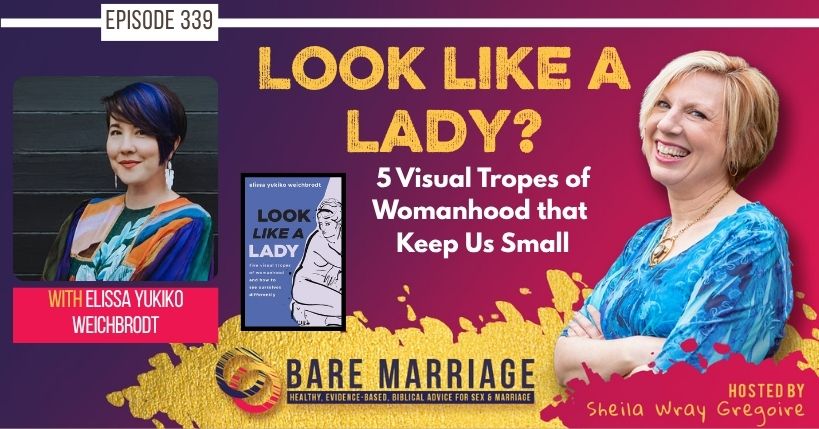


What does it mean to look like a lady?
One of the fun part about my job is that I get to read books that I wouldn’t otherwise hear of–books that are unique, ever so cool, and change my thinking. All while teaching me something new!
Look Like a Lady is like that.
We all know the tropes and stereotypes that women are expected to conform to, both in our society and in church.
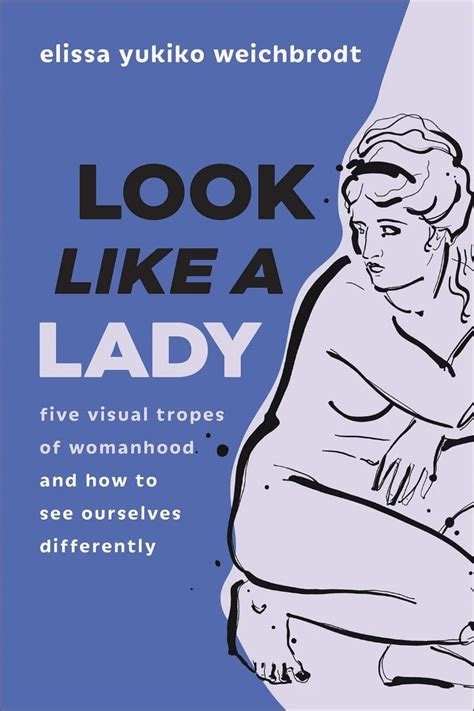
But in Look Like a Lady, art historian Elissa Yukiko Weichbrodt shows us five visual tropes throughout art history that you will instantly recognize: Venus, Vessel, Maiden, Mother, Monster.
And then she shows us the counter-stories in Scripture that point us to something liberating, bigger, and better.
I learned so much about art. I thought about being a woman in a whole new way. It was truly a fun read! And this was a great conversation too.
Or, as always, you can watch on YouTube:
Timeline of the Podcast
00:00 Welcome & Introduction to “Look Like a Lady” by Elissa Yukiko Weichbrodt
03:00 Five Tropes of Womanhood
06:30 Venus: Desiring to be Desired
16:59 The Counter-Narrative to Venus: Witnessing Instead of Objectifying
23:25 Maiden: The Inaccessible Prize Being Pursued
31:53 Counterpoint to the Maiden: Moving Instead of Waiting
37:38 Vessel: Women as Symbols or Containers for Meaning
43:56 Counter-Story to the Vessel: Being Fully Human
48:31 Mother: The Perfect Mom
01:00:30 Counter-Story to the Mother: Cultivating Life (Even Outside of Birthing Children)
01:05:09 Monster: The Threatening Woman
01:13:25 Counter-Story to the Monster: Partnering in God’s Kingdom
01:17:05 Conclusion: Making a New Story
Key Talking Points
1. We often mistake cultural stories for biblical truth.
It is so easy for cultural images to become invisible to us. When we see the same picture of womanhood over and over—in art, advertising, media, or even church teaching—we can start assuming it must simply be “the way women are.” But repetition isn’t the same thing as revelation, and we need to be willing to hold these stories up to Scripture and ask whether they actually reflect God’s vision for women.
2. The “Venus” story teaches women to see themselves through someone else’s eyes.
The Venus trope tells women that being desirable is central to being a woman. This belief can actually pull women out of their own bodies, encouraging us to constantly monitor how we are being perceived rather than experiencing ourselves as whole, embodied people. The alternative isn’t simply to say, “Women are sexy and sexuality is our power,” but to imagine a way of seeing one another that is rooted in love, curiosity, compassion, and genuine attention.
3. We don’t have to wait to be chosen—we can move, grow, and act.
The “maiden” is young, passive, contained, and waiting to be pursued and chosen. That story has obvious echoes in some contemporary messages telling women to wait for a husband and treating marriage as the thing that finally gives their lives purpose. We love the counter-story of Mary Magdalene, because she isn’t waiting around to become somebody’s prize—she is moving forward in faith, repentance, strength, and agency.
4. Women don’t have to exist primarily as symbols for other people’s virtue.
The “vessel” trope was especially fascinating because it shows how women’s bodies have historically been used to represent abstract ideas such as justice, liberty, peace, or virtue, while actual men get to be depicted as particular people with particular accomplishments. The counter-story of Artemisia Gentileschi reminds us that women aren’t merely containers for someone else’s meaning; women themselves are thinkers, creators, artists, theologians, and people with stories worth knowing.
5. Motherhood is valuable, but it cannot be the definition of womanhood.
We talk about how the idealized “mother” is often portrayed as endlessly patient, naturally nurturing, completely fulfilled by caring for everyone else, and somehow capable of doing it all alone. But real motherhood has always depended on community, shared work, fathers who actually parent, and networks of people caring for children together. And women can cultivate life, mentor, teach, create, nurture, and contribute in profoundly generative ways whether or not they have biological children.
6. “Good woman” and “monster” can become two sides of the same trap.
The monster is essentially what happens when a woman fails to fit—or refuses to fit—the other prescribed roles. If she’s too old, too loud, too knowledgeable, too assertive, too sexual, not sexual enough, or simply unwilling to make herself smaller, she can suddenly become “the threat.” It is exhausting to constantly self-police in order to make sure nobody sees you that way.
7. The better story is not about becoming the “perfect” kind of woman—it is about becoming fully ourselves in community with others.
Elissa’s counter-stories aren’t simply reversed versions of the old stereotypes. They’re verbs: witnessing, moving, being, cultivating, partnering. They describe people who are actively participating in God’s work rather than trying to squeeze themselves into a static picture of what a woman is supposed to be. And that feels much closer to the heart of Christ—and much more freeing!

Things Mentioned in the Podcast
CHECK OUT OUR OCTOBER SIMULCAST EVENT
We’re doing our sex talk and a one-day marriage conference! Check it out for more information.
Find the church info page here!
TO SUPPORT US:
- Join our Patreon for as little as $5 a month to support our work (and get access to the book club!)
- And check out our Merch, or any of our courses!
- Give to the Good Fruit Faith Initiative of the Bosko Foundation
- Join our email list!
LINKS MENTIONED:
- Elissa Yukiko Weichbrodt’s website
- Elissa’s book, “Look Like a Lady”
- Elissa’s Instagram
- Elissa’s Substack
Transcript
Welcome to the Bare Marriage podcast. I’m Sheila Wray Gregoire from Baremarriage.com where we like to talk about healthy, evidence based biblical advice for your sex life and your marriage.
And today we’re going to have one of my favorite interviews that I’ve done in a while. Look Like A Lady. What does that mean? Five different images that you get from artwork over the years that have so influenced us. We see these themes throughout culture and how they have intersected with evangelical theology. And that’s going to be a super fun conversation just coming up in just a few minutes.
Before we get to it, a super quick thank you to everyone who supports us. You have no idea how much your support means. The emails that I get,encouraging me, the DMs, we get everything like that. It really helps boost me because I get so many emails of just really hard stories and people attacking me. And so it’s wonderful to get encouragement when people leave reviews for our books on Amazon, Goodreads or whatever that is so encouraging to. And of course, when people subscribe, you know, we are always at the mercy of algorithms that could change at any minute.
So if you can subscribe to just at least three different ways of finding me. So whether it’s YouTube and Facebook and our email list or whatever it might be, Instagram and our email list, my Substack, whatever. That way if an algorithm changes, I don’t lose you and you don’t lose me. So thank you. And of course, you can always put your money where your mouth is too and join our Patreon for as little as $5 a month. Get access to our Facebook group or, you can support us through the Good Fruit Faith initiative of the Bosko Foundation and support our work getting our stuff translated into Spanish and so much more, our research papers, etc. and that’s tax deductible within the United States.
Okay, that is all of the announcements out of the way. And I want to bring our interview on right now. Well, I am so excited to welcome Elissa Yukiko Weichbrodt onto our podcast today. Hello, Elissa.
Elissa
Hey, Sheila, thanks so much for having me. So happy to be here.
Sheila
Yeah, this is going to be a fun podcast because I learned so much from your book. I felt like I was nerding out a little bit. So your new book Look Like A Lady? I don’t know the subtitles. I never memorize subtitles. What do you do? You know what your subtitle is? I do my own work. Okay.
Elissa
Look Like A Lady, Five visual tropes of womanhood and how to see ourselves differently.
Sheila
Lovely. And you are an art history professor, are you?
Elissa
I am, yeah, a professor of art history.
Sheila
And this book combines art history and theology and general history and all kinds of stuff all in one. And it’s super interesting. Like, I learned so much about art history, I feel like I just want to go to the art galleries in Ottawa.
Elissa
Oh, great.
Sheila
Yeah. But what you’re what you’re really saying is that when you look at art, there are these five sort of tropes of womanhood that we see over and over again, and we don’t just see them in like art from centuries ago, we see them in advertisements, we see them in even the way church portrays women, we see them everywhere. There’s these five tropes.
Elissa
Yes, and I think people might argue that there’s maybe more than five tropes, like not every image that you see is necessarily going to fall into one of these, but I would say that these are the five dominant tropes, the five dominant narratives that in the West we have given to women.
Sheila
Yeah. And I certainly related to them. I’m like, oh. Yeah, oh yeah, yeah, that’s definitely it. Yeah. And part of the problem is that, you know, we’ve been told from a young age that we’re supposed to like that, that any one of these tropes is what we’re supposed to be. Well, except for the fifth, which we’ll talk about, but like, you know, we’re supposed to, that’s what the epitome of womanhood is and it’s not from the Bible. It’s not from God. It’s just in our culture.
Elissa
Right? Right. But when we see these things over and over and over again, we start to just assume that that’s how the world is, right, that those are the norms, that that’s baked into everything. And so we forget to question them. We forget to hold them up to Scripture. We forget to sort of imagine that there might be another way for us to live.
Sheila
You know, I’ve been going, I’ve been doing this deep dive into, like, neuroscience for, for the book that I’m writing right now. And one of the things about the brain that I find so fascinating is that the brain really, really, really likes shortcuts. Like, the brain really, really likes prejudices and stereotypes and things like that, because then it doesn’t have to do as much work. Right? Like the brain is going to the path of least resistance so that it can save energy to do work where it actually needs to do work. Which is why when we have habits that are unthinking, we tend to get things done easier because the brain doesn’t have to think about it. Whereas starting a new habit is really difficult because the brain has to think about it. And when you’re on autopilot, it’s better and what these stereotypes do is they put you on autopilot, right? Like the brain, the brain gravitates to them because they like them. And what you’re asking us to do is question it. Don’t go on autopilot.
So what are the five tropes that we’re going to talk about?
Elissa
So the five that I look at in the book are Venus, which is woman as the object of desire, the Vessel which is women as sort of containers for meaning or as symbols, the Maiden, women as young and passive, waiting to be acted upon. The Mother and here very specifically the mother story of the completely devoted, eternally placid mother. And then the Monster which needs to be tamed or defeated.
Sheila
Right. I feel like I’m increasingly in that category these days. And then you present counter stories, and we’ll talk about those in a minute, because I don’t want to spoil it. But, yes, you present all of these counter stories that show that there’s another way of looking at this, and this is what God invites us into. And for each, for each of these, you have really cool art that you’re describing.
So let’s start with Venus. And you say to be a woman is to desire, to be desired. That’s really that’s really the point of Venus, right?
Elissa
Yes, yes. I, I start that chapter out with this story from my childhood, this very clear memory that I have as a pre-teen girl. Imagining my body as others would see it from the outside for the first time, sort of imagining, do I look like this desirable girl who is in the Coca-Cola ad at that time?
Right. And so instead of paying attention to the wind on my skin as I’m standing outside or to the smell of grass clippings, I’m instead not in my body, but I’m sort of imagining how I am perceived. And that, for me, was sort of my introduction to telling myself that story, of the goal here as a woman is to be desirable and to be a good woman. I should want to be desirable to men.
Sheila
I wonder when that started, like you were 11, when you remember this very distinct memory. And I was trying, as I was reading this, I was thinking what would be my memory? And I’m not even sure. I think it was just from TV shows. I’m Gen X, we read stuff or we watch stuff inappropriate, way too early. I think we more than millennials did. But yeah, I like that idea that the epitome of womanhood is for a man to find you attractive and yeah, and to choose you. And we’ll get into that in a minute. But yeah, to find you, to find you attractive and, and I like what you said about how, like instead of just feeling the wind or enjoying the grass, it’s like you step outside of yourself, like it. It encourages women not to be embodied. Right?
Elissa
Yeah. I think one of the things that is so dangerous about this Venus story is, is not only that it encourages women to be disembodied, to sort of imagine ourselves as an object rather than as, like an agent and a body in time and place, but that we also twist some of our lived experience, that can be really experiences that, that we actually dislike.
We try to re narrate them to ourselves is something that we should be proud of. Right? So one of the stories I tell in the in there is in college being catcalled, particularly for being half Asian and trying to talk myself into that being a good thing, like, well, at least somebody finds me attractive, like, at least like I might feel uncomfortable by that and think it’s kind of gross and weird, but at least somebody finds me attractive. So that must mean that I am succeeding at being a woman because I am desirable.
Sheila
Right? Right. And I think I remember a couple of years ago on the blog, when I started talking more about how toxic this stuff was. I was talking about how women don’t like to be ogled, like women don’t like that. And I had all kinds of men commenting. I would just love it for a change to be ogled. Like, I would just love it. Why? You know, because no woman ever notices me as like, no, no, no no, no, we don’t want to be objectified. But the idea is, oh, no, that’s a great thing. That’s a great thing to be. No. It’s like, no it’s not. No it’s not, it’s icky. It’s gross. It’s like, because what you’re saying is all I am is my body.
Elissa
Right? Exactly. It’s dehumanizing.
Sheila
It is. And I had another interesting comment recently from a woman who was saying, you know, in youth groups, they’re always hearing this message right about, you know, you don’t want to cause a boy to lust. So somehow our God created our bodies to be beautiful and to be intoxicating to our husbands. But we want to make sure that we’re not intoxicating to the boys around us. So it’s like, how do you square that circle? Right. But one of the most, as she came away with, was, well, no boys seem to be lusting after me. And so I guess I’m not really a woman like it. It’s like if I am not the object of desire, maybe that’s what you experienced. You know, because it’s difficult, you know, if you don’t match racial stereotypes because you’re half Asian, you can feel like you’re the odd one out. And so for someone to be saying you’re attractive is supposed to be good, but it’s like, yeah, when no one says you’re attractive, then are you really a woman?
Elissa
Yeah, exactly. I think certainly some of this has lessened as I have aged, but there’s still something, a kind of gut check that still happens. You know, every morning when you’re looking in the mirror and trying to decide like am I ready to go out into the world? Is this, is this the body that I am, that I am presenting to the world? Not and having to sort of ask myself no no no no no no. Is, is this body that is a gift the body that I am ready to go engage the world in or as.
Sheila
Oh I love that. Yeah. Yeah. Like is this the body that I’m ready to go engage the world with? I like that that’s a great way of reframing that. Another thing that you said and you showed several pictures of it. I love line drawing. So, in your book, you don’t show the actual art. You draw your versions of it, which is really like, you’re a great artist. It’s lovely. But I love how you also show that in so many of the depictions of Venus, she looks like she’s covering up like she’s scared or embarrassed. It’s not just that she’s inviting the male gaze. She also knows that inviting the male gaze in some way puts her in danger.
Elissa
Yes, that her vulnerability is supposed to also be sexually titillating. Right. And I think that that is such an insidious part of this whole Venus narrative. Going back to sort of the origins of the Venus, story or like visual trope, back to Hellenistic Greece with this change that happens in, in classical Greece and earlier depictions of women, depictions of the, of the goddesses, they were always clothed, they were always draped. But then there’s this change that happens, and it actually has a lot to do with the changing political terrain, the changing social makeup at the time. But this change happens to depict Venus as unclothed or Aphrodite as unclothed with the in with the specific purpose of creating a sort of homosocial space for men to say, we all agree that this is hot, right?
An part of it was not just that she was beautiful, that she was esthetically pleasing, but that you had sort of power as a man to interrupt a goddess at her bath to see something that you weren’t supposed to see and that was supposed to be part of what made this arousing to you. And then that gets sort of, you know, reenergized in these different ways and not all Venus or Aphrodite sculptures that follow necessarily have that same kind of shrinking back, but certainly these original ones that that sort of start the trope that become this template are rooted in this, this kind of voyeurism and this assumption that as the viewer, you should have access to something that you are not supposed to have access to.
Sheila
You know, what it reminds me of is when I read that part is modest, and is hottest in purity culture. It basically is modest and the hottest. Right? So it celebrates the fact that women are supposed to be beautiful, but then it makes it a virtue for women to be modest. Yeah. And then it turns around and says, what’s really hot is when a woman is modest, but you still can sense what she looks like.
Elissa
Yes.
Sheila
And it’s like, yeah, this is what purity culture was. Like it’s just wild and it does it, it does make it into these virtues like it combines. And this is you were talking, you told a really sad tale of, of a woman who had this Venus painting given to her in, I don’t know, the 1500s or something where it was an image of virtue. And so Venus became like, like the whole trope was really about what virtue meant. Right? You know, and how she might have interpreted that as a wife.
Elissa
Yes. Because and I think this is so important, so many of the artworks that I talk about in the book, people might be familiar with because they’ve seen them in museums or they’ve seen them, illustrated in like 100 great masterpieces that everyone should know, you know, and then they sort of trickle down and get reinterpreted into popular culture, things like that. But these, artworks like the Aphrodite of Nydia, like Titian’s Venus of Urbino, like Botticelli’s Primavera, those are paintings that don’t start out and sculptures that don’t start out in museums. Right? They have an actual social role. There are real human beings who are seeing those things everyday. They’re being shaped by those stories. It completely changed my understanding of these Venus sculptures, particularly these Venus paintings from the Renaissance to understand that they had a social role that they were given to women, to young women as marriage gifts, that this was their sex ed for brides. This is how they are being told to be a good wife is to be available to your husband in this way, to be this kind of beautiful, desirable body. And that’s just devastating. Not just for those young women, but also for their husbands. And I hope that that’s something that comes through in the book, that this is not just about how these stories can empower women, but how telling better, truer, fuller stories is actually good for all of us, right?
00:16:57:24 – 00:17:21:05
Sheila
Yes, exactly. Okay. So for each of these, these, tropes, these pictures that you have of women, you have a countervailing narrative which, which invites us to challenge that and see the other side of it, that God might actually be inviting us into. And for this one, it’s witnessing. And I love how you said at the beginning that each of the tropes, they’re nouns, right? Like they’re static, they’re like rock formations that don’t move, you know, Venus, Maiden, etc. but the countervailing ones, they’re verbs that are ongoing. Yes, because we are on a journey. We are in a process, we are learning, and that’s what we’re invited into. And so for this one, the word is witnessing. And you have a beautiful story of a statue of Elizabeth and Mary. Can you tell us about that?
Elissa
Yes. So I will talk about this little wooden sculpture. We don’t know the name of the artist, but it’s a visitation sculpture. It’s from the early 14th century, and it was made for a convent. So it’s an artwork that is made for women, and it’s Mary and Elizabeth looking at each other, sort of embracing each other, holding hands. My favorite part about this is that they have these little crystal pregnant bellies set into their wooden forms. And it’s just, I mean, when I first saw these sculptures, you know, years ago at the Metropolitan Museum of Art, I was like, oh, those are medieval. They’re so cheesy. Like, this is kind of like a Trotsky type of, I don’t know, thing. And the longer that I have looked at it, the older that I have become, I just love this sculpture so much, in part because of the story that it tells and in part because of how it was used. So the way that it was used is that it’s, it’s, in this convent and the sisters, at the convent of Saint Capuchos have this practice. It turns out, bearing witness to each other. So they keep something called the sister book, where they are writing these little accounts of moments of faith and actually moments of failure, of the sisters and sort of like keeping this log, keeping this accounting as a way to encourage the sisters that will follow. And so they are bearing witness to each other’s lives, to their Christian experience.
Elissa
And I think about that act as it relates to this little sculpture of Mary and Elizabeth bearing witness to each other at this moment of great vulnerability, when both of them are miraculously pregnant, when both of them are being doubted by their communities and they encounter each other, Mary goes up to visit Elizabeth. They encounter each other, and Elizabeth basically says, like, I believe you. The child in my room is left for joy, like you are the mother of my lord. And when Elizabeth sees Mary, when she affirms, Mary, in this moment that unlocks something for Mary, and she bursts forth into song. We get, you know, this beautiful song from Mary where she’s weaving together prophecies and promises? And it’s like when Elizabeth sees her, when Elizabeth bears witness to Mary, this new, beautiful thing is able to happen. And I think, wow, what a gift that our gaze is looking at each other does not have to be a consuming gaze. It doesn’t have to be an objectifying gaze. It doesn’t have to be a judging gaze. We actually can look at each other with love, with curiosity, with compassion, and look at what God can do with that, right? Look at what God can do or what he can crack open in somebody else. When we are both the giver and the receiver of that kind of loving witnessing look.
Sheila
Yeah, I love that. It reminds me of one of my favorite verses in Luke 7, where a woman has come to anoint Jesus’s feet with oil in the middle of dinner he’s having with the Pharisees, and he says to them, do you see this woman? Right. Like, do you see this woman? Not just do you judge her. Not just do you make assumptions about her. Not just do you laugh at her but do you actually see her.
Elissa
Yes, yes.
Sheila
And you know and God is inviting us. Yeah. To bear witness to one another too, to be there for one another the way that Elizabeth and Mary were for each other. I think that’s a lovely counterpoint to Venus.
Elissa
Well, and I think one of the things I really tried to do with these counter stories was to not just invert the existing narrative. Right? So one way that we might think about inverting the Venus story is to say, well, yeah, women are beautiful, women are sexy. And that is where our power comes from. Like our power, that we that we have is our sexuality.
And so we should sort of claim that and harness that and do it that what we will and I just I’m not satisfied with that as, as the end of the story, you know, like I want something different and what these counter stories allow is to, to look at actually older artwork. So these are, you know, and they deliberately not looking at second wave feminist artworks or contemporary artworks, modern artworks, deliberately looking at older artworks to say, hey, there were these other spaces, there are these other stories that we could have been telling all along. They’re just not the ones that we chose, you know, sort of culturally to really double down on.
Sheila
Yeah, actually, now, as I was reading your book, I got so many Beth Allison Barr vibes, too, because, you know, Beth Allison Barr looks at history and says, here, here’s a bunch of examples of women who are leading in the church, and we just chose to ignore that and write it out of our history. And you’re kind of doing that with art history, right?
Like, here’s a bunch of other ways we could have seen women, other ways that we could have done this. And we didn’t do it. But it was there the whole time. It was there the whole time. Okay. I want to do them slightly out of order for a reason. And I want to move to Maiden now.
Okay. And the maiden idea is this young woman who is inaccessible, but the man is pursuing her.
Elissa
Yes. She is the prize. She is I think the way I frame it in the chapter is that the Maiden contains so sort of this she’s not unruly, she’s not wild. Right. She’s composed, she’s contained, she’s captured. So she is this, the thing that is going to be pursued, the prize that is going to be won. And they also say that she’s consumptive. And that was mostly to get my three seasons. But what I mean by that is, that we have, over and over again in the West, actually fetishized women looking sick, women being ill, or women even dying as being something beautiful. And I think we really need to examine that and, and, and question that for ourselves.
Sheila
Yeah. Like, and you talked specifically about tuberculosis in the 1800s and how, you know, it would make women have a super translucent white skin but also have red cheeks.
Elissa
Dewy eyes. Yeah. Yeah.
Sheila
Really thin. And so this was considered the epitome of beauty, which is really creepy. But yeah, it’s this. And you give a lot of examples of, of, women who are literally being captured, like how so much of artwork is men grabbing on to women who are trying to get away.
Elissa
The paradigmatic example of this is Bernini’s Daphne and Apollo. So this beautiful 17th century sculpture carved out of marble, lifesize figures, of Apollo pursuing Daphne. And she’s sort of in the moment, turning into a laurel tree. And the way that this sculpture has been talked about in art history, is to really focus on Bernini, on the male artist virtuosity and being able to tell this story and being able to transform marble into flesh and being able to carve the marble so that as Daphne’s fingers turn into twigs, into leaves, like, oh, how amazing that Bernini is able to do that.
This is the sort of height of his achievement as a young artist. And we completely fail to pay attention to the actual story that’s being told. Right? We’re so caught up in how esthetically pleasing and how beautiful and how technically proficient this artwork is, that we don’t notice that what it’s doing is it’s normalizing, this kind of violent pursuit and capture of women, that it is, even recasting that as not lust, but love that Apollo loves Daphne and so that’s why he’s chasing after her. And we see that over and over again, in so many different artworks, and other repeated narratives like the, The Abduction of Sabine Women is another one that shows up a lot, too. And again, many of these used to teach moral virtue to young women and to men.
Sheila
And what was the moral virtue that it was trying to teach?
Elissa
There’s trying to teach that, that trying to teach men that their role as men is to be the pursuer, that women like fortune, love to be pursued and love to put up a little bit of a fight, even. Right, literally with what they’re telling them in the marriage. Marriage manuals at the time. And then for women, it’s saying your goal is to be the prize is to be the thing that is captured and that marriage is the state in which you are sort of destined for this is what is going to make you virtuous. And so even though you might be unwilling to enter into a marriage like the Sabine women doing your duty, you’re going to find your fulfillment through doing your duty as a good wife.
Sheila
Right? It reminds me a lot of Doug Wilson’s recent interview. Was it with CNN where he said. I don’t know which one it was. Anyway, one of those he was talking about the propriety of rape and how one of the, bargains that women are supposed to make is that they submit to good men, because if they don’t, then they lose the good men’s protection and they’ll be raped.
And so that’s, you know, that’s how that’s the point of marriage, is that this man you submit to, this man who basically does get to rape you himself so that you aren’t raped by all of these other men.
I’d like to see a hallmark card about that. But anyway, you know, I.
Elissa
I mean, I’m framing this chapter, this trope as being about women, but really, maybe of all of the chapters, this is the one that feels like this is also so much a story about men, right? Like, what are we teaching men? That for them to be virtuous, they need to be the ones who are taking right, that they it’s that for them to be virtuous, they need to be the ones who have such a kind of clarity of vision and drive that they will stop at nothing to get what they want. And that’s terrifying.
Sheila
It is.
Elissa
And not like Jesus.
Sheila
Yeah, exactly. But you know what? If you put these two together, Venus and the Maiden. So the beauty and the woman who is to be pursued. Do you know what I hear in both of those things? I hear wild at heart and captivation. That is the thesis.
In both wild at heart and captivating, the women want to be the beauty and that men need a maiden to pursue.
Elissa
Yes, exactly.
Sheila
That is literally what they wrote this about. And they said in their books that they were basing this on the stories that have been told again and again, and specifically they were talking about film, but they weren’t basing it on the Bible, but they were presenting it as this is God’s truth for all time, because we see this everywhere. And so this is what women and men are essentially about. And this is the heart of a woman, and this is the heart of a man. And it’s, it’s like, but, but, but it’s not.
Elissa
No, and I think, you know, that’s one of the things that art history has been so helpful for me, it is showing me how these artworks are actually rooted in these particular times and places and cultures that they are answering particular anxieties and fears and problems and hopes that these people had. And so to say, the proliferation of this kind of imagery and starting in 15th century Florence with rape of the Sabine women imagery, that has a lot to do with the birth crisis in Florence and needing to sort of convince women that giving birth to children to become young brides, to give birth to children is possible like that’s part of their civic duty. In the 17th century, when we have the John Bologna sculpture, that’s, that’s still in this major piazza in Florence of the abduction of a Sabine woman. That has a lot to do with politics. That is a direct product of reading Machiavelli and wanting to be like the Prince and sort of visualizing that in a public place for people and saying, this is what a good leader looks like is one who takes what he wants for himself. So these are not eternal, you know, sort of essential truths. These are artworks that are reflecting, that are growing out of really particular situations. And when we can recognize that, I think we can shake them, shake loose some of their power a little bit.
Sheila
Yes, I love that. And so the counterpoint to the maiden is moving.
Yeah. So tell me what that’s about.
Elissa
Yes. So here I’m looking at a wooden sculpture by Donatello of the penitent Mary Magdalene. And it’s probably the sculptures that people are most familiar with Donatello are in bronze or in marble, but this sculpture is wood, slightly larger than life size. And Mary Magdalene does not look like most other Mary Magdalene, that I think folks in sort of Western evangelicalism would be familiar with. She is, has long, shaggy hair that sort of covers her like a robe. Her face is incredibly gaunt. You can see her collarbone and her breastbone. And she has sort of ungainly large hands and feet. Her mouth is a little bit open so we can see her teeth, which is sort of uncomfortable. And she seems to be stepping forward, taking one step forward as her hands are pressing together almost in a, almost touching in a gesture of prayer and when I first saw this Donatello sculpture, I didn’t like it on a formal level.
It’s not a sculpture.
Sheila
It’s not aesthetically pleasing. No, she’s quite ugly, really.
Elissa
You look at it and you’re like, Mary Magdalene got the short end of that stick. You know, like, you don’t think, oh, I want to be her. But there are these, these tensions that Donatello actually builds and visually and conceptually to the sculpture. So there’s this tension of despite the fact that she looks haggard and sort of ugly and is wearing these unkempt has it has this hairy garment. When you look really closely, there’s these little traces of gold that are still there, still gilding, sort of on the edges of her hair. So there’s something precious, even though beautiful, even though her body is sort of ugly. And then the other point of friction is that while she looks really gaunt, while she looks maybe even underfed, her arm muscles are amazing. She has really sort of incredible biceps and so her arms look really strong, look really powerful. And, those two tensions together were enough to keep me looking in, were enough to have me go and do some more studies and more research on this. And what I found is there’s still a lot of questions about when exactly Donatello made this and who he made it for, but there’s a compelling argument to be made that this sculpture was originally made for a convent whose focus, whose ministry was bringing sex workers off the street and giving them a home, giving them training to be able to do some other kind of work. And basically sort of reaching out to the prostitutes in Florence and Mary Magdalene for lots of reasons. Jennifer Powell McNutt book The Mary We Forgot is great if people want to know actual Mary Magdalene. But there’s this idea, right, that Mary Magdalene was a prostitute, so she became the patron saint of prostitutes. So it makes sense that this convent would have a sculpture of Mary Magdalene there. And so as I started to think about what it means to show these women, this version of Mary Magdalene, something that I found so compelling was that this woman is weak and strong at the same time. She is carrying sort of the evidence of her lived experience of what she has endured of even some of the choices that she has made. And yet she is still gilt with gold. And I can say in the book that repentance is not a makeover. It’s not going to suddenly make us look suddenly beautiful and attractive. But what we see is this kind of agency in Mary Magdalene, that she is stepping forward in faith, that her arms are strong and she is pressing together her hands in prayer, that there is something that is, she is not waiting for somebody to come and to claim her as a prize.
She is moving in faith, in repentance, like towards Christ’s likeness. And I still don’t really want to look like that Mary Magdalene, but I want to be her.
Sheila
I wouldn’t mind those arm muscles. Yeah, I love how the image of a maiden is someone who is waiting and you think about all the trad wife content right now where a woman is just supposed to wait until the man shows up to marry her and she really has there’s really nothing in her life until that happens. And so she just has to wait. Whereas God is inviting us into our agency and into moving and growing. And yeah, I love that. I love that, yeah. Okay. So I found those two so interesting, the Venus and the Maiden, just because it seemed to epitomize wild at heart and captivating so much. And those were such huge bestsellers that you put evangelicalism as if it was spoken from God, that this is what the epitome of biblical man and woman is. But there are some others that you have that I found, and this one particularly, I found really interesting, as a standalone one, this is probably the most interesting one to me is the idea of woman as a vessel. I never thought about this before, but do you want to explain what you mean by that?
Elissa
Yes. So if we think about something like the Statue of Liberty, right. We’re actually really familiar with images of women, representations of women in public spaces, as symbols, symbols for virtue, symbols for abstract ideas, things like that. And if you, for example, go to Washington DC and you look at sculptures that are outside or on the buildings, most often you will see women, represented there as the United States of America, as justice, as liberty, as these other sorts of ideas or virtues. But the men who are represented are portraits. They’re particular men. That’s George Washington, that’s Thomas Jefferson, you know, so on and so forth. And so I just got really interested in this idea that women’s bodies were being seen as containers that could be filled up with meaning by, by somebody else. Curious about where that came from. I’m curious about what’s at stake, and curious about how, how we might even still see versions of that, you know, showing up today. This one probably felt like the hardest to find a direct corollary to the present day.
Sheila
I was thinking about this one, and what keeps coming back to me is how much of purity culture there is. But it’s not only purity culture, it’s just our gender discussion in evangelical evangelicalism as a whole is that somehow women are closer to the angels. Right? So women represent God’s love and God’s compassion and God’s everything. Women are the epitome of this, whereas men are the ones who go out and do the stuff. So it’s the whole idea of like the angel in the house in the Victorian era. Right. Where, where the woman was the one who domesticated the man. Like without the woman he wouldn’t be domesticated. He would be this wild thing. But this is why men need to get married. Because she is the one who represents and who holds, you know, the goodness of God in the goodness of what humanity is supposed to be. And then, by virtue of being near her, he is reformed. Right. But it’s not that she does anything necessarily. It’s not that she, you know, it’s not that she draws boundaries or that she says something or that it’s just that she herself, you know, is because she’s a woman, she’s closer to God and then, you know, closer to God’s character. Whereas men are going out and they’re doing all the important stuff. And so, right, we domesticate the man. And I feel like that so much of our messaging in the church is that men need women to be their sin management tools. Like, without women, men will sin terribly. You know, and even the Mother’s Day sermons that you hear just about how lovely women are, it’s not even about what any individual woman is being. It’s just like what she represents.
Elissa
Right? And there is something sort of seductive, right, about this idea that we could sort of help men be their better self that our virtue might help somebody else desire to be virtuous. Like, I get that, I think I write about how, particularly as a teenager, I was, like, very compelled by this idea that if I was good, then I could be especially desirable for being good and help like everybody else be better. But you know Karen Swallow Prior and Beth Allison Barr have also both written about how that idea of women as being inherently more virtuous than men is actually a fairly recent phenomenon. And how in the medieval period, even into the early modern, more often than not, women were seen as being more simple than men, that they were more animalistic, more corrupt, more prone to sexual lust, things like that.
Sheila
Just read The Canterbury Tales. There’s nothing about an angel in the house.
Elissa
And so what I found fascinating about the vessel trope, was that even when the prevailing wisdom was that women were not intelligent, that women were not virtuous, that women were not peaceful, that women were not, you know, epitome of justice, that their bodies were still being used to represent justice or peace or a scholarly discipline like astronomy. And the reason that that was that worked, right. The reason that people understood that women were being used as symbols and not as portraits was precisely because nobody expected a woman to actually be virtuous or to actually be in those spaces. So if you have a depiction of an actual philosopher and the discipline of philosophy, you’re not going to look at the discipline of philosophy as a woman and be like, oh, I wonder, who is that supposed to be? You know, is that supposed to be Julia Kristeva? Because you, sir, are supposed to know that there would be no actual women philosophers. Therefore, she must be a symbol.
Sheila
Yeah. And I love how you showed, you know, all these statues where you would have the woman who was the epitome of astronomy, the statue of a woman as astronomy, holding a compass or whatever. And then below her is the actual astronomer who’s a guy. Yeah. And a particular person. So, the guy gets to be a particular person. But the woman really only exists in the abstract.
Elissa
Yes, exactly. Well, because I think that that’s such a great encapsulation of why I chose the kind of story that I did is, the counter story for a vessel is being. And we look at Artemisia Gentileschi’s self-portrait as the allegory of painting, which on the surface you might think, isn’t she just making herself a symbol again?
Sheila
Which is a very long title for a painting of a woman who, like, you see the painting. It’s kind of neat. It’s a self-portrait. So she drew it herself, and she’s looking at herself from above, and she’s painting. But you can’t see the painting. You just see her.
Elissa
Yeah, she’s. She’s in the act of painting and is really active, kind of image. And she is using many of the symbols that were associated with this, with the symbol of painting with the allegorical sort of personification of painting. So you are supposed to sort of recognize her as being this personification, this, this allegory, this vessel. But at the same time, we’re asserting that it is also Artemisia Gentileschi herself. And I think anybody who has run across Artemisia Gentileschi online probably knows that she’s most famous for her paintings of Judith Beheading Holofernes. So these really violent depictions of the virtuous Jewish widow, Judith beheading the Assyrian General.
Sheila
Jail has nothing on Judith. Yeah. Yeah.
Elissa
And so Artemisia understandably has become something of a poster child for like, you know, go get girl, proto feminist sort of woman power. Particularly knowing more about her history and the sexual assault that she endured as a teenager and this, she raped by a man who was hired to teach her how to paint in perspective. He promises marriage to her. So they continue a sexual relationship. And when it becomes clear that he’s not going to marry her, it goes to trial. And there’s this public trial, a kind of public humiliation of Artemisia. And in the end, even though he’s found guilty, it’s really Artemisia who has to bear the burden of this.
Right? So she needs to be married off quickly to a lesser known painter to move. And it’s actually that which allows her to really start her professional career as an artist. But what happens is, because of that experience, she never finishes her training in how to paint in perspective. Set a figure into a setting. And so when I look at self-portrait as an allegory of painting, I love the active figure. I love how the light is falling on the figure. I love how her mouth is parted and she’s just like, so invested in the work that she’s doing. And then I see, oh, that spatially, this painting doesn’t really make sense. We don’t understand where she is in space. And another scholar pointed out a different Artemisia painting. Actually, you know, perhaps this is because she never got to finish her training. I don’t think we need to reduce Artemisia to just this, this traumatic experience as a teenager and say everything that she did can be reduced down to that experience. But we do need to take it seriously, and we need to think about how our particular lived experiences are formative, shaping us, and how they become part of us. And what better story can we tell then? This is the life that I have and I’m going to live it faithfully, hurts and all.
Sheila
Yeah. So you get to be who you are. I think that’s such a powerful metaphor, actually, that, you know, because of her rape, she was never, you know, she always saw perspective in a slightly different way. But that’s actually really powerful. But yeah, really. And it’s interesting how these stories are still there even 500 years ago. Still battling a lot of the same issues. Right. So yeah. All right. Let’s do Mother. I think this is the one people are most familiar with. So we can step over this one quickly. But yes, there are so many paintings where women are mothers and especially in, you know, the Renaissance painting Mary and the Baby Jesus like everybody did the Madonna and Child, right? Everyone did Mother and child. And this was the epitome of painting. And then you get into later art and we see the cult of domesticity coming where women are presented as most fulfilled when they are surrounded by children and mothers.
Elissa
Yes, exactly. And, and I think that the enlightenment is an important piece in all of this too. So the enlightenment thinkers really putting forward this idea that there is a scientific reason, that women are better suited for the home, that women are, sort of naturally formed to be mothers, to be caregivers and that these enlightenment thinkers like Rousseau, they’re not looking to Scripture. This is not like they are trying to sort of figure out biblical manhood and womanhood. Right. This has much more to do with their understanding of science, much more to do with their understanding of politics. And we have essentially just accepted that and baptized that into a lot of evangelical culture without really investigating where some of those assumptions come from.
Sheila
Because it really is quite incredible when you look at biblical women, how little mothering is held up as the ideal, which doesn’t mean mothering isn’t important. You know, obviously mothering and parenting in general is extremely important. And, and I think that God, yes, invites us to invest heavily into the next generation in whatever way that we all might be. But if we are blessed to be mothers, then that is a high part of our calling. In the same way that if you’re blessed to be fathers, that’s a high part of our calling. And children need us to invest in them. But the biblical picture of women is not that they are praised for their motherhood necessarily. You know, you can look at Zipporah, Moses’ wife. And the biggest thing that she’s mentioned for in Scripture is telling her husband off. And you know circumcising the kids and him because that’s that must be the reason that God is coming at us. So, I mean, in the sense you can say that’s mothering in that she’s protecting the family where he failed to do so, but it’s not this domestic idea of mothering. It’s this active idea of making the world right. And then we see so many women in Scripture that I praise for nothing to do with mothering. We don’t even know if they were mothers. Like, Lydia, Priscilla, Phoebe, all very important women in the New Testament. We have no idea if they were mothers or not. Right. You know, Jumia the apostle they may have been, they probably were. Most women were, but we don’t know.
Elissa
Right. And that was so humbling for me to realize that was true about the Bible and that I think because for so long, the stories in the Bible that stood out to me about motherhood, where women who, who were infertile, that the biggest blessing that they could receive, right, was becoming a mother. And so then I sort of missed that there were all these other women who are doing all these other things, who are being so faithful, who are called by God where they were where we don’t know their maternal status. That’s not something that’s commented on. And we certainly also know that there are. Well. I’ll just leave it at that.
Sheila
I think of this elevation of motherhood and again, not trying to denigrate motherhood, I think that motherhood is extremely important. But the problem is elevating it as the only path for women and the main source of women’s identity. That’s where the problem comes. It’s not that motherhood is bad. Motherhood is actually wonderful. And then the world needs mothers. And I mean, it’s incredible that God created our bodies, that we can give life. And that is something that as a woman, no matter how much it hurts. I’m very grateful that I could do that. But it’s not my only path to serving God. It’s not my main path to serving God. And I think that in the modern church, increasingly it is being as, as we see this backlash, in the last few years where complementarism is coming out even harder than it did before that, this idea that motherhood is her main role is really coming back.
Elissa
And we do again all of us a disservice when we play this as a zero sum game. Right. That if it has to either be motherhood is the, the very best, the only calling for women or we’re denigrating motherhood. And we don’t have to play that game.
Sheila
That works. Yeah. Exactly. Like you can love being a mom and you can also do other things or you know, you can love people who are moms even if you yourself aren’t. And you can respect that. And you can help and throw yourself into kids. I love Dolly Parton like Dolly Parton is like the world’s mom, even though she never had kids herself. You know, making sure that millions of children have books, you know, making sure putting books in children’s hands like, that’s lovely. That is her mothering. Even if she never had children of her own. And there’s so much of that that we can do. Yeah. But I think especially for. And this was your journey as well when, when women journey with infertility to have mothering held up as the epitome of womanhood is really hurtful in the church I think.
Elissa
Yeah it is. And to turn mothering into a sort of goal. In and of itself. Right. That my goal as a young bride, was supposed to be to just become a mother. And then everything else would fall away. Everything else would make sense. Even being told that once my son was born that I would somehow, like, almost magically know exactly what to do, but it was going to be this really natural kind of experience. That I would naturally understand how to meet his every need and would love every second of it. And that’s not true.
Sheila
Yes, it is not necessarily the most natural thing in the world. And that’s why we need community. I think part of the trope of making mothering so natural is also telling women that they should be able to handle everything on their own. And when we make and I think that’s something that we forget when we make mothering into the main thing for women.
And you see these paintings where you have a mother who is alone with a ton of kids. Right. And so the idea is mothers should exist alone with children as opposed to community.
Elissa
Right.
Sheila
And as opposed to women coming alongside other women and helping them. Right. And as opposed to men also doing their job as fathers, which is another huge issue.
Elissa
Well, because so much of this particular mother’s story actually grows legs and becomes powerful enlightenment and industrial revolution onwards. And so as we have that split between the public and the private spheres, and as there is this gendering of those spheres that the public spheres for men and the private sphere, the domestic spheres for women, that, yeah, women are sort of sealed off in the home, and therefore they’re also sealed off with the children rather than being part of these bigger communities. Right. Or thinking about how mothering, how parenting, is in many ways a community project. And, you know, in my tradition, we covenant together that we are part of helping to care for the children in our church. Like that is part of our calling as church members is to be part of caring for those children. This is not something that we expect the parents to do off on their own, or the mother to do off on her own.
Sheila
Yeah, I know that. Another point about the mother idea, where it often is accompanied, especially in more modern times with, you know, moms, a stay at home mom or a trad wife where she is at home, she isn’t working outside the home. She is domestic. She is caring for everything in the home as well as the kids. She’s making a good home for her husband to come home to, etc.. Is that that is an extreme geographical and racial and historical anomaly. For the majority of history, women have not had the luxury of not working. And even when women are in the domestic sphere, they’re still not working. The big difference today is that women are simply finally getting paid for it. But in the domestic sphere, you know, women were still working. But if you look in the 1200s, in the 1300s, farming tended to be done together. You know, she was part of it. And now she’s supposed to stay at home and just look after the kids and just look after the home while he’s the one who earns money. And that simply wasn’t the case throughout history, women always were involved in the economic side of the house because there was no other way to do it.
There was no other way to survive. And that’s still the case worldwide. And it’s still the case in North America for the vast majority of households where they can’t afford to live on one income.
Elissa
Yes. And I think that some of the paintings of women as these doting sort of perfect mothers that have been given the most authority are actually paintings by women. Right. So Elizabeth Vigee Lebrun or Lilly Martin Spencer are two examples that I use. And there are all of these frictions between the fact that these women are painting the mother story and their own life. Lilly Martin Spencer, an American painter, mid 19th century, she became really well known for her paintings of sort of perfect American domesticity of women in the home, creating these nurturing environments for their children, a haven for the husband. But the reality was that she and her husband, Benjamin, were quite poor and that they had Lilly birthed 13 children, only seven of whom lived to adulthood. And Benjamin stops working outside of the home so that he can help run her studio, frame her paintings, and care for the children while she is doing portrait sittings. And so the sort of fiction that she’s painting, right, is really different from her lived experience. But people in the 19th century didn’t want to see pictures of real motherhood.
They wanted to see the story. They wanted to see the mother’s story.
Sheila
Yeah. I think it’s important to remember that if something is only possible because of where you live, when you live, and the social class that you’re born into, then it cannot be God’s prescription for all of humanity.
Elissa
That’s a good word.
Sheila
Okay. So what is the counterpoint to mothering? So to my mother I’m sorry because it’s a noun. It’s my mother. Yes.
Elissa
The counter story to mother is cultivating. And here I actually look at two examples of women who did not have biological children, but who were cultivating life, who were being generative nonetheless. One is another nun. My husband said, I talk about nuns maybe too much in this book. But I look at Herrad of Landsberg, who puts together, she’s a 12th century nun and she puts together this book called The Garden of Delights for the postulants who are under her care. And this is supposed to be, it’s an illustrated volume of theology and natural science, and it’s supposed to be everything that the women who she is responsible for need to know as part of their education. And I love this book for so many reasons. As an educator, the fact that it was big enough for multiple people to read from it at the same time, the fact that Herrad is copying from a lot of other philosophers and theologians, but then arranging things and adding her own glosses so that she’s like, really curating what she wants her women to understand. I love the metaphor of the garden and to the bee that runs through this that Herrad is basically saying like, I am like a honeybee gathering all of this theological nectar from these different places, and I’m turning it into something new and good and sweet for you, my daughters. And I just she is not a biological mother.
And yet she is cultivating a community that she expects will continue after her, you know, like she is cultivating these women, developing them as whole people. And making something new, even though she’s not married, even though she doesn’t have children of her own. And I just I love that as particularly as an educator, I love that, and then the sort of second example that I use is Sarah Mapps Douglass, who is a 19th century, African American woman. She is an abolitionist in Philadelphia. It’s really extraordinary. Smart woman. Well educated. Again, doesn’t have biological children of her own, but is a mentor to so many other younger women. And we look at a little painting that she makes of a black swallowtail butterfly, as this encouragement to a black woman, that that black is beautiful, essentially, like in the 19th century, and that she can be full of life and something that helps perpetuate life. Right. Like the thing about the metaphor of the bee and the butterfly is that they are they’re pollinators, and they are what makes more life possible. And so to give that kind of vision to women, and even not just to women who don’t have biological children. But this has been such a gift of the counter story to me. You know, I do have children. But to think about my work as an educator, cultivating work as being something generative, something that is, making something new, apart from just birthing children.
Sheila
I love that. I think, too, in the New Testaments how and I could have this wrong because I’m just thinking off the top of my head. But all of the leaders of churches that are named in the New Testament are women. Like it was women who ran the churches in the New Testament times. Right? We have Lydia, we have Nympha. We have the church that we met in, I think it was Mark’s mother’s home. 3rd John was written to the esteemed lady who we think was just a leader of a church. Some biblical scholars think. But you have all of these women across, you know, the areas where the missionaries went and they were leading these churches and they were the ones who were seeding into that first generation of Christians. And. Yeah, and we don’t know if any of them were mothers or not. I mean, obviously Mark’s mother was a mother, but like the other ones, we don’t necessarily know if they were mothers. So super interesting. Okay, let’s move on to the last one, which is I think this is me. Okay. So this is Monster, which is basically, I think if I can, if I can sum it up, is any woman who rejects one of the other ones or who’s old, right. Which is really rejecting Maiden, right? Like when you’re not a maiden, then you’re a monster. So you’re not young anymore. And they all have names too, right? Hag? Jezebel. Witch. Harpy.
Elissa
When I got to this chapter, I sort of realized that there were twice as many ways to be a monster as it was to be a good woman. So if the scripts of Venus, Vessel, Maiden and Mother, are how women should be, then any time women fail to either fulfill or we sort of exceed the boundaries of that, we have too little or too much of any of those other things. Then we become monsters.
Sheila
Yeah. And I love that you wrote. To be a good woman means not being a threat. That’s the whole point. Right? And so whenever we’re a threat, by using our own voice, by having our own opinions, by speaking up, by drawing boundaries. Yes. Then we become the Monster.
Elissa
And yeah, there is something so devastating about regulating yourself constantly to keep from being a threat. To always be trying to walk a line and saying, why, if I do this much or if I don’t do this, then people are going to see me as a threat. I’m going to disrupt the status quo or maybe even like the peace that seems to be present, which really wouldn’t be, you know, like a real peace at all. But, that constant self-policing, is something that really came to the surface for me as I was writing that chapter.
Sheila
I remember Shaunti Feldhahn writing in her book For Young Women Only, which is for teen girls, about how men and boys don’t like to feel like a girl knows more than them. So even if you know more, you’re supposed to act like they are the smartest thing in the world and ask them to teach you something. And it’s like, so if we’re the expert, we’re just not allowed to be the expert.
Elissa
Yeah, exactly. And that was, a lot, a part of my story as a very curious teen who read a lot and who loved theology. My dad is extraordinary and was just handing me theology books and saying, of course you can read it. Are you part of the church? Of course you can read this. But I learned pretty quickly that not everybody wanted me to be speaking up. Not everybody wanted me to know as much as I did. And that, I could be seen as a threat, even by asking questions, you know, just by wanting to understand more that that could be perceived as, as being threatening to, the status quo.
Sheila
Yeah. And that Crone example that shows up so much in artwork of, you know, the old woman who looks awful and she represents danger and threat and that you’re going against common norms or whatever it might be that is so often used.
Elissa
Yes. So there’s this recurring use of old women as either being the butt of a joke or being the embodiment of evil. And something that was interesting to learn about was how, perhaps the two reasons why older women were really targeted in some of these witch hunts in 15th century Italy, for example, was because older women were some of the most vulnerable. There’s nobody who’s going to stand up for them, right? Many of them were widowed. And so they were already marginalized socially. So they made for a really good scapegoat. They made for a really good person to sort of pin on. All this other stuff is going bad. It must be your fault. You must be like a conduit of evil. But women, older women were also sometimes seen as a threat because of their lived experience. A widow has had the experience of sex. A widow might actually have property. A woman who has had children and raised them to adulthood was oftentimes, had some knowledge of medicine. So, but if you’re a healer, that also means that she knows how to hurt people. And so it was women’s sort of exposure to life to the world that then makes them perceived as dangerous. And, and so there’s this, this kind of effort to describe women, even in scientific terms, as being shriveled up, right? That’s like, as we enter into menopause, we are drying away, we’re shuffling up that there’s really nothing left. And I write in the book about how when I think about my grandmothers, when I think about my mom, when I think about the older women in my churches, I see them as so full. I see them as just overflowing with all of this wisdom and with knowledge and care, with lived experience that I want to sort of shrink from. I don’t see them as shriveled up crones. I see them as, just as so ripe in some way, you know, like, ready to give these particular graces to me and I’m grateful.
Sheila
Yeah. Yeah, exactly. It reminds me of a show that went really big last month on Amazon Prime. Ride or Die with Hannah Waddingham and Octavia Spencer. And my threads are full of my threads. Social media account. You know how algorithms get really, really targeted and, I can’t go on it without seeing more stuff, more people talking about Ride or Die. But there’s this scene in the first episode, apparently, where Hannah Waddingham is told that she’s a woman of a certain age. And so now she’s WOCA. And how that now makes her a threat because she’s 50, basically. And I feel that very much. And I think what happens with menopause, there’s been some recent studies coming out that because of all the hormonal changes, the stuff, the self-policing that women have been doing for years, you no longer have the emotional energy to do it. It’s. And so biologically, women just don’t give a crap anymore. Once you become a woman of a certain age, it’s like, I just don’t care. I don’t have the emotional reserves to self silence myself anymore because I’m dealing with all of these menopausal symptoms. And I’ve got all this going on, and so yeah, women do become bolder as they get older. And I wonder if that’s one of the reasons why youth is so venerated for women, that the only time that women are really respected is when they’re like 18 or 19 or even younger. You look at the pedophilic tendencies in our culture too.
Elissa
Well, and I and I think, it’s important to recognize that not all monsters necessarily even have to be scary. Right. Like there’s, there’s also these monstrous bodies that are the ones that we feel like it’s okay to make fun of. And so we see that also a lot in art history of old women being the sort of butt of the joke. So Greek sculptures of drunk old women, and they’re supposed to be these sort of novelty things that you might want to put in your garden or something like that, as like, oh, isn’t that so funny? The woman who has lost control, and I don’t want that either.
Sheila
And there’s a lot of things too about how, you know, if you don’t live up to the stereotype of the white pretty young woman, then you are a monster. So anyone of a different race is like you’re, you’re the other, right. Like brute. To be a monster is really to be the other. It’s to be a threat. So what is the counterpoint to monsters?
Elissa
The counterpoint of monsters is partnering. And here we are looking at the mosaics in a ninth century church in Rome Santa Prassede, where, in the mosaics or behind the altar, you have this vision of Christ’s triumphant return, descending on these sunrise clouds. And he’s flanked by Paul and Peter, which is pretty common, and then by two other saints, sort of like on the very end. But in between that we have these two sisters, Saints Prassede and Valencia. Who the tradition holds were these second century women, who helped care for, people who were injured during persecution and then who washed and buried the bodies of martyrs. And what’s most remarkable about this mosaic, the thing that just made me weep the first time I saw it was that Paul and Peter actually both have their arm around the sister. They are embracing. They’re standing shoulder to shoulder, side by side, and they have their arm around each of these sisters and are sort of introducing them to the returning Christ like, look, we did it. The kingdom has come. We worked together. We partnered together for this kingdom. And now the consummation is here and it’s beautiful.
Sheila
I love that part. I was reading this book, I was like, oh, isn’t that lovely? Like, what a beauty.
Elissa
I don’t even know that it exists, right? Until I went to Italy for the first time. And it’s just every time I go back there and see that, I think. Wow we women are part of the kingdom of God.
Sheila
Yes, yes. And we don’t exist just to be threats or to, you know, we don’t need to self-police like we have something to offer of our whole selves, right? Like they showed up, they offered their whole selves and that was honored. Yeah, I love that. Exactly.
Elissa
And I think the other thing that I really love about this mosaic is just the sort of visual abundance in it. So the nature of mosaic, where you have all these tiny little pieces of glass that are set into, you know, set together to create this bigger image. They catch the light and so they sparkle. And you’re looking at one image, but there is this sort of multiplication that’s happening in front of your eyes. And the scene itself has plants and fruit and flowers and these lambs and, just the whole mosaic as a whole, the triumphal arches in front of it are telling the story of Revelation and of Christ’s return. And it’s a story of abundance. It’s not a story of scarcity. It’s not a story of like, you better get this right. You better, you know, find your lane and stick within it. There’s this, this kind of imaginative profanation that’s happening. And Prassede and Valencia actually have little feet and their ring is really cool, like red pointed toe shoes but their little feet aren’t even touching the ground. They’re sort of hovering above it, which is very common in sort of Byzantine era art. But when I look at them, I just feel like they’re vibrating with excitement and all of the abundance that is around them and getting to live into that. And that changes everything.
Sheila
Yeah. That’s beautiful. Well, Elissa, so your book is Look Like A Lady or you’re looking at these five stories that we see throughout history and art. And how even though we may think that these stories sound so familiar and that this is what we’re supposed to be, there’s also these counter stories that we need to pay attention to, because often they get silenced, and they’re far more in line with the heart of Christ. And I love that. I love that you’re inviting us into questioning and saying, hey, there’s another thing that we could have talked about. Let’s talk about that. Let’s make this our story. Let’s make this our story. Yeah. Lovely. Let’s. So your book has launched. I think this is coming out. I think it just launched lately. What’s the date that it came out?
Elissa
It came out September 8th.
Sheila
Yeah. So two days ago the book launched. So you can now get it. It is live, so you can go. Anyway, we will put a link in the podcast notes to where you can get Look Like A Lady. And like I said, you’re going to learn so much about art history. It’s really cool and about history in general and about theology, and just a lot of moments in this book I really, really loved.
Where can people find you, Elissa? Are you on social media?
Elissa
I am on social media. So I am on Instagram, @elissabrodt. And I also have a Substack. elissayukikoweichbrodt.substack.com. The loving look newsletter. And people can find me in both of those places.
Sheila
Okay. And we will link to those as well. So thank you so much. I hope the launch goes great for you.
Elissa
Thank you so much, Shelia. This has been a great conversation.
Sheila
That was such a fun conversation. Again, check the podcast notes out for the links to the book. Thank you for joining us. And next week we have another super fun interview coming. Kristin Kobes Du Mez is going to be joining us with her new book that launches on Tuesday Live, Laugh, Love. And that’s a great interview too. So thank you for being part of the Bare Marriage community. Remember to sign up on different platforms to find me and remember to.
There’s just a few short weeks to join in on the simulcast that we are doing. October 2nd and 3rd. We have our sex talk that I’m giving on Friday night, and your church can be part of it. It’s super inexpensive. Or our one day marriage conference on October 3rd. You can still sign up. I’m going to put the link in the podcast notes. And then even if October 2nd and 3rd don’t work for you, you can use it anytime in the next 30 days.
So maybe there’s time closer to Halloween that you would rather host this conference. That’s still going to work, but you need to sign up now. So the link is in the podcast notes to bring healthy marriage teaching to your church and your people. Thanks so much and we’ll see you again next week on Bare Marriage. Bye bye.




0 Comments