



Have you ever felt like God was more like some than others?
When you’re a woman, and God is always talked about as male, it can make it seem like God can understand men more than women. Like the things that women go through are a little alien to God, more so than the things men go through.
I remember when I first started reading about how God doesn’t actually have a gender (something that even John Piper believes!), and I started crying thinking that God understood cramps. I know it sounds silly, but it always seemed like, as a woman, I was separate from God in a way that my husband wasn’t.
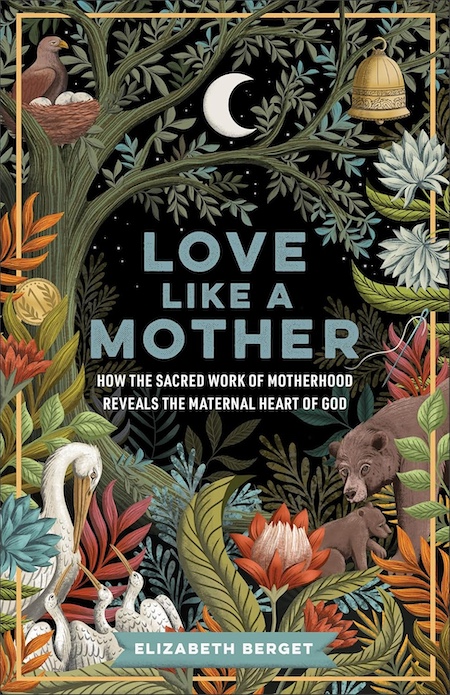
And so I just loved Elizabeth Berget’s book Love Like a Mother: How the Sacred Work of Motherhood Reveals the Heart of God. She takes us through all the different ways in Scripture that God is referred to as a mother, and spoken of in mothering terms, so many of which I completely missed! And in the work of pregnancy, labour, sleepless nights, etc., Elizabeth shows that these are all things that actually help us reveal God’s heart even more. This is a beautiful book, and so healing! I think you’ll love this conversation.
Or, as always, you can watch on YouTube:
Timeline of the Podcast
00:00 Intro: Why Think of God as Mother?
02:06 God is More than “Father” – Expanding the Language
08:38 The Maternal Compassion of God
12:36 God Understands Exhausted Mothers
16:52 Isaiah 42:14 – Scripture Compares God to a Mother in Labor
23:09 What Women’s Bodies Can Teach Us About God & Christ’s Sacrifice on the Cross
33:13 Grief, Miscarriage, & Infertility – Illuminating God’s Longing, Grief, & Enduring Love
40:19 God as Shekinah – Like a Mother Who Protects Us & Stays With Us
46:05 Mental Load, Toddlers, & God’s Patience – Jesus Understands “I Need a Minute”
53:43 What Changes When Women See Themselves in God’s Image?
58:45 Breath Prayers for Real Life: A Simple Spiritual Practice for Busy Seasons
01:00:38 Conclusion: How to Connect With Elizabeth Berget
Key Talking Points
1. Scripture gives us a much bigger picture of God than we often hear in church.
Elizabeth’s argument isn’t that Christians should stop calling God Father. Rather, Scripture uses many images for God—including maternal ones—and ignoring those images can leave women working harder to recognize themselves in the biblical picture of God.
2. God’s compassion has a distinctly maternal dimension.
Exploring the Hebrew connection between God’s compassion and the word for womb can suggest a picture of God whose care is visceral, protective, and deeply responsive—like a mother instinctively responding when her child is in distress.
3. Motherhood is not supposed to be a spiritual performance.
God understands what exhaustion actually feels like. Mothers of young children aren’t failing spiritually because they can’t maintain elaborate devotional routines; God can meet them in the ordinary, chaotic work of caring for their children.
4. Women’s embodied experiences can become theological lenses.
Pregnancy, birth, breastfeeding, vulnerability, physical exhaustion, and even the ways women’s bodies are permanently changed through motherhood can help illuminate biblical descriptions of God’s love. Rather than being obstacles to theology, women’s bodies and experiences can help us know God more fully.
5. God’s love is both sacrificial and life-giving—but not a call to martyrdom.
Connections can be drawn between childbirth, Christ’s suffering, and the language of “this is my body, broken for you,” while also emphasizing an important boundary: God does not ask mothers to completely erase themselves. Rest, nourishment, health, and bodily care matter to God too.
6. God’s protection can mean presence, not just rescue.
The discussion of Shekinah offers a compelling distinction between God protecting us by delivering us from danger and God protecting us by remaining present with us when the danger doesn’t disappear. Sometimes God’s care looks less like removing the darkness and more like refusing to leave us alone in it.
7. Rest is not a failure of faith.
Let’s challenge the idea that the harder something is, the more holy it must be. Jesus experienced exhaustion and withdrew from crowds, while Scripture repeatedly portrays God as attentive to our physical needs. Sleep, boundaries, and help from others can be part of faithful living rather than evidence that we’re falling short.
8. Expanding our understanding of God could also expand the church’s understanding of women.
Elizabeth’s larger hope is that churches would stop treating women’s voices and experiences as peripheral and instead recognize that women have theological insight to offer precisely because of their embodied experiences. The result could be a richer theology and a fuller picture of God.

Things Mentioned in the Podcast
CHECK OUT OUR OCTOBER SIMULCAST EVENT
We’re doing our sex talk and a one-day marriage conference! Check it out for more information.
Find the church info page here!
TO SUPPORT US:
- Join our Patreon for as little as $5 a month to support our work (and get access to the book club!)
- And check out our Merch, or any of our courses!
- Give to the Good Fruit Faith Initiative of the Bosko Foundation
- Join our email list!
LINKS MENTIONED:
- Elizabeth Berget’s Website
- Elizabeth’s book, “Love Like a Mother”
- Elizabeth’s Substack
- Elizabeth’s Instagram
Transcript
We’re totally used to calling God father, but how would you feel about calling God your mother too? That’s what we’re going to be talking about on today’s marriage podcast. Hi, I’m Sheila Wray Gregoire from baremarriage.com, where we like to talk about healthy, evidence based biblical advice for your sex life and your marriage. And today, I have an amazing interview with the author of a new book called Love Like a Mother about how all the different ways that God sees himself and portrays himself as a mother in Scripture, and how as women, we can actually take a lot of comfort in that.
I’m excited about it, but I loved this book so much, and I’m so excited about this conversation that we’re about to have before we get to it.
Just some really super quick things. Remember that I’m on October 2nd and 3rd. We are having our simulcast on Friday night, October 2nd, I am giving a sex talk for women and your church can be part of it. Just sign up. It’s super inexpensive. It’s a way to bring me to your church, without a lot of money and to get some healthy teaching out there. You’re going to have access to it. You can do it live. Just, there’s some special tech way to adjust for time zones. Or you can have access to the recording anytime for 30 days.
And then on Saturday, October 3rd, we have an all day marriage conference with Keith and me. And so again, this is a great way to bring some healthy evidence based advice about marriage and sex to your church. So we have a link to that in the podcast notes.
And as always, if you love what we’re doing and if you want to be part of our Spanish outreach, which is about to start, you can join our Patreon group for as little as $5 a month and be part of our Facebook group, which is just an awesome place. That’s where I get all my likes. This is not a scary place on the internet to go, and I can get fed. And then at higher tiers, you get access to some of the courses that Joanna will be running. It’s going to be running in the winter and her book club and more. So take a look at that.
Or if you are in the United States and you would like to give a tax deductible donation, you can do that through the Good Faith Initiative of the Bosco Foundation. And there’s links again to the podcast notes. And now let’s get on with our interview.
Well, I am so pleased to welcome on to the podcast, Elizabeth Berget. She’s a writer and speaker. She’s done a ton of work, and now she has this awesome new book out called Love Like a Mother. And I have to read the subtitle because it’s a really good subtitle. How the Sacred Work of Motherhood Reveals the Maternal Heart of God.
Hello, Elizabeth.
Elizabeth
Hi. Thanks for having me. This is such a joy and honor.
Sheila
You know, I think I really got a lot out of your book. And we’ll talk about some of it in a minute, but I want to just focus on your main thesis before we get into the specifics. Which is like, we talk about God as father all the time. But talking about God as mother, a lot of people are getting heebie jeebies right now.
Elizabeth
Oh, absolutely. It’s so prickly.
Sheila
Yeah, yeah. Why?
Elizabeth
Part of being human and we’re, we’re used to what we’re used to. We like familiarity. We like comfort. We like what we like. We like what we know, we like what feels certain. And knowing God as mother, or thinking about God in maternal ways, or really focusing hyper focusing on God’s maternal qualities. It’s new for a lot of us.
It doesn’t get talked about a lot. It doesn’t get a lot of airtime. Other than maybe like a Mother’s day sermon here or there. And so we feel like it’s kind of like a slippery slope into something, not orthodox or not Christian. And I can relate to that.
Ten years ago when I first started encountering these ideas, I was a little like them. Whoa. Am I about to be a heretic? You know, if I described this, I can really relate and really empathize with people who are getting those heebie jeebies right now. And part of why I really wanted to write this book was to say, you know, this is actually deeply rooted in Scripture. These are old ideas. They’re not new. We don’t need to be afraid that this is going to pull us away from God or pull us out of Christianity. And so, yeah, but I can relate with those feelings and I have so much empathy for anyone who’s okay, Sheila, what are you talking about right now? Like, why are you having this person on?
Sheila
I think you quoted Amy Peeler, who’s done some great work on the gender of God. And she said, all humans suffer when we think that God is more like some than others. And that’s really the point of this, right? Is that as a woman, we think of God as other in a way that men don’t. You know, and I remember the first time I was exposed to this idea that we didn’t need to think of God is male, like God is just. And even John Piper has said this.
Elizabeth
Yeah. I quote that in my book. Yeah.
Sheila
A super heretical thing like you’ve been told. Piper said, like God doesn’t have a gender. Now, he would say that Christianity is supposed to have a masculine feel and is absolutely right. But God doesn’t have a gender.
And yet we feel like, well, to think that God can relate to me as a mother is somehow wrong. But to think that my husband can relate to God as a father is fine.
Elizabeth
Right? Right. And to be fair, God is known as father-like. I mean, despite what you’re saying, you know, this wide theological spectrum from everyone from like Richard Rohr to John Piper saying, God the Spirit, God doesn’t have a body. God isn’t male or female. Those are human categorizations that don’t apply to God. Like despite that reality and despite the fact that, you know, Orthodox teaching for thousands of years has affirmed that God is a spirit. God does not have a gender. God is known as father primarily in the Bible. And I think that’s the key word. So like what I like to tell people is just like Jesus in the parables was so generous to say, here’s an agricultural metaphor, here’s a family metaphor, here’s an economic metaphor. What do you need to know?
What do you need to understand what I’m doing here in establishing the kingdom of God? God, too, is so generous in Scripture and gives us metaphor on metaphor, on metaphor to know who God is. God is like a rock. God is a shield. God is a fortress. God is a shepherd. God is a father. And God is like a mother. And so I think what I would like to emphasize is, yeah, I got it that God can serve as father, we’re not trying to throw that out. We’re not trying to replace our father. We’re not trying to say mother is better than father. But when we ignore that God is like a mother, it alienates women. We have to work harder to know God in our bodies and in our experiences, and in our day to day lives than men do when they relate to God as Father. Because that’s just what again, gets kind of the most airtime. So yeah, I really make a big point. My book is like we’re not trying to replace. It’s an expansion. We want to know God fully. We need to look at the maternal aspects of God that are layered into Scripture.
Sheila
Yeah, I remember, it must have been about eight years ago. I was standing in my closet and I was reaching for a necklace, and I had just finished listening to a podcast about this idea that, you know, you can relate to God as feminine and masculine, like, he’s not more masculine. It’s feminine. Yeah. And I just started to weep because I realized how much I have felt that there’s this barrier.
Where, you know, men are made more in the image of God than women are. Yeah. And so somehow, you know, they can relate to God in a way that, that I can or God and the thought that, well, if God isn’t male in the sense that we think of it, if God is just as female as he is male, then God can understand cramps. Like, not that he has experienced anything, but like they’re not another thing, you know.
Elizabeth
Yeah, absolutely. I think what you’re saying like that was a really transformative, really kind of a hinge point for me to say, okay, well, if both men and women are made equally in God’s image, like we often think, like, well, what does that mean about us as humans that we’re made in God’s image? But to flip that and say, well, what does it mean about God.
That women are made in God’s image? What of womanhood and femininity and menstruation and maybe the experiences of birth and motherhood? Like, what does that tell us about who God is? If we’re if we are truly image bearers of who God is? And so, yeah, there’s a book called Theology of the Womb by Christy Bauman that talks about menstruation and perimenopause and kind of everything in between. And, that was one of the first books I read that was like, oh, these, these cramps like, this is this is part of creating life. And like, God knows about creating life, you know? And so there was just a lot there like that. I was thinking, yeah.
Sheila
So maybe it was even more recent years.
Elizabeth
I feel like she’s sort of like a bedrock. Her work has been such a bedrock foundation for mine. And I’m so grateful for her.
Sheila
Yeah. Okay. So let’s dive in now. I love and this book is really heavily rooted in Scripture. I just want to say this from the outset. Absolutely. And, I hadn’t realized this point. Well, so many of the points they brought out, I’m like, oh my gosh, I never saw that. But Exodus 34:6 is the first time we see a self-description of God. So up until then we hear what God is like. But other people are talking about God. But in Exodus 34:6 God says who he is. And one of the things he says he is, is compassionate. And in Hebrew that word for compassionate is, is there’s roots in womb, rechem. So can you explain that?
Elizabeth
Yeah, absolutely. So, it’s kind of the Shammah, the Lord, the Lord, the compassionate and gracious God, you know, slow to anger, abounding in steadfast love and faithfulness. I may have messed up the order of that, but that word, compassion, is kind of this first word that comes out of God’s own mouth, that God is describing who he is. And in Hebrew, the word compassion is rechem. And that has sort of, linguistic ties, and meaning ties to the word womb in Hebrew, which is rechem, so that our hook and sound. And though both those words are related, and so the Hebrews would have understood the compassion of God to be like a motherly compassion, the same kind of compassion a mother has for the baby in her womb that like, I will protect you at all costs. I will give you everything you need. I am, essentially, your whole life. And so kind of that sweaty feeling that mothers get when their baby cries, it’s kind of like I have to do something. I need to make this better. That’s the same kind of compassion that God has for us. And so we see that, rechem compassion show up in different places in Israel’s history, when they’re enslaved in Egypt, later on in the Exiles, this is the same kind of rechem and compassion that David appeals to, after he’s wronged Bathsheba, is like, come and make this better, God, come and help me. And God has that same sort of gut I got. I got to help my baby. Feeling that we have as women, as mothers. And so, yeah, it’s this really strong start, I think, to, to our humans attempts at knowing God is to say, okay, God’s compassion is like a mother’s and it’s I think it’s a significant it’s one of the first words God uses to describe who God is, to us.
Sheila
Yeah, I think that’s amazing. It’s like you’re detailing your journey to motherhood. So you’re in pregnancy, in labor and living with toddlers and feeling overwhelmed and not sleeping and feeling like a husk of your former self. You said like you don’t even know who you are anymore and you haven’t showered in days. And how we can see a lot of these same trends in Scripture as to how God refers to himself or talks about himself. And you say, and people are going to be getting their hackles up right now because I just talked about himself. I’m used to talking about God. I and male pronouns. And you said that to you in the book, like even though you’re describing the mother parts, you know, you’re just talking about God with the male pronoun too.
So yeah, it’s weird.
Elizabeth
It’s super weird. Yeah. It makes grammatically like very weird sentences to talk about God nursing, which is in Scripture. Nobody’s making that up. Nobody’s adding that to Scripture. And then use the pronoun. And yeah, I mean. Its pronouns in general are such a loaded topic. And our culture today, you know, and so it’s, you know, I feel like my stance has kind of just been like, you know, we can we can. I think we just need language. So whatever you’re kind of comfortable with. And for me, I wrote this book using the pronouns.
Because that is how Scripture refers to God. But I think when we only focus on that, or when we exclusively paint God with male pronouns or male imagery, we’re missing out. We’re not only shortchanging ourselves, but we’re diminishing who God is. And so yeah, it is. It is really tricky. I really and my editorial team, we’ve really wrestled with that, in that kind of early stages of figuring out how to write this book.
Sheila
Yeah, it is tricky. So you say you use a lot of your own stories, which I thought were so beautiful, and then also bring in a lot of stories of adoption and fostering and, and all the different ways that we can relate to caring for children in our society. And that really formed the bedrock of it really, really neat. But, one of the big things that you start out with is this idea that often as mothers, when we approach motherhood from an evangelical Christian standpoint, whenever there’s so much on us, right, like, you actually do this perfectly or your kids are going to turn out badly. You should be surrendering everything to the Lord and know, not really struggling. And you talked about how you felt so badly when your spiritual disciplines really fell to the wayside when you’re not sleeping. And how are you supposed to be doing your devotions when you’re not sleeping? And you open the book by saying, but God gets it and he doesn’t expect us to act like we don’t have young. And you bring up all these different verses where God talks about how he leads those with young. He’s careful, you know, with those with young, like he sees us when we are young as different.
Elizabeth
Yeah, absolutely. I mean Isaiah 40:11 that you’re referring to that God is gentle to those at the young. Like I remember reading that for the first time, probably like two kids deep. I had my three kids within four years. So it was just like baby after baby after baby and nobody was sleeping. And my body was just sort of like I had gone through the ringer and I remember coming across that verse and just being oh like God knows how long it takes us to get out the door. God knows that I have asked my toddler to put on his shoes, and he is melting down, like for the last 30 minutes, like God is seeing me. And I think there’s just, you know, like you said, there’s so much pressure, especially I think with an evangelicalism on mothers, is that like, not only is this your highest calling and potentially your only calling, which is categorically, objectively untrue. But it’s like and then you better get your stuff together or your kids are going to be reprobates and you’re probably going to leave them there. You know, it’s just like, like to put that on mothers, especially young mothers, that you, you are in charge of helping your kids know God and you like to put that on them when like most especially like mothers of young children are just so physically tired and touched. Oh, and like and then like some of the work that you do or like okay it’s on mothers to cultivate amazing sexual experiences with their husbands and be their methadone and like you combine all of that and it’s just like, no wonder moms are feeling and then we’re doing it alone. You know, we don’t have our villages that we used to have.
And so a huge, the throughline of my book is to say, like, like this pressure isn’t coming from God. It’s coming from sources that are not of God, because God sees you and God knows exactly how many times you got up last night. God knows exactly how much your back aches from carrying around this baby. God knows that your colicky baby will not be put down between the hours of six and 8:30 at night. You know, like God sees that and God isn’t like standing there going, hey, keep up, let’s go. And so I think for a lot of us, what I was starting to hear from a lot of mothers as I started writing about these themes was like this feeling of shame, of like, man, my Bible is gathering dust. Or like, I can’t get to this Bible study because this kid won’t nap. And like all these spiritual disciplines which are good disciplines, just aren’t fitting with this new stage of life. And so a huge part of why I wrote this book was to say, hey, God sees how hard this is. God sees how all consuming this season is and is going to meet you there. And so, I include a lot of spiritual practices at the end of each chapter that aren’t kind of, sort of add more to your to do list or require time or energy you don’t have. It’s like, hey, you’re giving that baby a bath. So God is renewing your soul. Like, take a second and see how God is cleansing you and wants you to be clean and restored and refreshed, or you’re cutting up grapes and getting yelled at for putting it on the wrong plate by your three year old. Like God is eager to provide every single source of sustenance that you need. And we see that throughout the Bible. And so this, this idea that God understands motherhood because mothers are made in God’s image is also sort of a spiritual lifeline, I think, for moms who kind of feel spiritually adrift, especially in those early years or other intense seasons of motherhood.
Sheila
Yeah, yeah, I love that. In the chapter on labor, I again, here’s another verse that I didn’t see I missed, Isaiah 42:14. It talks about God as if God is in labor. Yeah. So God says, I will no longer hold back. I will gasp and pant like a woman in labor. Basically, what God’s talking about in context is to bring justice to the world through Jesus. Right. Like and so this work of bringing justice to the world of, of ending oppression, of having Jesus come is like God is in labor. Yeah.
Elizabeth
It’s crazy. So like, I think what I loved, about what you said is like, I didn’t see it. I think for so many of us, we don’t see these metaphors because we’re not maybe told them again, they don’t get a lot of airtime. But like, I think somehow, you know, growing into femininity, growing into being, you know, an adult woman or growing into motherhood, you suddenly have new lenses, right? Like motherhood, particularly your organs. Get rearranged, your brain gets rewired, your hormones all over the place, and you just have this new perspective. I remember kind of coming through my first birth and going, oh, this is love. Like, you know, it just seems like it totally rearranged my perspective. And so, and not to say that people who do not have children cannot experience that, but for me, that was a huge catalyst in changing my worldview and perspective. And it gives us a new lens. And when we take that lens on Scripture, we’re going to see these metaphors and images and say Oh, God’s like that you know, and I think, I like to tell people there are sort of macro and micro examples of God as mother within Scripture. So the micros are the ones you’re referring to, Isaiah 42, where it’s like God is like a laboring mother, or Isaiah 66. God is a comforting mother that nurses us. Or Hosea 13:8 God is like a mother bear. It’s like there’s a direct line. You can’t help but see it. And then there’s these macro stories where, like, for example, God wakes Adam up in the garden. What does he do? He feeds him, and then he feeds the Israelites manna in the wilderness, and then he feeds Elijah in the wilderness.
Sheila
The Elijah one, I love that story. Yeah. It’s like, okay, Elijah, you need to have a nap, you know?
Elizabeth
Yes, a little snack and a nap. What mother can’t relate to that, right? Like, okay, you’re melting down. Let’s just reset here, you know? But it just goes on and on. And then Jesus feeds his disciples on the beach and then the kingdom to come, we’re told that God is preparing a feast for us. And like, who prepares meals? Who feeds their children? Moms, typically and historically. And so it gives us this lens to see, like God is behaving in maternal ways towards humanity all through Scripture. We just need to be able to see it. And so when you talk about verses like Isaiah 42, I think it’s 14. Numbers are never my strong suit. But, where you know, God is compared to a laboring mother, eager to bring forth justice through the work of Jesus. What I love about that, and I talk about this in the book a little bit more, is that it’s paired with, I think the verse before is Isaiah 42:13, where God is compared to a soldier who’s furious, who is coming with a flaming chariot. And so we get these side by side depictions of God in multiple places, particularly in Isaiah and then in Deuteronomy 30:32, where God is compared to a father and mother side by side, or a male and feminine image side by side. And it’s like, yeah, we need that. We need the full picture of God. And so, yeah, that’s one of my, my favorites as well. And I think labor in particular is such a memorable and transformative experience for everyone, whether it went well or didn’t. And I’ve had both experiences, you know, that, it can’t help but shape you. And so, like, why wouldn’t we use experiences like labor and birth that are so tremendously transformative to help us understand Scripture? Like, is this my body broken for you? Never before in my life did I understand that as well as I did within the process of birth when my body was literally broken for the sake of new life. And so I think, you know, not to get too into the weeds, but when we’ve had historically male representatives of God in the church for the last 2000 years and into today, we’re missing out on some of these analogies that women can bring to say, hey, my body and my experience, they’re going to help us know God just as much as a male body and an experience can.
Sheila
Yeah. And I think that’s really interesting, what you said about the juxtaposition of how, you know, God is like a warrior, but God is also like a mother. And I think the way that our evangelical culture is currently framing gender roles, it’s like men go out and do the work of God. Yeah, men are out there and women are doing the supportive role of raising the kids. But what this says is, no, they’re both like, everything you’re doing is the work of God. Like it isn’t the work of God because so much of women’s experiences feel like I need to support my husband so that he can go out and do the real thing. But it’s like, but, but what you’re doing is the real thing.
Elizabeth
And like to limit God in that way, to say God is only in these spaces or in these kinds of roles or in these traditions is to limit, yeah, both women and to limit who God is. And I think it invites men into the work of caretaking, which I think most men fall into a more caretaking role when they have kids. I think that’s true. Men are so much more complex than just, you know, like women care for children, men, you know, like, but those are the ideologies we’re giving that, you know, I was, I stand out to me in the podcast episode you did on Mental Load. I think this last spring, like May or April, where you talk about, like. What’s going to get women in? the mood, what’s going to help them. And it is like vacuuming. It is like, can you do the dishes? But it’s also like, okay. The baby cries. I remember you talking about that and just being like, I am going to light something on fire like that. These men, you know, that there’s this entitlement of, you should care about me more than a baby, but it’s like, no, like I think children invite us into these roles that are like, they just need care. They need constant care for the first few years of their lives. And that is the business of God. God is in the business of constantly caring for us. So that is the work of both men and women if we want to be image bearers of God.
Sheila
Yeah, yes. Because as we understand more what motherhood entails, we’re actually understanding more about the character of God. And I think that’s the coolest thing. Yeah. Like what you said, like God, God is in the business of constant care, right? Just like me. Like God is in the business of constant care, constantly monitoring us and not in a weird way, but like being really concerned for us.
Elizabeth
Like God doesn’t let a sparrow fall, right? Like there’s this hypervigilance to God’s nature that I think mothers really embody, especially like you hear about. With both first and second children, you know, our amygdala as women grows exponentially and we are suddenly, like, scanning the horizon for threats. Right. And that doesn’t go away, it permanently changes our brain structure. And so it’s like we look at that as a bad thing, right? We’re like, oh, calm down. They’re going to be fine. But it’s like, no, this is how God is toward us. God is scanning the horizon for us. God is not going to let our feet stumble. God is not going to let the snake grab our ankle. Right. Like and so I think there’s this beauty in recognizing that, like, the bodies and experience of women are not problems to be solved. They’re not hindrances to knowing God are, in fact, like a portal to knowing God more fully.
Sheila
Yeah. That’s amazing. I love that so much. Okay, there is this one part that made me laugh in your book because you were talking about how women’s bodies are porous, wet and vulnerable in labor, right? Like we’re leaking everywhere. There’s fluid coming out everywhere. And, you know, we’re broken. And that has typically been seen. And there’s a lot of work on disgusting undiscussed psychology, how much, you know, women’s bodies are seen as disgusting because of how leaky and wet we are, etc.. And yet that is what Jesus was to. Like Jesus on the cross was the ultimate in being porous and wet and vulnerable. And what made me laugh was that in their first version of the Great Sex Rescue, we had this line in it about, and it was in the postpartum part where we were talking about how women were being pressured to have sex postpartum. And about how women are. And we had three words, I forget what the first one was, but we had something bloody and torn like women’s bodies or something and bloody and torn. And the editor, who is male, made us take it out because he thought it was just too much and like, no, you don’t understand. He thought it was too much. Yeah, that is true. Right. Like we in labor, there’s just this, this unique feeling of I am, I am, I am the body.
Elizabeth
Like it’s so animalistic. I think that’s so funny that your editor wanted you to take it out because it’s like, that’s exactly the point is to like, come across it, like how physical this is, you know, that it’s bloody and torn and broken and wet and having given birth myself three times. And then I did birth photography for a number of years, it’s like there’s just like you said, there’s just fluids ever. I’ve stepped over vomit multiple times to get into a position to take a picture for somebody. Right? Like it’s just kind of part of what it is. And I really credit Kat Armas with that language. She talks about how Jesus was leaky, porous and wet in an interview, and I remember latching on to that and thinking, okay, at the beginning of Jesus’s life and at the end of Jesus’s life. He became what? What? Maybe at the time they would have been considered feminine. They became leaky, porous and wet, whereas men were kind of hard, cold, rigid. Right. And again, these are like strong binaries that, you know, obviously there’s a nuance here in that. Right? But I think, I think, you know, one thing that really fascinated me that I talk about in the book, too, is like in in years past, I talk about these are not new ideas, in the Middle Ages, they had these prayer books that would guide people in prayer and devotion throughout the day. And they, they often depicted artistically the wounds of Christ, the nails in his feet, the nails in his hands. And then the side wound and more often than not, you can google this. This isn’t me like finding some weird outlier. Like you can find pages and pages of Google imagery of Jesus’ side wound depicted as a vulva, because it signified the birth of the church through Christ suffering, which is a direct labor comparison. And so when you talk about the disgust factor, like, I just think it’s like we have so long relegated the bodies of women to like yuck. This isn’t helpful. This is gross. This is a barrier. This is a problem to be solved and to repeat my language from earlier, but when we look at Christ, who was objectively a man on earth, like, no one’s arguing for the gender fluidity of Jesus Christ while he walked this earth. But like that, Jesus, even Jesus in his male embodied life on earth, could understand and relate to a woman in labor. I think it is so tremendously comforting and that we can find access to God in those incredibly feminine moments of having a baby, which is hard and like suffering. And I’m not comparing laboring to suffering on the cross, like, like, don’t misconstrue my words here. But there’s parallels. Absolutely. And I think there’s a lot of compassion for God to connect with women, even in those, like, distinctly feminine moments.
Sheila
But even like you said, with the Eucharist, this is my body broken for you. And every week when I go up for communion at our Anglican church. Now, my priest says that, like, Sheila, this is, you know, this is his body broken for you? Yeah. The closest thing we have to that other than Jesus is, is labor.
We are broken. I couldn’t walk for six weeks after I had Rebecca. I couldn’t walk, you know? Yeah, like, I was really broken. And my daughters have been broken in worse and different ways. Both of them after labor like.
Elizabeth
And even nursing like. I mean, I talk about this in the book. My nursing adventure with my first was not easy for the first several months, like mastitis and bleeding and scabbing and like we could not get the hang of it for such a long time. But like, there’s a brokenness in that, too. Like, this is my body broken for you, I am giving of myself. And there’s, like closeness to God both in the sacrifice to say, like, you know, I am giving of myself, but I’m so quick to say, like God is not looking for martyrs within motherhood. God is not looking for you to completely forget yourself. God is not looking for you to forget that you are a self and a body that needs taken care of. Because look at the way God cares for bodies. Jesus so often, like, broke the Sabbath in order to help bodies that were in need. Those were like the primary. I think it’s all but I’m feeling hesitant saying that. But the majority of the times Jesus broke Sabbath was to say, do you need to eat? Do you need healing? Jesus, like we said that Elijah in the wilderness to say, do you need a snack and a nap? You know, and so I just think God is so good to convey that our physical bodies really matter. And so, yes, we’re sacrificing and we’re breaking our bodies, but we’re not supposed to stay that way forever. Like God really wants us to be good, healthy, whole, cared for, rested bodies as well.
Sheila
Yeah, absolutely. And I, I hadn’t noticed this either. But Hebrews 12, those first few verses where it talks about how, you know, since we’re surrounded by so great a cloud of witnesses, let us, you know, lay aside everything, that. Oh, gosh, I used to have these memorized. I should have these memorized. You know, that hinders us. And let us run with perseverance. Race the day before us, looking into Jesus, the author, perfecter of our faith, who for the joy that was chosen for him endured the cross, despising the shame, and you know, that’s what labor really is, right? Like for the joy that is set before you, you endure.
Elizabeth
Yeah, absolutely. I mean, like I’ve faced some critique of that where people were like, I didn’t feel joy after my labor because maybe they were dismissed or labor, you know, they were rushed into a procedure that they weren’t ready for or, you know, or and I discussed this in chapter four, they had a stillbirth or they had a loss. Yeah. I mean, like, there’s so much that can paint shades and colors into our experiences of labor. But I would say for the majority of laborers, it’s, it’s that baby in your arms, right? It’s that flood of oxytocin. It’s that connectivity. Like I, I tell people when I can’t sleep, I picture my three newborn babies on my chest and like the way that felt because they’re my happiest moments, right? Is just to say I so badly want you and your life and to know you that I’m going to endure the worst pain of my life, the categorically worst pain in my life, and so, yeah, I think, I think we forget that sometimes that we are joyful to God, that we are a delight to God, especially if we’ve grown up in maybe more reformed spaces that, you know, talk about where we’re sinners in the hands of God, where the spider over the flame. We are worthless. We don’t deserve God’s mercy. Right? Like, I think we forget that we delight God and we are a joy to God, just like our children are a joy to us because God is a good parent and so well, it’s like, I think it’s so good to remember that.
Sheila
The verse in Zephaniah that he rejoices over us to sing. Yeah, that’s very much a mother. I think about how you sing over your baby’s crib. Last night. I put my grandkids to bed and we sang, Jesus loves me, you know, like, that’s just what we do, right?
Elizabeth
Yeah. And again, like, I try to say this a lot, like, fathers can do that too, and they can delight in their children and as they should. But there is something really unique about the love of a mother and the activity of a mother that, yeah, I do think is reflected in the heart of God toward us.
Sheila
There’s an Instagram reel that’s going quite viral. All kinds of people have sent it to me. I think I shared it to, about by this guy who was talking about how to measure the pain of childbirth, and they said that, and I might get these numbers wrong, but it’s like if you go on to a pain scale, like 43 is if you break 20 bones in your body and 46 is when you pass out from pain and labor is like 54.
Elizabeth
Oh, I believe that’s crazy. I haven’t seen that. But yeah, that’s so crazy.
Sheila
And you don’t pass out like.
Elizabeth
Yeah. And you just keep going. Yeah. Because you just can’t. I mean it’s so beautiful the way our bodies take over in that moment too I think because we are, I think living in a culture that generally tries to disconnect us from our bodies, you know, we do so especially in like, Christian evangelical spaces. It’s the truth. Like knowing the beliefs like believing them with your head and like, I think we have a hard time putting our bodies in that. But I think God is inviting our entire selves into knowing who God is. Yeah. That’s crazy. I have to find that. That’s a beautiful statistic. I mean hang that on my hat.
Sheila
Okay, so, you do have a chapter, called Seared Hearts and Scarred Hands. The loss of infertility and miscarriage. I skimmed this one. So. But I do want to say that you got things right. The worry that your child’s cold in the grave. One year, the cemetery with my son flooded, and I just couldn’t get that out of my head. They thought that. Yeah, his grave was flooded. That was really, really, really hard. Yeah. And, and that feeling like it hurts to breathe a little, you know, yes, it does. And yeah, I like the thought that God understands that and that and that, that is, that is the problem. That is the human condition is that, you know, this birth life, death thing, it’s all intertwined. And you can have this hope that can just be shattered, you know? Yeah. I think this is coming out on September 3rd. I might be wrong, but I think this podcast is out on September 3rd, which means that tomorrow is the 30th anniversary of my son’s death. So this year, on his birthday, I shared this on Instagram a while ago.
But yeah. I got a tattoo of the footprints that they took the night that he died. The nurse took handprints and footprints of him and gave them to us. And along with a lock of hair, and I’ve never known what to do with that. It’s been sitting in a book, and this year I just decided that I was going to get a tattoo. So I got my first tattoo at 56. And then just on my inner arm of his footprints, he had such big feet like.
Elizabeth
He did have big feet. Yeah.
Sheila
And the poor little guy was only four and a half pounds when he died. And I think his feet were huge. My grandson’s feet were really large when he was born as well. But Christopher’s legs were so tiny, but his feet were huge. It was really cute. But, I, you know, I thought when I got the tattoo that when I saw it, it would mostly be a reminder of sadness. But what I found over the last month is it’s just really a reminder of strength. Like, you know, that I endured that, I did that, and then at the same time, I cared for my oldest daughter, you know, and it hasn’t gone away. It’s still there. Like the grief is still there, but it’s like, yeah. I did that.
Elizabeth
There’s so much resilience. And it’s sort of forced upon you. It’s not like you’re choosing this as a strength building exercise. Right. But it’s like you do it and then looking back you see like it’s like I think especially taking care of your older daughter. Like it’s you just keep going because that’s kind of what you have to do and what mothers do, you know?
Yeah, it was really important to me to include a chapter on loss and infertility, because I think those are just relatively universal experiences. I’ve had my own loss. And then, I had a few friends who were so generous to share their stories of infertility and different kinds of loss with me, that, you know, I pray I treated well, I was, I, I probably spent more time on that chapter than I think most of the rest of the book combined, just to try to try to get it right. So it’s a comfort to me to hear that it resonated. And there is a trigger warning at the beginning because I’m like if you need to skip this, please go right ahead.
But yeah, I think you know, when you talk about, carrying Christopher with you on a tattoo on your body, it just really reminds me to of just, like, even, you know, the studies on micro cameras, where, fetal cells transfer to the mother’s bloodstream within pregnancy, and maternal cells transfer or transfer to the baby within pregnancy, even if that pregnancy is not carried to full term or results in a living baby. And those cells can stay within both mother and baby for decades, like it doesn’t go away. And so there’s just this, like, I think it really speaks to the way that God is so intertwined with who we are. Like God is carrying us. You know, when we talk about the indwelling of the Holy Spirit, there’s just this, like, sort of unbreakable connection that I think is maybe not best, but more fully understood through maternal terms and, and even the scars of Jesus after the resurrection that Jesus chose to be resurrected with scars is so crazy to me. Like I look at my friends with C-section scars are like my own stretch marks or the ways that my body is irrevocably changed. You know, the way that I can’t sneeze without caution these days, right? It’s just like there’s this way that children change us, that is, is never going to go away, that we’re always going to carry those kids, those memories of those kids with us or their living bodies with us. And I just think, if that doesn’t speak to the intimacy of God’s love for us and the resilience of God’s love for us to love us even when we were dead, to love us even when we were sinners, to love us when we stray, to love us when we are misguided, you know, to love us when we choose things that are not of God.
I mean, I just think there’s a resilience to that love and a strength and long suffering to that love that I think. Yeah. What you’re talking about really can bring to life.
Sheila
And I think the infertility journey, too, you think about how you want so much to have this deep, loving relationship with someone that just doesn’t come to pass. And how much is that God’s experience?
We’re you’re, you’re hoping and you’re wanting and you’re wishing and you’re pursuing and it just doesn’t happen. And yeah I think even in that you know we, we understand the heart of God really. And I think that that’s probably one of the reasons why there are so many stories of infertility in Scripture I think is because, yeah, both God understands infertility. But I think infertility shows something about or illustrates something about God’s experience too, with us.
Elizabeth
Yeah, I talk a lot in that chapter about the three lost and found, parables within Luke and of God searching, you know, leaving the 99 to look for the lamb, the woman up turning her house to look for the lost coin, and then, of course, the prodigal son, and really look at the father’s experience in that to say, like so many of us have understood that yearning, whether we’ve yearned for a baby that isn’t materializing or we’ve yearned for a lost relationship or brokenness that can’t be fixed. And like I asked that question in chapter four, Does God yearn? Does God long for us? Does God mourn? And I think that it’s really clear throughout Scripture that God does, and I think especially those parables really highlight that God has a heart that is longing for us, whether we are turning to God or not. God is longing for us, looking for us, going to great lengths for us. And that speaks again to how we are God’s joy. We are God’s delight. God is chasing after us because we delight God. God wants to be with us. We are not whole until we are with God. And so, yeah, I think there is something about a mother’s love, particularly in the stories of fertility within Scripture and in our everyday lives that really speak to that.
Sheila
Yeah. Okay. Let’s move on to the idea of shelter in Shekinah, the protection. I really liked what you said about how there’s two different kinds of protection that we often picture. You know there’s the very and again we’re using binary gendered terms. But there’s the kind that we picture the typical male protection. Where you know, you kill all the enemies and you, you physically protect. But then there’s the protection of the soldier dying on the battlefield, the two people he calls out for are God and his mother. Yeah, yeah. And what does he want his mother to do at that minute? It’s not to vanquish his enemies or to protect him. It’s just to be there. It’s just to be there and comfort him. And, like, isn’t that the protection that a mother gives us. I am always watching over you. I know I care about you. I, you know, I’m going to try to emotionally enter into this with you like, I care, I see.
Elizabeth
Yeah. I talk about in that section that it’s like protection by preservation. So there’s like a protection by deliverance that we typically think of like you said, like, you know, the knight in shining armor coming to kill all the dragons and open up the dungeon door. And
God certainly is portrayed that way. Like, let’s know God as a vigilant protector and rescuer in that sense. But let’s also know God as Shekinah. So this is a Jewish term that, or a Hebrew term that, is used in Judaism. It’s not technically used in the first five books of the Bible, although it’s kind of like thinly referenced through various parts of the Torah.
But it essentially just means God’s dwelling place, like God’s presence.
Sheila
We talk in the, in the prophets where you talk about the glory of God.
Elizabeth
Yeah. And so, like, you know, there’s roots between the word tabernacle and the words Shekinah. They share a linguistic root as well. So it’s basically like, where do we meet God? Where do we encounter God, God’s presence? And so, yeah, there’s this beautiful understanding, like within the exile that, you know, we often think of sort of God back at Zion, calling the Israelites back, saying, okay, all right, I’ve relented, you can come back. I’m going to rescue you now. But there’s this understanding with the word Shekinah to kind of that God was there with them in the exile. It’s the same picture we get from Psalm 23 when it talks, you know, even though you walk through the valley of the shadow of death, I’m there like I’m there in the dark with you. I’m not just in the light calling you back. I’m not just on the shore, beckoning you back from the waves. Like I’m out there in the waves with you. And I do believe it’s this presence protection to say even though everything’s horrible, even though nothing is going the way you want. Even though all you can see is darkness all around you. And you can’t see a way out. I’m here to protect the very core of who you are. And that is beloved. Like I am not leaving you because I love you and that that can never be taken from you. And so, yeah, I tell some stories, from a mother in the Holocaust. And there’s a beautiful book called Mother Mourner Midwife by, I want to say, L. Juliana M. Claassens. I got a lot of these ideas from. But there’s just this idea that God is with us in the most stark experiences. And when that we all know people where that rescue doesn’t come, you know, the dawn doesn’t break. They’re just living in pain for months or years on end. And so what do we do with God’s promises of protection in those moments? And I think we find the answer in the concept of Shekinah.
Sheila
Yeah. Yeah, I think that’s lovely. Which, of course, is not to say that mothers don’t physically rescue their kids either, right? It’s obvious. Oh my gosh, yes I have. We had a very similar one with my son in law and my grandson, where Alex touched a wasp’s nest that didn’t realize was in his play structure, and all of a sudden he’s just surrounded by wasps.
Elizabeth
My gosh. Oh my gosh. Yeah. It’s terrifying.
Sheila
I love the picture that you told of having to rescue one kid and then just to rescue the one kid. The younger one is down again, right?
Elizabeth
Right. Yeah. It’s crazy. It was crazy. And I, it’s like I talk about it’s my lift the car of the baby moment. I ended up lifting both my sons up our front steps. They’re combined, you know, 60, 70 pounds. You know, I’m not like a power lifter. So that was a big, big deal for me.
But, like, yeah, I just think this idea that like mothers and they’re vigilant, like protection is just wired into us. Like I said, our amygdala grows, we’re looking for a threat. We’re looking for, you know, we visit a non baby proofed house, and our eyes are just scanning for cords and Legos, and beads, you know, all of the things and like you said, toddlers especially I think are just sort of little people with death wishes.
Like they just sort of out they’re so unaware of how much danger there is in life and they are just flinging themselves towards danger day after day, hitting their heads on things and putting things in their orifices that they shouldn’t. And so I do think that just painting such a picture of who we are to God is sort of like fumbling toddlers in many ways, who are just kind of like hell bent on destruction in some ways and hell bent on making the worst of our choices. And then God is just there, so lovingly, like lifting the car off of us right day after day after day, rescuing us from the beads. I tell a few stories in that chapter of mothers who do some incredible rescue work and like physical, like you said, like very powerful, I just think, yeah, protection is typically thought of is this male like knight in shining armor, but there is a protection of my mother that is fierce, like in Hosea 13:8, when we get God is like a mother bear, eager to protect her cubs from harm. Both, both internal and external. And so, yeah, there’s really strong pictures of maternal protection.
Sheila
I like how you kindly turn that on its head for us times the trouble that the mother bear is trying to protect the cubs from. Isn’t the cubs getting attacked, but the cubs doing something really stupid.
Elizabeth
Yes, yes. Like self harm, you know, and like we all can relate with that. Like I have done, I have made this choice and it has turned out horribly. I have this mess of my own making, and God is as eager to rescue us from, from even that. And the ways that we turn away from God and make those wrong choices.
Sheila
And your chapter on mental load. I laughed about what you said about the letters to the Corinthians because I’m like, oh my gosh, I never saw that before but it’s so true. It’s like the way that Paul is talking to the Corinthians is, okay, you guys are just quarrelling. You need to stop.
You need to stop fighting. You need to stop being stupid. It sounds like Paul’s talking to toddlers.
Elizabeth
I mean, even God, like, one of my favorite stories in the whole book is when I talk about, again, numbers are so hard. It’s in Numbers, I believe 11 and the Israelites are just complaining about manna every day, and they’re like, who will give us meat? Like we are tired of this. We’d be better off in Egypt with our melons and our garlic and our leeks and Moses turns to God and is like, am I these people’s mother? You are. I’m not going to deal with this. You’re their mom. You got to deal with this. Like, obviously I’m paraphrasing. And so yeah, there’s this like essentially, God gets so angry at their complaining that he floods the camp with quail. He’s just like, okay, fine. You want quail? Fine, have so much of it, it comes out your nose. I think that’s a direct quote. And it’s just like how can a mother not relate to that? Like, okay, fine, you want mac and cheese for mac and cheese for the next five days, so you can’t stand it any more, right? Like we just get a little fed up. I do think, God, we see that in God. We see that in Paul’s words, like you’re saying, it’s just kind of like, there’s so much to our relationship with our kids that gives us such a portal to both, like our experience as God’s children and our experience as, of a God who loves us like a parent who it’s like, okay, you are driving me up the wall, but I am still going to show up for you. I’m still going to be here. I’m still going to make dinner for you. So it’s just this beautiful, like two way street to knowing our relationship with God I think through kids, especially the ones that maybe you feel like they’re going to give us gray hairs a little early.
Sheila
All right. I think one of my favorite parts of your book was on sleep progression and Sabbath, because it’s just so real. And I have a daughter going through this right now with my youngest grandchild just decided not to sleep, you know, and it’s so hard. I remember, I honestly thought I was going crazy when my second daughter didn’t sleep at all. She was just so difficult. And my husband was in the middle of studying for his pediatric exams, so he really couldn’t help. Plus, he was on call constantly, and I thought I was going crazy, I thought I was losing my mind, like I was just so tired, like I was desperate, you know? And that’s what kids do to us.
And yet God understands that. I think it’s so interesting, what you said about the Sabbath and how day seven, like we were supposed to live on Sabbath, and then the fall came. Yeah. And now we’re just in these cycles of getting exhausted, absolutely exhausted. And just that, you know, God understands that and that he’s not angry at us when we’re at our end, you know, and Jesus, I thought this was so funny. I never saw this before. Like, I’ve seen it, but I’ve never compared it to motherhood before. How often Jesus was like, I am just so exhausted. I need to get away from you. Like when moms locked themselves in the bathroom.
Elizabeth
Yeah. I need a minute.
Sheila
How often Jesus walked away from the disciples in the crowd. Because I am touched. Okay. Yeah. Everyone’s been touching me all day. Yeah, Jesus does that. And I’ve always thought about it in more spiritual terms, like, you know, when you read these things, you think about it in terms of, okay, he needed to have boundaries and he needed to, you know, realize, like he couldn’t be everything for out.
Elizabeth
Nobody talks to me.
Sheila
It actually makes a lot more sense. Not that the other isn’t also true, right? It’s like I can relate to that. I can see, yeah, I can feel it.
Elizabeth
I know there’s such a comfort in that, right? To know that like the God who has. You know, we talk about, oh, the reference is escaping me now, but the God who never slumbers or sleeps, I want to say it’s in Psalm 121. But like you read that about God and you’re like, great, must be nice, right? Like, I wish I had that energy. Wonderful. But then you read about Jesus, who was tired and maybe frustrated and needed some space, needed to not be touched, needed to not be talked to. I had a friend who used to wear a funny hat and she liked it when her kids were really little and was like, when this is on, nobody can touch me or talk to me. And she would put it on for like 15 minutes, just like I needed it. But it was a symbol for the kids to remember the hat. She would point to the hat I needed for a minute. I just get it so much. Especially when you’re not sleeping at night. Similar to your second daughter. My oldest son, like, did not understand what sleep was for, like the first year and a half, two years of his life, and I yeah, I felt like I was going insane. Like, I just remember being I, like you said earlier, a husk of my former self. Like, I couldn’t think, I couldn’t read. I felt like I couldn’t articulate. I, you know, I’d kind of drag us through the days just like praying for nap time. Right. And so I just think there’s such a comfort to knowing that, like, the God who never slumbers or sleeps also came to earth as a human and a limited human body and got tired because there’s so much in the Bible, that indicates that God wants us rested. And I think we’re so quick to paint that in a spiritual frame of like, God wants us resting in him and relying on him. Absolutely. I think God also just wants us to feel good in our bodies, and we’re not going to do that if we’re not sleeping. And so, you know, there’s, I think I always say like, oh, if I had another life, I would, you know, be an immigration attorney or I would do this or that. Right. Like, but I feel like if I had another life, one of my things would be like men and women should be getting up equally in the middle of the night, like, as everybody’s working the next day, even if you’re a stay at home mom. And I think the messaging I got and this was not for my husband, but I just think, like the cultures we both grew up in was, well, he goes to work the next day, so I’m going to be the one to get up. And I was nursing and most of my kids would not take bottles very easily. And so part of it is like, okay, it makes sense. But I was also, you know, I got to a point, I talk about this because, like, I can’t do this another night. I’m literally going crazy and, you know, making my husband deal with it. I put on headphones or earplugs and went into a different part of the house and just was like, good luck. You know, this is after my son was weaned. So, I mean, you know, I wasn’t it wasn’t like, sounds really cruel when I say that. But yeah, I just think we get to a point where we’re so tired and Jesus can so relate with that. And like I said before Isaiah 40:11, God is so gentle to those with young and sees just how tired you are and doesn’t want that for you. It’s not like we’re going to snap our fingers and do it, but it’s like, I think, again, we sometimes get this message that the harder something is, the more holy it is. And so we can sometimes get into this martyr mentality of, well, I got to be the one to get up with this kid every time because this is the most holy option. And it’s like no you’re a body, you’re not God. You’re limited. Like, we need some sleep. We have to figure out a way, get you some sleep, you know. So.
Sheila
Absolutely, absolutely. And I know, you know a couple of times where I was just exhausted and my mom would take the kids so that we could sleep or when Katie was just at the end of her rope with her first, you know, there was one night where I, yeah, I just took her and. Yeah, it’s like you just need that. Yeah. And God does understand that we need rest. I love that. So when you think about how, seeking God as a mother means that women can see themselves in the image of God more, what kind of change do you think that could make? If we could, if we could catch that vision? Like, what are you hoping that people will see with this book?
Elizabeth
Yeah, I think I primarily hope that women and mothers who are weary, physically or otherwise, or feel spiritual shame for not keeping up in kind of those intense seasons of motherhood who are feeling that extra pressure of like, okay, I’m a mom now. I got to get together who are feeling those pressures from, you know, whether it’s their church or ideologies they grew up with I really like my primary prayer is that they feel seen and just so deeply loved that they can get a taste of, okay, as much as I love this little kid so much as I love this little baby in my arms or my grown kid, you know? So God loves me to an even greater degree. Like I am so beloved, even if I’m not keeping up with these spiritual disciplines, even if I lost it at my kids this afternoon, like, you know, no, like no matter what, that God sees them and that they are just deeply beloved as much as they love their own kids. I think that’s my primary hope. And then in terms of broader help. I did pray a lot for people in the midst of things like deconstruction and reconstruction of their faith. And that’s something I’ve experienced. And, I think it can be a really gentle portal back to knowing God, to know God as Mother in addition to father. If you’ve maybe grown up with a punitive or angry picture of God to know some of these scriptures that do really explicitly talk about a maternal care for you from the divine. And so I think I pray that this book can really speak to those who are, who really want to remain Christian, who want to remain, within the faith, but are struggling to know, like, okay, how can I do that in a way that, is not kind of exactly what I grew up with? And then, yeah, just more broadly, I think like, oh, what could change in the church if we really valued the voices and the bodies and the experiences of women? Like what would change? What would change in our theology? What would change in our practice? What would change in the way we love our communities? Like if we didn’t just relegate the voices of women to the sidelines of the nurseries or the potluck kitchens, right? If we said, hey, you and your body and your experiences really can teach us about God, we want to hear from you.
You know, I think, I had my father in law, who is a lifelong evangelical pastor and has a more conservative viewpoint than I do, but is a pretty open minded individual, fantastic grandfather and father in law, like nothing but good to say about this man. But I had him read an early version of this book to say, okay, what are your red flags to someone who’s coming from a complementary space, who’s, you know, maybe, you know, just has a kind of a different view of some of these things than I do.
What’s going to make someone like you put this book down? And he really just said, you know, his response was surprising. He said, there’s nothing in here that’s radical, this is all coming straight from Scripture. But boy, we don’t hear about this a lot in churches like mine, because we don’t give women the microphone and so I would say, like even to those of you in, complementarian circles, like, you know, this doesn’t have to maybe look like a woman giving getting up on a Sunday morning if that’s just something you can’t get behind.
But like, you need to be asking the women in your congregation in your life, like, how do you know God? What is something you know about God that I can’t because I do not have a female body or female experiences? So yeah, I think there’s kind of a broad hope that, you know, across the complementarian and egalitarian spectrum, that churches would just be really open to hearing from women and knowing God through the voices and experiences and bodies of women.
Sheila
Because it is such a tremendous feeling of relief and intimacy with God. I think when you realize that you’re not different.
Elizabeth
And I think I will talk about the work of Bekah Stewart in my book where she, her book Permission to Matter. Oh, the subtitle is not coming to me right now. But she essentially talks about how women have to work so hard often in our church spaces to find themselves in the stories. And she calls it intellectual flexibility, where they’re just, they’re just doing this extra work that men are often not having to do to find themselves in the truths of Scripture, because we’re not often framing it in a very feminine framework or perspective. And so, yeah, I would hope that this, well, kind of helps open a variety of church leaders and, and church goers to think about God in a more expansive way, because not only is it going to help both men and women to know God as mother. I mean, I always say, like, you know, all of us are born needing a mom and maternal care, and that need is best met in God alone, just like every other need we have. And so, not only is it going to, you know, benefit men and women, but I think it’s going to help us have a more full and expansive picture of God that is rooted in Scripture. So and that’s what we’re all after, right? We want to know God. And so I think when we ignore these maternal ideas, we are ignoring half the face of God.
Sheila
Yeah, exactly. Very last thing. I really liked what you did at the end of each chapter where you had those spiritual practices that you were mentioning. But I want to draw attention to breath prayers, because I think for a lot of people that are listening, they haven’t done this. It sounds kind of odd. But I love the concept of it. So can you explain what a breath prayer is?
Elizabeth
Yeah, absolutely. So, a breath prayer is essentially as you breathe in, you say or think or kind of focus on one statement. And then as you breathe out, you focus on another, usually complementarian statement. So I first came across this practice in a book by Brennan Manning where he would say, essentially like, you are God, I am beloved. And you just kind of do that in and out as many times as you can or within a certain set of time. Or if you’re a busy mom and you’re standing at the kitchen sink maybe just once or twice, right? Like, but it’s just this, like, very simple way of tethering yourself to who God is and the truth of God and the truth of your own belovedness wherever you are, you could be in traffic, you could be at work, you could be at church, you could be, you know, trying to get a kid down for a nap for the 18th hour in a row. Right? Like you can do it anywhere. And I think that’s why it can be a really helpful practice, especially for busy moms. And so, yeah, I include a breath prayer at the end of each chapter. That is, you know, kind of connected to the chapter’s contents. Something you can kind of take with you a little spiritual practice, you can tuck in your pocket that’s going to help tether you to the truth of how God is looking out for you, even in those kinds of crazy moments.
Sheila
Because I love that there isn’t going to be anything about how you have to get up an hour before your child.
Elizabeth
Please don’t. So please don’t do that. Especially if you’re not sleeping and if it serves you, if that’s like I always I just feel like I want to say that so clearly. If those spiritual practices are still working with you, great. Amazing. But if they’re not, there are other ways to connect with God in these seasons that are a little bit less demanding.
Sheila
Amen. Okay, so the book, again, is Love Like a Mother – How the Sacred Work of Motherhood Reveals the Maternal Heart of God, by Elizabeth Berget. And I’m going to put the link in the podcast notes where you can find it, and a link to Elizabeth’s Substack. What’s your Substack called again?
Elizabeth
It’s called Back of the flock.
Sheila
Ok. So we’ll put a link to that too. Yeah. Anywhere else people should find you.
Elizabeth
Instagram Elizabeth_A_Berget. And yeah, Substack and my website is just Elizabethberget.com and there’s all kinds of good information on there as well.
Sheila
Great. So thank you for this conversation. That’s been wonderful.
Elizabeth
Thank you. Oh my gosh. This has been a joy. I really appreciate it.
Sheila
So thanks for joining us on the Bare Marriage podcast. I love being able to bring these super healthy books to you. We’ve got a couple more interviews coming up in the next few weeks about some amazing books that have just launched that can help us see the stereotypes that we have in the church about us as women and just let us know that we can flourish instead. And so, you know, just bringing great books to you means so much to me. I often get accused of people saying to me, oh, so you just hate everything then? Because I criticize and critique all of these evangelical marriage books. It’s like, no, I don’t hate everything. I just hate the things that aren’t of Jesus. And so I will bring you all these healthy books instead. So please take a look at Love Like a Mother. The link is in the podcast notes. It’s going to help you feel so differently about God and just know that God understands you as a woman. It’s not that we are other than God, it’s that God can relate to us as both women and men. He’s not just male. And so, please take a look at this book. It’s wonderful. And we’ll see you again next week on the Bare Marriage Podcast. Bye bye.
Does seeing God as a mother resonate with you? What would it change? Let’s talk in the comments!







There is a concept I have heard about how the concept of wisdom being personified as a woman. This concept is much more explicit in the Catholic deuterocanonical books, but you can still see it in bits and pieces in Proverbs as well. Basically the idea that God has a feminine side as well in the form of Lady Wisdom.
I love this so much!!!
Is anyone here familiar with Stephanie Stalvey’s work? She published a beautiful graphic memoir about her neo-Calvinist upbringing, her deconstruction, and how giving birth led her to experience God as a mother. She just has beautiful illustration of what was discussed on the podcast here, and you can also see them on her Instagram page.
I think it is lovely that people are finding that the God of the Bible is not as exclusively masculine as translators and other interpreters/preachers might portray. A mothering God is beautiful, though there are many women who have never, and will never, give birth to a child; and they are also in the image of God. I guess I have always believed that God was genderless; maybe it’s my part-Jewish background.
Where I struggle, though, is in feeling that the Bible is just missing half of the picture of God. The Bible we have, textually, is a complilation of men’s oral traditions – told by men, in men’s spaces, written down by men, transcribed by male scribes, chosen and preserved and handed down and taught by men. The stories about women in the Bible are entirely through the eyes of men – what men thought were important, the male gaze, the male priorities, the male opinions of what female life must be like. Why else would God curse the entire female gender with the pain of menstruation and childbirth, the one thing that keeps the race alive? That feels like a male perspective on God solely, to explain something men could never truly understand. The Bible increasingly feels to me like a book about how men perceive God. Where are the stories about how women perceive God? What are we all, both men and women, missing by only seeing half of God?
Off Topic.
Sheila, I keep hearing you mention the book you are working on now about Fawning and it being biblical womanhood.
Could you link me to info on it.
Or if that is not available, could you update me on where you are with this?
Thank you.
Yes, I am still around. Mostly lurking in the Patreon Facebook group.
Hi Mara! You can preorder through Amazon now, but it’s not out until March!
Thank you.
Just the title puts into words what I was seeing back in 2011 with John Piper’s modeled speech for women on how to respond to their husbands trying to pressure them into gross sin.
https://frombitterwaterstosweet.blogspot.com/2011/02/men-defining-sweet-for-women.html
I am so glad you and Dr. Lin are taking this on in book form.
I referred to it as the “Keep Sweet Conspiracy” and related it to Warren Jeffs because I simply did not have the language of Fawning and Trauma responses at the time. This so needs to be confronted and I’m glad you are spearheading it. I am cheering you on from the sidelines.