
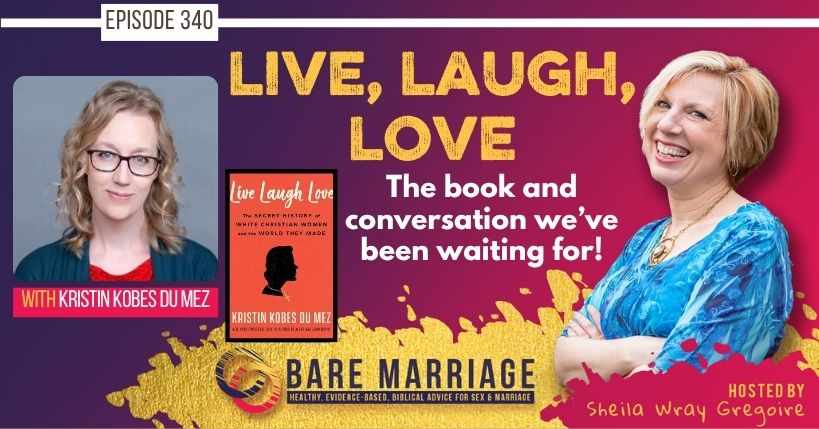


At long last, Live, Laugh, Love is here!
Kristin Du Mez made history when she wrote Jesus and John Wayne, the history of evangelicalism and how it led to Trump (and what it said about masculinity).
People wanted her to do the same thing to write about how the evangelical ideas of womanhood came to be.
And that day is finally here! Live, Laugh, Love launched on Tuesday, and I’m so happy to bring you this convo with Kristin today. I focused our conversation on the things that I knew would matter especially to my listeners–how women often created theologies to make sense of their lack of agency; how the whole idea of “biblical womanhood” didn’t come from the Bible; and what romance novels taught us.
So dive in!
Or, as always, you can watch on YouTube:
Timeline of the Podcast
00:00 Introducing Kristin Du Mez
05:57 Live, Laugh, Love & Where “Christian Womanhood” Came From
10:51 The Hannah Whittall Smith Story
17:10 Faith, Change, & Deconstruction – Part of the Human Experience
21:02 The Fascinating Womanhood Phenomenon – Evangelicalism, Mormonism, & Positive Thinking
26:40 The Myth of Biblical Womanhood & Its Actual Roots
31:43 The Complicated Story of Elisabeth Elliot
47:06 The Problem with Sanitized Christian Stories & How the Gatekeepers Took Over
55:49 Christian Women Take Over the Internet
01:02:20 Christian Fiction & Female Agency
01:15:18 Conclusion: Can Women Change the Story?
Key Talking Points
1. Christian womanhood has a history—and it’s more complicated than we often realize.
Where did our modern ideas about femininity, submission, marriage, beauty, wellness, and success actually come from? Kristin’s historical research shows that many of the ideas we now casually call “biblical womanhood” emerged through a complicated mixture of evangelicalism, holiness theology, Mormonism, secular positive thinking, publishing, and popular culture.
2. Women often created their own spaces because they were excluded from institutional power.
Women who couldn’t hold the same positions of authority within churches nevertheless found ways to build influence through women’s ministries, books, conferences, radio, and eventually the internet. That meant women’s theology developed in spaces that weren’t always closely monitored by the institutional gatekeepers—but it also meant women were navigating enormous constraints as they tried to claim agency.
3. The promise of “follow the formula and you’ll be happy” has deep roots.
From Hannah Whittall Smith onward, we see versions of a powerful idea: if you believe correctly, surrender correctly, behave correctly, and follow the right spiritual principles, you can ultimately obtain the happy life you want. The problem is that real life doesn’t cooperate with formulas—and when the promised blessings don’t arrive, women are often left believing they must have failed.
4. Submission theology can turn suffering into something women feel obligated to endure.
The stories of Hannah Whittall Smith and especially Elisabeth Elliot reveal how theology can become a framework for making sense of circumstances people cannot control. When submission is elevated into the ultimate Christian virtue, suffering can become spiritualized—and women may be encouraged to endure situations rather than question the systems producing them.
5. Christian publishing didn’t just reflect theology—it helped shape it.
We often imagine theological ideas spreading because they were simply “biblical,” but Kristin shows how publishers, bookstores, radio, organizations, and markets all played a role. Once certain ideas became commercially successful and institutional gatekeepers reinforced them, other voices became much harder to publish or promote.
6. The internet disrupted the old gatekeeping system—but it didn’t automatically make everything better.
Blogging gave ordinary Christian women platforms that previously would have been nearly impossible to obtain. Suddenly women could build audiences without first receiving approval from denominational or publishing gatekeepers. But the shift from blogs to social media also created new influencer cultures, showing once again that increased access to a platform doesn’t necessarily mean increased wisdom or accountability.
7. We don’t need sanitized stories to have a living faith.
Perhaps the biggest takeaway for us is that Christianity doesn’t need tidy biographies, perfect heroes, or neat explanations for suffering. Real history is messy. People change, people fail, people resist, people get things wrong, and people keep searching for God in the middle of it all. A faith that is actually grounded in reality should be able to handle that complexity rather than hiding it. (And we’re here for it!)
Things Mentioned in the Podcast
BARE MARRIAGE ANNOUNCEMENTS
Preorder Fawn, Sheila’s New Book
Our Spanish Site is live!
CHECK OUT OUR OCTOBER SIMULCAST EVENT
We’re doing our sex talk and a one-day marriage conference! Check it out for more information.
Find the church info page here!
TO SUPPORT US:
- Join our Patreon for as little as $5 a month to support our work (and get access to the book club!)
- And check out our Merch, or any of our courses!
- Give to the Good Fruit Faith Initiative of the Bosko Foundation
- Join our email list!
LINKS MENTIONED:
- Kristin Du Mez’s book, “Live, Laugh, Love”
- Kristin’s Website
- Kristin’s Substack
- Elissa Yukiko Weichbrodt’s website
- Elissa’s book, “Look Like a Lady”
- The Whole Story
- Holding It Together: How Women Became America’s Safety Net
- Episode 104: Jesus & John Wayne
- Katharine Bushnell Episode
Have you read the book yet? What most excites you about it? Let’s talk in the comments!
Transcript
Are you ready? I don’t think you’re ready. This is the podcast that we have been waiting for since, well, since almost when Great Sex Rescue was out. Because Kristin Du Mez’s new book, Live Laugh Love is finally here.
Her book, tracing what biblical womanhood and what her ideas of women in Evangelicalism and Christianity have been and have become throughout history. And this is going to be such an awesome conversation. I’ve been so looking forward to this. I read the book a couple of months ago and have just been itching to talk to you all about it, so that is what is coming up on the podcast before we get to it. And Kristin will be here in just a few minutes.
Some really exciting stuff that is going on here at Bare Marriage too. This week our Spanish side launched. I can’t even say the name of it. Please excuse me. If it was French, I could do it. But we have a Spanish site where we translated eight different podcasts into Spanish. We have a Spanish version of The Good Girl’s Guide to Great Sex, a Spanish version of 31 Days to Great Sex. We have a Spanish version of our orgasm course. We are trying to create some a Spanish resource hub where women who are having issues with sex and who just want to figure out how all of this is supposed to work without it being some weird, creepy obligation, duty thing can come so where they can get healthy information because we keep being told in in the Spanish community, in the Latin American community especially, that there’s such a need for healthy resources and so that is now here we have some social media accounts, and so much more. So I’m going to put a link to our landing page for our Spanish resources. Please share it with any Spanish speaking people that you know. Let’s get this going in Latin America and let’s show them that, yeah, there’s another place where you can get healthy stuff. And thank you so much to our donors through the Good Fruit Faith initiative of the Bosco Foundation. You know, people would be giving even as little as $10 a month. And that’s what funds are research projects, and that’s what funds are our translation work. And we’ve got the Good Guys Guide to Great Sex coming out in February and the Great Sex Rescue probably next year. And so we’re getting all of that ready, to do Spanish stuff with you.
So thank you to the Good Fruit Faith initiative and of course, to everyone who gives to our Patreon as well. So check out those links. And now, without further ado, here is what you all have been waiting for. Here is Kristin.
Well. I am so thrilled to welcome a friend to the podcast, Kristin Du Mez. Hello.
Kristin
Hi, Sheila, it’s so good to be here.
Sheila
Yeah, and this is going to be fun. So you, after many, many years of trials and tribulations and pulling your hair out, you have managed to bring your new book, Live Love Laugh into existence. Did I say that right?
Kristin
Live Laugh Love
Sheila
Not only do I get the title wrong, okay, I never remember subtitles – the secret history of White Christian women and the world they made.
Kristin
Yes. That’s it. It took a long time. It took longer than I thought it would. And it actually wasn’t kind of a struggle to write in that. Like, I always knew what I was going to write next. It just kept expanding. Yeah. Right. And so, like, the writing process itself was one of excitement and discovery. But my goodness, it took longer than I had planned. And fortunately my publisher was along for the ride and just kept saying, just, you know, keep digging Kristin.
Sheila
So yeah. Yeah. And keep cutting. Keep cutting, I’m sure.
Kristin
And then keep cutting. And then they give up at the end. It’s a little longer than all of us would have liked, but we all kind of agreed. This is the length that it has to be. It’s a complex book, but it’s, you know, a lot of different pieces that seem like they might not have anything to do with each other, but then by the end, you see how they all fit together.
00:04:08:06 – 00:04:17:16
Sheila
Yeah, I love it. So, of course people know you best for Jesus and John Wayne. So can you sum up Jesus and John Wayne for me?
Kristin
Yeah. So Jesus and John Wayne is a book about white evangelical masculinity and militarism and essentially answers that perennial question: how could family values voters vote for a man like Donald Trump? And what I do is, rather than seeing that as a betrayal of their values, I take a closer look at the things they actually value and discover this strain of aggressive, militant masculinity that develops over the years, people like Mark Driscoll and these popular books on evangelical manhood. And that goes hand in hand with a militant Christian nationalism, so that by the time Donald Trump appears on the stage, he is God’s anointed one, the right man for these troubled times, precisely because he does not embody traditional Christian virtues.
Sheila
Right? And of course, that came out right at the tail end of Trump 1.0 so right before the 2020 election and had a huge impact there. And of course, you said that you wrote it to understand the times. You didn’t write it as a prescription or as like, an idea book and yet very much so, you know, you look at Pete Hegseth or something and poster boy.
Kristin
Right? Nightmare poster boy.
Sheila
This wasn’t supposed to be an instruction manual, but somehow people have taken it that way. And now, Live Laugh Love is it’s kind of a little different like it because I think, and you can tell me if I got this wrong, but I think in in Jesus and John, when you were really trying to draw the line to that militarism and see, the problem with looking at evangelical women is that there isn’t just one.
Kristin
Right?
Sheila
There isn’t just one thing that you can draw the line to. So you’re more trying to help us understand how we got to where we are, where there’s this whole lot of different influences in the pot mixing it all.
Kristin
Yeah, yeah. I think, and the subtitles also kind of point to a difference where Jesus and John Wayne are how white evangelicals corrupted a faith and fractured a nation. The subtitle to Live Laugh Love is the Secret History of White Christian Women and the world they made, not just evangelical women. So, this is an evangelical, charismatic mainline. But then I also bring in the secular tradition of positive thinking and how that. Oh, and Mormonism. Yeah. And the secular tradition of positive thinking and how they all kind of influence each other. And I mean, if you think about the title Live Laugh Love, what I love about the title is that when I share that title in the spaces filled with women, they know immediately like the contents of the book. Right. You’re going to talk about mommy blogs and Christian romance and multi-level marketing. Right. They just know what’s going to be in there. But if you think about any of those topics, you know, influencers, mommy blogs, multi-level marketing, you know that this is not just an evangelical story. It is an evangelical story. You know, it’s also a Mormon story that Mormon women have played a really prominent role inside these cultural spaces. And it’s not just a Christian women story. So when you get things like the secular philosophy of positive thinking, which deeply shapes prosperity theology deeply shapes and deeply shapes mainstream evangelicalism, but it also shapes secular women’s culture. Right? The wellness industry and all of that. So that’s what I’m tackling here. And then when I did, I’m a historian. So I kind of start there and then start teasing out, where did these things come from? And where did our modern ideas about femininity and beauty and wellness and prosperity and success come from? Where did these things come from?
Sheila
Right. And I think one of the interesting things too, about studying women, and in a Christian cultural space is that a lot of this happened outside, right? Because women couldn’t influence inside churches. We couldn’t lead. And so we built all of these spaces for ourselves that weren’t policed in the same way.
Kristin
Exactly, exactly. And so, you know, if you are an ordained minister, if you are a seminary professor. All right, inside those spaces, there are rules of orthodoxy. You have to sign on. You have to teach a particular variant of Christian theology. Right. And your paycheck depends on it in the women’s spaces, because they are mostly kept out of positions of institutional authority, they get to create their own spaces. And so, you know, women’s ministry, some of them are under the authority of a denomination, some are completely, you know, on their own. But even those under the authority of a denomination, often the men in the denomination didn’t pay a lot of attention to what was going on in those women’s spaces. And then on the consumer side of things, women could, you know, buy a book by Joyce Meyer and by Beth Moore and by Dorothy Patterson, and they could tune in to Televangelism. And so they could consume products coming from all over the theological map. And, and that’s generally what women have done. And so just by looking at women, I knew I had to broaden my scope because things just work differently in the women’s space. And power also works differently when we’re looking at women’s spaces, because most women did not have kind of direct access to religious power, social power, and they had to navigate, you know, male headship and, different hierarchies, theological hierarchies and rules.
So many rules to claim some sort of power in their spaces. So I think it’s a more complicated book in that respect to some of the women that, you know, you might expect, if you know my work, if you know where I’m coming from, you might expect me to, you know, be really critical of I think you might be surprised at the complex and even sympathetic treatment of some of these women in the book because, you know, they’re, they’re grappling with some really difficult constraints.
Sheila
Right. Well, we obviously cannot cover the whole book because it’s huge. But there are a couple stories that I want to bring out. So one of them, you open the book with, you start talking about Hannah Whitall Smith, and I actually read her book like, several years ago. What was it? The secret to a Christian?
Kristin
The Christian Secret to a Happy Life.
Sheila
Yeah, I read that a couple of years ago. And I forget why. I think I found it at a yard sale, and I just thought it would be neat to see what they wrote 140 years ago or whatever. And, you know, I found that there were a lot of echoes in it of things that I have said. And some of the central messages that I used to say in some of my women’s conferences when I did them in the OT, that I now kind of regret because I feel like it was too simplistic. Yeah. But I saw a lot of it there. It’s like, oh, this is interesting that she was saying a lot of the same things back then, but I find her a really interesting woman. So can you kind of tell us her story?
Kristin
Yeah. You know, I didn’t originally plan to write about Hannah Whitall Smith at all, and I thought the book was going to start much later. So in the 60s and 70s, when it was when I thought the story was really going to get, get going and, so I what happened is I just kept running up against mention of her and, and people like Elisabeth Elliott and Marabel Morgan would give shout outs to, Hannah Smith and, Christian publishers, would be, you know, republishing her work.
And just over and over again, I kept running into Hannah Smith. And so I thought, okay, I’m a historian. I have to figure out what this is about.
And so what the first chapter does by centering on Hannah Smith is, first of all, it really centers women in the history of evangelicalism. And it helps us see a particular variant of evangelicalism that really comes to define 20th century American evangelicalism. And that is something called holiness evangelicalism. And it’s part of this revivalist tradition. And in the 19th century, it stood against Calvinism, against the kind of doom and gloom theology of sin and brokenness. And it was a very empowering theology that centered religious experience and that centered the role of the will, so if you believe right in the act of the will, then you can kind of put into motion spiritual laws. God’s going to act in a very predictable way, and the result is going to ultimately be holiness and happiness. And this is like the formula. And it was so neat and tidy and so false. But it was tantalizing because it gave Christians a sense of power. Right? You have within yourself the power not only to be good, but to get good things. Now, Hannah Smith I don’t want to give too many spoilers, but she, you know, leaned into this theology. She started as a Quaker, converted to evangelicalism, and wrote this book that became a massive bestseller.
Sheila
Like 3 million copies.
Kristin
Wild.
Sheila
Did that not start Fleming Revell?
Kristin
It’s one of the first books published by Fleming Revell. Revell publisher. That’s the publisher, set up by Dwight Moody’s brother in law.
Sheila
That’s part of Baker Publishing Group, which is what I’m with.
Kristin
It is. It’s been bought out, you know, multiple times. But Revell is a name that appears over and over again. I mean, by the end of her life, she had really kind of backed away from it because her own life was anything but happy. Her husband cheated on her. He was also a holiness preacher, and she was sick and her children were difficult and several died.
Sheila
Like tragically died.
Kristin
It was like, you know, it was real life is what it was. And her theology really couldn’t explain it. In the end, she had to just say, well, I guess I have to use my will not just to believe, but I have to use my will to be happy. So she had to completely redefine happiness to find that reward. So that’s what happened to her. But her book had a life of its own. Right, her book that gave these promises of a happy life and how to achieve it, sold millions of copies and kept being reprinted and then inspiring a whole host of popular Christian women’s books in the post-World War Two era.
Sheila
Yeah, and I thought it was interesting that you know her husband was a speaker, but then so was she. And in some ways she was better than him. And then when he had all of these fallings, she kept going in a lot of ways. So it’s interesting that all that happened.
Kristin
She was a feminist. She was a women’s rights activist, and she taught total submission to God so that the calling of the Christian was to totally submit. This is the act of the will. And then, like you totally submit your will to God’s will. What happens over time is that teaching gets transformed into total submission, not to God directly, but to the men in your life that God has placed in authority over you, and that by that post-World War Two era, that’s how her theology is being put to use.
00:16:14:24 – 00:16:34:06
Kristin
Give up your will, totally submit to God. But what that looks like is to your husband, to your pastor, right? And so it really robs women of agency while promising them that they are going to receive rewards on earth as in heaven.
Sheila
What I found interesting about Hannah’s story, too, and you made reference to this, is that a lot of these theologies that women really took off with and got famous with, and again, we’re talking about a few of them, but there’s many of them in your book. A lot of them were a way for these women to make sense of circumstances that they couldn’t control. And I think that’s a theme that we see, like throughout the story of women’s experience in Christianity. And in it is theology that helps us make sense of bad situations that we can do very little about.
Kristin
Exactly, exactly. And another theme that emerges over and over again, throughout the book is change over time. All right. I actually allude to Hannah Smith. She goes through many, many spiritual transformations. Her theology keeps shifting. And so I refer to her evolving faith, which of course, is, to those in the know, a shout out to Rachel Held Evans. Who comes in at the end of the book and rather than seeing this as kind of, you know, deconstruction, although I think that those in various stages of deconstruction will find the book fascinating. As a historian, what I have to say is that when you look at the level of biography, when you really hone in on an individual believer’s lives, you will see dramatic change over time.
People with genuine faith are constantly struggling to make sense of their lives in light of their theology, and then to adjust their theology in ways that make sense of their lives. This is not necessarily a problematic thing. This is just a thing. This is what happens when you have faithful people or people trying to live faithfully and authentically according to their beliefs. This is just human experience.
Sheila
Yeah, I love that. And yet at the same time, in modern evangelicalism, we are going to have people who write the same books for 40 years. Right? Like, what do we have? The five languages, five love languages.
Kristin
Right, well, well that’s it. So the market’s going to reward certain things. And, you know, once you get a formula and once you have these, like, institutional, power structures and again, a lucrative market, it’s going to reward formulaic, and acceptable blueprints for this is the faith you ought to have again when you, when you scratch beneath the surface and look at even the very people writing these confident, formulaic, books, their lives are falling apart underneath. And if that’s the case, you know, what does that mean for the rest of us who are often, you know, running up against the formulaic faith standards and these impossible standards of purity and faithfulness or people who are, like, literally shaping their entire lives to live up to these standards, doing everything right, only to discover that, you know, the blessings that they were promised just aren’t manifesting for them. Then what happens? Either you blame yourself, which a lot of women do, or you have to revise that theology or walk away from the faith altogether. And all of those paths are represented in this book.
Sheila
Yeah. Yeah, very much so. You know what, Becca? The internet can sometimes be a really, really terrible place. But I have a happy place.
Rebecca
We do.
Sheila
That is our patreon group on Facebook. It’s the place where I go when I have some encouragement. Where I just need to bounce something off of people to see if I’m crazy or not. And also where I get the best ideas for our podcasts and our blog posts.
Rebecca
Absolutely. And we also have a lot of fun there too. We’ve created a fantastic community where we, you know, share funny memes that we’ve seen throughout the week, and we talk about the terrible takes that we saw on Instagram. And you can go somewhere and know that you don’t have to defend your belief that women should have rights. So if you are looking for a way to support this podcast, if you love what we do and you want to give us a tangible step up, you can join our Patreon for as little as $5 a month and get access to our Facebook group, where you’ll get to join in the fun and know that you’re supporting a fantastic cause.
Sheila
To join our Patreon! It’s just Patreon.com/baremarriage or take a look at the link in the podcast notes.
Okay, let’s fast forward a little bit, to the chapter. It is you who have failed. I love your chapter titles, like. Yeah, like you’re the one who messed up. You’re the one who has the power to fix it. And that’s very much the message of fascinating womanhood. Yes. And which has two iterations.
Kristin
Actually three.
Sheila
Yes. And I would even include Laura Doyle in that. I don’t think you talked about Laura Doyle.
Kristin
No. There are so many others who consider all of the women here. Not the definitive examples but representative examples.
Sheila
Yeah, because I feel like you went to like fascinating women. And then. And then really the surrendered wife. And like the Laura Doyle thing, I think she kind of continued. Yes. Anyway, we talked about that in the podcast two weeks ago. Two weeks ago, I don’t know how long ago it was, but it was in August. So I’ll put a link to the podcast notes to that one. Really interesting. But let’s start with the 1920s. So tell me about the booklets.
Kristin
Okay. Well, you know, well, first let’s start with that. It’s you who have failed because that’s where I started with Helen Andelin’s book, Fascinating Womanhood. And, it’s always interesting when I raise that name and title, there’s always some women in the audience that know exactly what I’m talking about. And then there are others who just haven’t heard of her at all. But, that is, it was a self-published book, published in the 1960s, that sold millions of copies. Fascinating Woman had courses and it taught women how to please men and you please men by being hyper feminine, by being really, you know, ditzy. And you don’t challenge a man’s authority. You don’t challenge his ego. You just please him in every possible way, become nothing so that he feels like he’s everything. And far from being oppressive to women again, this is the key to happiness. You submit to your husband, and you submit your will to him and he’s going to be nice to you. He’s going to buy you nice things. He’s going to treat you well, and it becomes all the rage. And, now what a lot of people didn’t realize is that Helen Andelin was Mormon. And so this is a Mormon book. She didn’t really advertise that. And she really marketed it more broadly. She certainly marketed it through Mormon spaces, but she didn’t go out and really advertise it, certainly not as a Mormon book. She downplayed that. No, this is just a book for women. It will teach you how to be happy. That book goes on to directly inspire Marabel Morgan’s book, The Total Woman that became the best selling nonfiction book in the United States in 1974. Right. So you have this direct kind of pedigree. Well, it turns out that Helen Andolin drew very heavily on a series of booklets that were published in the early 1920s by a little outfit called Psychology Press, and was not a Mormon publisher. It was not a Christian publisher. It was a new thought publisher. In other words, the secular philosophy of positive thinking. And that was when those booklets first really popularized this hyper feminine, submissive style, which was all a ploy to get you what you want. And it goes hand in hand with consumer capitalism with the get rich quick schemes. It’s essentially the female version of get rich quick, you know, mind control books. So what I discovered then is these very popular, ideals of quote unquote Christian womanhood that take hold in evangelical spaces and throughout the world of Christian publishing, actually were rooted in a Mormon book that was rooted in the secular philosophy of New Thought and that’s that was one of these moments, like, now I get it. Remember what I said about, you know, when you think about multi-level marketing, you think about influencers, you think about that whole world. You know, it’s evangelical, Mormon and positive thinking. And here I had this central strand that connects all of those things. And this is the strand that defines kind of, you know, popular conceptions of the ideal woman, Christian or otherwise.
Sheila
Right? I love Tia Levings’ memoir, A Well-trained Wife. She talks about fascinating womanhood and how she learned how to talk. Yes, because they make you change your voice and Tia Levings calls it a funny baby voice. How you’re supposed to speak just a little bit higher. And when you’re angry, you’re supposed to pout and you’re supposed to pound your fist against his chest. Like. Just like you’re a little kid.
Kristin
Be a little baby. Yeah, because threatening his ego gives you just enough power. But it still makes you so cute and adorable and right, this child-like model childish model, right again has deep historical roots. And I encountered it in my historical research before I read Tia’s book. So when I read Tia, I thought, yeah, right. So Tia is a voice that comes in, later in the book because she lived it. Right. So I kind of encountered this first just as a researcher trying to figure out where this stuff comes from? And, you know, she experienced it firsthand.
Sheila
Yeah, yeah. And so you have I mean, I thought, I think this is absolutely fascinating that this idea of biblical womanhood because very much what they were sharing in Fascinating Womanhood and in The Total Woman, I mean, all of that led to love and respect led to for women only. It led to like all of the bestsellers that we critique, His Needs Her Needs, Marriage on the Rock. It led to Mark Driscoll like it’s all telling the same story. And it didn’t come from the Bible.
Kristin
No biblical womanhood. It is so culturally conceived. And that’s the thing that history shows us so powerful. Right. So, like, your work is so crucial. And again, I don’t know if this will be a spoiler or not, but you actually enter the narrative at the end of the book because of your work deconstructing these myths, especially around female sexuality and sexual purity. Right. And so you’re tackling this head on. What I do as a historian is show where they came from. Right. And once you start to see where these things came from, I mean, ultimately it doesn’t answer the question, is it right or wrong? But it does make it a whole lot harder to argue that these are biblical, and certainly that they are the only true biblical way to be a woman, to be a man. You know, biblical sexuality, all of that. No. There is so much more going on.
Sheila
Yeah. And I think what I find interesting about Fascinating Womanhood and in the Total Woman conversation is that this is where we start to see, and I know it was present before, but this is where the idea of sex as a ministry that women perform for men becomes like a really, really prominent theme. Yes, in a way that it wasn’t before.
Kristin
Yeah, yeah, it’s a duty. And any, you know, they have no needs that matter.
Sheila
Right?
Kristin
It is what they owe their husbands. And their husbands have immense needs. Yes, they have sexual needs and even more so, or I don’t know, or equally so, their egos need to be, you know, stroked. And they are so fragile, their masculinity, their authority, just so fragile. And what they really need is to come home to a wife every day who props them back up and tells them how amazing they are, how good they look, how powerful they are, and caters to their every need. Whether it be in sex, salads or sports, as Marabel Morgan likes to say, right? That is the woman’s calling. Now open your Bibles. Where does that come from? And it infantilized these women and it infantilized men.
Sheila
Yeah, yeah. Because they are so fragile that they need it. And yet women don’t need this. And so it’s like who is actually leading them?
Kristin
Right. It just comes across as, you know, almost in its best form, manipulative. Right. Because either it’s just entirely oppressive to women. And it’s just a way to kind of brainwash women into completely giving up all of their, you know, not just rights, but even their dignity, or how it’s sold to women is, again, the Christian secret of a happy life.
Follow these rules and you will be rewarded with, loving husband, a good marriage, a happy home and a prosperous life. Right? It always comes with that set of promises. Therefore, what this really is, is it’s all, these are all tools of manipulation, right? Manipulate your husband, give him what he wants so that he gives you what you want. Whether it be, you know, a new nightgown or a trip to Hawaii. I eat according to these rules, and you’re going to ultimately get what you want.
Sheila
Yeah. You know, what’s interesting is, and I’ve mentioned this before, in our survey for a book, The Marriage You Want: some 7000 people, a matched pair with, with both husband and wife of a couple answering. And we found that passive aggressiveness among women was far higher in relationships where the husband was in authority over the wife. So in complementarian relationships, you see a lot more passive aggressiveness on the part of women, because this is how we were literally taught to act.
Kristin
Right. That’s what you’ve got. That’s you have to work within the system and that’s what you’ve got. You cannot be direct, right? You cannot talk about your needs. You cannot challenge the authority or the decisions. So you’ve got to yeah. What are you left with? And so yeah. Is that a healthy marriage? Is that a healthy human relationship? And yet for generations this has been packaged and sold as the only way to be a Christian wife. And it really is wild once you start to, to pull things apart right.
Sheila
Now, another woman who had a big influence on what it means to be a Christian wife was Elisabeth Elliot, and I find her so fascinating. Joanna, our statistician, loves that she’s done some major Elisabeth Elliot deep dives, and read many of her books. But it’s like Elisabeth Elliot, you’re talking about the evolution of faith. Like she could have gone in so many different directions.
Kristin
Goodness, yes.
Sheila
And like, how would evangelical womanhood be different if she had chosen different routes where it really looked like she was going down the egalitarian route for a while there? And then she totally changed her mind on it.
Kristin
Yes. Oh my gosh. You know, initially when I sat down to start writing this book, I saw it, I got to deal with Elisabeth Elliot again. I already wrote about her son and Jesus and John Wayne, and I just, you know, I always like my writing to be new things. And I felt like I had to, you know, retread old ground. And then I started doing more digging. And, a couple of biographies came out, Ellen Vaughn’s work and especially Lucy S.R. Austin’s book, covering her entire life. And, you know, like I said, once you get into the level of, you know, kind of grassroots spiritual lives, whole life biography and not the sanitized, inspirational nonfiction version that Christians love to put out there. But the deeply researched, historically accurate versions, things get much more interesting. So then I knew, oh, I cannot wait to dig back into Elliott’s story. And I spent a lot of time in the archives, and I’m trying to piece together what happened, and she became probably my favorite character in the book, to be honest, because she is so interesting and she kind of starts off life deeply influenced by this holiness Christianity. The same, as Hannah Whitall Smith. In fact, her parents had a cherished volume of Smith’s book, and her great uncle helped start the American Kazakh movement. Kazakh theology is a variant of this holiness theology and the kind of high control variant. So, she’s like steeped in that. She’s like the next iteration of Hannah Whitall Smith. And you can see that in her early life and submission and submission to God and putting all of her own interests aside to submit, totally. And the path that that puts her on, how that shapes her relationship to Jim, what she tolerates and her relationship with Jim.
Sheila
I know, like, why does nobody talk about the fact that he was cheating on her?
Kristin
He was such a schmuck, right? He was so terrible. I mean, even her own brother, who was his best friend, said he’s playing her like a yoyo. Right. But her theology said, you know, just suffer and submit. And that was all she was called to do. And so she waited it out.
Sheila
So for people who don’t know, basically, like, she falls in love with this guy while they’re in college. Right. And he doesn’t really seem to pay much attention to her. And then he starts and they start this friendship and they end up talking and he says, you know, I don’t think I’m going to get married. But if I were to get married, it would be to you. But I’m going to the mission field. And so then they’ll start writing letters, but then he’ll be like, no, I feel like I’m loving you too much more than God. And she’ll say that. And so then we need to break it off. We need to stop corresponding, and then he’ll start again and all this back and forth.
Kristin
And then he’ll be, like, hanging out and kissing other girls.
Sheila
Even though they spent all of this time in their letters, obsessing over whether their physical contact was too much and the physical contact they met was like brushing hands against each other. And at one point they were sitting on a park bench and he put his head in her lap. Right. And like, was that too much? And where they totally did they needed to put it on the altar like Abraham put Isaac on the altar and just like, obsessing over this and meanwhile. Yeah. So and then he goes out and kisses a whole bunch of other girls, like, not just one, but like a whole bunch of them.
Kristin
Right. And then, you know, eventually, you know, God is faithful and they end up, they both go to the mission field in Ecuador but go separately. But they’re, you know, in each other’s orbits, and then they end up finally Jim gets the message from God, yes he should marry her. So they marry .
Sheila
But he only gets that after he’s told that he can’t continue to serve in this capacity unless he’s married
Kristin
Things are great. According to what? Elisabeth’s word. And then, you know, the familiar story where he is martyred or, you know, killed, by the Iraqi people that he and other male missionaries foolishly decide to go to, you know, without any language capacity. It’s a fool’s errand. But they ignore all of the signs that would direct them, like, no, this is a bad idea. And there were many. If you instead say no, God was telling them to go, okay, so that’s like the familiar story. But then what happens to Elisabeth after that? And that’s where things get super interesting, because yes, she writes, through Gates of Splendor. She writes about the martyrs. But even in that book, she’s already a little bit nuanced. Yes, it’s a story of God’s faithfulness, but it’s a little bit more complex. And then her subsequent book kind of biography of Jim, even more so, and she is starting to personally really grapple with the simplistic teachings that she had been raised with. The holiness. And like explicitly saying holiness theology, I don’t buy it anymore. God’s promises did not come true. I was obedient and looked at what happened to me. And she’s not even bitter. She’s just seeking the truth. And she doesn’t turn away from the Bible. She just starts turning away from what she calls evangelical gobbledygook. The simplistic, vocabulary, the simplistic truths that were being sold as Christianity. She wants none of it. And I just, I grab my book here because, I have an Elisabeth Elliot quote right up front, that comes from this era, of her life. She writes, and if you make this system your god, you’ll soon be telling lies in order to remain consistent, she starts issuing a devastating critique of cultural evangelicalism of evangelicalism at large. She starts questioning the purity teachings. She starts entertaining the fact that same sex relationships might actually be honoring God. And she just has absolutely devastating critiques of Christian publishing as being overly simplistic. And they aren’t interested in the truth. The hero of her story is the truth. She says, essentially, as I read that, that the documents from that era and my editor saw this too, when I turned the manuscript in those first chapters, like Elisabeth Elliot of the 50s and 60s is essentially me.
Sheila
Yeah.
Kristin
A woman who is holding on to her faith but realizing that the beauty of Christianity is in the complexity, and those trite promises are actually falsehoods. And then she snaps back.
Sheila
In a big way.
Kristin
She marries her second husband Addison Leitch, who is a stalwart conservative, thinks feminism is stupid. Editor at Christianity Today. He tragically dies of cancer relatively soon.
Sheila
And there were also some rumors that he was having inappropriate relationships with some of his students?
Kristin
Yes, there was that. There’s so much that didn’t make it into this book. There are yes, those. And even his courtship of Elliott is a little.
Sheila
Because his wife was still alive.
Kristin
His wife was still alive, dying of cancer when they met, when they became very close. So I think it was six weeks after her death that they were engaged. Right. So there’s just a lot more, like literally every page of this book there’s a lot more that could be written underneath it. And then she ends up kind of coming out of her seeking phase and ends up writing exactly the Christian platitudes that she had so strongly rejected. She came out with her book, Let Me Be a Woman in 1976, and it’s all this Christian womanhood stuff. It sounds just like that Marabel Morgan stuff, and it’s all about submission.
Sheila
And again, this is two years after The Total Woman. So it’s like, you know, The Total Woman was sort of pop Christianity. It didn’t have a lot of Bible verses that you see the same words, but and so Elisabeth Elliot just kind of took it and added serious theology.
Kristin
And that theology is the theology of surrender, of submission. It’s that holiness theology which works perfectly for it if you just substitute man for God. But of course, she conflates the two completely, and that’s what I argue. Hannah Whitall Smith never did right. She always kept those separate. And that’s the Elisabeth Elliot that we know today. That’s the Elisabeth Elliot that wrote Passion and Purity. But what we find out is when she marries a third time, she marries an abusive man. And, the last 35 years of her life, even as she keeps promoting this, these platitudes and promoting the purity stuff, she is in an abusive relationship and, to her death. And it is an absolutely devastating end to the life of a woman who I genuinely think was trying to be faithful to God, and that took her in many different directions. But it left her for the last several decades of her life in a space of profound unhappiness and even suffering. And so it’s a deeply troubling story, on multiple levels. Troubling in terms of where it brought her, what happened to her, but also deeply troubling because of the hundreds of thousands, millions, really, of people, women especially, whose lives she shaped because she told them things that were not even true in her own life.
Sheila
Yeah, yeah. And again, you’re living in an abusive marriage, trying to make sense of it, trying to make yourself able to accept it. And how do you do that? You hype up the submission side of it, right? You hype up that God is pleased when you submit because that’s the only way that you can deal with it.
Kristin
And that you turn your suffering into, kind of a spiritual practice. You turn all of the bad things into, right? You spiritualize them and you justify them, and you are able to endure.
Sheila
Yeah. And you think about this woman when she was single. So, between her first and second husband, she had a lot of independent, very independent thoughts. She was and she was really able to explore authentically what faith meant. And then when she got into both of these marriages that were problematic, she really seemed like she really did love her second husband. But to me, from what I’ve read, it still seems problematic. But anyway, she gets into these marriages that are problematic and her theology just changes. Yeah. And her critique of evangelicalism collapses like this, and she becomes one of the foremost drivers of evangelical publishing.
Kristin
Yes, it is wild. It is wild. And honestly, you know, having looked closely into this, I still have questions. I still have questions about what happened. Because I do not believe she was a woman who was easily pushed around. She was very principled and, again, I just can’t quite fathom what would lead the Elisabeth Elliot of the early 60s and really through the 60s to then become the Elisabeth Elliot of the 70s and, you know, through to the rest of her life. Fundamentally, there’s a bit of a mystery there. And, you know, what I did discover was that evangelical gatekeepers, powerful gatekeepers, were aware of her falling away from their version of their faith and were troubled with it. Her own family members were all kind of watching her. And then she met with their approval once she did her about-face. And I just want to know a little bit more. What kind of pressures, what kind of promises, what kind of almost conversion happened. Because I can describe what happens, but I cannot fully explain it.
Sheila
She reminds me so much of my grandmother. Like, very capable, very intelligent, very charismatic. When you spoke, like, you know, you could really command a crowd, but completely allowed the men in her life to overshadow her own thoughts. Yeah. You know, and affect her theology. My grandmother married later in life like she was. I think she was 31 or 32 when she married, which was older in those days. And in her 30s, she had a radio show in Winnipeg that she did on her own. And she taught at a Bible college and like, she was just very vibrant and going somewhere. And then she married a man who was a pastor and was never happy again, you know, because her life had to shrink. And yet when she was single, it’s like all of this was open to her, and she could think for herself.
Kristin
And yeah, yeah, you know, it is interesting to think what Elliot’s life trajectory would have been if she hadn’t remarried a second time. And certainly if she hadn’t remarried that third time. Yeah. And so, you know, but she still had agency throughout. Right? And she kept writing books and she taught these things that really just were false.
Sheila
And you think about, like, okay, Passion and Purity that inspired I Kissed Dating Goodbye. Yes. Right. Like, she was a mentor to Joshua Harris.
Kristin
I think she was.
Sheila
And she became very much a mentor in the Bill Gothard community, too.
Kristin
Yeah.
Sheila
Yeah. Which and we know how that turned out as well.
Kristin
Like who her work was. Yes. It crossed over into so many spaces and she really became, you know, as close to an evangelical saint as, you know, you can get in evangelicalism and that, like the kind of untouchable exemplar of Christian faithfulness because of her suffering and her submission. Right. So that’s the role that she plays. So I’m already bracing myself for when the book comes out, for presenting, like just the actual history. That isn’t a sanitized version because evangelicals love, you know, the sanitized versions, the inspirational versions. And I talk a lot in the book about the whole genre of inspirational nonfiction that develops with Revell Publishing and chosen books and that this has really become standard in evangelical circles. Like, you can talk about hardship, you can talk about failings, as long as that’s part of, kind of overarching narrative of God’s faithfulness and then ultimate obedience to get you to that happy ending and the really neat and tidy takeaways for Christian readers. But anything other than that, right. And you’re going to open yourself up to sometimes really quite vicious attacks.
Sheila
Yeah, yeah.
Kristin
I will say I’m going to channel the Elisabeth Elliot of, you know, the, the, the middle years. And she said this beautiful line, when she is critiquing exactly that tendency in Christian publishing, she said the hero of my tale is truth, right? So it’s like, if Christians cannot handle the truth, what are we even doing? And if we can’t construct theologies or, you know, think about what it means to be faithful around true historical narratives. Right? Then we have a huge problem. So, yeah, that would be my pre-emptive defense.
Sheila
Yes, I find the period from 1970 to 1998 so interesting because I feel like there wasn’t one story in the same way about the Bible as there is today. And I know there’s lots of voices on the left, and we would be some of those. And you talk about that at the end of your book. But I remember in the 80s, when I was in university and in the early 90s, almost everybody I knew was egalitarian. Many of us were still going to complementary churches, but we all knew it was only a matter of time, like the walls were coming down. I went to Urbana 87 and almost all the speakers were egalitarian.
I got to meet my hero there, Kari Torjensen Malcolm who wrote a book called Women at The Crossroads, published by, I think, IVP in the 80s. And it was one of the first books that told me that there was another way of seeing, you know, women and women’s leadership. And that was just so prevalent in the 1980s. It was like there was this whole publishing of egalitarianism that was out there. Yeah. Catherine Kroeger was doing work on first Timothy 2:12. Like, there were all of these people that were really pushing this. Yeah. And then it’s like it all stopped.
Kristin
Yeah, yeah. You know, I wrote about Lisa Scanzone and Virginia Melancon in the 70s already. And, you know, what happened is yeah, they were meeting with a lot of success across evangelical publishing spaces before things were locked down against them. And Elliot was part of that, locking things down. And so then you have by the very late 70s and through the 80s, you have the conservative takeover of the Southern Baptist Convention, which is hugely influential.
Kristin
And then, you know, by the 90s, you have really risen. All right. Late 80s, complementarism, counsel for biblical womanhood and manhood.
Sheila
When was that 1988? When was that?
Kristin
1987 I think. I could be wrong. It’s in the book probably or I know it’s Jesus and John Wayne, but then you have you know, by the 90s, and 2000, you’re getting into not just the, the SBC holding the line, but the Gospel Coalition. Literally defining, you know, the gospel Coalition around complementarism. And that’s something that I trace, you know, inherency complementarism, you know, their version of inherency, how they are able, you know, men in power are able to, produce a very narrow understanding of Christian orthodoxy and enforce that in their spaces. And that’s where you see the kind of sea change in Christian publishing, like people falling into line, because there are also mechanisms of discipline that are used to maintain those new orthodoxy.
Sheila
And let’s talk about that discipline because I don’t think people understand how this worked. So, the Southern Baptist obviously had this conservative resurgence, really got going in the 80s, had totally solidified by the 90s. And then you start seeing purity, culture, etc., etc. but what people don’t understand, I think, is that LifeWay Resources was owned by the SBC, and LifeWay was the largest Christian bookstore chain in the U.S. and in order to get your book in LifeWay, it had to abide by certain things. And so Christian publishers stopped publishing things that wouldn’t be stocked at LifeWay. Yeah. Because it would affect sales so much. Focus on the Family wouldn’t have you on their show unless you abided by certain things. And so, you know, all of this clamped down on a lot of the things that actually had been published in the 70s and 80s, like we had totally progressive books out there. Like if you could read some of the books from the 80s and think that was just written yesterday, right, right. But it all went away for like 30 years, and now I feel like we’re rediscovering it, which is great.
Kristin
I love how you highlight the forces of the market there. Right? So even publishers that may have, you know, different principles or convictions are going to play the game so that they can get their books on the shelves in those major bookstore chains so that they can get a spot to focus on the Family, and sell hundreds of thousands of copies, hopefully. Right. That is so,Live Laugh Love is about the Christian marketplace as well as about, you know, many other things. And then the gatekeepers that enforce rules, but also then just the power of the marketplace itself, once you identify this kind of key constituency, key consumer base, right. How do you appeal to them?
And you can see this in Christian radio. And I loved writing about Christian radio to where once they kind of determined that the key to profitability is giving, you know, quote unquote, Becky, their representative persona, you know, the average white Christian woman with kids in the minivan. Once you decide that she is key to your profitability, all of your music like the songwriting, right?
The artists have to fall in line to not do anything that could offend Becky and, the programing for Christian radio, all of that and you just see how it isn’t just these kinds of top down, authoritative positions that shape the Christian subculture. It is also the market. And, you know, they’re interrelated. And so, yeah, if you want your song played on Christian radio, you better be careful what you say. And, what we have then over the course of decades of this now is really, you know, kind of the, the state of the American church today, which is, a lot of people who hold convictions who do not dare to speak those convictions, people who stay silent in order to maintain jobs in evangelical organizations, in order to keep those publishing deals. We have a shocking lack of any prophetic voice, and you have a lot of people calling it righteous to just get along and get ahead inside those spaces.
Sheila
Yeah, it’s so scary. And it wasn’t always like that. Like there was, there was more of a plethora of voices in the 60s, 70s and 80s. They sang very different things than there were in the 90s. And aughts, which I think would surprise a lot of people, because I think people assume that the trajectory is that you always get more and more progressive, but that’s actually not true now.
Kristin
And you can see that, too, with, like I have a chapter on, women’s bloggers and, they’re the initial wave of bloggers. You know, the first ones were mostly just doing devotional things online and then talking about their lives online. And they weren’t radical and they weren’t really, shaking, you know, shaking things up until they did start shaking things up because they were writing about their authentic faith. Right? And again, people change over time. And what the, the blogosphere did is it democratized, the, the space it gave ordinary women platforms, before they even knew what that meant, they discovered, oh my goodness, I’m writing on this little blog and suddenly, you know, you get this big book deal and you sell hundreds of thousands of copies of a book, and you’re, an authority. Whereas before it was much harder for women, you had to be like the wife of a big time pastor to work your way up through denominational ministries, you know, like Beth Moore or so it was a lot harder to just kind of break through. There were a lot of mechanisms for gatekeeping. Once women, Christian women start blogging, the gatekeepers lose control, but they don’t even realize that at first because they aren’t reading women’s blogs until these women have amassed huge followings and they start questioning some of the teachings that they have been handed down, women like Sarah Bessey, like Rachel Hall Devin, Jen Hatmaker. And then all of a sudden, you see this, this moment in the 2010s where the gatekeepers, mostly men, but not all right, say, oh my goodness, like, who are these women? Where’s their power? And they try to kind of crack down. But then you, you don’t just see a, you know, getting more progressive because you also see the whole online space changed significantly and switch from blogging into social media, first Facebook and then Instagram and then evolve into especially this visually oriented cultural space of Instagram and TikTok and so on, into the kind of right wing influencer culture that is flourishing today. So, you’re right, it is not a trajectory of progressive, evolution or even any kind of liberation if you want to use that terminology. History is much more complicated. So you never actually know what’s right around the corner. And I guess there’s some comfort in that.
Sheila
I do miss the blogging days, like when blogs were king. I do miss that. I had fun. And what’s interesting is when I started in 2008, I was in with this big group of people, a lot of women who had big blogs and the majority of them are divorced today.
Kristin
Yes. So many of them are divorced.
Sheila
And the main topic of their blog was how to have a happy marriage. And again, it just reminds you of that whole Elisabeth Elliot thing trying to make sense of their suffering. And so I’m going to write about how to be a good wife, how to stay happy, how to do all this stuff, because that’s what I’m dealing with.
Kristin
Yeah, but what happens then? Right? When everything falls apart? I will say, the majority of the women that I was writing about, and I didn’t go to look for the ones who ended up divorced, I just was looking for, you know, some of the big names, from the early years of blogging, almost every single one of them ended up divorced. An exception would be Ann Voskamp. And, you know, I write quite a bit about her. Much more could be said and how she fits in that, but, you know, so not all of the women kind of had things come crashing down, but most actually did. And, when I interviewed Kristen Howerton, she was really not.
Sheila
No relation to Josh Howerton.
Kristin
No. Thank you. Yes. You know, a progressive, Christian blogger, who kind of wrote under the title, or the blog title Rage Against the Minivan and, she was, just a super fan. And she was super fun, super sharp and, but she talked about her own divorce and how the pressure on her because she had this Christian platform, even though she was more progressive and she would write about family and, you know, her adopted kids and her natural born kids and her Christian life, her social justice stuff, even, you know, kind of on the left edge of, Christian mommy blogs. She didn’t know how to surface the story of her divorce. And because initially her instinct was right, she needed to protect the privacy of her family as she was sorting through this to protect her kids. But then she had the pressure of, I’m still writing as though I have this great Christian marriage, and it’s not true. So what do I owe you know, people out there? What do I owe my own children? And again, life is just really, really messy. But people are coming to these blogs because they want something, a certain level of messiness is fine, but then it has to be kind of wrapped up in a nice bow, make you feel good and, and give you some, you know, inspiration, encouragement and some nice pat answers. So the real messiness of life isn’t super marketable.
Sheila
When it came time to tell my daughters about sex and puberty, I did a really bad job.
Rebecca
Not your strongest suit. I’m going to be honest. And your job was to teach women about sex at that point.
Sheila
I got a lot better as they got older. But you and your sister Katie and I were talking a couple of years ago, and you were joking with me about how bad a job I did, and I said, okay, well, then you do a better one. And you guys got together and you created a course called The Whole Story –
a video course where you and Katie tell the girls about sex and puberty. And then there’s discussion questions and activities that parents can do with their kids to solidify the lesson and make sure that you are the one talking to your kids, too.
Rebecca
And after resounding positive feedback from the girls version, we decided to add a boys version too. So don’t worry, moms and dads of boys, we’ve got you covered. So if you have kids from ages about 10 to 16, you should check out the whole story. Don’t put off having these conversations because if you don’t have them now, someone else will have them with your kid. This is a conversation that we want to help you have. Feeling empowered, not awkward.
Sheila
And the link to the Whole Story is in the podcast. Speaking of wrapping things up and bows and pat answers, I would say that probably the most influential aspect in my Christian walk in probably the first 30 years of my life was actually Christian fiction, and I didn’t realize it until much later about how so much of my theology was based in Francine Rivers the Mark of the Lion, or the TV series on Jerusalem, or, I didn’t read The Love Come Softly that much, even though she’s Canadian, but, you know, but that that whole thing. And I just couldn’t get into the Amish stuff. But you read, like, all of these books that are written to women. Yeah. The major takeaway is that God works in major, major ways when you lay down and do nothing. Yes. And so when you finally stop trying, when you finally surrender and just accept what you have and trust in God, then he will work. And it completely takes away women’s agency. And that is the main message over and over again with the people that we’re supposed to see as heroines: are these women who did nothing?
Kristin
Yes. Let the man take charge. Yeah. Don’t complain except for your circumstances. And yeah, I have a chapter on Love Come Softly and the genre of prairie fiction. And then I touch on Amish fiction as well. But initially when I conceived of this project, I intended to include Karen Kingsbury and a number of others and The Detainees. I read those books absolutely shaped my view of the Holy Land, among others.
Sheila
Yes, I know, and now I’m deconstructing a lot of that.
Kristin
Yes, you’re right how influential these books were. And, yeah, I have a shelf here with a bunch of novels that I read that I originally thought, oh, there’s so much to be said. And then wordcount got, you know, I ran up against wordcount, so I had to, like, drop one by the side and then another. So I ended up just really devoting what I didn’t want to like, a sprinkling overview. I wanted to really bring readers from outside this cultural space kind of into the narrative of at least one book. And that’s where I went with, Oke’s Love Come Softly, because it really did break open the market for Christian fiction in 1979, and it was later adapted into a Hallmark film. And it, you know, was kind of a good representative work. But I loved reading that one, not just for the theology and the positivity and the submission and all of that and the masculine protection. But also, I read it as an economic document. Right. What were the free market economics, the, kind of libertarian ideals that were also embedded in Christian fiction. And that’s something I saw over and over again in some of the books I didn’t end up including, but that was fun to write about and to hold it up together with, Laura Ingalls Wilder’s Little House, which scholars have already really shown how, the ideals of libertarianism, free market capitalism were embedded throughout that series. And I see that Oke kind of takes that and runs with it. But in a more overtly Christian packaging.
Sheila
Okay, I have a theory that I want to run by you, and I want to see what you think of it. Okay. So a big part of what you’re saying is that much of, the culture towards women, the messages towards women, we’re often women trying to make sense of their situation and, and as well, the gatekeepers were definitely trying to steer the church in certain ways. So, yeah, towards thinking unions are bad towards, you know, against socialism. All of that went through the church as well as a Canadian looking into America. I’m wondering how much of the current trad wife stuff, and I know there’s many things to it. And I’m not saying this is the only thing. Okay. I’m just wondering if this is a piece of it. Is that in America, you need women to be caregivers in a way that you don’t in most other Western nations. Because we do have more social safety nets. They’re not perfect. We need a lot more funding for parents with autism. We need, like, you know, but nothing is perfect, right? But we do have more social support. We certainly have better nursing homes. And funding for that. We have a year of maternity leave, that’s usually paid, like, we have all kinds of different things. Right? But the US really relies on women to fill the gaps that the government is not filling. And so without women filling those gaps, society would basically collapse, right? Like there’s, there’d be nobody to look after parents as they age. There’d be nobody to look after the disabled siblings. When the parents got there, there’d be such huge gaps. And so like, could this be like the trad wife coming back right now is at the same time trying to cut back on all these social services, right?
Kristin
Yeah. Yeah. No, I love that theory. In fact, there is a book and I’m trying to see if I have it actually right over here. Because I’m blanking on the title and I do not. That makes exactly that case really powerful. It came out, I think, years ago.
Sheila
I just read it because that’s how I’m getting some of this. I know.
Sheila
And I will link it in the podcast notes. There you go.
Kristin
Why am I blanking on that? Because yes, I originally intended to kind of go in that direction. And again, I just kind of kept running out of space, especially towards the end, when there were so many things to pull together. But yes, I think that is certainly a theory that is worth considering. That the kind of breadwinner ideal that becomes, you know, linked with masculinity, and linked with this kind of nostalgic, myth of independence and godly independence and all of that just becomes gospel truth. And, but it never was true, right? It always required community, always required, and even like American individualism, if you look at the pioneer stories and so on, those pioneers were settling land that was cleared of native Americans by the federal government and railroads, you know, by the federal government brought them out there. So it’s always more complicated. But that mythology ends up becoming a kind of gospel truth, and it is pushed by people, with a direct stake in selling the myth. You know, so we have even talked about multi-level marketing. Yeah. Kind of the corporate interests who are, selling this as the only acceptable way to be Christian is to be capitalist.
But yes, capitalism with no social safety net, which is the capitalism they’re pushing, right? Welfare. They demonize that.
Sheila
That, yes, even the corporations even though Elon Musk is the biggest benefactor.
Kristin
While there is. Totally cool. Right. And they all, you know, just don’t call it that. Right. But this is, when you read, you know, Christian fiction, even nonfiction, but especially Christian fiction, right? You just see these themes. They’re just like, they’re seamlessly, just embedded in the fictional narratives that powerfully then shape notions, especially if you don’t consider yourself political notions of what is good, what is appropriate, who is deserving, who is undeserving? And, yeah, who’s going to fill in the gaps there? It’s going to have to be the uncompensated labor, and even coercive labor of women to hold society together. So I think a case could be made for that. Certainly. I’ll also say that, you know, there are always larger economic forces at play and kind of the liberal promise and the dual wage earners and the, you know, have it all feminism also runs up against limitations. And so, you know, to kind of hold the complexity kind of across the political spectrum is helpful. But yes, I would affirm your theory.
Sheila
Yeah, absolutely. Because it is difficult. I think, you know, as a Canadian in the 80s, seeing the promise of egalitarianism coming in and just being a natural thing, and then we tend to be like 5 to 10 years behind the US. But as the conservative resurgence came into the US and then hit here, and it was largely an American led thing in the church, like that wasn’t natural to the Canadian church and I feel like it killed where we were going. Interesting. And I saw, you know, as we were doing our surveys and talking to people around the world, we see a very similar thing happening in Australia right now where complementarism is doing a big resurgence and where it’s largely this American influence driven, even some of the biggest voices in it, or even speaking with Turning Point USA, which is just crazy.
Kristin
Yeah, yeah. No, I’m hearing that from Australia. I, you know, after Jesus and John Wayne came out, I heard from Christians around the world, in Africa, in China, I heard about the influence of John Piper’s theology and Gospel coalition writings in house churches in China. I’m hearing from folks in the UK, certainly in Canada. I just got off a call with somebody from Brazil and talked about how this, you know, American, Christian cultural ideals are just flooding the market in places like Brazil and, with obvious political connotations as well as the kind of social and theological repercussions. So, yes, this is the story. And so when you look at popular culture, you look at these, you know, the Christian publishing, Christian music, social media, all of that. And influencers, right? National boundaries are porous. And so what happens in America regretfully does end up, shaping global Christianity. And it’s never just, like, taking over global Christianity. But what we see happening is some of these really hierarchical and patriarchal theologies then take root in cultures that have their own hierarchies, their own kind of patriarchal roles. And so whereas, you know, scholars, especially Christian scholars, like to talk, in the past about the liberating effects of Christian evangelism. Now, what you’re seeing is that Christian theologies and that reinforcing, these hierarchical and even oppressive, social structures and sometimes, state regimes as well.
Sheila
Yeah, yeah. It’s like, how is that good news? Hey, you’re being oppressed and abused by your husband. Well guess what?
Kristin
Yep. Now he gets to call it biblical too.
Sheila
Yeah, yeah, yeah, it’s a huge problem. I think as I read the last bit of your book, the last bit feels different because you’re showing how a lot of these voices that the gatekeepers could no longer control because of the internet, actually have larger platforms than many of the gatekeepers themselves. You know, like a Jen Hatmaker or yeah, like a lot of these. And I and I would hope that we’re part of that too, you know, like our voices as we’re challenging some of that. So it seems like today there is this time where, yes, the voices that are trying to constrict women in the name of biblical womanhood are still really loud.
But there’s also this other side, and it’s just going to be interesting to see what happens in the next little while. I think there will continue to be a big divide and I think there will be a split in the church. I’m, I’m kind of hoping there will be. I don’t know, maybe that’s not right to hope for that, but I think we’d be healthier if we could go forward in the name of love and justice rather than oppression and hierarchy.
Kristin
But yeah, I know, I think you’re right that like, I don’t think you can walk back from you know what? At least not anytime soon. What the democratizing effects of the internet and how any woman can potentially gain a platform. Now, that doesn’t mean that money doesn’t make a difference, and it doesn’t.
Sheila
That’s necessarily a good thing. I just said no, no, no, not right. Because I have a big problem with people with no qualifications giving marriage advice and sex advice. Right?
Kristin
Right. Of course they were getting publishing deals too. But yes, yes.
Sheila
And I and the men were doing it already. Right. I think pastors who have no and they’re not speaking from peer reviewed research and they’re saying crap, so it’s.
Kristin
Be careful what you wish for. But, one thing that I will say is something that gives me some comfort is that it is now easier for women inside these really high control religious spaces, like the type that Tia Levings writes about. If you go into, you know, Doug Wilson spaces or some of those Gothard inspired spaces and there are a lot of these, really around the country women who, either converted into them or drawn into them or were born into these spaces. There is now like a small army of women who left those spaces, some of them have platforms, some of them work very quietly, still inside those spaces and try to show women patiently and gently that there is another way to live. There is another way to live as a Christian. And so, yes, when I’m depressed about all the things going on in the world, I do think that things are different now around abuse. That, you know, if you speak out about abuse, there is absolutely no guarantee that, you know, justice in any real sense is going to happen. But there is a very high chance that you will be believed by some and that you will find people who can walk alongside you. And that feels different to me now. And I think that’s something worth noting. Institutionally. You know, I, I still think that despite the power of a platform, I think, institutions still build an incredible amount of power. And if you look at institutions on the scale of the Southern Baptist Convention, for example, it’s really daunting if you look at the money being poured into Christian influencer spaces on the right. And then hold that up against what, you know, somebody like you are doing or what, the kind of thing that I do, which is just totally just, you know, start talking and.
Sheila
Just look at our wonderful sets. Everybody. Look at our beautiful sets
Kristin
Great. And we’re just like, hey, I have something to say. I’m going to say it to the world. Yes. Right. You know, the power differential is still, worth noting, but voices can get out there and voices can be heard, in a way that, yeah, maybe they couldn’t at various times before.
Sheila
So. Yeah. So I think overall, one of the overall things that I got in reading your book was how much so much of theology for women was just trying to make sense of suffering and it’s okay to discard that and go back to Jesus. It really is. And the other thing that I got was it didn’t have to be this way.
Kristin
Yeah.
Sheila
Like I had you on I had you on the podcast to talk about your first book, and this is a couple of years ago, but Catherine Bushnell, who’s one of my heroes, she’s just an amazing woman who wrote, like, who fought against sex trafficking. He did these big campaigns against the US military and what it was doing, abroad. And this is like the late 1800s. And then she ended up writing all these amazing books on egalitarianism, the arguments of which we still use today. They’re the basis. And she did it all in like, what, the 1920s, 1930s. And yet history’s largely forgotten her, like, yeah. Like all along there’s been these women. Yes, we have been amazing. Yeah. And we had Elisabeth Elliot, the 1950s and 60s version of Elisabeth Elliot. Right. Like they didn’t have to be this way if we had listened to other voices.
Kristin
Exactly, exactly. And, you know, I’m sometimes critiqued. You’re probably critiqued in similar ways, but critiqued by defensive evangelicals. And not all evangelicals are defensive, but some are, critiqued for it. You know, why don’t you ever say anything nice about evangelicals? Why don’t you actually, you know, write good things about heaven.
Sheila
But you did. You wrote a book about Katherine Bushnell.
Kristin
Thank you, thank you. I wrote an entire book on an amazing evangelical woman who was one of the first anti-trafficking activists. She was motivated by her theology to do these incredible things, to speak truth to power. And you know what the response was? I mean, one time I, actually I’ve asked this many times, but at one point when I, when I said that, let me tell you about this incredible Christian woman, evangelical woman, Katherine Bushnell. He told me, his follow up question was. Yeah, but did you say anything nice about Christian men? And all of a sudden I was like, oh, how the goalposts have shifted, right? You didn’t want something nice, and then you didn’t want just, you know, something nice about you wanted me to affirm a particular variant of, you know, masculine theology and celebrate that. Well, you know, sorry, that’s just not part of my agenda or, you know. Yeah. But if you look at my books too Jesus and John Wayne and this one evangelical man, evangelical women, I say in the intro, you know, they are heroes and villains, but honestly, I don’t even know who’s who sometimes. Right? History is messy. And, for all of the kinds of tragic stories or, you know, places where people are manipulative, where they are coercive, where they are doing great harm. You know, there are also stories of people who are resisting, who are speaking truth to power, who are struggling to understand God in the world, who are struggling to be faithful, like real history has the whole mix in it. And if you demand that we only produce highly sanitized versions of our favorite, you know, pet topics or traditions, that is just lying. It is not going to produce a history that holds up to scrutiny. And I would argue it’s not going to produce the kind of history that can support a living faith. Right. That the faith that we are, you know, seeking to practice, to hold on to has to be able to grapple with reality, past and present.
Sheila
Amen. Well, everyone we have here we go. Live, Laugh. Love. It was out two days ago, September 15th, and you can get it anywhere. I will put some links, a couple links in the podcast notes, but of course always buy it from your local bookstore if you can and support local. And I’m just really excited to see what the conversation around this is. I think it’s good for us to try to understand where we got to, because there is so much disillusionment and disenchantment and people just trying to find Jesus and all of this. And I think you help show how at all points in history, there were people trying to find Jesus.
Kristin
Absolutely.
Sheila
It was just hard with all the voices. So thanks for writing this, Kristin. And where do you want me to send people to find you? Your Substack?
Kristin
I yeah, Substack is probably the best spot to make connections, and I’m on social media most places at Kkdumez
Sheila
Okay to me, and we’ll put links to that too, and I will. I will also put links to your interview on Catherine Bushnell and his and John Wayne. You’ve been on the podcast a couple of other times too, but we’ll put those especially, so thanks, Kristin. It was good to talk to you.
Kristin
Thank you so much, Sheila. I’m a big fan and really appreciate being able to come on.
Sheila
You know, one of my favorite parts of this job is making connections with incredible women that I wouldn’t otherwise know. And I’ve had the honor of meeting Kristin in real life, of sitting down, having dinner with her, talking with her. She invited me to lecture at the university where she was at, like, she’s just been so generous with me.
And I just love the fact that we can partner with each other with Kristin, Beth Allison Barr. I mean, we had some amazing people on the podcast in the last few weeks. Last week we had, Elissa Yukiko Weichbrodt brought with her book, Look Like a Lady and all of these amazing people writing great books that can really shape how we see what it means to be a woman and a follower of Jesus at the same time. And yeah, it’s like we’re all doing our own little side of it. You know? Kristin with history, Alyssa with art history, me more with sociology and research. And we’re all saying, hey, like the messages that have been out there, they haven’t been good ones and we can do this better. And we must do this better. And so we’re all doing our part. And you have a part to play too. Wherever you are. You know people that I’ll never reach. You know, people that Kristin will never reach. You have people in your life who need to see a different model of what it means to be a Jesus follower and a woman, and so don’t be afraid to show up with everything that you are and show them that, yeah, you have opinions and you know what it means to really love Jesus with everything you have.
But that doesn’t mean that you give up who you are, and that you shrink and become nothing so that a man can shine. You’re allowed to shine too. So tell him about some of these books. Speak up to your pastor when they say terrible things. Speak up to your small group leader. Find a church to support. That’s a healthy one because there are really good, healthy churches out there.
And, and just keep putting one step in front of you because I’m grateful for your partnership. I’m grateful for you listening to me every week, and I’m honored that you’re here. Remember that. You can be part of the work that we do by giving to the good faith initiative of the Bosco Foundation, or by joining our patreon group. And those links are in the podcast notes. And don’t forget to check out Alice’s book, Kristin’s book. All of those links are in the podcast notes, too. And thank you for joining us on the Bare Marriage Podcast. I really love you. Glad you’re here. Bye bye.

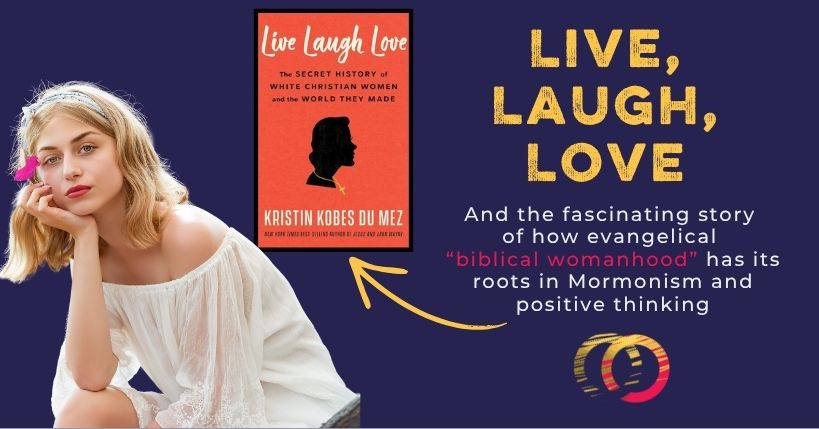
0 Comments