Transcript
Sheila
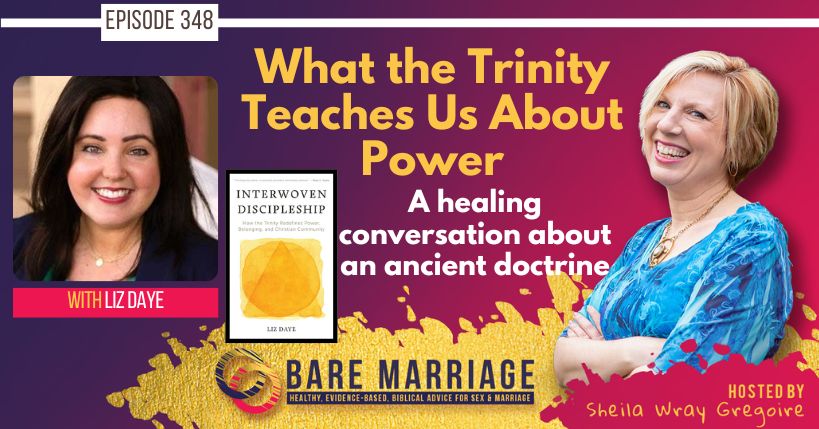
Do you know what one of my favourite things is in doing this work at Bare Marriage? It’s not necessarily when I get the emails about Sheila you saved my marriage or you saved my sex life. Those are awesome too. But it’s actually when I get the emails saying Sheila you helped me not run away from Jesus, you helped me hold onto to Jesus, you helped me find Jesus again because a lot of the work we do here at Bare Marriage challenges what many of us grew up hearing in the evangelical church and we start to realize how toxic these environments are but you know what Jesus isn’t toxic. So today on the Bare Marriage podcast I want to give you a new way to think about faith, about the Trinity, about Jesus. It’s awesome and as we are entering into the Christmas season pretty soon, I know it’s still a couple weeks away, but you know we can start thinking about this. I think it’s great to think about the incarnation and what it all means. I’m Sheila Wray Gregoire from BareMarriage.com. I’m always so happy when you join my podcast, as we talk about healthy, evidence based biblical advice for your sex life and your marriage. But of course it is always faith based and so today I am welcoming one of my internet friends that we talk to on social media all the time about problems with David, about sex as abuse but she is going to be here to talk about God and the Trinity and what that means for our faith. So welcome to this interview. Well this is a fun one for me because I get to meet someone I have kind of known online for a while, Liz Daye she is doing so many things, she wears so many hats, she is a hospital chaplain at Emery, she is doing her doctorate on public theology, is that what you said?
Liz
Theology for ministry, so yeah like connecting the dots.
Sheila
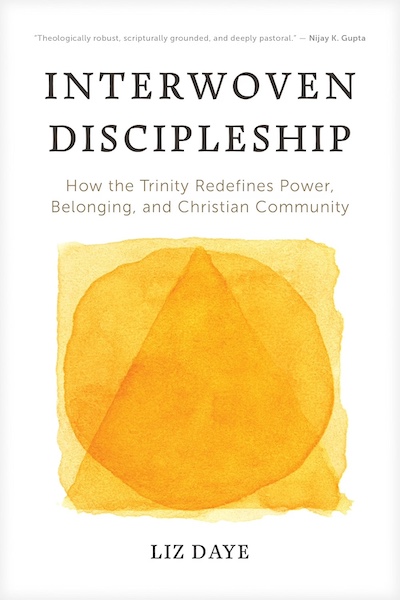
Yes at Northern, you teach at Dallas Theological Seminary and you’re just doing a whole bunch of stuff and now you have a new really cool new book out called Interwoven Discipleship and I never remember subtitles, so what is your subtitle?
Liz
Because I can read it, because it’s in front of me. How the Trinity redefines power belonging and Christian community, so like not spicy topics at all.
Sheila
Basically what you are saying is that the view of the Trinity is actually important and we don’t realize it’s important like we think it’s just some theological thing that you believe in and that you say in the Apostle’s Creed but it actually affects our view of what it means to be a Christian.
Liz
It actually does and when we go into seminary we hear all these Greek and Latin words and we get bogged down by all the terminology and we are just trying to pass the class right? We miss that actually people are already connecting these dots in weird ways and we need to be able to know when that is happening. And also imagining what God actually is? It is a really worshipful question that I think can help shape the way we view our neighbours and live in community, so yeah there is a lot there to play with.
Sheila
Yeah this quote from the movie A Walk to Remember. You can tell a lot about a person from the God they imagine. And it’s true though, the way that we picture God actually impacts how we relate to him, how we relate to others in the church, how we see the point of our Christian walk. It is a very accessible theology book. If any of you have ever wanted to read theology but you’re like I don’t like big words, you literally quote movie lines.
Liz
We are having fun.
Sheila
As well as ancient theologians from long ago. I want to read something you said at the very beginning that I think sets the tone here. You said this, when faith is privatized and performative it no longer promotes flourishing for all, it doesn’t confront injustice, heal wounds or welcome the stranger. It chooses busyness that caters to comfort rather than communicating with God and showing compassion to others. So what kind of discipleship are we really practising? If our faith doesn’t move us towards mercy, justice and solidarity then it’s time to reimagine what following Jesus actually looks like and I suggest that we return to the basics which start by wondering what God actually is. So a lot there to unpack. The very very first part of it has been like one of my pet peeves and those of you who have listened to the Bare Marriage podcasts for a long time will know this. I really think that evangelicalism did such a disservice when we made Christianity into accepting Jesus into your heart and that’s all it was. As long as you believe the right thing when you are 8 years old nothing else can touch you. And it’s such an individualistic view of what it means to be a Christian. With everything there is truth in it, right? I’m not saying we reject it all together but it’s gone so wrong.
Liz
I think we treat it as the end point, right? That you did this and you started this, the end. You are good, you got your gold ticket to heaven, or whatever you know you have imagined there. That’s the beginning point, if we decide to say I am going to follow Jesus, I am going to explore what this is going to look like, that is the beginning of the Christian walk. That’s the beginning of this lifelong journey of living in community and being part of God’s family and living out our faith in community. So I think even just reframing that as, this is a starting point, let’s have a clear direction and let’s have a clear focus and pace and what is that going to look like, what’s the quality of our Christian like going to look like? That helps us find a better language . Now I can do what I want.
Sheila
Yeah I am even reacting to the word saved now. Because it seems so much like a once and done. And it also seems like the purpose of our relationship with Christ is to get us to heaven. And I really like what you just said, like you just said this whole long thing and you never said anything about heaven, you said things about being part of the family of Christ and living it out in Christian community and that seems to be totally missing from our gospel messages.
Liz
Yeah, like the whole point of the resurrection is that now God is with us, we don’t have to wait until we are no longer flesh on this earth, we get to experience the love of God right now. And we get to extend the love of God to others and practice it and it’s going to be weird and difficult because we are human. And like there is this human part of the gospel that I feel like we cast aside a lot because we really want this perfect, pristine version. Yeah and we miss so much when we do that.
Sheila
Yeah okay, you have this beautiful diagram that you use throughout the book that explains how the Trinity is wholeness and how we need to think of discipleship differently. Can you explain that to me?
Liz
So when I first did this, I was drawing little diagrams with a pencil and my daughter’s graph paper for her math class and she got in trouble because there were all these weird diagrams, anyway. No I think that this idea, typically we think of the Trinity and we have these triangle pyramid shaped graphics, Father, Son and Holy Spirit and you automatically infer this power dynamic Father on top. What I am suggesting is that we remember that there is movement in the life of God. That is very very important and when we remember that Father, Son and Spirit are interwoven, interconnected, interdependent, they are always moving and practising this concept of reciprocity and mutuality then we have this idea of following Jesus towards the heart of the father with the love of the Holy Spirit and we get access to this great language that we are seeing that God is moving. God is active. God is alive. Right. That’s a core tenant in the Christian faith that God is alive and that inspires life in the Christian walk. So yeah, throughout the book, we changed the diagram a little bit, and we played with the language to see, like actually hospitality and justice are parts of this vocabulary that we are playing with and that they’re part of this life that we’re invited into.
Sheila
Yeah the gospel that we are given, I think can be a very anemic one because it’s like, as long as I say the right prayer, I’m saved and it misses what it means to be part of a community. I mean, what does community mean to you? Like, you work as a chaplain. So community is everything that you do every day in your job, in ministry. You teach students. You know, it’s not just our prayer life with God. It’s everything around us. And what should that look like? Like, what does that mean for us?
Liz
Yeah. So I’ll share a little bit about my story. So when my oldest daughter was six, she had another very complicated spinal cord surgery related to the disability she was born with. And the surgery didn’t go well. It further disabled her. So that was a very traumatic period. We were in the hospital for several days, and throughout that period our church kept showing up like over and over every single day. People were showing up with gas gift cards and food and coffee and praying and, you know, just stuff to make her feel seen and loved. And this happened for days, and I didn’t realize how weird that was. And one of the nurses pulled me aside and she said, you don’t understand. You’ve had 30 visitors come to your floor in the past week. Everybody else in this hall has had nobody. And that really drove it home for me, is that I realized that, you know, I wanted to be a chaplain. During that season, I experienced the love of a chaplain and experienced the care of a chaplain for the first time. I didn’t really know what it was I thought I did, but I didn’t. So between that and that experience, I realized I was like, I want to contribute to somebody else’s support system when they’re going through these seasons of trauma, because I experienced it, and I know what it means because it saved my faith in a sense. Right? I couldn’t find words, but I had people with me and just experiencing that and deciding in advance like, no, that’s that’s who I’m going to be for somebody else. That feels important, even if it looks weird, like we do weird stuff as chaplains. We hang out in the morgue sometimes and we, you know, every once in a while we get called to, like, you know, do a little exorcism prayer in the E.R.. Like, there’s weird, fun stuff that’s part of this idea because people are wrestling with their faith in these really traumatic moments and these really traumatic situations, and they’re looking for a safe, non anxious presence to just remind them of what it feels like to be in their body, to feel love, to feel like a person. And yeah, I mean there’s yeah, my work is kind of weird and our life is kind of weird, but I like letting these different parts of my life talk to each other, because I’ve really experienced this firsthand. And I think that, you know, this book isn’t as much about, like, revamping your entire church structure or implementing a model like this is just a way to live, regardless of what the power dynamics are. And I feel like that’s very freeing in a sense, too for a lot of us that are stuck in these institutions that we don’t really like very much or stuck in these situations. Yeah, we do get to empower one another and, and practice agency and find creative ways to love one another through deep pain, crisis, trauma. We just have to want to and we have to slow down enough to see one another and care.
Sheila
I think about that, like, okay, so 30 people show up, show up at the hospital.
Liz
Yeah.
Sheila
You may not have agreed about, like, infant baptism with all of them or about, you know, gifts of the spirit or whatever else we tend to argue about. But in those moments, none of that matters, right? Like, none of it like our beliefs on these specific doctrines don’t matter. Because the point is, are we loving one another and and being Jesus hands and feet, even the fact that Jesus showed up like, isn’t that part of the incarnation too, that he shows up and he feeds people and, you know, he heals people’s physical ailments like he’s there for the things that we struggle with in our flesh and blood. Right? Like he shows up, God cares about our flesh and blood. He doesn’t just care about our doctrines or beliefs or whatever. And I just think in evangelicalism our faith has become so intellectual. . And if it doesn’t have it doesn’t have hands and feet. You know.
Liz
Yeah. Because it has keyboards and, you know, chat bots and that. But that takes away, right? It prevents us from being able to see one another as neighbors, as family members, as people. And, yeah, I and again, when those people were coming, they were preaching, they weren’t saying, okay, well, we need to pray that she’s healed in a particular way, like there was none of that spiritual bypassing. It was really just like, I see your pain. I’m with you in it.
Sheila
Right? Yeah. That’s lovely. Yeah. And often, we get into these weird theologies like the prosperity gospel, which is a very individualistic philosophy or theology. Right. I mean, how would you describe it, like the Joel Osteen kind of thing?
Liz
Joel Osteen, a math equation if I do this and if I do this in this particular way, then I will be entitled to this and I will be deserving of this. I did this, I did this, I did what I was supposed to do. So I’m supposed to have this. And there’s a lot of friction, especially like almost all of my, all of my patients are cancer patients. I work in a cancer center. So that comes up a lot with people that say I did this all of my life. I was healthy all of my life. I went to church every day. Why do I have stage four cancer? Right. And those are moments where we don’t want to give them a math equation. We need to make space for the complexity there. And for the reality that sometimes sin and suffering is more and more weird and evil. Right. Like cancer is evil. We can say that. And I think sometimes we so desperately want a thing or want an outcome that we forget that there’s just so much more that we’re a part of, and opening our viewpoint outside of ourselves. To your point, it’s a very individualized way to view the world, right?
Sheila
And also, if you believe in the prosperity gospel, then you don’t really know anything to those around you, because if they don’t do well, it’s because they didn’t believe enough or do enough. And it’s like this interdependence. And you talk about it. There’s a word for it. Pericarditis, which he did I say that, right?
Liz
Yes. You did. Good job.
Sheila
Okay. That you talk about mutual indwelling. That’s one of the theologies of the Trinity. That’s quite foundational, that. Yeah, that they dwell within each other. It’s not that one is over another.
Liz
Right.
Sheila
It’s that they that they indwell. And that’s how we’re supposed to live too.
Liz
Yes. So I think we get really robust theology from this vocabulary because it protects the oneness of God. Right? The Triune God is one God, and also the Triune God is Father, Son, Holy Spirit, mutually and dwelling, interconnected, inseparable. And we get a lot of that theological terminology from that. And I love that, especially like in majority world theology and global theology, liberation theology, they really take this doctrine seriously because they’re like, oh yeah, belonging matters. This is a way not just to copy God, but to be invited into the divine life and to live as God’s family. So I think that, yeah, I mean, it’s just a different way of viewing, like usually, like in seminary, typically like that’s like the last lesson at the end of the curriculum before finals and you’ve already checked out and you’re not really paying attention. And it’s a thought, right? Yes. Yeah. And so like the last lesson is oh, by the way. Here’s this word. And oh, by the way, don’t do x, y and z at the end.
Sheila
Right.
Liz
And so I kind of played with them or I was like, why? What if we start here just, what if what if we change the order a little bit and just see what happens? And I think it just gives us more accessible language instead of like, weird Latin words. That’s like turning people off and scaring people because they’re weird.
Sheila
So what does this all have to do with justice? Because justice comes up a lot in interwoven discipleship in your book. Like how does that relate to justice.
Liz
So, the whole concept is that this idea of God, who is one whole, complete God, is also just this perfect picture of shalom shaped wholeness, right? And we talk about, you know, what it means for God to promote shalom, God’s dream for there to be shalom in the world. And what it means when sin interrupts and vandalises and harms that sense of shalom and creates systems of injustice. And even just exploring some of that, like what is sin? It’s not just these individual thoughts, feelings, actions, it is anything that vandalises, harms, breaks, inhibits, shalom or flourishes for all of God’s creation. Right?
Sheila
Yeah.
Liz
So when we think about that, like shalom is where we’re headed, right? This is our revelation 21, at the end of the story. God wins, we’re in this shalom family for eternity. And right now, God’s work, our work in the world should be shalom shaped, because that’s where we’re headed, right? We want to live now. Like we’re going to live for eternity. We want to promote shalom in our relationships, and that’s going to include just living, living justly in community. It’s going to look like instead of reinforcing power dynamics that exploit people and that harm people and that diminish people, we’re going to elevate the image of God and all people. We’re going to take those doctrines seriously because they have ethical implications. So, yeah, it’s a way to take things very seriously. Right?
Sheila
Yeah. You said something. You said a little phrase that I want to draw attention to. You said just living. And what you meant was like righteous living, right? But I find it fascinating that in Hebrew, the words are the same. Righteousness and justice. We think of them as two totally different things. We think that righteousness is following the rules and being holy. And we think justice is helping the oppressed, right?
Liz
Yeah. But to God, there are two sides of the same coin. They’re the same thing.
Sheila
And when I learned that, my mind was blown, I was like, oh my goodness.
Liz
One also just this idea. So in the ancient world, when they’re talking about what it means to live justly and live righteously, God is weighing a lot more than God is counting. And that felt really meaningful too, because this idea of just living has weight to it. You’re not checking boxes and looking to tally up a total like we do in Baptistland where we, like, count everything. Right. It’s the sum total of our life and the significance of it. And that felt like just a way to kind of reframe that and, and view it the way that God is actually viewing it through the language that we have in the Hebrew Bible. So, yeah, I mean, justice and righteousness, they go together. You can’t separate them. They shouldn’t be separated.
Sheila
One of the things when I hear your story about the hospital and all the people that visit you, I have to admit that one of the first thoughts I had right now was, oh my gosh, I don’t have time to visit someone in the hospital right now. But you know, and yeah, just because I’m going, this is just a crazy week for me. And I’m like, but I should have time to visit someone in the hospital. And so, like, all these shoulds are coming on me. But I think one of the things that I often miss, and I’m sure some of our listeners miss as well, is this idea of living in community and being Jesus hands and feet does not always mean that we are the ones who are showing up at the hospital, or that we are the ones. Sometimes it means that we need to make space for other people to do that for us.
Liz
Yeah. And that’s one of the most challenging parts for those of us who have grown up in evangelicalism and received this message like, you have to be generous. Like generosity makes you a good person, but if you receive too much, then you’re a taker and that’s bad.
Sheila
Yeah.
Liz
And we like, internalize that messaging. Like, I don’t want to ask for too much. And I think, you know, not even just being willing to receive. That’s the gospel. Being willing to receive. Yeah, it’s huge anyway. But also, I mean, there’s something just so beautiful and willing to receive it more than once. Like, we are always in the hospital. We have ten plus hospital stays a year. Just due to the nature of our family and, and some of the stuff that our kids go through, our church always shows up. Every time we don’t, we don’t have to ask. They just show up and we show up for others when there’s a baby, when there’s a surgery like. And sometimes I can’t physically show things up because there’s Covid or there’s, you know with masking. And then it becomes this question about am I willing and what, what am I willing to do? How am I willing to send a gas gift card? Am I willing to knit a blanket for somebody? Yeah. My oldest daughter. So she was doing hospital, homebound, recovering from surgery, and she needed community service hours, but she couldn’t get out of bed. So she was really frustrated. So she was crocheting. Because my cancer patients love hats and blankets and these little crochet things and that. And because she was willing, she’s looking for a way to live creatively and be a part of something, even if she can’t, like, do the thing. Check the box.
Sheila
Yeah.
Liz
And that’s just this desire to be willing. We love one another. We want to flourish for one another. We want wholeness and spiritual health for one another. So, you know, we can look for ways to be creative and love one another through lots of pain and lots of suffering.
Sheila
I really appreciate a lot of your talk about disability in the book. And, and you told the story about your daughter, asking if she’s still going to have her feet in heaven. And I found that really touching. Can you tell us that?
Liz
Yeah. Oh, my goodness. She was when I was three at the time and she had just gotten her first, AFO’s and she was, I think in Sunday school or like in a, maybe in preschool.
Sheila
Can you explain AFO?
Liz
Oh, it’s an ankle foot orthotic, it’s like a brace that you wear on your feet. Just to help you walk. But yeah, she wears them every day. She’s worn them every day for ten years. And so one of her teachers thought that they were being encouraging. They said, well guess what? You are going to be totally healed when you go to heaven. Isn’t that great news? And my daughter was terrified. She’s like, what? What do you mean? Like, do I like my foot? Do I get to keep it? Do I have to have a new one? I don’t know that foot. That foot isn’t a part of my body. And she’s asking these really important questions. I’m like, man, I’ve never thought about this before in my entire life. But this does matter because different people have very different experiences with disability. Right. There’s such a wide range, and the way that we view our bodies and the way that we view, you know, how our day to day life looks is an embodied experience. And I think just being brave enough to say, you know, I like my body the way that it is, the way that God made me and I think I’d like to keep it. You know, that’s a very brave thing to do. And certainly it’s different for everybody, right? There’s so much, you know, medical trauma and, and different things that people experience. But I do think that even just making space for people with disabilities to not hate themselves, right?
Sheila
And to not see themselves as a project that needs to be fixed or that will one day be fixed, but can just show 100% who they are, right?
Liz
Yeah. Like, I like I’m autistic. I remember I wrote in a seminary paper one time about Psalm 150. This is my least favorite Psalm in the Bible, because it feels very loud and my professor was like, well, this is what heaven’s going to be like. And I’m like, I really hope there’s headphones. And just this idea of like, am I going to hate heaven? Because it’s going to be too loud. Like, you don’t get to ask that everywhere, right?
Sheila
Yeah, yeah.
Liz
And also, we can love God enough to know that, you know, God made our brains and our bodies and whatever heaven’s going to be like, or whatever this new creation is going to be like. I think it’s going to be something good. I don’t know what it looks like, but I think it’s going to be something good for those of us who have different brains and different bodies.
Sheila
Yeah, I love that. One of the reasons I think that the church has gone so off kilter in the last, I mean, you can trace it for centuries. But especially as we’ve seen the conservative resurgence in the last, you know, 20 to 30 years, is because we haven’t had a robust view of the Trinity, like the whole eternal subordination of the son heresy that’s been making the rounds. And Beth Barr has talked about this a lot in her book, The Making of Biblical Womanhood. This is basically an area in heresy that has been resurrected for the sole purpose of defending the fact that people can be equal but subordinate at the same time.
Liz
Yeah. And it’s specifically there to support their vision for male power. And I think that’s really important when we are looking at the conservative resurgence and when we’re looking at people like Bruce Ware and these ideas that they’re putting out about complementarism and about women, they’re rooted in the Trinity. That’s their argument, right? So when we look at the things that they’re publishing, they’re making this direct connection and they’re not being called out on it. And I think that, you know, it’s problematic for a whole host of reasons, especially, you know, very serious Trinitarian scholars that are way smarter than me will say from the get go, like that is, you know, social Trinitarianism. That’s a wrong view of looking at the Trinity because you’re focusing more on people than what God is actually like. But I think that there’s a justice component that we have to talk about. There’s this motivation that you’re using these doctrines to serve other theological positions that protect power.
Sheila
Yeah
Liz
And that’s bad.
Sheila
Yeah. And that’s such an antithetical thing. Because what they say, like the eternal subordination of the son, says that Jesus is eternally submitting to the father. So Jesus is eternally in submission to the father, but that all members of the Trinity are equal. And so if Jesus can eternally submit to the father and still be equal, then women can submit to men and still be equal to men. And so they’re saying that the gender relations actually reflect the Trinity. Yeah. And to make it sound, no, it really isn’t. And it’s totally. And again, this is a controversy that was kind of dealt with at the Council of Nicea in the 300’s.
Liz
Very much dealt with.
Sheila
Yeah, yeah. And then it came back specifically in the 1970s, came roaring back because, up until then they had been able to justify women being under men by saying that women were inferior.
Liz
And also before that women did not have access to seminary, right?
Sheila
Yeah
Liz
They weren’t able to read the Bible for themselves and study it in a scholarly way, so once women began to read the Bible for themselves and study it and see the way that Scripture is speaking for women and advocating for the flourishing of women, then all of a sudden there’s this response saying, oh no, we have to protect our power.
Sheila
Yeah. And that’s how this that’s how this whole thing got going. And so the conversation about the Trinity, like what is God like? Yeah. And what does it look like to live in community and in mutual interdependence actually like these. Great. It’s quite significant in how we treat one another and in how doctrines have, have been used to keep people down. And you make a big point about the SBC that you really can’t separate, hierarchy, the issue of hierarchy and men being over women from the issue of dealing with sexual abuse.
Liz
Right.
Sheila
Like they’re totally intertwined.
Liz
That was a very spicy point that we really had to advocate to leave that sentence in the book.
Sheila
Well, thank you for doing that.
Liz
So because, typically theology books. Right. I wrote this book to hopefully help, you know, future pastors in a seminary classroom. Most of them aren’t going to go that far to connect the dots. And it was really important for me in this book for people to see the correlation between these different conversations, the relationship between these different conversations. Because there is a relationship there.
Sheila
Yeah. And here I’ll read what you said. I love how I found the spicy steak. Like I didn’t pull out a ton from your book, but I love how I managed to find the spiciest. Okay. You said this. The conversations about women in church leadership and abuse reform are inseparable. Because the same theological prioritization of male authority intent on barring women from pastoral ministry also creates systems that silence survivors and children in crisis, protecting abusers by prioritizing power over transparency and control over truth. This is not because women in survivors are the same group, but because the same authority structures designed to restrict women’s voices also tend to suppress the voices of survivors, creating parallel patterns of minimization and control.
LizYeah, I and I stand by that because we see this playing out in culture, especially for the past ten years. These parallel conversations that were having about women in vocational pastoral ministry and the conversations that we’re having trying to advocate for the dignity and the justice that survivors of clergy sexual abuse deserve. Right? They deserve to be heard and their stories be treated as something sacred. Yeah. These power structures that are intent on silencing women and silencing women are the same power structures, right? It’s the same.
Sheila
Yeah. You are the silent victims or your silence. But it’s the same people doing it and the same. And then doing it in the same way, using the same, the, using the same structures and yeah. And I think it’s so interesting that when the SBC officially decided to pivot from dealing with sexual abuse, the thing they did was start denying women the ability to pastor or teach men.
Liz
Because, yeah, not only is it a distraction, but it also is a protective mechanism that reinforces this idea that nobody’s going to keep challenging us. Right?
Sheila
Yeah, these are the ways that our theology actually really does impact our justice. It really is. So, after that, in the book, you talk about a concept that I just, I want to end with because I think it’s so important, but about how it’s a big deal that the Bible calls us siblings.
Liz
It is. And I share in the book about how this idea of being brothers and sisters, being siblings in God’s family is like the predominant language that the New Testament authors use to describe discipleship. Right? We move away from this like disciple language into this sibling relationship language.
Sheila
And I never realized that, you know, that’s true, right? Like, yeah, like once we see the church start, it is all about brothers and sisters, like after the resurrection. It’s all brothers and sisters. Yeah, yeah.
Liz
And there’s this important transition because again, Paul is looking for the right language to say, like, this is how we’re supposed to live now as people who are filled with the Holy Spirit, right? That should change things. And I think that, yeah, it gets lost in translation sometimes because for a long time it just said, brothers, write that Adelphi word. But in a lot of places, that word is for brothers and sisters.
Sheila
Yes.
Liz
And, you know, now we have some better translations where they’ll spell that out a little bit more explicitly so that English readers can actually see it in the text. But I think when we internalize that, when we recognize that this is a pattern that is prevalent in the New Testament, that empowers us to live differently, and then we’ll see these examples of like, you know, Romans 16 and this church that is vibrant and alive with brothers and sisters of all ages and marital status, working together and collaborating. And we get this really beautiful picture of what it looks like to live as God’s family, not as like sexualizing our sisters and vilifying them with the Billy Graham rule and like, but like what happens when this woman isn’t just, you know, either a wife or somebody else’s wife? You know what happens when she’s your sister, right? Hopefully you’d want to protect her. Hopefully you would want to keep her safe. Hopefully you would want to empower her to work alongside you in a productive, meaningful way that honors God. Like that’s the goal right?
Sheila
Yeah. And I love that I think everyone should read Romans 16. Like just because it first, it just looks like a whole bunch of names and it’s, you know, it seems like, okay, this is just another boring thing. You feel like you’re reading a genealogy or something, but if you actually dig into it, it’s fascinating because I think there’s 29 names mentioned. If I go by memories, I could be wrong, but there’s 29 names mentioned of which ten are female, which is a really high percentage. Right? And of those ten that are female, seven are listed in relation to their work that they do with Paul. So that’s 70%, which is a higher percentage than the men who are listed. You have Junia who’s an apostle, Priscilla, who taught, who taught men. You have women who lead churches in their homes. So they were the leader of that church, like, you have all of these different people who are doing all these really cool things. And Paul’s like, I see you, I see what you’re doing, and I want you to know, I appreciate you and I’m remembering you, and I’m praying for you. And, you know, I’m wishing you all the best. And I want to see you fly. And we had such fun together when we were together. And I just want you to know you’re still in my heart. I wonder if pastors today were to write letters. Would they mention women in such high numbers? Would they say those things about women?
Liz
Yeah. I mean, he’s going out of his way to honor the work that they’re already doing. Yeah. Telling them what to do. He’s taking this show not tell approach to cheer them on. And I think that that’s really especially in the context of the Roman Empire. Right. Like, yeah, this is a completely different way to live as a community and live as a chosen family. Yeah.
Sheila
Yeah. And even the men that he mentions, it’s not just like that hey, you’re my bros. Right. Like, it’s like. No, we did stuff together, we did stuff together. And, you know, we’re part of this together and it really is that shared calling that we are in this together, when you do amazing things I am happy for you, I cheer you on and I am excited. Yeah, it’s that attitude towards people as opposed to I am talking about you because you are my friend and I like you and we have more in common than I have with this other dude.
Liz
Yeah
Sheila
Yeah, it’s not like that. It’s this sibling as opposed to yeah we are besties and I don’t really like him, he dresses weird or whatever, It’s not like that.
Liz
For real though. Yeah. And I think, even so, I am lucky. I am blessed that I get to experience this in my ministry context right? We are a team of chaplains who are men and women working together. And even just I never experienced that dynamic when I worked in churches or even in different. Northern is very much like that dynamic. But yeah, just this ability to trust my brothers in ministry and work together and collaborate for the good of our patients like that has been such a gift to experience. And I know that so many women who feel isolated in ministry and feel left out of like, you can’t go to the elder meetings because you’re a woman.
Sheila
Like, yeah.
Liz
My heart hurts for those women who are wrestling with these questions because I’ve experienced this other way to do ministry with my brothers, and it has given. It has healed me in a way. And I wish that more women and men could experience the dynamic of what it looks like to work together as brothers and sisters for the glory of God. Right. Yeah. I just there’s so much opportunity. There’s so much possibility there.
Sheila
Yeah, I love that. So what is your prayer for this book? Liz.
Liz
I hope that it makes space for people to start asking questions and get comfortable asking questions, because throughout the book, my guiding question is, what is God like over and over and over again? And there’s not one answer, but there is this idea that curiosity invites us into a safe relationship, right? You don’t ask questions where you don’t feel safe, and my hope is that people would feel safe enough to ask questions so that they can experience the love of God in a new way, and experience the love of their communities in a new way. And yeah, that’s going to look different and lots of different places, but that’s really my core hope.
Sheila
Yeah. I love that. So if you want to read a theology, but if you’ve seriously a lot of us, we want to go further in our faith, but we don’t know how to do it. And we’ve done a lot of Bible studies. We’ve read self-help books. But this is a really good theology book that is so accessible that’s going to teach you so many different concepts. But yeah, it’s going to use illustrations that you’re going to understand and it’s not going to make you feel dumb, but you are going to learn a lot. So take a look at Interwoven Discipleship. I’ve got a link to it in the podcast notes. And Liz, where can people find you?
Liz
You can find me on my website with just my name, www.lizadaye.com. I’m on Substack, my Substack is for flourishing, and I’m on Instagram and Threads and all the places.
Sheila
Yes, we will put links to those things too. All right. Thank you, Liz.
Liz
Thank you so much.
Sheila
Liz’s book is now out. It was published on November 10th, so just two days ago. And you can get it anywhere that you buy books. So please check out the link in the podcast notes. You can get it anywhere now, so order it, enjoy it, and let it revitalize your faith.
Thank you for joining us to listen to Bare Marriage. Remember that a super cool place where you can learn even more as our patron group, where you can join for as little as $5 a month. Patreon.com. The link is also in the podcast notes. It’s a great place to keep up on what we’re doing behind the scenes. And will see you again next week for a super fun episode of the Bare Marriage Podcast, where we are going to look at some new research on women’s libido. So we’ll see you then. Bye bye








0 Comments