
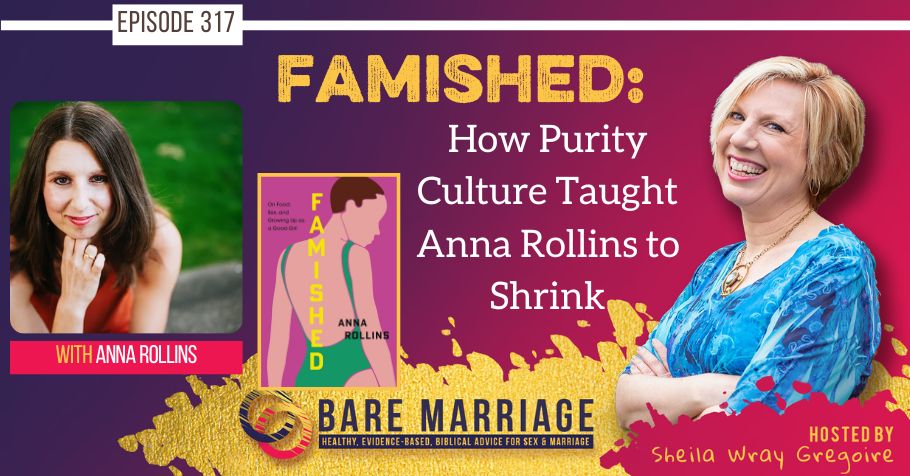
What if purity culture taught you to shrink?
And you did–literally?
I read Anna Rollins’ book Famished lately, and I was so enthralled by her story (and her writing). She was describing what it was like growing up in purity culture, and how all the stress and rules made her feel like she had to be perfect. This manifested itself in her as an eating disorder, but I’ve seen her story in people I know close up.
When we girls are taught that we aren’t enough unless we’re perfect, then we will shrink ourselves, because it’s the only mechanism we have.
What’s interesting about her story too is that she wasn’t getting these messages from her parents. Her parents were pretty chill. It was the evangeical culture, and coming to terms with that as an adult, and figuring out who she wants to be with faith, is a fascinating story.
You’ll appreciate this conversation!
Or, as always, you can watch on YouTube:
Timeline of the Podcast
00:00 Introduction, Meet Anna Rollins & the book Famished
3:43 When Did It Start and what Anna’s research Shows About Young Girls and Diet Culture
9:57 The impact of 90s pop culture:Britney Spears, and a Thousand Crunches a Night
11:44 Two Messages from the Church About Your Body & Your Desires
22:00 Purity Culture, Vaginismus, and Being Dismissed by Doctors
33:06 The Breaking Point: Postpartum Crisis and Reaching for Help
37:08 Anger, Powerlessness, and What Disordered Eating Was Really About
39:27 Addressing and Healing Church Trauma through EMDR therapy
43:13 Choosing to Stay: Anna’s Decision About Faith and Church
47:12 Are things getting better for the next generation of Christians?
50:18 Anna’s parting message to Sheila’s audience
52:05 Announcement on new book translations!
Key Talking Points
- Dieting as young as second grade — Anna describes her first food restriction at age 7, and research backs her up: many girls go on their first diet at age 6 or 7. The messaging came from both church culture and mainstream pop culture simultaneously.
- The fatphobia of the 90s era— Heroin chic in pop culture collided with a church-based messaging, creating an impossible and damaging standard for young women’s bodies.
- “Die to self” theology weaponized against desire — The message to crucify your flesh and surrender all desires to God, while not intended to be harmful, layered on top of secular diet culture in devastating ways.
- The bookish, fervent girls got hit hardest — Those who deconstructed purity culture weren’t the casual church-goers. They were the ones who took it most seriously, read all the books, and tried hardest to do it right.
- Purity culture and vaginismus — Evangelical women suffer from painful sex at twice the rate of the general population. Anna shares her experience of being dismissed at the OB/GYN, and Sheila discusses upcoming research in the Journal of Sexual Medicine confirming this connection.
- Compulsive exercise as a socially praised coping mechanism — Anna was praised by many for her coping mechanism of 10-15 mile daily runs. Her husband was the only one who could see the obsession because he was the person who lived with her and saw the damage of it.
- Internalized anger and the loss of voice — When women aren’t allowed to speak up or challenge authority, they often turn their anger inward. Anna connects her disordered eating directly to powerlessness and unexpressed rage at misogyny in the church.
- EMDR therapy for embodied church trauma — Anna used EMDR to heal her physical trauma responses to hymns and church settings and found it transformative in ways talk therapy alone hadn’t been.
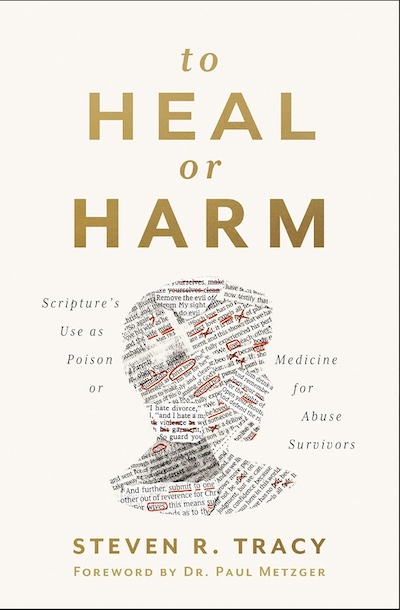
Thanks to our sponsor–To Heal or Harm
Get the book that shows how Scripture has been misused–and how to use it to heal instead!
For all too many of us, Scripture has been used to make us accept abuse. To tell us we can’t defend ourselves. To let others control us.
But what if that stems from an improper use of Scripture?
Dr. Tracy’s book teaches how to interpret Scripture in ways that heal, not in ways that poison. And he points out the typical texts that have been weaponized against victims, and shows how they can heal instead!
For those who need to know what Scripture says, or who desperately want their pastor, their father, their sister to hear them–check out this clarifying and life-giving book!
Things Mentioned in the Podcast
THANKS TO OUR SPONSOR:
To Heal or Harm: Scripture’s Use as Poison or Medicine for Abuse Survivors by Dr. Steven Tracy. How to refute it when Bible verses are weaponized! https://amzn.to/4rSYkZu
TO SUPPORT US:
- Join our Patreon for as little as $5 a month to support our work
- And check out our Merch, or any of our courses!
- Give to the Good Fruit Faith Initiative of the Bosko Foundation
- Join our email list!
LINKS MENTIONED:
- Get Anna Rollins’ book Famished
- Follow Anna on Substack
- Watch our Love & Respect Docuseries
- The Portuguese version of The Great Sex Rescue
- The Chinese version of The Great Sex Rescue
- The Spanish version of The Good Girl’s Guide to Great Sex
Transcript
Sheila
Welcome to the Bare Marriage podcast. I’m Sheila Wray-Gregoire, author from BareMarriage.com where we like to talk about healthy, evidence based biblical advice for your sex life and your marriage.
And I am joined by my daughter Rebecca
Rebecca
Hello, hello
Sheila
Just for a second, because
Rebecca
Yes just for a second
Sheila
We have an amazing interview coming up with Anna Rollins, who wrote the book Famished.
And this is right up your alley. Actually, I’m sure you wish you had done the interview.
Rebecca
Because it’s all psychological stuff.
Speaker
Yeah, about about millennials growing up in purity culture and how that actually impacted a lot of women with eating disorders.
Speaker
Yeah. So so interesting.
Sheila
Yeah, I really enjoyed the book. Before we get to it, we just want to do a big shout out to our patrons who help support what we do. And we have an awesome time in patron group. We’ve got a lot new patrons since we did our Love and Respect docu series.
Rebecca
Yes and if you loved that docuseries. If you sign up as a patron, you’re about to get a whole bunch of exclusive content. And because I’m not entirely sure when it went up, it might already be up. At the point of recording this Joanna and I are going to be recording some never seen before, quotes and clips from Emerson Eggerich. And I’m going to be live reacting and I don’t know what clips she’s chosen.
We’re recording that on Monday. That’s going to be up within four days of when I’m recording this. But I don’t know if this podcast out, so you may have already missed it. You can go get it. Yes, you can go see it, it is already up. Statistically speaking
Sheila
It probably is. And I and you know, a lot of people say to me, we love your content, Sheila. We just want to get it out to more people. One of the best ways you can do that is to like and subscribe. So wherever you are listening to this, if you are listening on audio, make sure that you are subscribed in your podcast app.
If you are watching on YouTube, please hit that subscribe button and remember to leave a comment too. Because when you leave a comment, you tell the algorithm, hey, this is cool stuff, and then they’re more likely to recommend it to more people. And that’s just a really good tip for whenever you’re around social media. If you enjoy someone, whether it’s us or someone else, like and comment and subscribe because that feeds the algorithm.
Rebecca
Yes, because I just want to let you know, because I’ve been, I’ve been looking at this because we’re doing our YouTube thing now, okay. If our videos have a 10% like ratio, they will hit the algorithm like nothing else. So if you are watching it, like it, because getting us to that 10% like ratio, I’m just telling you the numbers.
Because I find the numbers interesting.
Sheila
Yeah.
Rebecca
You have a 10% like ratio. You’re much more likely get pushed into other people’s watch this next sections. And I would so much rather our stuff get into someone’s watch this next rather than something Focus on the Family.
Sheila
So so that’s how you can help us. So feel free to join our Patreon. Like subscribe and just stick around. And because we got an amazing interview coming up for you right now.
I am so happy to bring up the podcast. Anna Rollins, who has just written an amazing memoir called Famished. Here we go. Okay, let me get the subtitle right. I always get subtitles wrong. It is on food, sex, and growing up as a good girl. So there’s the book. And welcome, Anna.
Anna Rollins
Thank you so much for having me. I’m so excited to talk with you. I think your work is so, like, it’s been so important to me and important to so many women I’ve spoken to. So thank you.
Sheila
Yeah. Well, I that always makes me feel great, too, because, I mean, that’s why we do it so that we can help people. So the thought that that, it is helping is is amazing. Now, you were a professor of what was it? Of English, of
Anna Rollins
Yeah. I taught English in higher ed for almost years. I, I was an instructor, and then I also ran a writing center.
Sheila
Okay, yeah, yeah. And now you’re you’re doing freelance work, you’re at home with your youngest child, and you have three of them here.
Anna Rollins
Yeah, yeah.
Sheila
So lovely. Very busy, very busy life, but but great. And in the middle of all of this busyness, like, as you’re having your first, children especially, you’re starting to realize there’s something seriously wrong.
And, and and so this starts you on a journey of figuring out your eating disorder and where that came from. And that’s what we’re going to be talking about today is just the intersection of of the messages that we get in the church, not only about food, but just about our worth and and our worth is women and perfectionism and all of that stuff that gets so ugly. So, yeah.
Anna Rollins
Yeah, I, I really had to unpack the scripts that I’d been handed in. Not not just in purity culture. Like I grew up, Southern Baptist, and I grew up, like, you know, really steeped in purity culture as a millennial girl. But, I mean, these messages were also coming from mainstream culture, too, like, there’s perfectionism in that as well. And so I’m hearing messages from, like, the secular culture messages in church. And it’s kind of they’re laying over top of each other. And I’m just, believing that to be a good person, I have to kind of shrink my desires and shrink my, my hopes for my life. And I was able to, I was able to kind of manage that perfectionism.
But it all came to a head when I became a mom. I really had to unpack these scripts and think through whether or not, they were serving me, whether or not, like, what I had been taught about what God wanted for me was actually like the gospel. And so that’s something that I explore in Famished.
Sheila
Yeah, yeah. And I really love that it is a memoir. So it’s not, you know, it’s not a book like She Deserves Better, where you go into all the, all the things that have gone wrong in church, this is actually your life. And I really appreciate it. And you weave in a lot of other people’s stories too. So let’s let’s start.
When do you remember first restricting your food intake?
Anna Rollins
Second grade, I remember, and it’s funny because, a lot of times, like, you’ll speak to women and they talk about how, like they started restricting food because they saw their moms restricting food. My my mom did not do that. My mom had a pretty healthy relationship with food, but I would see other women at church and other women like at school, and I would I was, you know, watching TV, watching Saved by the Bell, like I was watching these things in pop culture. And I, remember in second grade, like looking at myself in the mirror, realizing that it was not in line with what I felt, um, a good girl should look like. I, like, saw my little belly sticking out. And I remember deciding very quietly, like, okay, I need to go on a diet now. And I remember thinking to myself, but I can’t tell my mom I’m going on a diet because she won’t let me do that. Like, I kind of knew, like, that wasn’t okay. And so I would couch it. I would tell, like, my mom, can you pack a salad for me for lunch? And my mom would be like, yeah, I can add a salad with your sandwich and chips and blah, blah, blah, blah, blah. But I and I remember just like, kind of knowing that that request was rooted in, like, hopes to lose weight and then it just kind of kept becoming a bigger and bigger part of my life.
But I was I was very young. And I, there are a lot of statistics that show that a lot of girls go on their first diets at age 6 or 7, and it’s really like it’s startling.
Sheila
Yeah. It’s so sad. It’s so sad. And then, as you get older, you had this goal of never being over 100 pounds.
Anna Rollins
Yeah
Sheila
That’s wild. Well, how tall are you?
Anna Rollins
Oh, I’m. Well, I remember that goal was when I was 12, but I’m 5’7 so. And I remember and then in the 90s and 2000s there was this narrative. A lot of women talk about it in a lot of magazines. People would say like the ideal weight for a woman is like, you shouldn’t be more than pounds if you’re five foot.
And then like, add pounds for each inch, you’re over five foot, right? And that like it was still a very low weight. But I remember, there was a girl from church she and I, like, made this pact. And it was almost like this pact to never grow up. I don’t know that that is how we would have, characterized it, but it was like we looked at each other.
We were at the swimming pool, and we were playing, chicken fight. Like, where you get on someone’s shoulders and you fight with them and like, the lightest people were on top. And so we were like, swapping weights. And then we both kind of said like, and we’re never going to get over 100 pounds. And it was like this challenge, but it was also like this, like it was like even at the age of 12, we knew that our power was in being able to maintain small bodies.
It was almost like this, like sign of discipline, this sign of mastery. We wouldn’t have been able to articulate that at years old. But yeah, I was in this kind of like, I don’t know that we were competing, but it was like this, like, yeah, we’re going to do this thing and we’re going to resist ourselves and we’re going to keep it all under control.
Sheila
Right? And it wasn’t just restricting eating. You also exercised. Crazy. I you heard Britney Spears once say that. What? She did a thousand crunches a night. So you started doing a thousand?
Anna Rollins
Yeah. Yeah, I think that was, I spoke to a lot of women for this book, and we would talk about, like, these, like, moments in pop culture that shaped us. And that was something that so many women remember. They said like, oh, yeah, I remember Britney Spears talking about like, she got her abs by doing a thousand crunches a night.
Sheila
And like, how long would that take? I was even thinking about, like, logistically.
Anna Rollins
So much time, like, it’s I like so much headspace. I mean, it like this. This was not, like, healthy movement. Like, this is this was, all consuming, very self-focused, but also like, in an attempt to transcend the self, to show that you are like the like, it’s funny how it works that way. It was like we’re trying to demonstrate mastery of our flesh and yet it’s also so very selfish.
And yeah, it was this like and the cultural environment was kind of encouraging. It to like the 90s. People have called it the most fatphobic period in history. It was a time when heroin chic was at its height, but also there was this war on obesity. So like, children are getting heroin chic from the pop culture, but also like politicians and parents are afraid that their children are going to become overweight.
And so there’s like this micromanagement of bodies. And it’s just all kind of explosive.
Sheila
Right. And so this is going on and you talk a lot about different moments of, of things that you heard that really solidified this need to stay, to stay small. But there’s kind of two different messages. As I was, I was just trying to find the threads as I’m reading through your, your memoir, I think the two messages that you got at church, and you can correct me if I’m wrong, like some of them were certainly about your body, right?
About how, you know, there were all the women around you who were trying to lose weight, and people who lost weight were seen as being more spiritual and they’re doing all the way down programs and all the crazy weight loss stuff that was in the church in the 90s, for sure. But there’s also this other area where you have to die to self, and any kind of desire at all is bad.
Anna Rollins
Yeah.
Sheila
Right. And and I think that’s what we don’t talk about when it comes to eating disorders is we tend just to look at the messages about your body. But it’s to me, as I was reading your memoir, that actually it was some of the other messages that were almost as intense. Yeah, right. Like you’re not supposed to want anything. And so if you wanted food, you were in sin.
Anna Rollins
Yeah. I mean, and that’s not what was explicitly said. But as a young girl, you’re you’re hearing all these messages. And a lot of times they conflict and, dieting in the larger culture, at least at that time. And I would argue still now it was seen almost as like a moral good. It was seen as like discipline and self-control.
And, and so that the way that dieting was framed in the larger culture and then even in the church, like my church had this, a faith based weight loss program that a lot of the moms joined, like that was happening on top of being told, like, crucify your flesh, your desires, like, submit all your desires to God, which, if, that can be so easily misconstrued by a young mind like, especially when you’re receiving all these conflicting messages about your own body and your worth.
Sheila
And I. Yeah, I just, you know, with all of these things, there’s that’s not obviously what any pastor or youth group leader or anyone meant. Right. But that bigger message, I think that you need to give everything up. You know, you need to be totally sold out and, and later you talk about how your husband also was struggling with a lot of mental health issues, and those are the messages that he was holding on to too.
Like, you have to give everything up. You can’t want anything. You have to surrender everything to God and when you grow up in a church where that is the main message, that you are somehow bad, right? I can see how this stuff can really get, get twisted in someone’s mind.
Anna Rollins
Yeah, and I really saw it when, I mean, both my husband and I were struggling with our mental health after, especially after our second child was born. And I just saw both in his life and in mine. How like we were scared to want anything. We were scared that whatever it was we wanted was actually, like, bad because we wanted it. And I saw that with my struggles with food. Yes. But I also saw it with, struggles with, like, ambition and like, healthy career desire and, even how we spent our leisure time, like, all of it felt so high stakes. Yeah. And there was so much. I mean, I think we both dealt with religious scrupulosity like we, were turning these things over and over.
Sheila
I think that high stakes thing, you know, I I’ve never had an eating disorder. But I certainly have had that. I’ve struggled with some of the same messages, like everything matters so much, right. Like if you if you go out. And for me, a lot of it was with money too. Like if I went out and I bought, I remember I bought myself a leather jacket that I just loved when I was 18 years old. You know, leather jackets were all the rage. And I immediately wrote a check to the church for the same amount of money because I wasn’t like, if I if I spent any money on myself, that was bad, if I because, you know, people were starving somewhere. So I had to give the money back. And I’m not saying there’s anything wrong with giving money back, but it’s that it’s that idea that that everything in your life has such tremendous weight. And so if you spend money on yourself, a child in Africa has just died.
Anna Rollins
Yeah, yeah. You know. Yeah, I, I definitely, the money guilt that that I connect with that very much like this idea that, if you have more than you need, should you should you be sacrificing more? That just kind of this like it’s a hyper focus on self and there’s not really much room to breathe or enjoy or like and granted, we do need to think about greed and oh.
Sheila
Yes, especially in this yes, yes, yeah. But it’s all the balance, right? It’s like when religion, when Christianity became only about sacrifice and and then we missed out, you know, Jesus turned water into wine. His first, his first miracle was turning water into wine. You know, and I think we missed the significance of that, too, right? Like, he didn’t only feed people, he also gave them a big party.
Anna
His, yeah, his first was a party that is kind of like. It’s interesting. It’s not like he saved someone from, like, he healed the sick later. The first one was a party, which is. Yeah, like a kind of indulgent.
Sheila
And I think, I think we, we missed that out a lot. So as here processing a lot of this and you know as you growing up your stress the way main stress was you would run right. He would just you always had to go for a run. I love that little anecdote where your husband said, hey, could we do something radical? Could you only run four days a week? And you thought, oh my goodness, how could I possibly? You were running what you said 10 or 15 miles a day before that.
Anna Rollins
That was my only coping mechanism that I was. Yeah. And I was injuring myself all the time. And I mean, planning my whole life around, these crazy long runs and I think, and there’s nothing wrong with running. That’s, that’s, so much of my what I explore in the book is like, a lot of these things that I struggled with aren’t, like, bad in moderation.
Or it’s just, and I would receive a lot of praise, too, for, I mean, if I were coping with alcohol or drugs, like no one would be praising me for that, but I, I received all sorts of praise for compulsive exercise, except for my husband who had to live with me.
Sheila
Right
Anna Rollins
See the obsession and the intensity and, yeah, yeah. So he could see what it really looked like on the inside. But yeah. Yeah.
Sheila
And I think, I think it’s interesting, too, you know, when you, when you finally went and talked to your therapist and she asked you what are three things that you want, three wishes and you didn’t know.
Anna Rollins
When she asked me, I thought I, I would like I couldn’t even, I couldn’t even the I think I answered her, I had to sit there for a while. And finally I said, I hope that my kids grow up healthy. Like I like, and those are the I mean, those are huge. Not everyone has those kids who grow up healthy like those are, but I couldn’t think of anything specific outside of like what?
I like, very generic things. Because I hadn’t really even dreamed very far for a career or for, like, I tried to keep my desires under control in so many ways so I gave her very generic, like, answers. And then I went home and I thought about it like what I actually did want.
Sheila
Yeah. And I just, I find that fascinating that, you know, you grew up in this church with parents who love you like, your parents were good. They were not bad parents. Right? Like you grew up.
Anna Rollins
Yeah they were great.
Sheila
Yeah. Good family. You know, not super abusive, like church. You’re not like. Like it’s not not no weird sexual abuse stuff when you’re eight. Like, nothing. Nothing that we often point to. But your experience of God in that place is one way you need to shrink. And that’s what keeps coming back. In this memoir, you said one at one point,
I thought this was so telling. “Without the power to speak up and challenge religious authority, I communicated my rejection of this world by trying to disappear my body. I dissented with a quiet, I’m not hungry.” Yeah, and over and over again. Right? Like you’re in this church situation where even though it’s not abusive in the ways that we often talk about it, is abusive in the way that it’s diminishing you. It’s telling you you shouldn’t have a voice, you should be shrinking. And so you literally did shrink.
Anna Rollins
Many of these people were very well intentioned. Like when I look back on, I think there were there was so much messaging. My parents read my book. And when they read it, they said, I didn’t realize you were receiving these messages at church school, in the Christian books you were reading. Like, if we had known this, we would have tried to get you out of this space or get you out of that space. Like this is something they weren’t aware of. And I also think that, like, there were just some major blind spots in the message, in the messaging, like, I think that, sometimes we are in a culture and things become normalized like this discussion of desire or like dying to self for like the way we talk about something becomes so normalized that we don’t even question what else it might be communicating or how it might be landing.
With. We don’t even think about the potential impacts of these messages. Yeah.
Sheila
Yeah, either. Okay, I’m going to jump forward for a minute because I want to pick up on something you said, but it requires a little bit of background. So when you first get married, you have vaginismus and you tell that story, and that’s some of your journey that actually got you into therapy and realizing that there’s something really wrong here.
And, and, and you’ve read you read our books and you talk a little bit about our books in your book. And one of the things that you said, you quoted, you quoted me saying that, a lot of parents don’t realize the messages their kids get. And it’s the bookish girls. It’s the girls who are reading all of the books.
It’s the girls who are reading Brio magazine. It’s the girls who are reading I Kisssed Dating Goodbye by Josh Harris, and their parents haven’t read it, but these girls, they want to love God. And so they’re reading all of this stuff that is everywhere. And and often our parents and sometimes even our youth pastors don’t realize the messages that we are getting.
And it’s often your most fervent followers of Jesus that are getting these messages the loudest.
Anna Rollins
Yeah, I, I think you’ve talked about this, how the purity culture messaging was much stronger for your daughters than it was for you. And yeah, like there was I mean, what was happening in the 90s was unique. And so you weren’t looking for that. You were almost like just the same thing with my parents. My parents were very involved in youth group culture. They loved their youth group. They still have very positive memories of it. They weren’t looking. They just assumed that I was getting the same thing. And, as far as, like, the bookish girls, so many of the people who I spoke to who really started deconstructing their faith as they were struggling with their relationships, with their bodies, with their works and their identity. Some of them left the faith altogether. Some of them didn’t. But, they were usually the ones who took it very seriously. I, like it was not the people who are casual. I had a, my husband’s friend read my book, and he grew up in a similar environment as me. And he said to my husband, he said, I heard all the same messages, but I was just able to ignore all of it, like, I just didn’t.
I just knew it was silly and I just didn’t pay attention to it. And he’s, he’s still a Christian. And, but I said to my husband, I was like, I like, wanted to do it right, like, like I believed it. And that that was, I think that’s in part why I like when it, when I saw, the residue of it in my own life and when I, I really had to grapple with it. Yeah. Yeah, I think the people who really struggle with these messages, they’re not the they’re not the casual. They’re not the casual. Yeah. Yeah.
Sheila
And I think that’s a really bothers me too, when people get mad at those who are deconstructing is and this is what we found as well in our stat is those who deconstruct were the most fervent believers, the people who only ever believed like 70%, you know, or whatever. Like they they attended church, but it wasn’t their whole identity.
They often have not deconstructed these toxic beliefs because the toxic beliefs never really went that far for them anyway. And, and then and then you get these pastors yelling about people who deconstruct and how they’re just wanting to sin. And it’s like, now that was never it. Yeah. These are people who we’re trying desperately not to sin and to please God.
Anna Rollins
Yeah. I mean, part of my deconstruction of purity culture and I it’s not like I’ve swung the other way. And now I’m on the opposite end of the spectrum. But part of it was I waited until marriage. I did the right thing. I got married and I struggled with vaginismus. I was in so much pain for years and years and I thought, this isn’t what I was promised.
Like, this is not how I want to live my life. It wasn’t that I was like, longing to sin, I mean, I don’t I’m sure you can find sin in everything, but, like, I wanted to live a full embodied life. And the the, the the formulas that I had adhered to, they were not working.
Sheila
Right? Yeah. And at the same time, you’re also running your ten miles a day, and and that was your emotional coping mechanism because you couldn’t really deal with your emotions yourself, which. Yeah, which is all just a big part of all this mess. I want to talk about the doctor’s appointment you had before you got married, because I think that’s something a lot of our listeners are going to relate to. It’s certainly something I relate to, to the same thing happened to me. But, you know, you go to get checked out and get your birth control prescription or whatever before you’re married and tell us what happens.
Anna Rollins
Yeah, yeah. So I, waited until marriage. And at that point I remember thinking, like, I should probably prepare to have sex. And so I read all these books with, like, manuals, like, because that’s what I do. Like I read all the time. Yeah. And I, at the time, I couldn’t even insert a tampon. I had never been allowed to wear them. And because of, my mom was even though she never dieted, there was a lot of cancer in her family history. She had a lot of early deaths. And so she was very concerned about, like, chemicals in everything. She worried about chemicals and fibers. Anyway, I so I couldn’t insert a tampon and I go to the ObGyn and they can’t perform a pap smear. And I tell them like I’m almost in tears. I’m like, I’m really scared about sex. Like, what do I do? I don’t like. And I was just kind of like laughed at and dismissed and I felt so pitiful and small and, and so I never brought it up again. Even when I got married and there was so much pain and, yeah. So my concerns were kind of minimized. And now that I’ve written this book and I’ve interviewed all these women and I’ve listened to you and I’ve done a lot of research, like, I know that 1 in 4 religious women will struggle with, like, painful sex. This is not an out. Like I was not an outlier as part of the reason I felt comfortable writing about it in the book, because it’s like, even though it’s personal, I’m like, this is really common.
This is not, if I like if we can take some of the shame away and some of the silencing, like, then maybe women could finally get some help, like the help that I wasn’t able to really get at that time. Yeah. So yeah. So it’s really common. But it was just. Yeah. Dismissed. And, I mean, I don’t know if she’d ever I would assume she had never really heard or done much work with women who struggled with vaginismus based on, like her reaction to me.
Sheila
Yeah, probably. And I had the same thing. I had a really hard time inserting tampons. I was able to by the time I got married, but I mean, that was pure willpower. Like, I’ve convinced the number of years I spent trying to get, like a slender one in. And then, you know, you sort of move up. And it was it was difficult. And, and all my friends could do it so easily. And I just, I always felt and that made me so angry at myself. And so then it was like, I need to get this done just so that I can prove that I’m not, you know. But it would every time I put a tampon and I swear it took ten minutes.
Like like it was just ridiculous, right? Yeah. And then the. Yeah, the pap smear hurt like I had all of those things as well. And, I just. Yeah, I hope that that evangelical women realize this is really common. And this is our problem. This is what I want people to know is evangelical women suffer from these things at least twice the rate of the general population.
We have a paper that’s coming out soon in the Journal of Sexual Medicine, based on our data set, which shows that actually evangelical women are more likely to have pain with obstructed penetration than abuse victims, abuse victims are more likely to have pain, but a pain with obstructed penetration is more likely because of religious teachings. Like it’s it’s really a big deal.
And I am grateful. I think the one group of people that is really understanding this is pelvic floor physiotherapists, because they see so much of it and they’re getting it.
Anna Rollins
When I finally even figured out how to advocate for myself enough, in part it was because of your work. And then, like researching things on the internet. When I finally started working with the pelvic floor physical therapist, she took me seriously. She didn’t condescend me. She didn’t make me feel like I was a failure or like, you know, like, not mature in some way.
Like, Yeah, she she was such a gift to me. Yeah. Yeah. And the. Yeah. Like, our our bodies hold these teachings, too. It’s not like, just this mental, when your, like, if you’re saving yourself for marriage, it’s not like, just a decision you make in your mind. Like your, your body is like training itself to. And it come at coming back from that often requires professional help.
Sheila
Yeah yeah yeah it does. And I hope that people go I mean I didn’t for the longest time and I hope people do get some help now because it’s much better than when I got married, you know. So yeah. So please see a pelvic floor physiotherapist and tell someone because there is some, some help out there. And if you’re, if, if, if you’re single, if you’re not married and you’re listening and you have trouble inserting tampons, now’s a good time to see pelvic floor physiotherapist.
You know, it’s it doesn’t have to be about sex. It’s also about your health. And having pelvic floor muscles that are chronically tense. Is bad for you long term, like even taking sex out of the picture. So, yeah. Please see a pelvic floor physiotherapist.
I’m curious, like, if when you think about, when you started to realize that I need to do something, this isn’t okay. I’m falling apart. What was the what was the point that said, no, this isn’t okay.
Anna Rollins
Yeah, it was after my second son was born. I had gone through kind of a traumatic postpartum experience and we were dealing with a lot of chronic health issues, including, my son, who, kept being hospitalized for respiratory viruses. And it was right during right around the pandemic, and I was my coping mechanism was disordered eating behaviors and compulsive exercise.
And, and I was I needed to parent two small children. And I, I think when I was younger, I thought that, like, these are things that someone outgrows. I would when I was struggling as a teenager, I remember thinking like, eventually I will become mature enough and I will not be playing these stupid games with my food.
Or like, I thought that, like, I would reach this point of maturity and move past it. And I did have periods in my life where I had moved past a lot of things. But then when life got stressful, that’s exactly what I would go back to. And it was making it so it was hard to parent. It was a strain on my marriage.
It was I was hurting myself like I wasn’t as young as I used to be. My body like, could you kind of bounce back from the semi abusive things I would do to it or like when I was younger, but like that wasn’t the case. It was like bringing me down. So and I just realized, like, I, deserve some help. I feel ashamed of this. It makes me feel immature and like, this is like a young girl’s problem, but, I’m never going to move past it unless I reach out for help. And, like, I’m able to give voice to these problems. Yeah. So I, I started going to therapy and I started writing privately, and, and I really, then I started writing about it publicly, which was terrifying because I felt so ashamed of these things for for so many years in my life.
Like, I was ashamed even to bring it up to the therapist. I thought, she doesn’t want to hear some stupid body image crap like I was really, like, dismissive of myself. And, and then I started writing about it publicly, and I was embarrassed about that, too. But I noticed that the more I like, put it out in the light, the less power it had over me. And even, when I felt, I don’t know, like I would publish maybe something online and if I felt judged by other people, usually people were very kind. But sometimes people you could, you could feel some judgment. I had this like awareness that I was strong enough to withstand another person’s negative evaluation of me, and so much of my desire to control my body was like to control the perception of other people and to like, try to be perceived as like pure and good and like disciplined and like all these things. And so for and so when I would show like parts of myself that weren’t that great and I could feel judgment, but then like, I could withstand it, like I could move on like, that was very, very, that was very healing. I almost think that was the most healing part of it.
Sheila
That’s so neat. I love that, as you as you go through this process, too, you’re going through therapy and you’re reevaluating, evaluating a lot of things, a lot. Some of the themes that kept coming up was your anger, you know, and, and you had a lot of anger at the misogyny in the church as you started to look at John MacArthur and Mark Driscoll and all these terrible guys that we talk about all the time. How much was your eating disorder and your and your, compulsive exercise really dealing with anger?
Anna Rollins
Oh, I think that was a lot of it. I felt powerless in a way. And, So. And no one likes that feeling. No one likes feeling trapped or powerless. And so we’re all, like, looking for something that we do have power over. And for me, no matter what someone said to me or told me I had to do like, as if I could still at least keep my food rituals and my exercise compulsions like I could. I could handle whatever crap someone threw. I mean, but yeah, I think that, like a lot of it was unexpressed anger and which isn’t to say sometimes anger grows when you express it, but, there’s so there’s, a balance. It’s not like just letting. But I do think that, finding my voice and, being honest and being able to name harm and, try to ask the environments are made better. I do think that, like, that is a much better way to manage anger than, like, kind of internalizing it and taking it out on the, on the self.
Sheila
But I think one of the reasons that women so often do internalized is because we don’t have any other way of dealing with it. Right? Like when you’re in a situation or in a, in a society or a culture where your voice doesn’t matter and your voice is constantly being silenced, then the only thing that you have to do with your anger is to turn it inward.
And that’s. Yeah. And you learning. Yeah. Learning to speak up and have a voice is one way that we start to to fight that. And I want to talk to you. I found it really fascinating what you did with your church trauma. So, you know, you’re through this whole thing. You’re still going to church, and your kids like church. Your boys, your oldest ones. They like church. They have friends. They like. They like, you know, they enjoy it. And yet you’re having panic attacks when they play certain hymns. And, and it was hard for you, and you came to a place where you needed to decide, am I going to stay in church? I’m going to leave church because I can’t keep this waffling. And you decide to stay, but you know, you can’t. You gotta deal with a panic attack. So you had eMDR with your therapist. Can you can you explain that? Because I think I found this fascinating.
Anna Rollins
I, I’ve been going to talk therapy for a while, but I would still have these responses in church like these, like sweaty palms and shaking. And I would, like, get very angry before and after. And I was reading this, a friend of mine had told me about eMDR, and they talked about how, like, it’s a way of healing, embodied trauma.
Sheila
Like what is okay, eye movement. What is it?
Anna Rollins
I believe movement G do I hold on?
Sheila
I movement is a direct no eye movement. Anyway, it’s something to do with your eyes.
Anna Rollins
Yeah, they make it. It’s bilateral like you’re looking left to right. And I won’t get all the steps. Right. But, the therapist who was trained in it, he would have me envision a safe space. And then he would have me think about a moment where I was triggered in church, and so I would there was a him that I associated with something bad that had happened to me.
And every time I heard that hymn, it just made my hands sweat. So I would think about, like hearing that hymn in that space. And I would just I was just supposed to focus on that thought. And then there is something about the eyes going bilaterally. There’s something about it takes a memory that’s currently like in present day, and it stores it like it’s past tense. And it was incredible because it was like I was reliving these these events that my body registered as traumatic. I mean, it sounds silly to say like a hymn was traumatic, but like, oh.
Sheila
No, it doesn’t at all. For me, I have one. I’m thinking I need to go do this for It Was Well With My Soul, because we we sang that at my son’s funeral and it’s been 31 years. Yeah, 31 years this year. And every time that song comes, I have to leave church. I can’t I can’t sit in a building that sings it, you know? And it’s like I would really like to be over that. Like, I would like to be able to just think and and remember in a nice way instead of it being all, so, yeah, maybe I need to go do this for that hymn.
Anna Rollins
I mean I did it for Just As I Am
Sheila
Okay. Yeah.
Anna Rollins
And yeah it was incredible. I did a number of sessions and it was like it’s not like I forgot everything, but I didn’t have these physical reactions in safe church spaces, hearing songs that are not bad. Songs like these are not like I was able to be in the present rather than, like constantly feeling like hyper vigilant and on edge about, the altar calls that made me feel ashamed or, some of the that, some of the like behavior by people in charge who were like cruel or diminishing like it was like I could that was like a past thing and it didn’t even feel as intense.
Sheila
I know I’ve talked to other people who had done eMDR and there like at the time, like you’re sitting in the office, you’re like, this is doing nothing. This is silly, right? But then but then later, yeah. You just find that you don’t get those sweaty palms and that racing heartbeat in these situations.
Anna Rollins
Yeah, I agree, I did eMDR near the end of composing a draft of my manuscript, and I feel like in some of the scenes that I write, there’s this intensity that when I read it now, I’m like, where did that intensity come from? I don’t feel that anymore. And I’m like, oh, I think it’s I hate the word healed. But like, I think it’s because I’ve healed some. But when I was writing it, it felt so like visceral and intense, and I’m not sure I could have access to that feeling if I had done the eMDR session yet.
Sheila
Right? Yeah. Yeah, it’s just interesting. It was a bunch of stuff I should probably do eMDR for because this is a hard work. I get this sort of stuff every day. Yeah. But when you, when you do feel like, like I think that that choice that you had to make. And I’m not saying that people can’t make a different choice and say, no, I really can’t handle church anymore.
I don’t I don’t mean that, but I think that is a choice that a lot of people are coming to. Is, is do I stay at this place where I do have trauma responses, where I do, I do feel a lot of hurt? Or do I go and can you talk us through your decision to stay?
Anna Rollins
Yeah, I so I started thinking like, am I still a Christian? And I thought, I still believe in God. I still believe in Jesus, I still believe in good and evil and sin. And I think that I’m a sinner and I like that. Okay. I think I believe like the basics of Christianity. It’s the other stuff that I really, really struggle with. And honestly, it was experiencing, hurt and pain outside of Christianity. I, I had a, an experience that was very misogynistic and I, had this moment where I realized I was like, oh, this isn’t just the church. This is people. People hurt each other deeply. And yes, there’s like messaging in the church that’s very hurtful and I think needs to change. But like, I think I saw that like, church hurt it, like it’s not just in church. It’s not that’s not the only place where these really painful things can happen. It can happen in other spaces. So that was a that was a turning point for me. And then also, my husband really believes and he’s very committed and he and I don’t agree on every little thing, but I very much respect him.
And I like I feel like respect is like weaponized and complimentary churches, but like, yeah, I do, I but I think that he is one of the best people I know and he cares about other people. And so I like value our family functioning as a unit. And I want to work as a team. And, and so I realized that I believe the basics of Christianity, there is so much that hurts people in a lot of church messaging, but there’s so much that hurts people and so many other spaces, too.
And I just kind of came to the decision where I was like, I don’t think that abandoning my faith altogether is the answer to healing or like, that’s not what I that’s not what I want. That’s not what I choose to do. And I don’t think that everyone has to come to that same decision either. But for me, that was kind of the process.
Sheila
Yeah. Yeah, I appreciate that. As you look at, as you talk to so many people to write this memoir and, and you found just a floodgate of women who also had body image issues and eating disorder issues growing up in the church. Do you see things changing, like, do you think it is better for the next generation in church?
Anna Rollins
I think it depends on what kind of church space you’re. I think these conversations are happening, which I think is very good. And I think that people are like, more conscious of how they talk about bodies. But also there’s this surge of white Christian nationalism, and it’s coinciding with, this new focus on thinness and like, this kind of obsession with going back to traditional roles and, putting people in very rigid boxes. And so, even though I feel like I have found spaces that are more, I don’t know, I guess it depends on where you’re at.
Sheila
Yeah. Because it’s very different and depending on what church. Yeah. I think that’s interesting to what you said about, you know, Christian nationalism is like, you know, we look at the 90s and the aughts and purity culture was there at the height of it. And to a certain extent, purity of culture has calmed down. It’s still there very much, but it’s not quite to the same extent.
But then there’s this could be something else. Right? And that’s the thing. There’s always going to be something else. And, and so we like your parents didn’t realize what was happening because their experience was good. So they didn’t know what had changed. And maybe the message to us is when we find a space that’s healthy, we need to stay vigilant because, you know, purity culture came in and so many people like your parents and like me to a long time didn’t realize it.Right? And so these other things are coming in and and whatever the message is, is going to be harmful to us, like to the people who believe the most. It just is to the bookish little girls, to those fervent little boys. It’s going to be, it’s going to be harmful because they’re going to believe.
Anna Rollins
Yeah, yeah. I I feel like in the church that I’m currently in, I, I feel like there are a lot of people who want to understand, like, they don’t want to be as fundamentalist, in their thinking. And, and so my experience of church right now has been very positive. But then, you know, I see that every church is so different, too. You know, there’s there’s like evangelical culture, but even within that, the different spaces that you’re dealing with, different problems and different, different strengths. So.
Sheila
Yeah. So just watch out for your kids wherever you are. Just watch out for your kids. Yeah, yeah. Well thank you. Is there anything that that that you want to leave people with? I mean, you know, our audience because you are our audience. So what do you want to say to the people? Listen to this podcast based on what you’ve gone through?
Anna Rollins
Yeah. I, so when I spoke to so many women and they talked about how, like when they heal their relationship with their body, their relationship to God changed. And I think that like, it was just, so helpful for me to there’s a line in my book where I, like, kind of come to this realization that I’m not pure, I’m a sinner who can be forgiven. And, like my like, attempts at being pure were really hurting me. Like it was. And it, like, was a little bit ugly to outsiders, but it was also hurting me. And so, like, really embracing like, this view of grace and forgiveness, that that has been very healing for me.
Sheila
Yeah, I love that. Well, the book again is Famished. It is lovely. And, and I’ll put a link in the podcast notes where you can find it. So thank you so muchAnna for being here. I really appreciate it.
Anna Rollins
Thank you for having me on. This was really I love this conversation. Thank you.
Sheila
Honestly, in reading that book, I just saw so much of you in it.
Rebecca?
Yeah?
Sheila
You know, reading Famished like,
Rebecca
Like a lot of the purity culture
Sheila
Yeah. Like, not not the eating disorder thing. But but just that need to control that need to be perfect, like, you know, hi. Intelligent millennial girls who grew up in this, in this culture and where you’re told you actually don’t have a lot of control or autonomy, it. Yeah, it’s it’s really super interesting. So great memoir. As we are talking about books, I realized that sometimes I’m so busy sharing about all the new podcasts we have and all the new docuseries and all the new this that I forget to share pretty important stuff. If you’re on YouTube, you’re going to be seeing this. But but all of you can hear it is that we have translations of some of our books that we’ve just never shared with you. So, and I’m sorry about that. So first, we have a Portuguese translation of the Great Sex Rescue.
Rebecca
We’re going to try to say, if.
Sheila
You are, you are.
Rebecca
Wonderful.
Sheila
Sounds awesome. Like, don’t we all want.
Rebecca
I did Spanish not Portugese
Sheila
And honestly, this Portuguese cover is my favorite cover of any cover that’s ever been done.
Rebecca
It’s gorgeous. I want us to send this cover to the publishers. Yeah, I just this one was really pretty.
Sheila
Yeah, I like it. And they did the charts so well and everything, so it’s lovely. And.
Rebecca
As I was to say, the book itself is nice. Like, they did the fancy thing where, like, you have, like, the little foldy flap on the inside that. Yeah. Use as your bookmark.
Sheila
Yeah. It’s it’s really well done. So if you, if you have friends from Brazil or Portugal or you speak Portuguese, it’s doing quite well in Brazil and I’ve, I’ve been interviewed on some podcasts in Brazil. So there you go. We also have it in Chinese. So the Great Sex Rescue is in Chinese. Another really super cute cover.
Rebecca
It’s adorable
Sheila
Yeah. And so we will put links, in the podcast notes if you want to get Great Sex Rescue in Chinese. Again, a really pretty book.
Rebecca
So cool
Sheila
And this one’s really exciting. You know, one of the things that we’ve been really, really working towards and trying to emphasize is getting our books in Spanish, and we have The Good Girls Guide to Great Sex is now in Spanish.
Yes, it is called. Do you want to try it?
Rebecca
Oh gosh.
Sheila
Yes So there you go. And we will we again, we’ll put the, the the link in the podcast notes. And the Good Guys Guide is coming out later this year. And then, we’ve been raising some money to do Great Sex Rescues. So we are going to get Great Sex Rescue translated into Spanish. We just thought, Good Girls Guide and Good Guys Guide were good ones to begin with.
Rebecca
Yeah, we did kind of a little bit of a pilot, like a bit of an informal survey. Yes. Speakers who listened to us. The biggest thing is there’s just not great sex education. So it’s jumping straight into great sex rescue without just understanding what an orgasm is like. Let’s. Yes. On the on the basis education.
Yeah a lot of the conservative spaces that are Spanish speaking, there’s just not a lot of conversation about the nitty gritty.
Sheila
Yeah. So we’re gonna be talking about this more in April. But yeah, the Spanish version of Good Girl’s Guide to Great Sex is out. And if you know anyone who speaks Spanish and chances are a lot of you do, please let them know. We’d love to see this book go big. If it goes big, it’s probably going to be easier to get our other books translated into Spanish, by the publisher, which would be so much easier than having to do it ourselves.
So yeah, so help us out on this one. Spread the word. And, yeah, we’re just really excited about it.
Rebecca
I know a lot of you been donating to the Good Fruit Faith initiative to help us with our translation efforts. It has been so beneficial. Yeah. Thank you so much. We’re trying to just get as many of these out as we can in a bunch of different languages.
Yeah. It’s just been amazing.
Sheila
So thank you very much. So we’ll put links to all those in the podcast as well. Of course to links to Famished by Anna Rollins. And thank you for joining us on the BareMarriage podcast. We’ll see you again next week. Bye bye.





A bit off topic, but I need to point it out.
Throughout most of my life, whenever I hear something prefaced by “It’s a well known fact” or “the bible clearly states”, it’s almost always not well known, not a fact and not in the bible (or is in the bible, but grossly misinterpreted).
I encountered purity culture a bit back then, but dieting wasn’t a big thing among the girls in my circle, unless they just didn’t talk about it publicly.
My favorite type example, from the Gospel According to Hal Lindsay:
“The Bible clearly states” that the Demon Locust plague of Revelation 9:1-11 are “clearly” helicopter gunships with chemical-weapon “stingers” piloted by long-haired bearded Hippies.
Ha! Ha! Very funny. Were they murderers as well?
I was a teenager in the 90s so I’m familiar with the heroin chic look in supermodels like Kate Moss. I didn’t know that was a thing in the evangelical world.
Then in 1999, I read His Needs Her Needs by Willard Harley when my ex and I went through a pre-marriage course in our church. Harley talked about a husband’s need to have an attractive wife and that she should not let herself go or the husband will have an affair.
Same with Emerson Eggherichs in Love and Respect. He tells wives that if “your husband comments on your weight gain, he’s only doing so because he cares about your health,” then he tells wives to “never comment on your husband’s pot belly.” So, the author must think it’s okay for men to gain weight but gosh forbid if women gain weight, their health is in jeopardy? I don’t think that’s what Eggherichs really means. The underlying meaning is that wives should never gain weight and if they do, their husbands will cheat.
Then there’s also the evangelical message that “men are more visual than women” and in order to attract a good, godly man, I must look a certain way.
Last week, I attended a recording of a Creative Marriage conference at a local church and noticed how thin all the pastors’ wives (some referred to themselves as co-pastors) were. Of course, they are megachurch pastors and I guess they feel they need to keep up an image.
Does anyone remember Gwen Shamblin, Christian author of many diet books? She also pastored a church and stressed the importance of being thin and equated it with obedience to God.
So, the secular world or mainstream culture often collides with the church.
And just an aside: Gwen Shamblin was a bone fide cult leader. I think she has been discredited.
I think she largely was, even before her death.
Yes, it absolutely does. And there are such beauty standards on megachurch pastors’ wives. And if you look at them, they almost always are quite attractive, and lots of times more attractive than their husbands.
Trophy Wife Syndrome.
Like the start of the Book of Esther, where Shahanshah Xerxes parades Shahbanou Vashti naked before his court.
“Look What *I* Got That YOU! CAN’T! HAVE!”
“I was a teenager in the 90s so I’m familiar with the heroin chic look in supermodels like Kate Moss.”
I referred to the look as “body pile at Auschwitz Look” or “Stage Four Cancer Look”.
But then people have long done stupid self-destructive things to look “Sex-Ay”.
(Remember toxic lead-based makeup? Corsets? Cigarettes? Well-done tanning beds? Today’s Looksmaxxing scene?)
Plus there’s a long-standing joke that fashion designers are all flaming gay and only obsessed with male beauty & fashion and either indifferent or hostile to women’s beauty & fashion, and fashion fads reflect that. I have vague memories of fashion runway photos from the Seventies or Eighties where “The Latest Trendiest High Fashion” for women were 1920s men’s business wear worn as sloppy as possible and/or Allgemiene-SS Dress Blacks done in Black Leather. High Fashion is Weird.
“I didn’t know that was a thing in the evangelical world.”
Christians are just notoriously late adopters, but they eventually create a Christian Counterfeit knockoff of pretty much everything on the Outside — usually around the time the real thing jumps the shark and enters its death spiral.
According to my YouTube feed, Heroin Chic is back among Hollywood Celebs, starting around the same time Ozempic hit the market. And the First Rule of Ozempic Club is NOBODY is allowed to talk about Ozempic Club.
Besides the overly-plastic surgery faces (which all end up looking the same), most A-list Celebs today show the physique of serious starvation — hollow cheeks, fully-exposed collarbones, matchstick limbs (where visible) and sunken temples on both sides of the head. (I first saw this combination 50 years ago as an eyewitness to end-stage cancer and am not the only one to call it “Concentration Camp Aesthetic”. Another common comparison is with the Rich & Famous of the Capital city of “Hunger Games” who show off their wealth & power by looking/overdressing as over-the-top freakish as possible.)
P.S. In today’s Algospeak, “Ana” is now the code word for “Anorexia” and “ED” is a close second. (Like “pew-pew” for firearm, “unalive” for “kill”, and “self-delete/self-deletion” for “suicide”.) I don’t know how they get “Ozempic” past the auto-delete Algorithms, but the situation got ridiculous long ago.
P.P.S. And Ozempic has been on the market long enough it’s starting to show its long-term side effects.
As well as being priced out of the market for diabetics due to the cosmetic/aesthetic demand.
“But then people have long done stupid self-destructive things to look “Sex-Ay”.”
In the Victorian Anglosphere of the 19th Century (not sure about the rest of European cultures), the Sex-Ay/”Romantic” look simulated the external symptoms of advanced Tuberculosis (which was endemic at the time) — skeletally-Skinny, always-fainting Frail, ghostly Pale with darkening around the eyes; the only thing missing was the constant coughing (including coughing up blood) of REAL Tuberculosis. (Come to think of it, that might also have been the origin of the bright red lips in white face look; at which point it’s a clean sweep for Tuberculosis = Sex-Ay.)
Note that many of the characters in Tim Burton’s Victorian fantasy “Corpse Bride” also have this look.
We attended non-denominational evangelical churches when I was growing up. I remember once a male friend of my parents was talking to them and made a whispered comment. He stumbled over his words, trying not to be unkind, but also wondering why non-denoms were full of obese women. I remember wondering what right he had to say anything when he was overweight himself. I wonder if his experience in a mainline accustomed him to seeing unhealthily thin women? What I noticed is that the women were always frumpy and not in modern clothes – think shapeless gingham dresses and bras with insufficient support to hold full bosoms at a culturally approved height. I wonder if he was responding to the general look and not the weight itself, but culture conditions us to think weight is the reason a person doesn’t meet the norms of visual appeal?
In my local area, “Non-denominaitional Evangelical” means “Calvary Chapel Clone with the labels painted over.”
(And forty hears ago it meant “Independent Fundametal Baptist with the labels painted over”.)
“What I noticed is that the women were always frumpy and not in modern clothes…”
Christians are infamous for being Late Adopters in just about everything.
And then they come out with their Christianese Counterfeit of it.
Dieting at age 7…
Praised for her 10-15 mile daily runs…
That’s not just an “eating disorder”.
That’s textbook identifiers of flat-out ANOREXIA NERVOSA.
(Karen Carpenter, anyone?)
Many-many years go, I saw a one-panel cartoon in a paperback collection that described Anorexia Nervosa perfectly. It’s a girl looking in her bathroom mirror. She looks like she came from a body pile at Auschwitz or a terminal cancer ward — couldn’t have weighed more than 50 lbs/25 kilos, max. She’s looking at her reflection in the mirror — a reflection straight out of “My 600 lb Life” — with the thought balloon “What a pig…”
It really is textbook. I know some young women who grew up in evangelicalism who have major exercise addictions, and they just don’t eat.
I am the other end of the spectrum where all of those modesty messages made me want to binge and emotionally eat out of shame probably as a way to subconsciously make myself uglier and deal with the stress of being a woman in the Church by using my excess fat as a way to avoid attention from men. Binge eating disorder is such a struggle and I am currently doing a research study for a mindfulness app to help people with BED though sometimes my bipolar meds distort my hunger cues a bit so I am hoping Zepbound normalizes them and make mindful eating easier.
People talk a lot about Karen Carpenter when talking about celebrities with EDs but not so much Cass Elliot who would have been diagnosed with BED had it been acknowledged as a legitimate disorder back then and not simply a discipline problem. All of those sketchy diet pills she took out of desperation to lose weight ultimately caused her heart to give out.
“But when I was writing it, it felt so like visceral and intense, and I’m not sure I could have access to that feeling if I had done the eMDR session yet.”
I’ve done some writing (SF & fantasy fiction), and I can tell you that it is the Dark and Strong emotions that put power into writing. Only two or three times in my life have I had a story burst into my head fully formed and demanding to be written. In all these cases, it was NOT a happy clappy joy joy joy story; far from it. Some were seriously dark but not Grimdark. Somber, but no Nihilism.
I think it’s interesting that this talk is pointed so heavily at Millennials. As a Gen X born in 1975, this story is my story, almost word for word, in so many ways: diet messages/culture (Weight Watchers at age 10 with my mom), purity culture (the chewed gum, rose with plucked petals, bringing to bed every partner you’ve ever had to your wedding night), weight loss discipline and running to cope/control (obsessed and injured but so “admired” and got critical/disappointed feedback when I gained appropriate weight during healing), sexual dysfunction/obligation sex in marriage, etc.
Maybe older Gen X didn’t receive these messages, but as someone who grew from age 10 to 25 in 1985 to 2000, it’s spot on and the same for many of my friends and peers at age 50-ish.