
Thank you to Zondervan and the book To Heal or Harm for sponsoring this post
Often when we point out advice is harmful people respond with “but it’s not meant for abusive marriages!”
The implication is that those who are abused should realize that this book or video or reel talking about how to handle something you’re upset about in marriage shouldn’t apply to them, because they’re more than just upset. They’re being abused.
Let’s talk about why that’s foolish and dangerous thinking.
Recently I made a reel on Instagram where I was responding to a young influencer who was telling wives that, instead of complaining about their husbands, they should only think good things. She used Philippians 4 as biblical evidence for this.
I noted how this was terrible advice even for healthy marriages, sharing our findings from The Marriage You Want about the unfairness threshold: you can put up with things in the first few years that are unfair, but it wears on you, and often by 20 years you’ve had it (especially with housework).
But the real issue here is actually about abused wives, and that’s because of this one simple fact:
Most women who are in abusive marriages don’t realize it for years.
They know something’s wrong, but they assume the problem is with them. So they read all the marriage books. They follow all the marriage accounts on social media. They keep looking for the one piece of advice that’s going to fix everything. I talked about this phenomenon with Natalie Hoffman on the Bare Marriage podcast once–how she devoured everything when she was trying to make sense of her abusive marriage and the desperation she felt.
Christian women so much want to be good and please God, and so when there are big problems in the marriage, they tend to assume that the problem is with them. And they’re very susceptible to reels just like this one that will tell them essentially to gaslight themselves. Keith and I talked about this in our podcast on the 5 point faulty foundation of evangelical marriage advice–we’re invariably told that the problem is our expectations, and we need to accept that marriage is hard.
Now, let’s just combine a few facts here and see where they lead:
- People in rough marriages are more likely to read marriage books or seek out marriage advice
- Women are more likely to read marriage books and seek out marriage advice
- At least 25% of women in evangelical marriages are in abusive marriages
The Key Thing to Remember
Anyone giving marriage advice, either in books or on social media, needs to be aware that more than a quarter of their readers/listeners will be in abusive marriages, and the real number is likely closer to 33% or 50%. Again, if we know that 25% of women are being abused, and we know that these women are far more likely to seek out marriage advice than the women in perfectly good marriages, you have to assume a large proportion of your listeneres are being abused.
And not only will that large proportion be reading your advice, they also won’t realize they are being abused. So even if you gave a caveat that this doesn’t apply in abusive marriages, these women wouldn’t understand that this caveat is meant for them.
What these women need, instead of advice that tells them to gaslight themselves, as our recent docuseries on Love & Respect also showed, is to be taught what healthy looks like. They need to be taught that it’s okay to expect reasonable things from their spouse. They need to be taught that boundaries are important, and that God does not want us to accept mistreatment. They need to be taught how unhealthy dynamics work.
After I posted this reel, I was inundated with women writing saying “that was me.”
Here’s what they said:
Here’s something I wish people did when they said “but this doesn’t count for abuse victims”: read out loud the list of what abuse actually looks like.
Because I didn’t know I was in an abusive marriage until someone took me through a pamphlet of “sings you’re in an abusive marriage.” They said I could only answer yes or no. Not justify, not explain away, just say yes or no. I was floored and viscerally remember the moment I kept hearin gmyself answer YES to the questions, “Have you ever…”
I have often said, “you don’t know you’re in an abusive relationship until you know. And when you know, you suddenly know it fully.” It’s like a shovel in your face.
I am also one of those women. I cannot explain the pain, devastation, and hurt this kind of advice causes for women in abusive relationships. I began to hate God–I do not like saying that but it was true. People act like if God is really on your side all this “advice” these women give you will immediately fix the problem. Nope, I always say believing this stuff nearly made me quit believing in God. And let me go a step further–
Many people wouldn’t like this, but this kind of “advice” destroys children too. I tbreaks them to see thir parent being abused by the other one. It is a huge burden to make kids carry that.
This is 100 percent correct. I’m finally coming out of an abusive marriage and I used to consume content like hers non stop. It was so damaging and made me blind to the abuse.
Yes, I had this same experience. I ran myself into the ground and became a shell of a person because of advice like this. Because it sounds so nice and godly. Even after I found you guys it took two more years before I could fully unhook and understood what I was experiencing was abuse.
Get the book that shows how Scripture has been misused–and how to use it to heal instead!
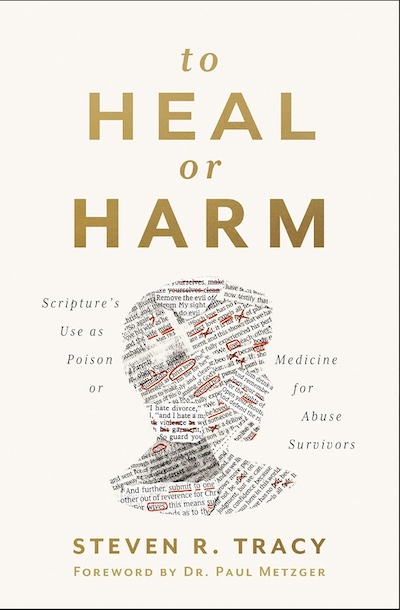
For all too many of us, Scripture has been used to make us accept abuse. To tell us we can’t defend ourselves. To let others control us.
But what if that stems from an improper use of Scripture?
Dr. Tracy’s book teaches how to interpret Scripture in ways that heal, not in ways that poison. And he points out the typical texts that have been weaponized against victims, and shows how they can heal instead!
For those who need to know what Scripture says, or who desperately want their pastor, their father, their sister to hear them–check out this clarifying and life-giving book!
If advice isn’t safe for abuse victims, then it isn’t safe period.
And that’s why in our book The Marriage You Want we made a point in basically every chapter that helped people identify when they had a normal marriage issue that could be dealt with, and when it crossed the line into abuse. We wanted it to be a book that could help people identify the real issue in their marriage. Sometimes it’s abuse, and sometimes it’s not, but people need clarity above all.
We need to stop accepting the excuse from pastors, authors, etc. that “it wasn’t meant for abuse victims.” Advice isn’t meant to do harm. And it is very possible to give advice that doesn’t harm, when you give advice that focuses not on making sure men remain in power and women remain compliant, but instead give advice that focuses on both people being able to fully show up and experience intimacy. And when they’re not able to do that–then something is wrong that needs to be addressed.
Excuses like “it wasn’t meant for abused women” simply mean “we don’t care if they’re hurt and they should have known better.” But how, exactly, were they supposed to know, when so many evangelical teachers and influencers are spreading marriage advice that actually normalizes abusive dynamics?
This isn’t okay, and it needs to stop.
So here’s what you can do:
- Download our grading rubric on healthy sexuality teaching, and show people which books are harmful
- Download any of our one sheets to give when someone recommends a toxic book that we’ve talked about
- When you see this kind of toxic advice on social media, leave a comment explaining why this is harmful to abuse victims; helping abuse victims recognize they’re being abused; and pointing to some healthy resources. Then:
- Unfollow, block, or mute these accounts. Let’s stop the algorithm from recommending them to others by making sure we don’t engage with them again.
- Stop rage following! If you follow someone who always gives terrible advice, just so you can watch the next terrible thing they say, remember that by spending time watching them you’re telling the social media platform “this is interesting stuff you should show to others.” Let’s clear our timelines of toxic stuff!
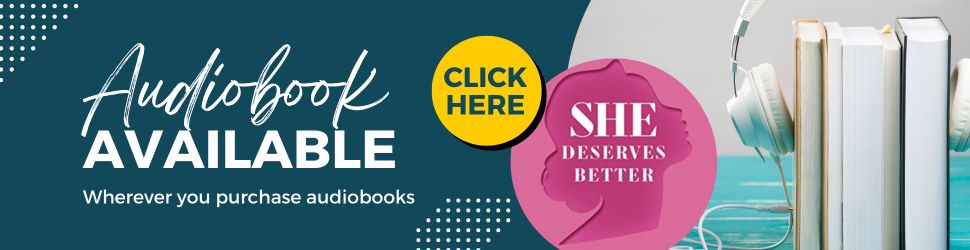
- Recommend healthy resources that help people see what healthy advice feels like. Give them The Great Sex Rescue, She Deserves Better, or The Marriage You Want. Once you see what healthy sounds like, you won’t get sucked in to the unhealthy stuff!
You may also enjoy
What do you think? Do you hear this excuse a lot from people giving marriage advice? How do we fight back? Let’s talk in the comments!

I always recommend you and others who give healthy advice in comment sections of those who give bad advice. However if you immediately block them I think the comment made disappears.
Yes, could be. But then go back next time you see them and block them!
Does your grading rubric also apply to books that cover other areas of sexuality? I’m thinking of a specific book that my pastor recommended to me on the topic of homosexuality, and it contained a chapter on homosexual relationships that really bothered me. I’ve been thinking for a long time about how to approach my pastor about it. Do you think the rubric might apply?
No, we’re looking just at healthy sexuality in heterosexual marriages. But there are many ways that a book could be problematic in other ways too.
Another thing is maybe the couple follows the advice and the relationship ends up becoming abusive BECAUSE of the advice or maybe not abusive or it ends up getting even worse than before the advice.
Yes!
What’s the source for the 25% stat please?
Most studies I’ve seen put the frequency of abuse at around the 20-25% mark. I’m specifically using the IFS World Map 2019 study, since Brad Wilcox quotes it all the time, and Josh Howerton quotes it all the time, so evangelicals tend to like it. And it finds that hierarchical christian men abuse at a rate of 27%.
Thanks. I’ll look it up. That’s horrendous though!
“That’s horrendous, though!”
Not to the abusive Christian husband. There it’s PROOF that GOD is on his side 110%.
The statistic is somehow so sad and not surprising. I attended a church for a while that was not openly into the Biblical manhood and womanhood stuff (aka misogyny wrapped in textual misinterpretation). Instead it was disseminated to people once they attended a small group. All the pastors went to Master’s Seminary. I started doing my research when I heard the women say off the wall things about being married. I’m single, so many of the things were obvious red flags. One woman decided even thinking or wishing their spouse would help them was “sinful.” No, it means he’s lazy. I saw men treat women like they were subservient children and incapable of doing anything. It was really odd. Couple that with them thinking 1 year olds were gross sinners when they can’t even understand basic English yet. I decided that was not the place for me. But those places only have one goal in mind for women: married with kids. If you don’t fit that you are shunned. So I think because of that women stay or they will lose their community. Really sick. I don’t think Jesus wants women to be treated like a trash heap.
That’s awful! Very in line with Master’s Seminary, but still awful!
I just have to say thank you for being so clear about this, Sheila. It’s been eye opening. My husband and I started going through a secular book on how ADHD affects marriage and there it was, bam, the author describing emotionally or verbally abusive marriages (both on the side of the ADHD spouse and the non-ADHD spouse) without labeling it abuse. Buh-bye, moving on.
Good for you!
Crazy thought: if your advice works well enough for people in healthy marriages but throws gasoline on the fire of abusive marriages, that’s advice that should not be in a book. If it is given out at all, it should be by a trained professional who has already done a thorough assessment as to whether or not abuse dynamics are present in the marriage.
I would be hard pressed to think of anything in TGSR that would be harmful to people in abusive marriages. So that’s appropriate to be in a book for general consumption.
You hit the nail on the head – my experience exactly! Sheila thank you for speaking up. This kind of toxic teaching has been going on for too long & has to stop.
It makes no sense at all when these authors give harmful advice then say, “This is not meant for abusive marriages.” I wonder if they have any awareness that their advice, which is usually not based on peer reviewed research and just on personal and cultural observations, is at all harmful.
This would be like me writing a book on dieting (which I am not qualified to do so because I do not have the right credentials or expertise) then telling readers that you must restrict your calories to 1200 a day and no snacks allowed between meals. Yet, I do not mention anything about those who have low blood sugar and need to eat smaller snacks throughout the day or even consider that people who are reading my book may struggle with eating disorders. Then I would say in one section, “but this advice is not meant for those who have eating disorders.”
That’s exactly how a lot of evangelical marriage books operate.
Absolutely! That’s a good analogy.
WIth Godly(TM) crap like that, is it any wonder that people outside the Christianese Bubble have such a low opinion of Christian marriage advice? Or Christian anything for that matter?
No wonder I’ve often heard women in Bible studies tell me how hard marriage is. This was back in my single days. I wasn’t sure if that was really their experience or if they were trying to encourage me to be content with my singleness. After all, I wouldn’t shut up about wanting to get married.
My first marriage was hard because my ex believed a lot of these harmful beliefs about what a “Christian” marriage should be.
Now I’ve been married to a wonderful man for almost two years and my marriage has not been hard.
Funny thing you mention this because as someone with binge eating disorder who read plenty of diet books throughout my years this happens with a ton of diet books too IRL! They use the same clause for EDs to cover their butts but binge eating disorder was only recently recognized as an ED less than 20 years ago and many people who have it often think “oh I just have bad discipline I am not trying hard” rather than something that needs professional help. For example, Weight Watchers will not let you join if you have anorexia or bulimia but are fine if you have BED which I think they should exclude too since it discourages them from getting professional help and I am saying this as someone who tried WW in the past and found that zero point foods made my binging even worse and these WW people really underestimate how many bananas I can eat I remember in the FAQ they were like “nobody is likely to eat 14 bananas which is why bananas are zero points” and I was just like “oh honey” many people with BED who done Weight Watchers say the same thing with how it made things worse for them especially as they added more zero point foods to their list as years went on.
Also funny you mention 1200 calories as that wouldn’t work for people that are very tall as they need much more than that at minimum to function especially if they are a man or very active. I am nearly six feet and tried 1200 at one point but I had no energy and it ended up making me feel so deprived that I binged!
This is a good point. Also, it’s wild that people claim “this advice wasn’t meant for abusive relationships” when some of the anecdotes in those books actually describe abuse, but they don’t point it out, they portray it like that’s just how marriage is.
I wrote a blog post about this and linked to yours, here: https://tellmewhytheworldisweird.blogspot.com/2026/02/this-advice-isnt-meant-for-abusive.html