



With thanks to Zondervan and the book To Heal or Harm for sponsoring this post.
My husband Keith is in the middle of a 4-part series about why complementarianism has such bad outcomes.
He started last week looking at the analogy that complementarians often use when defending hierarchy–“you’re equal in value to your boss, but your boss is still in hierarchy over you.”
He demolished that pretty well!
And today he’s back to talk about why complementarianism and intimacy can’t go together. This post first appeared on my Substack last week, but I always like them to be here on Bare Marriage central for posterity!
Grateful to him for writing this series now–it’s a busy month for me since my youngest daughter is due soon with baby #2, and I’m on standby and toddler duty! Excited times ahead!
Complementarian theology of marriage is based on a logical contradiction.
It requires you to believe that:
- (1) husband and wife are equal and
- (2) the husband has authority over the wife.
When asked how it could be possible for someone to be equal to someone, but also under that person’s authority, they often respond: “Well, you are under the authority of your boss. Don’t you consider yourself equal to your boss?” In a recent post I showed how this falls apart.
Hierarchy and equality are, in fact, contradictory and thus irreconcilable. I concluded by noting that this horrible analogy feels natural to some people because, sadly, the idea of husband as boss is commonly taught in Christian spaces that hold to complementarian views. Today I want to talk about how damaging that idea is to our very idea of what intimacy in marriage looks like.
Before I start, though, I need to address one thing.
No, this isn’t a strawman argument!
Whenever I bring up the uncomfortable ramifications of complementarian theology, I routinely get accused of making a strawman argument. A strawman argument is when you exaggerate or otherwise distort your opponent’s argument to make it easier to attack.
In this case, some will say: “complementarians don’t actually believe the husband is the boss, we believe the husband is a sacrificial leader”. But this attempt to make the debate about language is a deflection from what is happening in real life marriages.
Using a nicer name for it doesn’t change what it feels like to be on the other side of it. You can’t take a system that is manifestly unequal and unfair and then magically make it equal and fair simply by calling it “servant leadership”. And frankly I am tired of the constant use of flowery and deceptive language to make the ugly sound beautiful in order to justify the unjustifiable.
In the cold light of day, although they may not use the exact word, the idea of husband as boss is regularly and explicitly preached in complementarian circles. And although I have seen the rare complementarian arguing that this is a distortion, those few voices are drowned out by the majority opinion.
A classic example is “Love & Respect” by Emmerson Eggerichs, which is the most popular marriage study curriculum among evangelicals. He instructs wives to meet their husband’s need for respect using the acronym CHAIRS (Conquest, Hierarchy, Authority, Insight, Relationship, Sexuality). The first three are all clearly saying “He is the boss”. And – no surprise – so do the other three if you look at the contents of those chapters.
Furthermore, Eggerichs says he uses that acronym because the husband is the “chair” of the relationship. Even after all that, I am sure some would accuse me of “distortion” by concluding that Eggerichs teaches that the husband is the boss. Thankfully for my case, though, Eggerichs himself specifically uses the word. When asked to define the respect which he claims men desperately need, he says, “You respect your boss”(pg 68).
Eggerichs isn’t alone in thinking this way, though. The sentiment permeates evangelical teaching and protests that “actually, we preach servant leadership” are unconvincing when servant leadership looks like
1. “She doesn’t wear the pants in the family, I do!…She is MY helper; I’m not HER helper” as John Lovell expressed it and we discussed in this podcast )
2. Husbands having the “right to make commands” of their wives in the same way as they do their children (per Jonathan Leeman, discussed in this podcast )
3. The ubiquitous misquoting Scripture to say that the husband is the “head of the home”, which, when pointed out to them, they simply say, “Yes, technically it says ‘head of the wife’, but it’s the same thing!”
But how can a marriage promote true intimacy if there is even a suggestion that the husband is “the boss”?
I find it amazing that, as a society overall, it is generally acknowledged that a romantic/sexual relationship in the context of a power imbalance is at the very least “problematic”. Human resources departments everywhere have developed policies to ensure people are kept safe and not exploited or otherwise harmed. Meanwhile, within the Church, when egalitarian Christians continue to express concern about how problematic a power differential is in marriage, they are not simply pooh-poohed, but complementarians continue to assert – with absolutely no evidence – that a power differential in marriage is the surest way for a marriage to thrive!
When it comes to physical intimacy, though, the implications of promoting power imbalance within a relationship that, by definition, includes sex are horrific. One clear example is the erosion of the concept of marital rape which we see in Christian spaces. I would hope the argument for why that’s bad would make itself. To be honest, if it’s not self-evident to you, I am at a loss of what to say to convince you.
On a less heinous (but still distressing) note, is the uncritical adoption of the idea that the sex is for “physical release”. I thought as Christians, we believed sex was a beautiful gift from God not the quenching of some animalistic urge. At the very least, I think we can all agree that regardless of the physical effects, sex in a Christian marriage should result in us feeling closer to each other. So, what do the data show?
Get the book that shows how Scripture has been misused–and how to use it to heal instead!
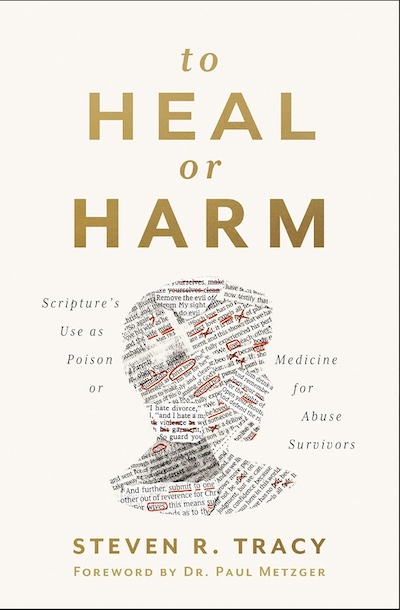
For all too many of us, Scripture has been used to make us accept abuse. To tell us we can’t defend ourselves. To let others control us.
But what if that stems from an improper use of Scripture?
Dr. Tracy’s book teaches how to interpret Scripture in ways that heal, not in ways that poison. And he points out the typical texts that have been weaponized against victims, and shows how they can heal instead!
For those who need to know what Scripture says, or who desperately want their pastor, their father, their sister to hear them–check out this clarifying and life-giving book!
Does Complementarianism Actually Bring More Intimacy? The Data Speaks!
Well, for our book The Marriage You Want, we surveyed over matched pair 1500 couples, plus another 4000 individuals, asking what their marriage was like and what they believed about marriage. We were able to see how people’s beliefs about marriage affected them and – because it was a matched pair sample – how it affected their spouse.
In our research, we found that when a woman believes her husband has a tie breaking vote in their marriage, she is 45% more likely to say she doesn’t feel emotionally close to him during sex and 41% more likely to express dissatisfaction with her sex life compared with women who don’t believe the husband is the tiebreaker. The husbands seem to pick up on this, too. If a man is married to women who believes this idea, he is 40% more likely to say he doesn’t feel close during sex and 32% more likely to say he is not satisfied with their sex life.
The data for when you believe that men “need respect in a way that women don’t understand” are even more damning. Whether it’s the wife who believes it or the husband who believes it, it adversely affects both of them.
If she believes it:
- She is 54% more likely to not feel close during sex and 51% more likely to be dissatisfied
- He is 49% more likely to not feel close during sex and 52% more likely to be dissatisfied
When he believes it, the numbers are even worse:
- She is 87% more likely to not feel close during sex and 39% more likely to be dissatisfied
- He is 69% more likely to not feel close during sex and 91% more likely to be dissatisfied
Whether you call it “being the boss” or “wearing the pants” or “heading the home” or “servant leadership”, complementarian teaching at its base assigns some level of additional authority and respect to the husband. But even just the authority to break ties – let alone the authority to “make commands” – is bad. Even the belief that he has a special need for respect – let alone actually granting unconditional respect – is bad. The evidence suggests that if we want our marriage to have a closer, more satisfying sexual relationship, ditching these beliefs would be an excellent first step.
But intimacy in marriage is more than just the sexual relationship. In our book The Marriage You Want, we define intimacy like this:
…to feel that joy of discovery when we see our spouse, that spark of deep knowing, deep longing, deep loving…Intimacy means that you see all of someone. You know what makes them tick. You know what they’re scared of and what they dream of. It’s the difference between knowing about someone and knowing someone, between understanding someone’s emotional state and actually entering into it with them.
This kind of intimacy requires vulnerability. And that vulnerability requires trust.
But if one person has authority over the other, both of these are bound to be distorted. If we see marriage as two complete equals working together as a true team under God, we can learn to depend on each other, we can each be strong when the other is weak, we can share the deepest parts of ourselves – including our fears and insecurities. But all of that becomes so much harder when we see ourselves as acting out roles with one person in authority over the other:
- He fears showing weakness because it suggests he is not a good leader
- She holds back on her opinions lest he find them disrespectful.
- He feels like he is only there to provide, that she doesn’t really accept him for who he is
- She feels she needs to shrink herself so that she doesn’t outshine him
For different reasons, they both end up feeling taken for granted. And, for different reasons, neither can say it to the other. It is all profoundly sad to me. And so unnecessary.
What about feeling cherished and accepted for who you are?
Complementarian husbands insist that they are given their additional authority for the benefit of the wife. For many of them, how much they cherish their wives is a particular point of pride. But in marriages where the wife believes her husband has the tie breaking vote, she is almost twice as likely (1.83x) than a woman who doesn’t believe that to think her opinions don’t matter as much as her husbands. And women who believe their opinions aren’t as important as their husbands are:
- 12.14x more likely to say their husband doesn’t know how to help them when they are stressed,
- 2.33x more likely to find money a source of stress in their marriage, and
- 3.48x more likely to feel sexually inadequate
Now what husband wants their wife to be stressed, to worry about money, to feel inadequate? I would hope that, complementarian and egalitarian alike, we husbands would fight to make these things not the case. But if we follow the logic, it leaves us with a paradox: if complementarian men truly want to use what they feel to be their God-given authority over their wife for her benefit, then the best way they can do that is to give it up. (Wait, that sounds familiar…..Where have I heard that before?…..)
Finally, let’s consider which view of marriage results in both husband and wife feeling relaxed and happy with each other rather than frustrated and angry.
When a woman believes her husband needs respect in a way she could never understand:
- She is 67% more likely to say her husband doesn’t know how to make her laugh and 63% more likely to say he is easily overwhelmed by his anger
- He is 43% more likely to say his wife doesn’t know how to make him laugh and 41% more likely to say she is easily overwhelmed by her anger
When the husband believes men need respect in a way that women don’t understand:
- She is 2.56x more likely to say her husband doesn’t know how to make her laugh and 1.52x more likely to say he is easily overwhelmed by his anger
- He is 2.04x more likely to say his wife doesn’t know how to make him laugh and 1.52x more likely to say she is easily overwhelmed by her anger
Regardless of what we think about the idea of “the husband is the boss”, it is inarguable that the husband breaking ties and needing respect are core teachings of complementarianism. But whatever theological arguments you make to say the Bible teaches these things, you can’t ignore the data that we see in the real world when those teachings are acted out.
Complementarians insist that Scripture teaches there must be a hierarchy in marriage. But the data show that in relationships where this is put into practice there is no evidence that it builds physical or emotional intimacy and lots of evidence that it detracts from it.
As Christians who want to follow God’s teachings and want to have healthy marriages we are thus left with only two options: either the complementarians are right and God designed a flawed way to do marriage or they are wrong in their interpretation of Scripture. I know which one makes more sense to me!
What do you think? Do people even realize more intimacy is possible? Let’s talk in the comments!








>> complementarians don’t actually believe the husband is the boss
They don’t believe that the husband is the boss. It’s just that, by some amazing coincidence, the husband is assigned all of the leadership, management, administrative, executive and decision-making roles, while the wife is assigned all of the servant and submission roles. The husband is also the tie-breaking vote in cases of disagreement.
But he’s not the boss, and if you listen very closely, you can actually HEAR my eyes rolling.
Just the family-level version of this TV Trope:
The more adjectives about Democracy in a country’s official name, the nastier a Dictatorship it is.
— TV Tropes, “People’s Republic of Tyranny”
I’ve asked this before, and I’ll ask it again.
If men have an innate, God-given need to be the boss, how do they assign the boss position in their all-male friend groups? When Alex, Bob, Charlie, Dave, and Eddie get together for the game, who is the boss? ***ONE*** of them MUST be the boss, right, or do they somehow turn off their need to be boss if it’s only penises in the room? Do they have a schedule of rotation? What if Alex misses a get-together due to work schedules or vacation or illness or whatever? Does Bob take his turn early, and if so, does Alex take Bob’s spot the next time? Or does the entire schedule advance so that Alex has to wait through Charlie’s, Dave’s, and Eddie’s turns for the rotation to cycle back around to him?
Or maybe Alex is ALWAYS the boss, as long as he is present? Do they have a predetermined pecking order, so that if Alex is absent, then the whole group knows that Eddie is the vice-boss and will thus be acting boss for this one get-together? What if Eddie is absent too? Do they know the whole pecking order all the way down?
C’mon, fellas, help us poor gals understand the boss dynamic. 🙄🙄🙄
“If men have an innate, God-given need to be the boss, how do they assign the boss position in their all-male friend groups? ”
FIGHT CLUB!
I CAN BEAT YOU UP! I CAN BEAT YOU UP! I CAN BEAT YOU UP!
“C’mon, fellas, help us poor gals understand the boss dynamic.”
Just ask Andrew Tate or Wes Watson:
“I! AM! THE! ALPHA!”
In my mostly male group of friends back in the day, one of us was kind of the alpha male, but not a complete boss. He didn’t make all or most of the decisions, he was just the “cool” guy and we all looked up to him. We had no second in command, to my knowledge.
So what would the group do if Charlie started to try to take over the group? Not let him know when the next meet-up will be? Deliberately schedule get-togethers for when you all knew Charlie would have a conflict? Tell him to his face his attempts are unwelcomed and will not be tolerated? Beat the crap out of him and tell him he’s permanently out of the group?
Or maybe you’d take the “Christian”-prescribed approach that women get on the regular: pray more, stay silent, appease him in all ways, not push back at all?
Good question. that never happened, so I have no idea how it would have gone. My guess is we would have just laughed at him and ignored him.
And if he made a habit of this behavior?
I mean, I get laughing at him for a one-off, but if it’s the way he lives his life…
More likely just ditch him and walk away.
Again, the difference between a Leader you want to follow and a Leader you’re Forced to follow.
In many ways, this sounds like the Natural Leader who people WANT to follow vs the type of Leader who people are FORCED to follow. Often one guy in a group will tend to the former role and the others just trust him. Maybe its a good track record, maybe just good Charisma, maybe he’s an intuitive politician, maybe people just trust him.
But all too often, Christians HAVE to Do X because The Heathen (everybody else) does Not-X.
And give it Cosmic-level Justification with “GOD Commands It!”
(1) husband and wife are equal and
(2) the husband has authority over the wife.
“Separate but Equal”, just like Jim Crow.
It’s hard to be intimate with your husband when you have the mindset that he’s supposed to be your boss. It’s just so cringey and in the workplace that would not fly. That would be grounds for sexual harassment.
Actually, I think the model at the emotional heart of the complementarian model is Main Character and Sidekick. Husband is Batman, wife is Robin. Husband is Lone Ranger, wife is Tonto. She’s not a paid employee, she’s a loyal, adoring assistant who always looks to the Main Character to call the shots, and she never drives the Batmobile, she always rides in the sidecar. Of course, the Main Character always knows what to do and his decisions always turn out right in the end.
I’m always a little confused by the “percentage more likely to…” and the “#x more likely to…” Statements. Toward the end you switched between them in one illustration, and while I can see the point you are making, the full impact of those stats are lost on me. Could someone suggest a rephrasing system/formula that would help me understand them?
Like, I understand the “that means that 1 in 4 of these women will then report…” Statements, but percents and “times more likely to” always seem to communicate the same thing but I know they actually don’t.
Think about it this way: when you wear a seat belt, you’re (I’m making this number up I don’t know it specifically) 6 times less likely to die in a car crash. Now, not a lot of people die in car crashes, but that’s still a big change.
We use percentages when the change is smaller, and we say “times more likely to” when the change is huge, because saying 650% less likely or 820% more likely sounds weird. So if all of the data is over 100%, then we say 1.5 times or 3.7 times, etc., but if it’s all under 100%, we say 32% or 86% etc. We found that people tended to understand that easier.
I hope that makes sense!
That helped SO much! Thank you!
I don’t know how you define “intimacy” (all too often these days it’s “meat in meat pumping away”) but I can tell you from my POV:
There can be no companionship with a GrrlBoss.
There can be no companionship with an organic sex toy.
There can be no companionship with a walking Jack Chick Tract.
The thing about the whole husband in authority thing is, you can’t have sex with your boss. That is just a horrible power dynamic to have in a relationship, and the reason militaries forbid relationships between people of differing ranks. When one has authority over the other, the one not in authority can’t fully consent or say no without fearing consequences.
Exactly! I don’t see how people don’t get this.
Best point!
“And frankly I am tired of the constant use of flowery and deceptive language to make the ugly sound beautiful in order to justify the unjustifiable.”
“Always use the proper Code Words: ‘Relocation’. ‘Resettlement’. ‘Delousing’.”
— Holocaust (1970s miniseries), Babi Yar scene
Aw, “Love and Respect,” a book given to me by my sister in my early 20’s when my marriage was on the rocks after the birth of our child…I could see the misogyny then, that his targeted audience was women, trying to get them to take full responsibility for anything unpleasant in the relationship, giving husbands a pass to carry on with little accountability for their part in the unpleasantness…the husband’s behavior was not the problem, it was the wife’s reaction to it…granted there are better and healthier ways to resolve conflict and respond as opposed to react. This was not teaching that. The wording was very underhanded and manipulative. I was just gobsmacked that Christian wives were eating this up, like this man’s ego singlehandedly saved their marriage!
As soon as I read it I was gobsmacked too!