
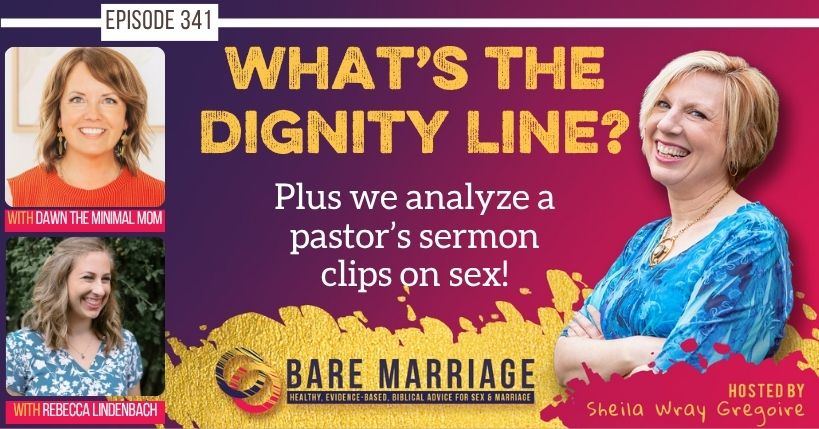


Today I’m going to intoduce you to Dawn, The Minimal Mom!
And there’s a story behind it. Dawn has a huge platform where she’s shared info, tips, and inspiration for becoming more minimal and oganized to be able to enjoy life more.
But along the way she got divorced, and felt that she had to share a bit with her audience, since they had known her family. And she ended up sharing this concept that she had created by combining a variety of sources that she dubbed “The Dignity Line.”
I had so many people send it to me that I felt I had to do something about it.
At the same time, Rebecca’s been really busy with community theatre and getting a homeschool coop together, so I didn’t want to burden her. I just scheduled it and did it myself.
And then Rebecca found out and was so upset because Dawn is her greatest parasocial relationship! I told her that Dawn told me that she had loved Rebecca’s 3 part series on Love & Respect, and that put her over the moon!
So today I’ll let Dawn explain about The Dignity Line, and then Rebecca joins me as we analyze a part of pastor Ryan Visconti’s sermon on sex, and note the similarities with what Mark Driscoll has said!
Or, as always, you can watch on YouTube:
Timeline of the Podcast
00:0 Introduction: Welcome + A Surprise Guest
04:27 Meet Dawn from The Minimal Mom & What’s The Dignity Line?
09:30 Why “Perfect” Marriages Can Be Misleading
11:24 The Dignity Line Diagram & its Integral Connection to Trust & Safety
19:22 The Exhaustion of Trying to Save a Marriage
25:41 Why Boundaries Can Be Complicated
29:56 When Marriage Advice Becomes Clarifying
33:33 What Does It Mean for Marriage Advice to “Work”?
40:32 The Dignity Line for Kids and Other Relationships
43:25 How Decluttering Can Help Rebuild Confidence
46:45 Rebecca Chimes in – When Pastors Talk About Sex
55:06 Does Christian Sex Advice Actually Consider Women?
01:01:20 Why “Withholding Sex” Is the Wrong Framework
01:09:00 Conclusion: Be a One-Bedroom Pastor
Key Talking Points
1. The “dignity line” gives us a way to talk about relationships without needing a diagnosis.
Dawn shares her idea of the “dignity line” – a simple framework for recognizing whether a relationship consistently treats people with basic dignity. Above the line, there is room for disagreement, mistakes, and conflict while still having accountability, empathy, and respect; below the line are patterns like name-calling, blame-shifting, manipulation, and refusing to take responsibility. The key is looking at patterns, rather than trying to determine whether someone deserves a particular label.
2. Someone can love you and still be treating you in a way that is profoundly unsafe.
Love and harmful behavior aren’t necessarily mutually exclusive. Dawn describes the difficulty of believing that her former husband genuinely loved her while also recognizing that the relationship repeatedly left her feeling unsafe and hypervigilant. The effect of those patterns matters, regardless of the exact psychological explanation behind them.
3. Sometimes what looks like a sudden divorce has actually been years in the making.
From the outside, we often see the polished version of a couple’s relationship and then feel shocked when they separate. Dawn reminds us how much work can happen privately before a marriage ends – counseling, reading books, trying new strategies, changing oneself, and repeatedly attempting to make the relationship work. What looks sudden to everyone else may be the conclusion of years of agonizing effort behind closed doors.
4. Boundaries can become a form of data collection.
The conventional advice to “just set boundaries” can be inadequate in a relationship where enforcing a boundary itself creates enormous fallout. Dawn explains that instead of automatically judging ourselves for not enforcing every boundary, we can pay attention to what happens when we try: Does the other person listen? Take responsibility? Escalate? Shame us? This turns repeated interactions into information that can help us understand the relationship more clearly.
5. Marriage resources need to define success differently.
We need to challenge the assumption that the purpose of every marriage book, counseling program, or retreat should be keeping the marriage together at all costs. Sometimes working toward a healthy marriage reveals that both people are not willing – or not able – to participate in creating one. In those situations, the goal may ultimately need to be helping people become safe and whole, whether that happens inside the marriage or apart from it.
6. Christian women aren’t responsible for producing a guaranteed happy ending.
There can be enormous pressure placed on women to pray harder, become more godly, communicate better, and somehow transform their husbands. But marriage involves two people, and there is no formula that guarantees one person’s faithfulness will produce the other person’s transformation. We need to make room for testimonies of marriages that heal, alongside honest stories of relationships where continued endurance was not the path to health.
7. Good sex advice has to start with mutuality—not obligation.
What happens when Christian teaching focuses on how often a wife should have sex without first asking whether sex is safe, mutual, pleasurable, intimate, and genuinely wanted? Conversations about frequency, variety, and sexual generosity are secondary to those foundational questions.
8. When speaking on sex, it is important to consider your audience.
A statement that might be useful to a healthy couple going through a temporary rough patch can be deeply harmful when delivered indiscriminately to people experiencing coercion, pain, neglect, or an unhealthy marriage dynamic. Before asking, “Could this advice ever be helpful?” we should ask, “Who is most likely to hear this – and what might it tell them about what they owe their spouse?” If it’s questionable, maybe it’s better left unsaid.
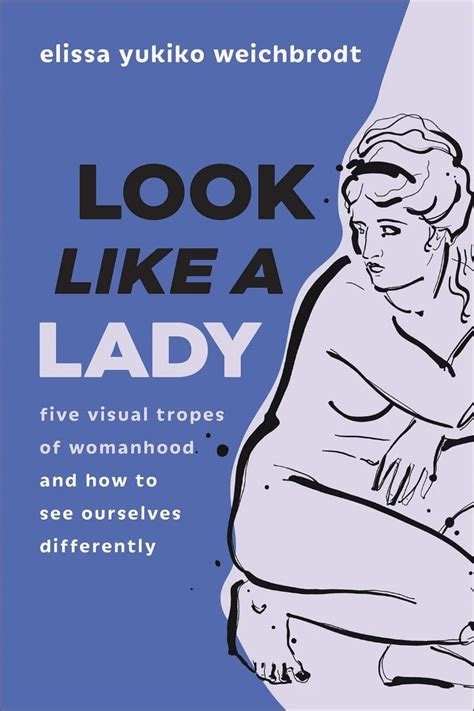
Ever feel like you’ve been put in a box as a woman?
That there are certain tropes that you’re supposed to live up to, but it just doesn’t work for you?
You’re not alone! Elissa Yukiko Weichbrodt takes us on journey through art history, connecting the dots to modern evangelicalism, to show how Venus, Vessel, Maiden, Mother, Monster continue through the ages–and how God offers us an alternate way of seeing, and being.
You’ll feel validated. You’ll feel smarter! And you’ll recognize yourself in the paintings!
Things Mentioned in the Podcast
OUR SPONSOR
Thanks to Brazos Press for sponsoring this podcast, so we could tell everyone about the amazing book Look Like a Lady!
Listen to our podcast with Elissa
BARE MARRIAGE ANNOUNCEMENTS
Preorder Fawn, Sheila’s New Book
Our Spanish Site is live!
CHECK OUT OUR OCTOBER SIMULCAST EVENT
We’re doing our sex talk and a one-day marriage conference! Check it out for more information.
Find the church info page here!
TO SUPPORT US:
- Join our Patreon for as little as $5 a month to support our work (and get access to the book club!)
- And check out our Merch, or any of our courses!
- Give to the Good Fruit Faith Initiative of the Bosko Foundation
- Join our email list!
LINKS MENTIONED:
- Dawn’s Website, “The Minimal Mom”
- Dawn’s Dignity Line Resources
- The Big Reasons For Divorce – Podcast Episode 212
- The Power of a Praying Wife Review – Podcast Episode 197
- Our Love & Respect Deep Dive Series
- Elissa Yukiko Weichbrodt’s book, “Look Like a Lady”
- Friday Roundup on Ryan Visconti
- Ryan Visconti full sermon
Transcript
Welcome to the Bare Marriage podcast. I’m Sheila Wray Gregoire. From Baremarriage.com where we like to talk about healthy, evidence based biblical advice for your sex life and your marriage. And I am joined today by my daughter, Rebecca Lindenbach to whom I owe a big apology. We have a story. So, Rebecca’s been really busy lately because she’s been involved in some community theater. You’ve done, like, three plays since June. You’ve been in three productions since June, and it just ended last weekend, and life was just really busy. And so. And then I’m about to abandon you because I am flying up to Halifax for our simulcast events on October 3rd, which I’m so excited about. And then my assistant Tammy, who lives in Halifax, her husband’s been a military chaplain for 42 years, and he’s retiring from the military. And so, we are going on a trip with them, which is the first vacation we’ve taken in almost two years. And so, I’m abandoning you for like three and a half weeks. So, I thought, well, you know, what I will do before I leave is I will take on most of the mental load, and I will do as much of the work as I can without even telling Rebecca what I am doing. And so, I invited one of Rebecca’s most favorite YouTubers on the podcast and interviewed her without telling Rebecca.
Rebecca
She didn’t know she was one of my favorite YouTubers. She didn’t know she was one of the people who fundamentally changed how I function on a day-to-day level.
Sheila
And so, I did that and I’m sorry. And we’re going to be having Dawn from TheMinimalMom, come on in just a minute to talk about the dignity line, which is a really cool thing, that she came up with to try to articulate some of the craziness that was happening in, in her relationship and in relationships that she saw around her. And I found it really helpful. A bunch of you sent it to me, and we’ll talk about that in a second. Before we get to that, a couple of quick announcements. Fawn, our new book that is coming out in March 2027. Fawn, How a Trauma Response Became Biblical Womanhood and How Women Can Reclaim Their Agency is now available for preorder. I wrote it with Doctor Merry Linn, who’s a psychologist. She’s my coauthor on it, and we’re just looking at how all the elements of biblical womanhood are actually fawning. And why is that? If fawning is a survival strategy, why do evangelical women need a survival strategy? And how can we get out of this mess? So, I am seriously so excited about this book. Remember that when you preorder, you help us a lot because it signals to retailers, oh, there’s a lot of demand. So, we should order a lot of these books. It raises the book in rankings so that more people pay attention to it. News organizations figure out what books to carry, physical bookstores figure out which books to order in. So please preorder. We’ve got some links in the podcast notes where you can do that. And something else really cool. Our Spanish language whole site and everything has launched.
Rebecca
Yeah. What we did is we actually got because of what Bosko has given us or donated our dollars through Bosko have funded the ability to translate podcasts and social media, one of our courses.
Sheila
Yes.
Rebecca
All in Spanish.
Sheila
Yeah. So, if you’re in Latin America, if you’re in Spain, anywhere that speaks Spanish, we have resources for you and the, I know the Latin American market is really big and there’s a lot of people who have who have written to us from Central America, South America, or even from United States in Spanish speaking communities, saying, we really need your stuff. And so, we took some of the donation money that you sent us, and we’ve prioritized Spanish language translation. And that’s up and coming. We’ve got the Good Girls Guide to Great Sex out in Spanish. What is the title? Becca, can you read it?
Rebecca
Okay. We’ll give this a shot with my 8 months of university Spanish. Yeah. De la chica Gwinnett para an sexo. So, you can you play Como player? UN matrimonio santo espacio nado.
Sheila
There you go. And we’ve set up some social media accounts. I think it translates into marriage without masks. I forget what the Spanish is. There you go. And. And so we shall have the links to all that in the podcast notes. Please send it to your friends who might be in those communities who might really appreciate it. And let’s get it going, because we have no way of getting the word out unless you share it. And yeah, you guys all funded this, so let’s share it and help other people find us. And so now, without further ado, here is our interview with Dawn.
All right. This is going to be super fun. And I need to tell you, this is a weird interview because I had multiple people send me this clip saying, Sheila, you have to listen to this from Dawn, the minimal mom. And I’m like, why? I don’t talk about organizing. I mean, I watch a lot of stuff about organizing, but I don’t talk about it. What is this got to do with me? And then I watched it and I’m like, oh my goodness, I need to see if Dawn will come on the podcast. And so, Dawn the minimal mom is here to tell us about the line.
Hello, Dawn.
Dawn
Yeah, Sheila. Thank you. I am excited to talk about where the line is and relationships. A very concrete way we can know should we stay or should we go? So, I’ll solve that for all of us today. But thank you. I have listened to all of your podcasts, your ideas, your concepts. It has helped me unravel so much of the things I used to believe, but that they didn’t sit right with me all the time.
And so, I’m just like, you know, and the way you approach things, it’s scientific. It’s grounded. It just has helped me so much. So, thank you for all that you do. And it just truly is a privilege and honor to get to visit with you today.
Sheila
Yeah. I’m so excited. So, you run a big YouTube channel and a big business talking about minimalism. That’s who you are.
Dawn
Yeah, I love talking about decluttering, and I’ve been doing it publicly online for almost ten years now. And so then naturally through that process, I share my family and my spouse, and we would even at times talk about our marriage and our Christian faith beliefs. And so, I had this very public facing life and I made it look really good, like, that’s what we do as women, right? We make our marriage relationships look really good, whether it’s when we go to church, whether it’s on Facebook or, YouTube, and you just edit out the parts that aren’t ideal or that are hurtful because I think, again, most of us are like, but they’re a good person that like, they love me so much. And so, these other things that come up and maybe keep coming up and coming up, like, that’s not the real them. And, you overlook it and you make things look really good. And then sometimes you get to a point where you start seeing the impact on your kids, and you start feeling like you’re crazy and you can’t take it anymore. And so, then you go on YouTube and you make a video saying, Tom and I are divorced. This sucks. And people are like, what? Like what happened? What happened to me, oh my goodness. Like how? Well, like you guys looked so good. And I think again, whether it’s influencers we follow or just that couple at church that actually seemed like they really had it together and then shocked everyone when they announced that they were getting divorced. We do a really good job of making it look good, but when I posted that video saying we were getting divorced, one of the number one questions on there was. But where’s the line? And so many women were saying, hey, I have difficulties in my marriage. I feel hurt and confused. I feel like I have been trying so hard. Where’s the line? Where’s the line? And it haunted me after that video because I had asked my therapist the same thing. For 16 years, I was trying to decipher that very same thing in my marriage.
Where is the line? And my therapist who I adore and is awesome. He was just like Dawn there’s not like it’s just not. And I’m like, no, that is there.
Sheila
There has to be a line. Yeah.
Dawn
To the point where I went back to school and I got my master’s in psychology, and I was just trying to pull together everything that I had learned as I listened to your podcast and, Natalie Hoffman and Leslie Vernick and, you know, learning about emotional abuse, learning how someone can honestly, truly love you. Like, really, I do not doubt that my ex-husband loved me and how they can also hurt you so much and try to reconcile that in our brains. And so finally, this idea came to me again. I don’t want to fully take credit for it because I really pulled together all these things that I had learned over the years. But I came up with this idea of the dignity line, and I truly do believe we can use us in every type of relationship that we have to decipher patterns and to figure out if we are being treated with dignity in a relationship. Because I think dignity is the line and we all deserve to be treated with dignity. And Sheila, also, when I was coming up with this, I knew it had to stand up in church like it had to satisfy the Christian community, even though I was, you know, deconstructing and reconstructing and reevaluating everything I believed. And like, if I’m going to come up with some kind of model or something that will help women and everyone decipher this, it has to stand up in the church. And so, what’s been helpful is this idea of dignity. Even our Christian friends cannot discount the fact that I do believe we all, every single human being on the face of the earth deserves to be treated with dignity.
Sheila
I love that, I love that, okay, before you jump into what the line is, I want to just say one thing. What strikes me of your story is how we follow all these influencers, and then all of a sudden, they get divorced and we’re blown away. And our reaction to that, I think when you watch people from afar, is, oh, this must have been a spur of the moment decision, because I could see how happy they were. Yeah. And so, we’re like, man, people are selfish. This is awful. How selfish are people just to blow up a perfectly good marriage? Because the only thing that you ever saw was the collated bits. The carefully collated picture. And that’s just a really good reminder for us that when someone gets divorced and it looks to you like it was out of nowhere, nobody chooses that.
Dawn
No. Especially not women.
Sheila
Yeah. Oh, especially in the church. Yeah. Nobody chooses that for no reason. And we have done a podcast. I’ll link to it in the podcast notes on the big reasons for divorce and how this idea that people are just giving up on marriage for no reason is just simply untrue. There’s usually years and years and years of people trying to make it work, trying to make sense of the deeply confusing parts of their marriage. And that’s what you did. You’re trying to make sense of this horribly confusing thing, and you finally distilled it down to this one diagram. And I would love to have you. Yeah, explain that to us.
Dawn
Yeah. And as women too, we’re respecting the Christian teachings that you don’t out your husband, you know, you respect your husband in public.
Sheila
Never speak ill of him.
Dawn
Handle, you know, and turn the other cheek. This is sanctified. Remember our pre-marital counseling? Marriage is sanctification. Oh, okay. So, if it’s extra hard. Oh, dang. Am I storing up treasures in heaven and getting ultra sanctified, right. But anyways, yes, I think we’re on the same page with that. But, okay, so this idea of the dignity line. So, again, it is so confusing when you’re trying to decipher this. And so, here’s what I had to start to understand about relationships. So, what we would say in a relationship. So, the line is dignity. Every human, if we can agree that every human being needs to be treated with dignity, then we can start to kind of, pull out. What does that actually look like? And so, what I think we could all agree on is that above the dignity line in a relationship, we say if we disagree, you don’t call names, you don’t mock me. You don’t tell me I’m lazy for bringing something up. You don’t twist my words or rewrite history. If you mess up, you own it. If I mess up, I own it. If something hurts me, you care that it hurts me. You’re willing to look at your parts. And again, I think this is very reasonable. I don’t think anyone would say, oh, you’re expecting too much from a relationship, right? But below the line is different. It’s name calling and lying, blame shifting criticism that attacks character instead of addressing an issue. Gaslighting, making someone question their reality, entitlement – acting like your comfort matters more than your partner’s well-being. And sometimes it’s more subtle, though it’s chronically not holding a job while someone else carries the weight, it’s disappearing into video games or hobbies while your partner is drowning. It’s financial irresponsibility that puts the family at risk. It’s refusing to try to understand your partner’s perspective. It’s promising change over and over with no follow through. It’s saying, I’m above you. Your needs are negotiable. Your exhaustion isn’t my responsibility. You’re not worth my effort. And you know, Sheila, what’s been interesting to me, though, is that I have an identical twin sister. And so, she got married a little bit later than me, but she’s been married for about ten years now, and like me, she’s also a pastor, too. And so, as we’ve talked this through together, she was like, her husband’s name is Princeton. And she’s like, well, he sometimes messes up, he sometimes loses his cool. But the difference is, even if you dip below the line, he comes back up above the line pretty quickly. He wants to apologize. He cares that it hurt her. And, on the contrary, what I often experienced in my marriage was defensiveness. Further criticism. Me being too needy at me, expecting perfectionism. So, I don’t want to say any, you know, in any relationship, if we occasionally dip below the line, it doesn’t mean that it’s necessarily unsafe or that you should leave. It’s what happens next in it. And that’s why I want to show this next part.
Sheila
And let me just say to like this line, you’ve got it. So, you’ve got this access that is the dignity line. And then you’ve got this access which is trust and safety.
Dawn
Yes.
Sheila
And because that is I think this is a piece that I’ve only started to understand in like probably the last five years, because really, we haven’t talked about it a lot, but how much trauma affects our bodies and how much when we are in chronically unsafe relationships, you know, our cortisol levels spike. Our brains are always trying to make sure that we’re safe. And when we’re not, that causes such stress. It has physical ramifications like this. This is one of the things that makes me upset is when people say, oh, but he never hit me. So, you know, it wasn’t physical abuse. Yes, but emotional abuse is physical abuse because emotional abuse takes away your safety. And then over time, that has physical ramifications, which can be just as bad. You can have chronic illnesses, you have higher incidences of cancer, of heart disease, etc. Like this is physical. And so, you know, we need that trust and safety in a relationship like our bodies need it.
Dawn
And I think that is the confusing part. And because especially if we’re talking in romantic relationships, but many have said this model is very helpful for parent relationships, sibling relationships, like you can see these patterns, but it’s this. It is that sometimes they’re warm, sometimes they’re kind, sometimes they’re connected. If that relationship was all bad all the time, we would have justified leaving much sooner. But it’s this confusion. Oh, sometimes they’re warm, sometimes they’re kind, and it’s this up and down. If you’re watching this instead of listening to it, it’s this up and down above the dignity line, below the dignity line, above it, below it. And I think as I, as I’ve looked at this more, something else very insidious that happens. And if you have not experienced this kind of relationship, I don’t think you fully understand it is that you’re led to believe often in this type of relationship. I was led to believe that I was the one causing the dips below the dignity line. I upset them, I didn’t do my wife leave duty about whatever that was at the time. I didn’t keep the kids quiet in the car when we were driving. Didn’t I know he got stressed out when we were driving distances and the kids were loud in the background. So of course, he lost his cool and pulled over on the side of the freeway and tried to force me out of the car on the side of the freeway with four little kids crying in the background. That was my fault. Why didn’t I catch it sooner? And so, and it’s silly now when I look at some of these examples, I’m like, oh my goodness. But it happened so gradually. And so, I think I caused the dip below the line and therefore that would also then logically tell me I can cause it to come back up again. So, what do I do? I reduce my needs. I don’t ask for things. I don’t push back against things. I just try to keep the peace at all costs. Because I’ve had this taste of life above the dignity line. I believe that’s who he actually is in his core. And so, it is my job, especially as a Christian woman, to call out the gold in my husband and to set him up for success.
Sheila
Give him a crown and he will become a king. Dawn, give him a crown.
Dawn
Obviously, if I could just do this better, everything would work itself out and be smooth. That line would be so smooth, right? If I were just doing a better job with it. But it’s exactly like you said, Sheila. It ends up that we are walking on eggshells even when the times are good. We cannot let our guard down. Our stress levels do not decrease because we are trying to prevent the next dip. We are hyper vigilant. I could read his moods like the back of my hand. I knew, especially if we were in public, I think, oh, that comment, that person just made is irritating him. Change the conversation. Go get food. I am hyper vigilant reading his moods, running interference in between the kids. I would especially, like, try not to have him snap at the kids in public, you know, make sure the kids are behaving well. It was the most exhausting way to live, and I didn’t even realize what was happening.
Sheila
Yeah. Or if you say to him, you know, I am feeling, you know, neglected. Oh, you always ask so much of me. You always ask too much of me. And then and then you’re like, well, no, I’m just feeling neglected. Well, you never care about how overworked I feel. You don’t value my feelings.
Dawn
You’re the one that wants to have four kids, I only wanted to have two kids if we didn’t have four kids, right? And I’m like, oh, right.
Sheila
Then suddenly you were the one who was upset and hurt. And the conversation becomes how hurt he is. You were upset and hurt and how if you don’t care that he’s hurt you, then don’t care about his feelings.
Dawn
1,000%.
Sheila
And it’s like it just is. So, and that’s the gaslighting and the confusion that comes when you are below the dignity line.
Dawn
Yes, it’s amazing how it wears down your confidence, and what you believe about yourself. You get so turned around in your own head and it’s it. It really is. Like if a friend were describing this situation, you’d be like, you shouldn’t take that. You should do, you should stand up, you know? But when it’s happening to us in our own home and I think, you know, I was so I was working so hard to work, to manage the kids, to manage his emotions that, you know, in, especially in the, the height of it, it was just like it was easier to just keep trying to keep everything smooth than to think I’m going to pick
a monumental battle and try and, you know, change any of this course, but also probably what people don’t understand in the background. I was reading every article about marriage, podcast. It kind of makes me really angry when women are like, oh, but did you read this book or did you listen to this podcast like, surely you don’t understand the women in the background of all this going on. I was trying everything. Marriage counselors. I went to my own counseling. I’m owning everything I can possibly own that I can, you know, like we are desperately in the background trying to save it because we don’t want to split up our family. And also, a lot of times we don’t want to leave our kids. Like if we have to get divorced and split custody, I’m not there to run interference. Like I’m not there to, you know, so that even feels impossible. So again, back to the beginning, when it feels sudden on the outside, women have spent literally hours and hours of their life contemplating and weighing and trying and exhausting themselves and giving up, sacrificing themselves to try and save this marriage while seemingly their partner is just going on enjoying the benefits of a wife that’s trying to keep them happy and give them everything that they want.
Sheila
Yeah. And then when you finally leave, the divorce comes out of nowhere. Yeah, yeah. Even though you’ve been screaming like this, this is bad for years. But yeah.
Dawn
But something else that was I think is helpful about the dignity line I’ve heard other women mention is that I was also in this process, trying to chase a diagnosis for my ex-husband because I’m like, if he has some kind of personality disorder or something else or, then other people will believe me. And that is very difficult. It’s very difficult to get that to cooperate with it. But through this process, again, with the dignity line, I’m like, okay, I need church goers to understand it and buy into it so they can validate it and use it. But I also need it to be outside of diagnoses and labels. And so that’s what I love about this again, because if we can show someone that, hey, this is how I’m consistently treated, again, we’re looking for patterns, not one-off experiences, but I’m consistently criticized. They don’t have any interest in hearing my side. They, you know, name call. They do this, you know, to the kids as well. And we can start to show these patterns below the dignity line. Well, I think then it’s a little bit outside of labels and yeah, are their narcissistic tendencies and all this. But I you know, and I hate that about our culture right now too, is like if you even bring up the word narcissist now, it’s like, as a woman, I feel like you just get shot down like, and I had therapist tell me this, oh, that term is so overused. And, and I would just hope if anyone heard someone describe their spouse as narcissistic, any kind of personality disorder, that you can set aside the cultural terms and maybe it’s overused. Maybe it’s not. Maybe it’s not defined correctly and say, oh, wow, there’s a woman in front of me crying out for help because maybe he’s not a clinically diagnosed narcissist, but if she’s even using that term, and if she’s even risking bringing this up to you, whatever your role is as a friend or anything, that means there’s some really yucky things, really gross, really demeaning things going on at home. And so can we just set that aside and say like, okay, we need to find out more, like lean in and not just dismiss it as, oh, oh, that’s a term that just gets overused all the time now.
Sheila
Yeah, exactly. I think so, I’m not even sure if it, you know, you said you were searching for a diagnosis because if people could see there was a diagnosis, they could understand you better.
Dawn
They would believe me.
Sheila
They would believe you. But I think people can be below the dignity line or can act below the dignity line, even if they’re not narcissistic or bad, even if you just have a lot of emotional immaturity or a lot of untreated trauma or and that that can be difficult because you could be married to a guy who is not a bad guy. You know, he’s not a narcissist. He’s not a bad guy. He just grew up with a really emotionally dysregulated, abusive dad, and he got emotionally enmeshed with his mom or whatever it might be, and he can’t handle his emotions and he goes nuts. It actually doesn’t matter why someone’s below the dignity line. Yes, yes. Because the actions and the effects are the same on your body. Like your body doesn’t feel safe. And when your body doesn’t feel safe you get the cortisol problems, you get you know, you get the hypervigilance where you’re like you said you’re constantly living in hypervigilance. We’re talking about this a lot in our new book form that’s coming out in May. You know, just the hypervigilance that so many Christian women live under, because we’re taught that we need to manage the emotions of the men around us. And so, you know, we’re dealing with all of this, and it really doesn’t matter why.
Dawn
Yes. Thank you. Yes.
Sheila
You know, because when you’re unsafe, you’re unsafe. You said something interesting too, in, in, one of your videos. Again, this is not the main thing you talk about. This is like, there’s this weird little offshoot that you mentioned in a couple of videos, and it just blew up like crazy. You had thousands upon thousands of comments. So, yes, usually you were talking about decluttering and talking about it very well. So go check out Minimal Mom there. But you said that, boundaries. You found it. All the discussion about boundaries is difficult because they never worked for you.
Dawn
Yes. Oh Sheila, I like I’m getting goosebumps right now because I can still, like, so distinctly, just remember a therapist saying, well, Dawon, you need to have boundaries. And so, I’m like, okay, I am going to go home and I’m going, I am committing to this because then what happens once we start to see like, okay, yeah, that’s not okay how he’s treating me, how he’s criticizing me. And so yes, and I read the boundaries in Marriage book and I’m like, okay, I am going to do this. Okay. Right. So we went home and we were remodeling our house. And he was like, oh, hey, I want to go to the home improvement store. Will you come with me? And so often I, I always felt like he just always wanted me next to him and with him and all this. But I had things I needed to do. Right. And also, a lot of times he is in the car. It’s a closed environment. That’s where we’d have these blowouts. So I didn’t want to go. I mean, there were other things I needed to do, and I didn’t like being in the car with him. And I was like, you know what? Today I actually want to stay home. I want to do this and this. And he was like, well, so now you’re choosing and doing chores around the house or the kids over spending time with me. We don’t get a lot of time together. And I was like, well, no, it’s not just that.
Also, I don’t always feel safe in the car with you. So I’m like, look at me. I’m standing up for myself. I’m telling him what I need and why I’m choosing to be an adult. I’m choosing not to ride in the car with him, you know? And so I just don’t always feel safe. And then it turned into, oh, well, I’m not good enough. And this is why you want to go to marriage counseling now. And so you can just use all this stuff against me. And what struck me is later on, my counselor would ask me because I again, I’d be like, I just it frustrates me. I didn’t stand up for myself more through this process. And he said, what was the cost? What was the cost? Oh, it was him going down the shame hole. Me, like you said earlier, me having to build him back up, tell him he’s not a horrible person. And it just like would drag out then he wouldn’t be productive. And I’m like, we just need to get this remodeling done, you know? And so it was actually less costly for me just to go to the stupid home improvement store with him for an hour, come back him get to work and do the things than for me to enforce my boundary and to choose this. And so enforcing boundaries. It’s very costly if we are consistently living below the line. But there is a way to use boundaries for our own data collection then. But one thing that Natalie Hoffman has said stood out to me. She was like, what? I want to tell those Christian therapists that, you know, say boundaries is like, I want you to walk into their office and say, well, let’s talk about boundaries.Why didn’t you tell me not to steal your couch in your office? And they’d be like, well, are you really going to steal my couch? And when I, when I, when I scream at these therapists, it’s like, should I really have to tell my husband, don’t call me a stupid B. Whatever. Don’t yell at my kids like this.Don’t like these are I thought these were givens. Like, I didn’t think I’d have to have boundaries like this. Like, keep your stupid boundaries, but I want to take a deep breath at how I see boundaries. Helpful now in these types of relationships is just being able to look at patterns and collect data. What happens when you try to enforce a boundary, and you always have the freedom to choose if it feels worth the cost or not. So again, no shame or guilt to women who have really tried to commit to this. It was probably very costly. And so instead of beating yourself up and saying, oh, I’m just not good at boundaries, say, okay, it’s costly. And that’s why I often choose not to enforce them. But what is that data telling me? What consistently happens when I try to enforce them? What are the patterns here that keep happening? And then again, that helps you then to decide, as you’re weighing pros and cons of whether you stay in a relationship like this or not? Or do you seek more help? It helps you to know where the breakdowns are, and to see the patterns and have better data to make these decisions with.
Sheila
Yeah, I’m always just funny because I listen to that part of it. And I thought, oh, this is something that I talk about a lot. Like I maybe I haven’t said it on a podcast, but that I, I think one of the benefits of some of the work we’ve done is that it’s very clarifying. It’s very clarifying about people’s relationships, because, you know, what we say in the great Sex Rescue, we’re redefining sex, basically, and we’re saying, look, if it’s not pleasurable for you, if it’s not intimate, if it’s not mutual, that it’s not really sex, and you do not have to like you do not have to consent to something which is hurting you. You can say to your husband, look, I want a great sex life with you, but I’m no longer willing to be used as a sex doll. Yeah. And if he says that’s not okay, yeah, then that’s clarifying. And so, you know, we’ve had a lot of people say, like, I read the Great Sex Rescue, and I realized that my marriage wasn’t healthy and it wasn’t going to get healthy because that’s what it does is it’s like, no, once you realize this dignity line, this is what this is what is necessary for my it’s not even what I deserve. You do deserve it.
Dawn
Kind of bare minimum, actually.
Sheila
Yeah, yeah, it’s beyond that. It’s like this is what is needed for me for my safety. And if they’re not even willing to talk about it or to consider the fact that I’m not feeling safe, then that’s very clarifying. That’s a lot of information that I needed to have that’s going to help me with next steps
Dawn
That’s really hard. I think that Sheila was one of the hardest things for me to be able to accept . How can you say that you love me so much? I mean, we’ve created this life together and all of this. And then when I really do express a need to and a desire and I do it and I do it in the right way, and I, you know, all this and then to get this data back, this response back, it is really hard to accept. And I think that took me months and months to be able to be like, oh wow, this is my reality. Like this is for real. Like there actually is when I just put it all out on the table. It was so disillusioning and so hard and so like I thought we were on the same team. I thought we were building a life together, a marriage. I thought we were both, you know, honoring God with our relationship and, you know, all of this. And so that both are true, that I do believe he loved me very much. And also, you could treat someone consistently and not hear me out and not be able to. And again, I am now learning more about psychology. I know you know. So there are people that like literally those neural pathways in their brain that are not developed, like they have not been able to empathize, to hear again, whatever. When we don’t have to, it doesn’t matter how they got there. But like they’re like they really, actually cannot put themselves in your shoes. They can’t hear you. They can’t get past their own defensiveness or whatever. And no matter how well you explain it. Right. And so that all it’s so disillusioning, like, this is not what marriage is supposed to be. It’s not what we go in thinking it’s going to be, and that we’re going to end up in this place now where we have someone who is literally showing us they’re not willing to put in the effort or do the work needed to change.
Sheila
Yeah. And again, let’s just reiterate this. They can say they love you and they can even mean it. Like in their hearts of hearts, they feel like they love you. They feel like you’re the most important person in the world to you. But it’s the actions that really matter. And I think we get very caught up in that because we’re like, no, but he honestly does love me. Yes, but what does love mean? Love isn’t just I feel this towards you. Love is also how you treat someone.
Dawn
Yeah, yeah. And this is also why then, you know, I was always chasing the next thing as most women in my position do the next marriage conference, the books. I mean, even till the very end, we did an intensive and what I realized is like, okay, why do those things work for some people? I mean, I appreciate why you’ve exposed a lot of the testimonies that these things are not real, or they’re the honeymoon period. I appreciate Natalie Hoffman saying she wrote a glowing review for, Intensive They Did because immediately after there was a change. Right. And so she gives this great testimony and it’s like, oh, can I take that back? And I’ve been in that situation too. Right. But a lot of the testimonies are not true. Are they inflated or they’re in it from a honeymoon period from a change and that doesn’t actually stick. But the reason retreats and podcasts and books and marriage counseling often doesn’t work is because if that person is not open, willing, already showing some signs of operating above the line at caring that these things hurt you, not just doing it because you finally put divorce on the table, or you threatened to leave, or to separate if they’re actually willing and can open mindedly hear this. And yeah, there’s a chance that some of these tools can work, and that’s awesome. But for most of us, again, we’re just trying to throw the next thing at it. And they’ve shown us that it’s not how they want to have a relationship with you so they don’t work. So again, there’s nothing wrong with you if you have tried and tried to use these resources and people will come and tell you, if I had a nickel for every person, you got to go to this therapist, you got to try this retreat or whatever. And so that’s why those often don’t work for you because it takes two.
Sheila
But again, it depends. I guess this is what I would say is it depends how you define work. Because like what we really try to do in The Marriage You Want, like our latest book, is saying, okay, this is what marriage looks like. This is a healthy marriage and this is what people should be working towards. And if you’re not willing to work towards that, this book actually helps you to see that, oh, this marriage isn’t healthy. And the problem is that a lot of these marriage materials and marriage books never do that second part. Yes, they don’t say, well, if someone isn’t willing to do this, that tells you important information, they only tell you need to keep trying and keep changing. And it’s like we need to start creating marriage materials with that goal in mind of what does it mean to work? It doesn’t always mean that the marriage is saved. It means that two people are safe and whole, whatever that may look like, whether they are divorced or whether they are married. But those two people are safe and whole, and sometimes you can be much safer and whole, more whole, you know, separated or divorced than you can be together. And because the church is so scared of divorce, it seems like we’re not in the church able to do that. But I think that would be one of the biggest positive changes that we could make to marriage materials.
Dawn
Yes. I couldn’t agree more.
Sheila
The aim is how do we get safe and whole within this marriage. But if we can’t get safe and hold within this marriage, then that is a good sign that we need to get safe and whole somewhere else.
Dawn
Exactly. And it’s always been so interesting because if someone gets diagnosed with cancer and we’re going to pray for them and all this, we don’t expect a 100% success rate, right? Some people get healed, some people don’t. And we’re just like, that is the mystery of life now. But then when it comes to marriage, it’s like no 100% success rate. It should always be 100. And there’s yet, like you said, and that’s what frustrates me the most too, about marriage. Like no one ever says, hey, it actually takes two willing parties. I thought when I got married, I’m like, oh, the three stranded cord, if it’s God and a praying wife, will certainly win over that dude after a while, right? I just keep praying, declaring, you know, growing myself like making myself the best and being the most godly wife I can and it is just a matter of time before he comes around. And I think that is the narrative we have to change. Is that like, no, there’s no guarantees, there’s no magic. And there is, you know, there’s so much Christian rhetoric out there of all these testimonies of that we just prayed and did all the things. And, you know, if I had a nickel for every copy of The Power of a Praying Wife that someone handed to me. Right. And thank you for also addressing that book. I was like 12 of my favorite of your podcasts here, but, yeah.
Sheila
I’ll put a link to that one too.
Dawn
Yes, yes. If we could just stop, can we just stop pretending like it’s a 100% success rate and there’s all these happy Christian couples out there that worked through the hard stuff. Are there any? Yes. That’s awesome. And are there women that are just suffering silently and think they have to give the, you know, God is faithful testimony and just keep enduring? Oh my goodness. Could we please just give you permission?
Sheila
I just look at some of these megachurch pastors, and I am sure that so many of them have wives that are just completely suffering. Yes, but they’re in such a difficult position because if they leave, yes, ministry falls apart. They lose their income. You worry. I mean, even Mica Miller, Death of a Pastor’s Wife, a Netflix documentary that was on a while ago. You know, she was saying one of the reasons she was afraid to come forward with her abuse was what would be the testimony to the congregation. Right. And so the stuff that so many of these wives are carrying the pressure about not being able to tell the truth is just. Yeah, it’s really sad.
Dawn
It’s sad. Yes.
Sheila
And so when you, was this deliberate, when you put this idea of the dignity line in that video and it was it, it was like a three minute clip in the middle of a much longer video about other normal stuff
And you just put it in the middle. It wasn’t even like, this is what this video is about. And it just blew up. Yeah. Were you surprised?
Dawn
Yeah. It was me testing the waters. I had, had that I’d been hashing it out in my brain for yeah, almost a year, about nine months up to that point. And I was. So it was me just kind of like, I’m just going to put it out there just a little bit and just see how it lands and, see if it makes sense that, like, it’s making sense to me doesn’t even make sense. And yeah, I mean, the comments on that video, women, women who even, like, I’ve been divorced 20 years and could never describe to my friends or church goers like what was actually wrong. And then they’re like, you summed it up in a minute, like my whole relationship. And so, yeah, no, I was surprised how much it connected it with women.
And again, not even women in difficult romantic relationships, but also. Oh, that makes sense with my mom, my boss and I, you know, you start to see it in other relationships, too. And so. Yeah. No, it was, it caught me off guard and, you know, really Sheila-like, because I didn’t have this tool when I was trying to decipher my own relationship and leave. It got to the point where it had an impact. I was watching it with the kids. So much, and now at this point, too, they’re getting a little older. And my therapist, I mean, I remember I would sit in my car in the driveway and talk to my therapist so no one could hear me. And I mean, I remember exactly where I was sitting and, I was like, but if I leave, like, I, I’m not there to protect the kids. And he was like, Dawn by staying, you are continuing to enable him and you are sending them a message that this type of behavior is okay. And, and so I was like, okay. So it got to this point where I was like, okay, like, yes, you’re right. And I got to get even the kids having half the time out of that stressful environment is still better for them than being in it full time. But I also realized that I was like, I need to set a new example for them, and I need to model to them what relationships should look like and what they should tolerate or not. And so even this idea of the dignity line has been really helpful for me. And I talk about it with them and they’re 11, 13, 15 and 16 now. It also did help me give a little bit more language to why I had to leave the marriage and everything to even for them. I mean, they saw it, but, you know, and so it’s been really and I have a printable for using it with teens too. But whether it’s friendships or their dating relationships, you know, like, hey, it’s not okay to be ghosted. It’s not if a friend is, you know, putting you down in front of other friends, like, no, like consistently. No, you know, they make plans without you. Whatever. And so it’s actually given us, really good language to use together. And also, sometimes when we’re coming out of these situations, kids have mixed loyalties. And there’s been different seasons of them treating me poorly. Them kind of mimicking some of the things they had witnessed. And for me to say, like, nope, sorry, not in this house. Like everyone’s treated above the line in here. And that’s like our lingo for it now. Like above the line, you know, and I give redos and I extend grace, but I also I’m like, I have to show you like, sorry, no one’s going to treat me like that anymore. And, so it’s been, it’s been actually really helpful, kind of in all my relationships now to have this kind of framework.
Sheila
Yeah, I love that. So you mentioned printable. So you do have free printables and they’re simple like here’s what the dignity line is. Here’s how you can talk about it with people. We’re going to put links to all that in the podcast notes and on your page on your website, where you have all the stuff above the line. You also have your videos where you talked about it. So we’ll put links to that. And of course, if you simply want to learn how to declutter.
Dawn
So do you. What’s fascinating Sheila. So because decluttering really does tie into this. So, you know, if we go back, 12 years ago, I had four kids, ages four and under. I’m a stay at home mom thinking like, I should be so happy now. I, like, am living the joy. This is what I’ve always wanted, right? And I’m just, like, drowning and stuff everywhere. And I found minimalism. And so over the course of the next year, I decluttered, like 80% of our stuff. And, and it just made it. I enjoyed being a mom again. My house was easier to manage, but it also gave me confidence. And it, like when I had my house in order then I felt like as you’re trying to navigate some of these really tough decisions and things, I felt more at peace in my home. I felt like I had more confidence again. And so I really do encourage women. I do think if you are, you know, contemplating your relationship, even entertaining the idea of leaving, that there is something about bringing your physical environment in order, even just making decluttering decisions, like, especially when it’s stuff that’s like been passed down to you, your mom gave you that you think you should keep, that there’s like this empowerment and saying, no, I don’t have to keep that just because someone gave it to me or they expect me to or, or whatnot. And so there’s something and so many women have, have, told me this, that there’s something very empowering about decluttering and simplifying your house, getting in order, getting all your systems in place. That then helps build your confidence, too, because usually we are being told we can’t trust our emotions were too emotional, we have too high of expectations and we tried to be like, no, actually, like I’m in control. Like I’m controlling what I can control, right? The stuff around me and those types of things. And it helps us to believe that we can trust ourselves again and we can make these decisions. And ultimately, if we do end up needing to separate or leave or whatnot, it’s much easier when you know all your stuff is, you know, okay, I’m going to grab these most important things or, okay, I got my clothes together, have the kids stuff together. If we had to leave quickly, we could do it, right? If you have to move out and move into an apartment or something, like, you’re like, okay, that felt really hard and unimaginable when my house was trashed. But now, like, it seems possible. And so I do believe that it goes hand in hand with us having the confidence to make really hard, sucky decisions sometimes that we have to do.
Sheila
Yeah, well thank you. I really appreciate you being here and sharing that. I was so excited.
Dawn
Maybe we can visit again in the future. So yeah.
Sheila
Thank you to everyone who sent me the link. The funny thing is I don’t go searching for this stuff, right. Like 80% of the stuff I talk about, I talk about because someone sent me a link to something else. So yeah.
Dawn
So that’s awesome. Well, and Sheila, thank you for all that you do. I have learned so much, gotten so much validation from you. I mean, especially the one on love and respect. Like, I definitely if you have not listened to that, like listen to that. The one on The Power of the Praying Wife even like Untangling Soul Ties and some of those things that just, you know, I can’t leave, I have a soul tie with that. Like, just like, learn more about it. It’s great. Yeah. So thank you so much for all the work that you do.
Sheila
Thanks, Dawn. I can’t believe how many people sent me that clip of the dignity line. I think it just really resonated with people. And I appreciate her story and the thought that she’s put into this. So I have something else I want to talk to you about. Okay. I get sent lots of things. And one of the things that we talked about on a Friday roundup, like about two weeks ago, was a social media post by a pastor in Arizona named Ryan Visconti from Generation Church. And in it, we won’t quote the whole thing. You can listen to our Friday roundup. But he was basically saying that the whole idea that women have mental load is totally a myth, because men carry just as much mental load, including planning for the zombie apocalypse.
Rebecca
They never ask women to help
Sheila
Yes, exactly. So,
Rebecca
Because men historically never, ever asked women to help.
Sheila
No. So we talked about that in a Friday roundup, but it got me thinking about what he taught about marriage, because I checked out on social media and he’s been doing a whole month on marriage. And of course, there was a sermon on sex. And so I thought, you know what? Why don’t I listen to it and just see what he said? Because now I’m curious. So I did, and I have some good news. It actually wasn’t all bad.
Rebecca
It wasn’t as bad as it could have been.
Sheila
In fact, some of it I actually thought he handled really well, like the porn section of the sermon. You know, he started out with the justice issue. And, you know, he talked about the shame that people can carry and how that can make it harder to quit porn. And it’s very important to quit. And here’s how you can do it. Like there were, there were a lot of elements of the sermon that I thought were actually not terrible, which is different from usual. You know, I still have the big problem with, you know, pastors speaking on a sermon on sex when they’re basically just talking from their own experience and not using peer reviewed research. We’ve talked about this before.
Rebecca
A theological issue is a theological issue. It’s not a theological issue in terms of the like instruction. And the advice is not theological. And yeah, someone is talking about sex outside of the contemplative area and into the nitty gritty.
Sheila
Yes, yes.
Rebecca
Really, I do think that you’re flat out of your depth.
Sheila
Yes, I would agree. And so, but there’s one section of the sermon that I just thought was so emblematic of the basic problem with the way that sex is talked about in the church. And so I want to listen to clips of that. But the whole problem is actually summed up to a much greater degree from this clip by Mark Driscoll. Okay, so let’s listen to Mark first, and then we’ll listen to how Ryan said almost basically the same thing, but in much nicer sounding words. Okay, okay, so here’s Mark.
Mark
For the couples that it’s like sexless marriage that is actually a sin against God. Yeah. So there’s going to be a small percentage of people that have some sort of unhealthy obsession or sexual addiction or something in there, like three times a day, you know, breakfast, lunch and dinner, like, okay, you’re not being reasonable. You’re being as unreasonable as the person who says once a month. But as a man, I can say that there is a clock in every meal. And after a certain number of hours, that’s when he starts to get frustrated.
Sheila
I don’t know if we just have a thing for Arizona pastors like this week.
Rebecca
There’s something about Arizona, though. To be fair. There’s a lot of stuff going on that’s super weird.
Sheila
Yeah, I also know there’s some really healthy churches there. So it’s like it’s really a grab bag.
Rebecca
The healthy churches in Arizona are saying amen to me saying there’s stuff going on in Arizona
Sheila
Because they’re the ones, they’re the ones dealing with the fallout of it. Okay. So here’s Mark saying it is a sin to withhold sex. Yeah. And it is just as much of a sin to demand sex three times a day as it is to only have sex once a month. And, what’s freaky about this clip is he’s saying all this while he’s sitting next to his wife.
00:50:20:28 – 00:50:38:06
Rebecca
Well, I’m thinking about it’s just as much a sin to have sex to demand that three times a day as it is to have it once a month. Sounds reasonable to people who have been raised to think all sins are equal. You shouldn’t be prideful. Don’t ignore the plank in your own eye. All that kind of teaching. So if you’re a woman who’s not wanting to have sex because of terrible dynamics in your marriage, you say, well, as something of men and something of women, but with men is don’t coerce and force your wife into sex, which is a form of marital rape. That’s like not having sex with someone is not raping them. Like having sex they don’t want to have, and forcing them and threatening them and coercing them is a fundamentally different thing. So these are not equal.
Sheila
Yeah. And he does go on to say more in this clip. I will put a link to the whole thing so you can judge it in context, or at least in the context that Mark Driscoll wants you to see it. But he goes on to talk about how if a man doesn’t get sex enough, he’ll be tempted. And so she has to help him not be tempted and not sin, etc..
Rebecca
I also like to say that three times a day is unreasonable, but he doesn’t say what is reasonable. Yeah. What about demanding sex every single day, most of the time only once a day. But every now and then he just needs it twice a day. What. Yeah. He says after a number of hours. He doesn’t say after a number of days the man is tempted.
Sheila
Yeah I know that was weird. After a number of hours.
Rebecca
He was like 72 hours. But you’re talking like pretty pretty common. Yeah. Just.
Sheila
Yeah. Okay. So now I’m going to play some clips from this section of the sermon where Ryan Visconti is talking about how people need to be generous and they can’t withhold sex either. Okay, so here’s the first one.
Ryan
This is the next thing: blessed sex is generous. Selfishness says they don’t deserve it, whereas generosity says, how can I bless you? And it’s selfish to make your spouse beg for affection or shame them for wanting you. So don’t use sex as a reward. Don’t withhold it as a punishment. Selfishness keeps score, whereas generosity gives freely and joyfully, and Christians are called to be generous. Now what I’ve noticed over the years is whenever I preach about generosity, selfish people don’t like it. If it’s about money and being generous with money, people will say, see, all the church wants is my money if you’re just a greedy pastor. And if I talk about being generous with sex, some selfish person will say, but my spouse doesn’t deserve it, he just wants sex. All he wants is sex. Here’s what the Bible says of Proverbs 11: a generous person will prosper. You want to prosper? Be generous.
Sheila
Okay so he’s painting this picture, right? Where you have a generous person is someone who gives, who has sex as often as your spouse wants. And a selfish person is someone who doesn’t want sex very much.
Rebecca
He wants sex all the time. It’s all he wants. And that person’s selfish, right?
Sheila
And you know, he later said, like later, he says in the sermon and other places that withholding sex is sinful. It’s wrong. You’re not supposed to do it. Okay? And he defines withholding sex as just.
Rebecca
Not having sex when he wants it.
Sheila
Right. Listen to this quick clip.
Ryan
But if your spouse wants sex and you were able physically to oblige them, then do not deprive them. Get in there and do your duty and smile like thank God you have a spouse to meet the needs of.
Rebecca
Our favorite word.
Sheila
Duty. Yeah. Like that is the least sexy word in the world. And I’m just amazed that so many pastors keep using it. Like, yes, ladies, do your duty. Lie back and think of England. I don’t know.
Rebecca
I’m sure that what he’s going to say, if he listens to us talking, criticizing us, he says, well, I’ve heard other plays, the sermon, like I said, that it’s okay if you say no every now and then, but it just has to be only every now and then. And I’m like, yeah, I know you said that. Good job. Yeah, that’s the bare minimum and that’s still bad. It’s still like you only have two saves and then you have to do it.
Oh okay. So you get two freebies and then the coercion happens, is still coercion like I’m just saying this this, this kind of mentality of how it has to be exactly when he wants it and then but I’m so reasonable because every now and then you get a raincheck from having sex you don’t want to have. Yeah. So that’s actually not reasonable. No it’s not.
Sheila
Oh yeah. And he again says later that you know it, it’s okay to say no sometimes. And you need to accept your spouse’s no. It’s just not okay to say no all the time. Now we’ve talked a lot about the problems of obligatory sex a lot. And I actually don’t want to talk about that today. I want to talk about something bigger, which is that both Mark and Ryan are assuming here that women experience sex in the same way men do. They are assuming that sex is fun, that sex is good, and that sex makes you feel closer.
Rebecca
I would actually disagree with you. I don’t think that they think that women experience sex the same way that men do. I think they fundamentally don’t care.
Sheila
You think they don’t care?
Rebecca
The evidence actually shows that overall, in talking about those things, women and men do experience sex the same way. From different ways.
Sheila
Okay.
Rebecca
He is expecting women to not enjoy sex. He is expecting women to not want sex.
Sheila
You think he’s saying women should have sex even if they don’t enjoy it.
Rebecca
Yes.
Sheila
Oh okay.
Rebecca
That’s the thing, do your duty.
00:55:53:22 – 00:55:55:16
Sheila
Okay. Yeah, maybe you’re right.
Rebecca
I actually think the goal should be that men and women are experiencing sex the same way. Through different ways. If you’re a husband and wife who are having sex. You should both be having fun. You should both be enjoying what you are doing.
Sheila
But that’s not what they say. And that’s my point is they don’t say that.
Rebecca
No. Like I’m just saying I don’t think that they expect that women like sex at all. So they can’t by definition believe that men and women experience sex the same way. Okay. I’m assuming the dude’s liking it if he’s willing to force his wife into it.
Sheila
Yeah, because this is my big problem with sermons like that. And again, if you listen to the longer clips, like if you listen to the whole thing by Ryan Visconti, it is not like compared to a lot of the stuff we criticize, this isn’t as bad as normal. Even with that small one, this is not as bad as normal.
Okay, like this is pretty typical of what you’re going to hear in evangelical churches. This is not on the level of JP Miller from Death of a Pastor’s Wife. All right. And we did Friday round up on that as well. If you’re not subscribed to our YouTube, like go check that out because I don’t really tend to share those anywhere other than our YouTube or our Friday email, but you should also subscribe to it.
But when pastors talk about how important it is that women have sex and never say no without mentioning the orgasm gap, the 47 point orgasm gap, without mentioning the fact that 23% of evangelical women have sexual pain disorders, without mentioning that 18% of women, their primary emotion after sex, is feeling used, then they’re really assuming that all that matters is that the guy enjoys himself, which is wild. Like we asked both men and women. Does he do enough foreplay? Okay, so we’ve surveyed thousands of men. We’ve surveyed thousands upon thousands of women, and we said, hey, does he do enough foreplay? And when women frequently reach orgasm, 94% of men say, yes, I do, and 87% of women do.
Rebecca
Which we find such a funny statistic.
Sheila
It which means 13% of women are like,
Rebecca
He could still do more. If there’s room for more. I had a good time. I got there also.
Sheila
Yeah, that’s hilarious.
Rebecca
Better than one slice of cake, two slices.
Sheila
But when women don’t frequently orgasm, I think it’s like 72-74. I’m sorry. I’m blanking on the exact number, but see, 72 or 74% of men still say they do enough foreplay, and so do 52% of women. Yeah. So it’s like both of us, men and women assume that if she doesn’t reach orgasm, it is her fault.
Rebecca
Yeah. It’s like, that’s not something where we’re expecting it to happen. It’s like, well, you know, they try their best and whatever.
Sheila
And she must be broken. But obviously you still have to have sex even if she’s not having a good time. So her experience is not actually that important. Okay. Because the main thing is that he gets his climax.
Every now and then you read a fascinating book that validates your life, makes sense of so much, and teaches you a ton all in one and Elissa Yukiko Weinbrodt’s book Look Like a Lady is like that. And I am so grateful to Brazos Press for sponsoring this podcast so that I have time to tell you about it. Alissa is an art historian, and she traces the five common tropes that are throughout art history, throughout our current culture, and even in evangelicalism today Venus, Vessel, Maiden, Mother, and Monster. And then she shows us the counterpoints that we see in both art and scripture, because, listen, the tropes do not have to limit us. They don’t have to be the boxes that we stuff ourselves into. We have alternatives to create a different world, a different vision of womanhood. And this book shows you how, while teaching you such seriously cool stuff. So pick up Look Like a Lady today. The link is in the podcast notes. And I just find this wild when a pastor can do an entire sermon on sex and never mention that her experience, she should be getting out of sex what he is, and if she isn’t getting out of sex what he is, then none of this stuff even applies. It’s like when we talked in the Marriage You Want about how there’s a hierarchy of needs, okay? There’s like your base needs that have to be met first. And once you’ve met those needs, then you can start talking about higher needs. But until you’ve met those things, you don’t get to talk about this stuff. And when it comes to sex, like the base needs are, it can’t hurt, it can’t be coerced, and it has to feel good for her, too. And until those three things are met, you don’t get to talk about frequency. You don’t get to talk about positions or spicing things up. Or anything like. The base stuff has to be there and like it has to feel humanizing to her. It can’t, you know, her dignity has to be like all of that is your base need. And until those base things are met, you don’t talk about this stuff. But these pastors, they spend their whole life talking about the stuff that’s the higher stuff and ignoring the base needs for women because they just don’t care, you know, or they’ve never thought about it or I don’t even know what the answer is, but.
Rebecca
They end up saying things like, you know, you shouldn’t use sex as a weapon. You should use it as a reward or a punishment. But what if we stopped doing it as a reward or punishment instead of looking at it as a consequence? Yeah, right. Because that and it’s just not sexy right. Think in marriages where she is humanized . She likes them, they are healthy. They are good to each other. There is no reason to be withholding.
Sheila
Yeah. And it doesn’t tend to happen.
Rebecca
It doesn’t tend to happen. But also like those kinds of couples, this is just very reminiscent of the conversation we had about the nude photos in Married Sex. They had this whole weird section where he was telling women these stories of these other women who had given their husbands naked pictures, and it had so helped them not look at porn. And you should take my tone of voice that I think that that is a load of bull. But that but we got and you can go listen to that podcast. But the whole point was the question you should be asking is who needs this advice. And because what they would say is if it was just for women who want to send naked photos, but then they don’t need to be convinced to do it. Yeah, they might need to be told, hey, you may be raised with like, you know, specific sexual anxieties due to purity culture and what else I was saying is good or not. But it is one of those things where this is an issue. This is a judgment issue rather than a sin issue. That’s a very different conversation than, oh, you don’t want to do this. Well, the Bible, the Bible doesn’t say that you can. And we’re in the same situation with sex here. Okay. There may be people who, like, are withholding sex because they are being mistreated or because sex is terrible. Do we really want to be cajoling them into having sex with someone who is mistreating them and not taking their pleasures seriously? No we don’t, but then what they’ll say is no, but it’s just for the people who like, maybe they’re in a bad rut or they just got out of there. Then say that. Then say that. Yeah. It’s like you can’t have something different than your defense. If you’re talking about who’s like you know what. Let’s be very real here. Like if this pastor were to say so you’ve been married for seven years. You got three kids. The youngest one is finally sleeping through the night and you’re just exhausted. And you know, now might be the time where you let your in-laws take the kids for a weekend so you can go and rekindle your marriage or something. And don’t feel bad about prioritizing you. Marriage. I don’t know, whatever. I still don’t even think the pastor should be doing that. Pastors, I think that I just need to get out of the bedroom. It’s definitely wrong. They can be in their bedroom but no one else’s. Please pastor your bedroom. Nobody else’s. I just do it anyway. Focus on that love. That’s the thing is if you’re talking about that then talk about that. But that’s not what they’re doing. You have to ask when you’re hearing this advice don’t think about how it could be helpful. Think about who this advice is talking to. Because who would change their minds? Yeah right. And if you’re hearing selfish women say, well, all he ever wants is sex and that all I ever hear, all he ever wants is sex. And that’s being selfish, okay? But who are the women who are complaining that all their husband wants is sex? And who is not having sex. Yeah. This isn’t like someone where they’re having a good sex life but like they’re having a little bit of a rough patch like. Yeah you’re being selfish. You have to do this, do your duty. Like who needs to be threatened multiple times from the pulpit to get into bed with their husband?
Sheila
Yeah. It’s. Yes. It’s someone who’s got terrible sex.
Rebecca
I am someone who has a reason for saying no. Yeah. That’s just my thing, like most people this is a hot take that y’all are not ready for most people to do things that feel good. If something feels good and they’re not doing it there’s a reason. Yeah. Because people we’re kind of like lizards. We are animals first and foremost. We really honestly are. And that’s a good and a bad thing. Like it’s not rocket science, but like if sex feels good and it’s not happening. Like maybe sex was good but now we have that super stressful job and I’m just drowning.
Sheila
Right.
Rebecca
And then yeah then for the ones who aren’t for sex isn’t good. Yeah. Then make it good
Sheila
But they never do. But the thing is they never say that. And he did have this thing about communication. So he did talk about communication. But he was talking about it more in terms of like if you want to do different positions and stuff. It wasn’t really in terms of if sex hasn’t felt good. He just never really acknowledged that. And that’s the thing is these people don’t acknowledge that. And I just wonder, like, do they think that if men were never orgasming, if a guy was never orgasming, he was getting aroused but never orgasming, would they be telling him, it doesn’t matter if you orgasm, you still need to have sex for decades.
Rebecca
But the problem with the whole complimentarian mindset is that they don’t have these. Yeah, really, at this point, believe that if you’ve been in this world for so long and you see everything in terms of gender roles, I’m not able to fully empathize with the other sex because you see their experience as fundamentally different. So it doesn’t matter what we would expect men to do because men are men and women are women.
Sheila
Right? Right. Yeah. And so and so it’s okay to tell them, okay, I have another pet peeve on the same thing. So I want to get rid of the whole phrase withholding sex altogether.
Rebecca
Yes.
Sheila
Because to withhold sex is to say that that person is entitled to my body regardless. And if I don’t give them my body, I am sinning. But that simply isn’t true, because biblically we have a mutual responsibility to one another. And if sex is not mutual, if sex is not pleasurable for both, if sex is not intimate, if sex is dehumanizing or something, you don’t owe that person your body because you’ve already lost those basic things that we’ve talked about. And when I’ve heard an uptick in the frequency on Instagram Reels of pastors and male Christian influencers talking about withholding sex as a sin, and I have yet to hear any of them talk about the orgasm gap, or any of them talk about sexual pain disorders, or any of them talk about all of the reasons that a woman might not want it.
And I mean, to be fair, he does mention hormones and etc. etc..
Rebecca
Hormones are always to blame and it’s not always hormones
Sheila
Sometimes it’s just he doesn’t do foreplay.
Rebecca
You over the course of like the majority of the people who are in these pews, who you are trying to talk to me. Statistically speaking, the 20 to 50 year olds. Right. It’s something we’re going through perimenopause and menopause in there. Some people might be postpartum or breast feeding. But for the vast majority of them, they’re just kind of in their normal hormonal.
Sheila
Yep. But even in perimenopause a menopause you can still reach orgasm. It just takes longer. You might have to relearn things.
Rebecca
And not for everyone too, it’s different for different people.
Sheila
Yeah. But I’ve talked to multiple gynecologists about this. Like do people actually lose their ability to orgasm. And they say, no you don’t. It’s just that it can be more difficult. And, you know, you might need HRT to make things easier. Like please talk to your doctor if you’re finding it all of a sudden, difficult because.
Rebecca
Yeah the answer isn’t just do your duty.
Sheila
Yeah. Like that’s just insane. And so I just, I just find this fascinating that pastors are seeing sex from such a male centric lens that they aren’t even able to understand, like, understand that they’re doing that. And I still believe that. Ryan Visconti or however you say his last name, thinks that he did a good job with this sermon. And like I said, it wasn’t as bad as a lot of stuff we’ve heard. But he still fundamentally missed the boat here because we’re not dealing with the main, absolute basic needs. We’re still lecturing women on how they need to give men all of these frills before they’re even looking after women’s foundation. Yeah. And yeah, that’s a topic that we talk about in The Marriage You Want, something we talk about in Great Sex Rescue, but you just don’t need to put up with this. And if you were ever in a church where a pastor is giving a long sermon on sex like this, it just might be time to think about going to a different church.
Rebecca
Pastors. Again, you need to be a one bedroom pastor. This is what I ask. I have asked for so little in my life. I have asked to not know what famous authors called their own penises. I have asked for people to retire and look after bunny rabbits when they were a toxic author. Because you make your millions, you have the ability to take care and foster orphaned bunnies. That is an option for you. That is not an option for me. I want that life. You can have it. Yes. I asked you to take it. I asked you to hold small, fluffy creatures. I have asked you to stop telling me what you call your bits. I’m just asking you pastors, just be a one bedroom pastor. Please stay out of everyone else’s bedroom. You can talk about sex in the theological. You can talk about it in the abstract, like in the moral. You can talk about that. Just please be a one bedroom pastor who is quiet about nicknames, and if you do something seriously bad and hurt a lot of people just use the money that you made to go make the world a better place by taking care of baby animals. That’s all I want. Yeah, I feel like that is doable. I feel that should not be a hard sell. I want to know less about you. And I want to help more wildlife.
Sheila
Who wants to join us? Because you know what? You don’t need pastors to give sermons. We have all of these resources on sex. Okay? You can give resources that are based on peer reviewed studies that are based on actual data, that aren’t just someone sharing what they do in the bedroom. Like we always like to say we know nothing about each other in the bedroom and we want to keep it that way so, so badly.
Rebecca
And if you want to name things, if you are someone who really likes naming things and has a very strange desire to share those names. You can name the bunnies, I would love to know what you name all the bunnies that you rescued
Sheila
Just not Mr. Happy.
Rebecca
Just not Mr. Happy, Mr. Grumpy. You could have one for every dwarf and Snow White. I don’t care, but I’m just saying there are options that we have not taken people. And the options we have taken have been less than ideal and have caused me to know things that I will never know. So one bedroom and no nicknames unless they’re for rabbits.
Sheila
I think that’s a good policy. Thank you. Becca, we’re going to put links to everything in the podcast notes. Do check us out on YouTube for our Friday roundups. They’re always fun. And subscribe to our email list and remember to preorder Fawn and check out our Spanish resources. Everything is in the podcast notes. We’ll see you again next week. Bye bye.



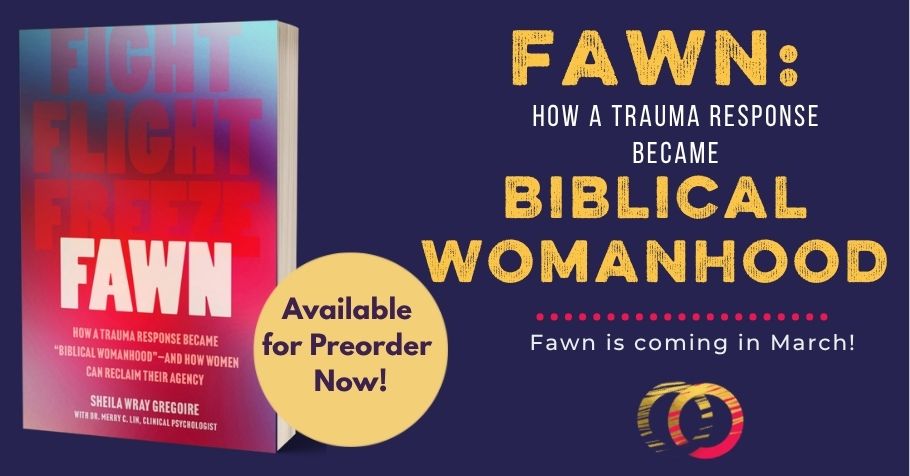


0 Comments