
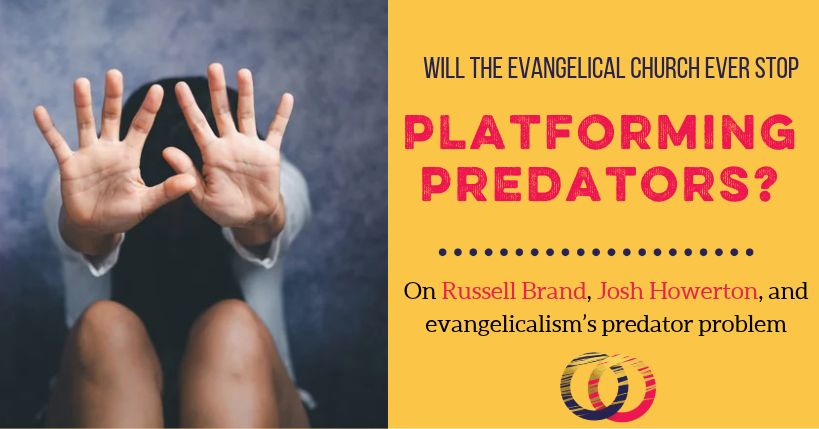

Last week Josh Howerton got caught plagiarizing again.
This time it was a November 1 sermon, almost word for word, from Robert Morris, the disgraced former pastor who was jailed for sexually abusing Cindy Clemishire when she was 12 (Cindy has chosen to come forward and be identified).
Now, Josh Howerton is no stranger to plagiarism. He brags about plagiarizing and has written posts defending it; we have caught him plagiarizing 4 people blatantly in the space of just 8 minutes of sermon.
You can watch our analysis of him here.
But what makes this one interesting is that apparently being a sexual predator doesn’t make one off limits to Josh Howerton. And even more interesting—many of the people calling him out on X for plagiarizing Robert Morris are not doing so because Morris is a predator, but rather because Morris is “word of faith.” Sure, he may have raped a teenager repeatedly, but what REALLY makes him bad is that he has the wrong theology! (you can see some of those comments in the thread).
The predation is a side issue that doesn’t even merit comment, apparently.
I originally wrote this article for my Substack, but I like to keep everything here, where I own everything.
Our Friday video last week summarized many of these issues, and I’ll post it at the bottom as well. Every Friday we post an unscripted video, focused on some news that broke that week or something that happened in the Bare Marriage universe, so subscribe to our YouTube if you’re not already!
We all know that evangelicalism has an abuse problem.
Julie Roys’ The Roys Report looks like a constant conveyor belt of pastors being arrested for clergy sexual abuse. We all know the names—Ravi Zacharias, Tullian Tchividjian, Robert Morris, Bruxy Cavey. We know the names of those who have covered up sexual abuse—John MacArthur, C.J. Mahaney. It goes on and on and seemingly never ends.
The abuse itself wouldn’t be as much of a stain on evangelicalism if it was handled appropriately and if proper means were taken to lessen the risk. Yes, abuse can happen anywhere, but if churches handle it well when it occurs, and do all they can to prevent it, then I don’t think people would be upset. But instead the opposite is usually true. Women’s and children’s well-being just doesn’t enter into the equation of far too many pastors and denominations (looking at you, SBC).
At every step, the evangelical establishment shows us that the abuse of women just isn’t that important.
Whether it’s the SBC treating women sharing the gospel as worse than covering up the sexual abuse of minors (since they’ll expel a church for one but not the other); or pastors ignoring power dynamics when preaching about David and Bathsheba, teaching that she was the seductress and not the victim who could not say no; or pastors continuing to platform abusers, women are told very loudly and clearly: “Your well-being doesn’t matter to us at all.”
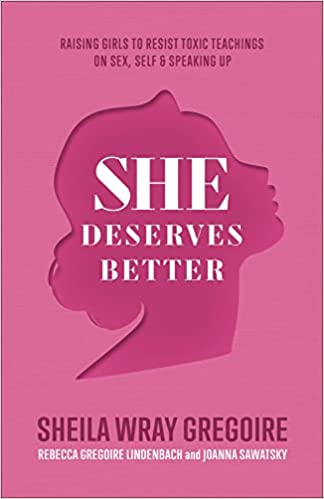
Our Bare Marriage research team recently showed in a peer reviewed article that teen girls are more at risk of predation in churches that teach modesty messages than in churches that do not insinuate that girls cause boys to lust. Evangelicalism’s very teaching creates the conditions where women and girls are more likely to be victimized. (You can see more on this in our book She Deserves Better).
And, of course, there’s evangelicalism’s support for political candidates who are documented child predators. We see pastors like Josh Howerton telling us that such things shouldn’t even matter when we vote. Look at how he framed this, right before the recent midterms:
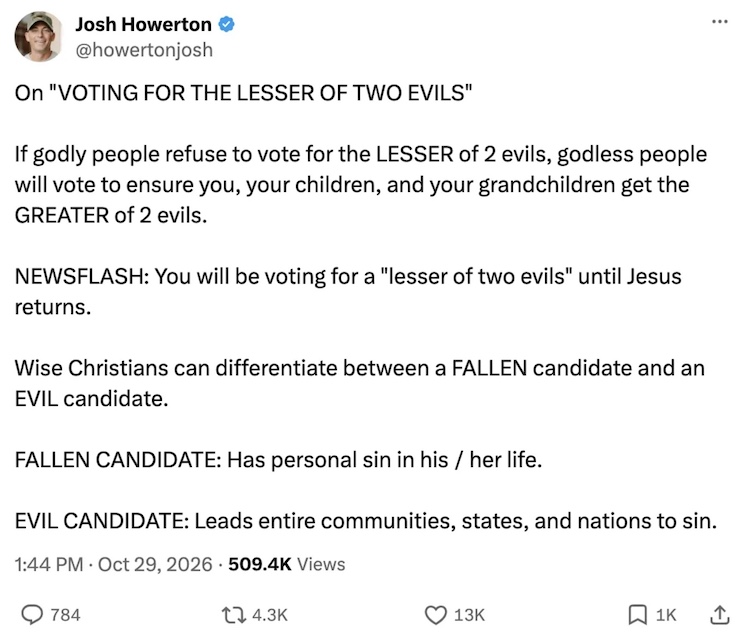
In context of other things Howerton has said, he wanted people to vote for the Republican candidates. But look how he explains predation—it’s a “personal sin in his/her life.” The sexual abuse of children, or preventing justice about the sexual abuse of children by keeping the Epstein files secret, is merely a “personal sin.” Covering for abusers is a “personal sin.”
Let’s be clear—covering up for abusers is a corporate sin. It hurts the entire body, the entire community.
And he pooh-poohed it away like it was nothing.


Likely none of this surprises you, if you’re like me.
It feels exhausting, like everyday you have to listen to more and more stories of women’s pain not even registering. They don’t even bother to give lip service to it anymore.
But what really has floored me in the last three weeks is not all of this, but rather the absolute torrential support for both Carl Lentz and Russell Brand.
In both cases I started off with small social media posts expressing disgust that Carl Lentz was writing a book and trying to get a platform, or that Russell Brand had so much support from evangelicals.
And in both cases I had so much backlash I had to write more posts, and even a podcast, to explain, because this is too important to ignore.
Let’s focus most on Brand, since it’s the most recent.
When Brand got word that he was being investigated and things were not looking good, he pivoted to Christianity, with a high profile “conversion.” He was immediately embraced by Sean Feucht and others, doing high profile evangelical podcasts while chumming with Trump officials like RFK Jr. He became the poster child for how Christianity could still capture souls. As Karen Swallow Prior wrote for Religion News:
Following Brand’s baptism, Catholic Bishop Robert Barron, founder of Word on Fire Ministries, was featured on Brand’s YouTube, racking up tens of thousands of views. Carl Lentz — former lead pastor of Hillsong Church NYC who was fired from that role after confessing to adultery and is now on his own redemption tour with his wife to promote their book “Overcoming Infidelity” — also interviewed Brand in a subscriber-only program in which Brand talks about “how faith has transformed his life.”
Just last year, Tullian Tchividjian, a pastor and Christian author who is accused of engaging in clergy sexual misconduct against several women (and is also the grandson of Billy Graham), hosted Brand for a conversation at his church. In his description of the conversation, Tchividijian praised Brand effusively — to great audience applause — calling Brand “refreshing,” “smart,” and ”innocent and fresh.”
Yet the man is a rapist, and he was just convicted in the UK to ten and a half years in prison.
What has been the response to my social media posts (one now seen more than 1,000,000 times)? Overwhelmingly I’m hearing these themes:
- The women’s direct testimony of their own experiences was just “hearsay”
- The corroborating medical testimony is irrelevant
- He repented, so we shouldn’t judge
- He’s a new person in Christ
Women’s experiences and testimony is deemed irrelevant because a man claims the name of Christ without any corresponding fruits of repentance.
The well-being of the women who were hurt (and not to be graphic, but the physical toll of the type of sexual assault he committed is intense and often lifelong) is not even worth mentioning; the only thing that seems to matter is that he says he is saved.
Sometime in the last 100-150 years we have turned Christianity into merely a set of beliefs. All one has to do is say the prayer, and then they’re in, and they can never be held accountable again because that would be judgmental.
Somehow the church has forgotten the stoy of Zaccheus, or the testimony of Jesus, which talks about what His followers will look like. It is not merely a list of beliefs, but rather that one shows with one’s actions that one is a follower of Christ. When Zaccheus repented, he paid back four times what he had stolen. He made amends. If Brand were to truly repent, he would have completely confessed, saved the women the trial, and accepted the consequences much earlier.
The interesting thing, to me, is not just that Brand so obviously is not truly repentant, but rather that he knew pivoting to Christianity would benefit his image.
He knew high profile Christians would go to bat for him and attack the women accusing him, as long as he claimed he was one of the tribe. And that’s exactly what happened.
Christianity, and especially evangelicalism, has such a reputation of haboring abusers that we’re the first place abusers flee to.
And this is sending a message to the women in evangelicalism, loud and clear.
Download Our Marriage Survey
Join 40,00 others and let's change the evangelical conversation about sex
There is nothing that matters more to women than their safety and their children’s safety.
Seriously, nothing.
And when the evangelical church is announcing so loudly that they truly don’t care about women and children being victimized, then women are going to get the message.
They obviously want to push us out, and so we’re going to get up and leave.
Not all of us, of course. Many are still stuck for various reasons, and will stick it out until that day that it hits a little too close to home.
But the wider society, though not perfect, treats predation infinitely more seriously than the evangelical church does.
Teachers that victimize a student can never teach again. A pastor can just start up a church again elsewhere.
These last few weeks, with the Lentz and Brand comments, and now the Josh Howerton debacle, have been so exhausting.
I’m tired of having to argue that women’s most basic safety should matter.
My only consolation is that at least they’re showing themselves for who they are. And perhaps more people will leave the toxic spaces, and create safer spaces where Jesus is truly worshiped.
Interestingly, Rebecca had a bit of a different reaction than I did. She says she’s not exhausted, because she got out of these bubbles ages ago, and they don’t emotionally affect her. Here’s our discussion!
What do you think? Will more women leave? Will people clean house? What are you seeing on the ground? Let’s talk in the comments!







0 Comments