



Who should we ultimately follow?
I’m wrapping up my submission series soon, and today’s post gets to the heart of the matter: too often we tell women that once they’re married, their husband stands in the place of Jesus in their lives.
On Monday we talked about how submission to your husband doesn’t mean that he makes all the decisions. I frequently get into conversations with people about this, because the main point I want to make is that ultimately, we’re supposed to be doing God’s will. In a marriage, then, what’s the best way to ensure that God’s will is done?
To me, it seems obvious that you wrestle things out together. After all, if you disagree on something, and then the husband decides what you do, there are only two possibilities: either one of you isn’t hearing from God, or both of you aren’t hearing from God. If, instead, you decide to pray it through, talk it through, ask others for help, and wrestle it through until you’re in agreement, then there’s more likelihood that both of you will indeed be hearing God’s voice.
And in our research for our new book The Marriage You Want, that’s what we found! Couples who make decisions together have better scores on conflict resolution and have better markers of emotional maturity. They just do better!


When I talk to people about it, I tend to ask this question: “What happens when you disagree?” I want people to work through the fact that assuming that he should make the decision does not necessarily mean that you’re doing God’s will.
Recently, though, I was involved in a discussion on social media with a man that just wasn’t going anywhere. But as I pushed, I realized what the issue was, and it helped me to see the more husband-centered marriage theology in a new way.
They never disagreed on a decision, you see, because he always made the decisions with virtually no input.
Here’s how it works:
He believed that God called him, as the husband, to lead and make decisions. Therefore, whenever he led and made a decision, he was ipso facto doing God’s will.
But that’s rather circular, because what it’s saying is this:
Because God asks me to make a decision, when I make a decision, that decision is automatically God’s will.
We have now equated a husband’s will with God’s will.
And that is highly problematic.
He honestly believed that if his wife were to have input, then they would not be operating as God intended. The only way to have a marriage that is God-centered was to do what the husband felt was right, and never do what the wife felt was right. If they did what the wife thought was right, then they would be disobeying God. The wife’s views, then, became irrelevant and unimportant.
This may sound bizarre, but I actually really appreciated that conversation, because it opened my eyes to how some people do view submission. Indeed, if you believe that what God wants most in marriage is for a husband to make the decisions while the wife follows, then giving her a chance to follow a decision she disagrees with becomes more godly than working through a problem together. If the best way to obey God is to obey your husband’s decisions, then if you agree on something, you don’t actually have the opportunity to obey your husband–and thus obey God. It sets up this really strange dynamic where disagreement becomes more godly than unity!
Yesterday I was involved with yet another conversation on my Facebook Page with a man who was explaining how “beautiful” complementarianism is, and he said, “wives follow their husbands to follow Christ!” I was flabbergasted that he admitted this out loud, because it all looks so obvious: He is saying that when she follows her husband, she’s following Christ. That’s idolatry. That’s blasphemy. That’s breaking all kinds of commandments!
It’s putting the husband in the place of Jesus in her life, and elevating a husband’s will over Jesus’ will. And somehow they don’t even see that this is problematic!
Somewhere we’ve totally lost the plot.
And remember how often God says in the Old Testament that He is a jealous God, and he will not “share his glory with another.” Do we really think that God will just say, “Yes, whatever the husband wants is what I want?” Will he subordinate Himself to the husband? We’ve gotten everything backwards!
The Marriage You Want is HERE!
It's time for HEALTHY and SAFE marriage advice!
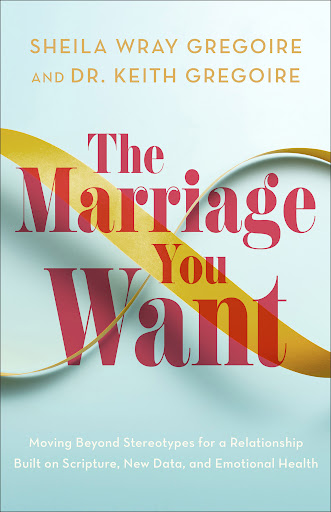
It's time for a marriage book that doesn't leave you defeated or guilty--but instead leaves you empowered, hopeful, and excited.
It's evidence-based. It's got tons of charts! And it's fun.
Available in audio, ebook, or paperback, with an accompanying study guide, let's talk about the things that actually go into making a great marriage, rather than the things that evangelicals have tended to stress that all too often harm.
Together, we can change the evangelical conversation about marriage!
I know some people (including both of these men) do adhere to this view. But I’d like to challenge it looking at 4 principles from Scripture.
1. God’s desire is that we do His will.
In the Lord’s prayer, we pray “Thy will be done”. That is our first and foremost duty on earth–to obey God.

2. There is no mediator or substitute for God on earth.
You cannot claim that the way to obey God is to simply follow what someone else says. Peter said, “We must obey God, rather than man.” (Acts 5:29). Paul wrote that the only mediator we have between God and us is Christ (1 Timothy 2:5).
Women do not have an additional mediator in our husbands; we are called to obey God first and foremost.
3. God’s main desire is not that we have power, but that we serve.
So much of marriage theology is centered around who has power, and I think this neglects the heart of the gospel. As Jesus said in Matthew 20:25-28 (NIV):
Jesus called them together and said, “You know that the rulers of the Gentiles lord it over them, and their high officials exercise authority over them. 26 Not so with you. Instead, whoever wants to become great among you must be your servant, 27 and whoever wants to be first must be your slave— 28 just as the Son of Man did not come to be served, but to serve, and to give his life as a ransom for many.
When we start saying, “Oh, but someone needs to have power!”, we’re missing the point. Jesus never asked that. Jesus said, “who can serve?” (And, indeed, that’s what we’ll be looking at next week when we see what submission really means in marriage!)
4. We are never to follow anyone into sin.
God is very clear that we are responsible for ourselves, and there is never an excuse for sin. Adam and Eve got in a lot of trouble for trying to blame others for their own sin!
Most people would agree with that, even those who say that the man should make all decisions in marriage. However, you can’t simultaneously believe that submission means following his decisions and also believe that we shouldn’t follow anyone into sin, because of Ephesians 5:24: Now as the church submits to Christ, so also wives should submit to their husbands in everything.
In everything. No ifs, ands or buts. If submission is about decision making, then wives should follow every decision. If, on the other hand, we’re called to faithfully serve our husbands in everything, then the verse makes perfect sense.
Next week we’ll look at what submission really does mean–and how it’s for everyone. That’s what Jesus wants us to do. That’s what He modeled to us. And that is the heart of the gospel.
What do you think? Have we taught whole generations of couples to commit idolatry? Why do you think people can’t see something this obvious? Let’s talk in the comments!
Our Submission Series
- What does it mean to obey like Sarah?
- Does the way we talk about submission make marriage into an idol?
- In the case of ties, he wins--Is that what submission means?
- Are you following God or your husband?
- What does submission really mean?
You may also enjoy other posts on submission:
- The Marriage You Want--about the kind of marriages that thrive
- Keith's series on the Danvers Statement (the statement defending complementarianism)
- PODCAST: Are we making a strawman out of complementarianism?
- PODCAST: We sum up the Danvers Statement's issues!
- And don't miss our Starter Pack of podcasts on complementarianism!
Check out our book The Marriage You Want on how to do marriage a HEALTHY way!






Something on my mind: if wives are truly supposed to submit to their husbands and obey them as if it’s from God, then they need to start explaining why God bypassed Joseph to tell Mary she would be the mother of the savior. Also, by their standard Mary should have obeyed Joseph and divorced (which brings up a whole host of other conundrums, because the Bible says Joseph’s motivation to divorce was from a righteous heart, and how can the Bible say he was righteous if we should never divorce??) So in this situation, God never consulted Joseph on His decision, told Mary directly, and Joseph would have been justified in divorcing Mary according to the Bible.
Why do so many choose to live out their marriages following their husbands vs God?
Because it’s easier! A. The pastor said it, so it has to be true.
B. Then I don’t have to carry that weight.
One thing we’re not talking about is how some women are perfectly fine with this because it doesn’t require as much from them. There are good and bad reasons why some women don’t want to have additional spiritual burdens or be made to feel like they have to live up to a certain standard of spirituality. And in many churches, that transactional way of relating to God is VERY much what is taught and the norm. Therefore, you have to have a certain depth of spirituality measured by how often you fast or your prayer times, or how well you know scripture, in order to really be able to hear from God. If not, then can you trust your decision-making capabilities?
It’s sick.
There’s so much more I can say about this but it wouldn’t be a “comment” rather an essay!
I think you’re very much right! I wrote a post on this a while ago too that I may rerun soon because I think it is important–a lot of women like submission because it relieves them of so much responsibility.
Great point!
“And remember how often God says in the Old Testament that He is a jealous God, and he will not “share his glory with another.” Do we really think that God will just say, “Yes, whatever the husband wants is what I want?” Will he subordinate Himself to the husband? We’ve gotten everything backwards!”
This is incredibly important.
Want to know who first wanted to be like God? Lucifer. How did that work out?
Also… something I’ve thought about: the numbering of chapters and verses in the Bible didn’t come about until the early 16th century. We use the numbering for reference, not for interpretation.
It’s easy to say “this verse of Ephesians says this” and then this totally different verse says this. But that’s not the way the Bible was written.
Mutual submission becomes much more obvious if you think about how the Bible looked for a millennium and a half: two sentences next to each other, each one a mirror of the other.
Christ washed the feet of His disciples. He never forced them to do anything. He didn’t rob them of dignity, autonomy, or free will. I am not familiar with any circumstance in which he cast the “tie breaking vote.”
yes, the way that Bibles put the break between verse 21 and verse 22 of Ephesians really distorts the meaning.
This. This is why I always push back when we reduce complimentatarianism to the tie breaker concept. “If they don’t actually practice that, they are actually egalitarian.” The truth is, she has no voice. There is never a need for a tie breaker. The twin evil to this is the subtext that…even though you really can’t see that the ideas/rules/plans are actually godly or will have a positive outcome….YOU must be wrong because if he is the appointed leader, he MUST be wiser, and more all knowing. I began to believe I was stupid and just couldn’t see it. It is very hard to describe how this chips away at your sense of worth. Your simple humanity, your value. This paradigm strips you of absolutely every shred of autonomy. I love your work and it has helped me so much but from time to time it is so obvious that you never lived it. You are actually quite amazing…to be so passionate about something you did not endure.
(I am married to a man of very high character, thankfully, but it was still very destructive)
Yes, this certainly is a really dangerous dynamic. I’m so sorry that you were sucked in to it too.
I so agree with this article! And M’s comment on how God bypassed Joseph and talked to Mary is a great point I had not thought of before. I often think of the account of Ananias & Saphirra in Acts 5. It impresses me that Peter confronts each of them separately, not together, and he does not assume that Saphirra agreed with her husband. Even if she did, she was given a chance to tell the truth, separate from her husband. Why would that have been done and why would she suffer punishment if she was supposed to do what her husband said? We each stand before God alone, subject to His judgment alone. I think since it’s stated that they decided to do this together shows that Saphirra could have corrected or at least disagreed with her husband, pointing out to him that it was the wrong thing to do. I’ve heard pastors say that if a husband leads his wife wrongly and she goes along with him, that she does not bear the responsibility, but I strongly disagree because of Acts 5. My husband is a mere man and can be very, very wrong, misled or deceived – just like myself. I cannot and should not trust him more than myself and certainly NOT more than Jesus Himself! Thank you for the article and all your work, Sheila! You are correcting the church (reforming) and that is continually needed.
Thanks, Charlene!
I love some of the comments/points made above, especially the point about Joseph and divorce and righteousness!
I agree it is idolatrous.
I think one of a couple dynamics often happen.
1. children are raised in this thought and so it is standard operating procedure. Actually, it is “sin” if you do not follow it. When kids from a young age believe that boys will grow up to be wise and hear better from God, the girls aren’t going to put much effort in trying. They instead look for a husband that seems like he is confidant enough to follow God which also means he will not allow for any “dissension.”. So they grow up living out those dynamics and it seems perfectly godly. And marriage is meant to make you holy not happy, right??🙄
2. If you marry into this mentality or change denominations somewhere along the way (easily done depending on how you were raised, etc.- my childhood’s psychological abuse primed me for this), many women, I think, hit the ground running in the overwhelming period of child-rearing. It is a comfort of some kind knowing they have one less responsibility because *he* has to make those decisions. These women are often too run down to realize he isn’t pulling his share of the mental load, etc., and that is largely why they strongly desire for ANYthing to be taken off their shoulders. When the church spaces talk up what a huge burden it is on the husband to bear that “responsibility,” the wives feel like they really dodged a bullet.
“Bonus:” If you cannot have children, it is because you are not submissive enough or not following God’s will enough so you keep trying to make yourself smaller and smaller. 😤😡😠
It is idolatrous, sick, and blasphemous.
Anna Anderson wrote on substack that reformed theology has a “keys to the kingdom” mentality sort of like the papacy, but if the office of pastor or elder is considered to have the keys to the kingdom, the person who fills the office is speaking the word of God. The character of the person doesn’t matter as long as he, and it is most certainly a male, is filling the office which is why a lot of spiritual abuse is covered up or male elders and pastors are not held accountable. It is mostly the victims who are held accountable for the sins of the abuser. Take this further if the husband is considered the priest of the home. No accountability there either and abuse is more likely. And these guys make up a large part of Trump’s base. Character doesn’t matter.
Just to expand on the idea of understanding where the other side is coming from, I think that many complementarians would say that a wife deferring to her husband is similar to obeying the government (I say this as extending the idea of trying to understand where the other side is coming from, not from a position of agreeing with what I am about to say). For example, I don’t need to consider what God’s will is regarding how fast I should drive, or how much I pay in taxes— God’s will is for me to obey whatever the government has decreed is the law. That’s true whether I live in a democracy or a monarchy. It’s true whether the laws are reasonable and just, or whether they are ill-conceived and ridiculous. As long as the law doesn’t command me to do something sinful, I’m supposed to obey it. Complementarians believe that God has set up a creation order that includes citizens obeying government, and wives obeying husbands in a similar fashion. They are afraid of disorder (their solution is hierarchical authority in practically every sphere) and also have a lot of overlap with the theology that believes that we are so inherently selfish and rebellious that everything we do and all our desires are tainted with sin, so God “lovingly refines” us by asking us to surrender our personal desires and preferences (and somehow they twist it to say that a husband’s “noble burden” of provision and leadership causes him to be refined, too, even while he gets his way at home whenever he chooses to invoke his privilege, or he automatically gets his way if his wife is especially self-limiting). But I think complementarians would say that wives obeying husbands is no more idolatry than citizens obeying the law is.
As long as they are clinging to the idea of “creation order” with regard to marriage, they are going to see obedience and submission as one of the most godly things you can do. And, yes, completely surrendering your personal desires to the authority over you is also going to be seen as more godly than working on a compromise that takes your desires into account.
I think you’re right. And it’s also absolutely bonkers!
When I first started researching this topic about three years ago, I came across some blogger — I wish I could remember his name so that I could credit him — who made a very cogent argument that the Greek word “hypotasso”, usually translated as “submit”, was a military term that meant to support someone (by bringing your troops to defend him) rather than simply to put yourself under someone or to obey someone. Since then, I have read the Biblical injunction to “submit” to a husband not as to obey him, but as to lift him up, to support him. It means saying not, “Yes, dear,” but “I’ve got your back.” (And doesn’t that tie in with the real meaning of “ezer,” which is how God described Eve when He created her? She was to be a strong ally, a defender and rescuer, of Adam, not the subordinate helper that our English translations usually imply in the way they translate “ezer.”)
Today, I found Jocelyn Andersen’s blog on this topic (https://jocelynandersen.blogspot.com/2019/09/hypotasso-alignedarrayed-with-not.html) and I was intrigued by her argument that the Greek word hypo does not always mean “under,” as is stated by almost all commentators. The compound word hypotasso is usually assumed to mean literally “to arrange oneself UNDER”, but according to Andersen, “hypo” is also used in 2 Corinthians 2:11 — “lest HYPO [us] Satan should gain advantage, for we are not ignorant of his devices.” Here, “hypo” clearly means “over,” not “under.” I know nothing about Jocelyn Andersen — just heard of her today for the first time — but I find this argument interesting and worth exploring. She says that hypotasso means something more akin to “array / align yourself WITH someone else” rather than “array yourself UNDER someone else, ” so that Ephesians 5:21-22 can best be rendered as a directive “for wives and husbands be arrayed/aligned with one another as the Ekklesia is aligned with Christ” (this last quote is from her blog).
In any case, as has been pointed out before, hypotasso cannot mean “obey” in the usual understanding of “submit,” as it makes no sense and it is impossible for all of us to obey one another. It simply cannot mean this. It must mean something else, and I like the idea of “lift up/support” and also the notion of “align yourself with.” Both understandings of this Greek verb carry the notions of doing unto others as we would have them do unto us, of considering others before ourselves, and of unity that I find so basic to Jesus’ teachings. I believe this verse is about love and unity, not obedience and hierarchy.
I like that too and it makes much more sense in context.
I was thinking about this while reading Ezekiel 18. To paraphrase verses 19-32, adding some contextual interpretation about honor culture, and reflecting on the law books:
The Israelites said, “God’s not just! God’s now saying that a son is not responsible if his father does wrong. That’s contrary to what’s obviously the right way to do things, what we’ve been taught for centuries! If a man does wrong, someone has to pay. Of course the entire family is responsible for making things right!”
Then God responds, “You think your customs are just? I’m trying to change your culture so that each person is responsible for their own actions. I don’t want anyone to die because they did wrong. Sure, someone who does wrong will die, but if they repent, I let them live. I certainly don’t want anyone dying because a relative did something wrong! Seriously, whose way creates the most justice, prevents the death of the the most innocent people?”
People thought it was normal, even the right way of living, for someone to suffer because the leader acted wrongly. God was trying to change that way of thinking. I see parallels to the Church’s conversations about gender relations.
Then we jump all the way to Jesus who still has to explain that no, people don’t suffer because they or their parents sinned (blind man, Tower of Salome).
There’s more nuance and discussion points to consider, but I’ll leave it there.
So true, Jill!
It seems like more lately, say the last 5 years, the alpha male mindset has returned and the man being in charge is becoming an idol in Christian marriages. It may not get preached on Sundays, but go to the marriage ministry groups and the women’s Bible studies, and it’s getting talked about. That’s why my husband and I don’t get in marriage ministries. A friends’ marriage ministry page on Facebook has been posting many videos of Mark Driscoll, Josh Howerton, even Jordan Peterson, and just the other day I discovered this man: Dry Creek Wrangler. In a video short from Alpha Motivation’s Facebook page, Dry Creek Wrangler said things like, “If you don’t have the backbone to be the bad guy, you have no business being a husband or a father… I’m putting my foot down…my children are going to hate me…my wife is going to get mad at me…we’re not doing this” (https://www.facebook.com/reel/1265533048062194). Why does a husband need to be the bad guy? To me, it sounds like he (the husband) is making a decision without consulting his wife and involving her in the decision-making process. I’d like to know what decisions this man was referring to. At the end of the video, he was saying our country (the US) has gotten away from this. I guess he wants to return to a post-WWII era that many Christian Nationalists want that only benefited white men of middle class or higher.
It’s really so anti-Christ.
In case anyone wants this information (and is still reading these comments), here is the information on the blogger I mentioned in my comment above. His name is Stant Litore, and you can read what he says about the meaning of “hypotasso” here:
https://stantlitore.com/2018/06/25/misleading-translation-wives-submit/
One of the things I really like about his post is that he stresses that the verb “hypotasso” is a military term and thus has strong connotations of wives fighting in defense of their (in many cases unconverted and unbelieving) husbands against the enemy. If you translate it as “submit,” you completely miss the point Paul was making by choosing to use a military term here. According to Litore, “if you do that, you lose the military context of ‘hupotassomai,’ which is about forming up for battle and about deploying or stationing yourself to support.” I find his post fascinating and worth reading (and re-reading).
Thank you!
I am seeing a lot of references to the original greek texts in the comments here. I have been thinking about trying to learn biblical greek for a while now and was wondering if there is a reliable resource out there that anyone would recommend?
I wish I knew, Curly Sue. I think Marg Mowczko makes some recommendations on her website. I suggest that might be a good starting point for you.