

When women are vulnerable, abuse can flourish
And it’s a problem that so much advice to evangelical women today is aimed at making women extremely vulnerable–sexually, financially, relationally.
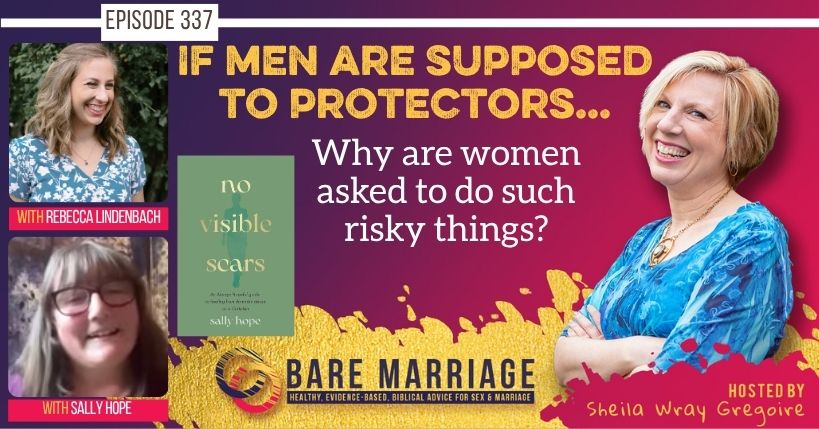
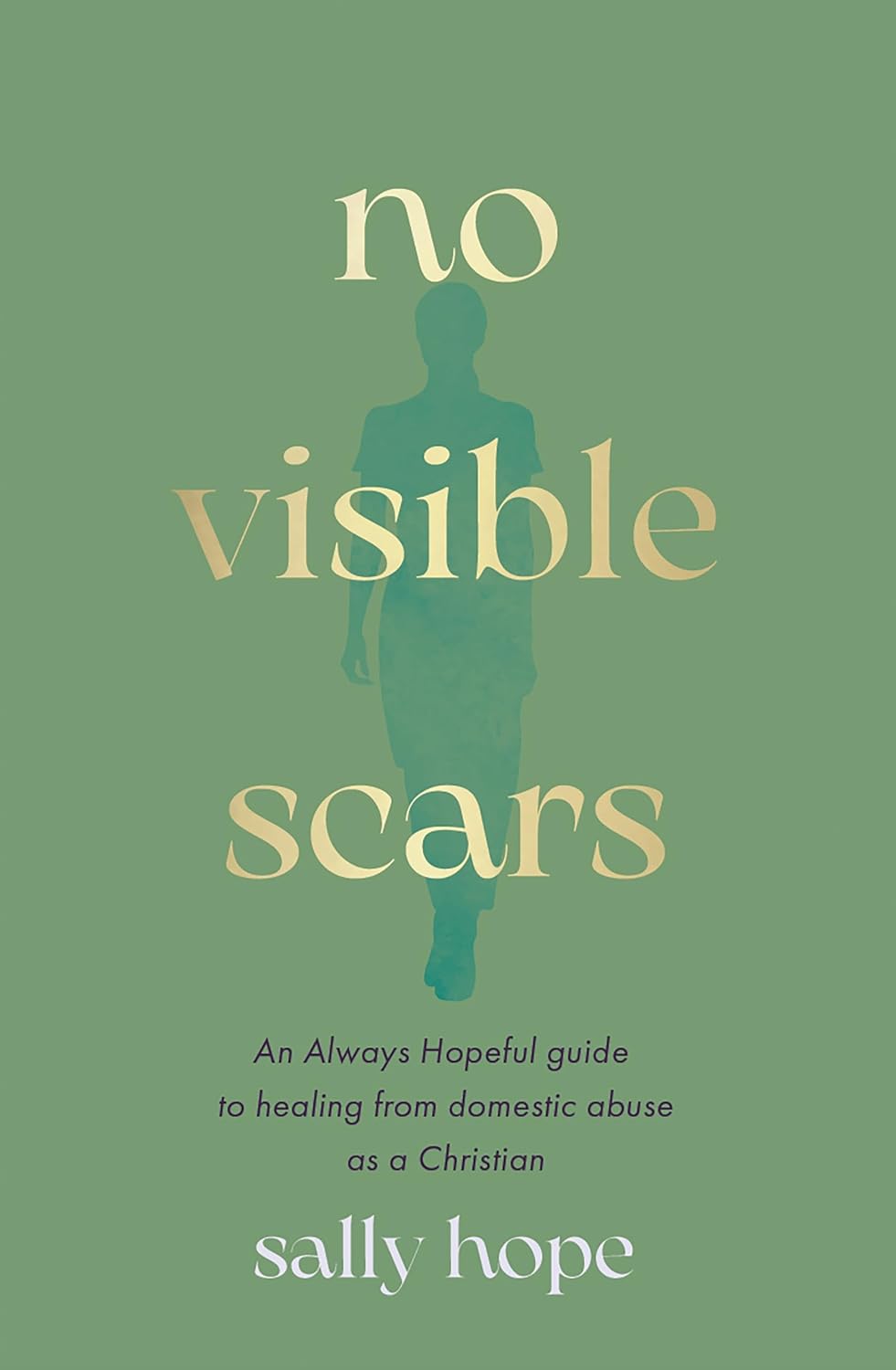
Today we’re going to look at how much women are asked to do risky things and just trust their husbands; and then we’ll have a conversation with Sally Hope, author of an amazing new workbook No Visible Scars, which helps victims of abuse process their abuse, figure out who God is and where He was during their abuse, and find God again when you’ve felt gaslit by the church. It’s so good!
Or, as always, you can watch on YouTube:
Timeline of the Podcast
00:00 Intro: Are Women Really More Protected in Conservative Christian Homes?
03:00 The Problem with Gary Thomas’ “Just Send Him Nude Photos”
05:51 How Complete Dependence Can Create Risk & Turn Into a Trap
10:49 A Real-Life Example of Financial Vulnerability
14:10 A Soft Life vs. Losing Your Autonomy
19:51 When Male “Protection” Becomes Control
25:25 The Connection Between Abuse & Economic Dependence
30:27 Helping Women Heal: An Interview with Sally Hope
34:57 Abuse, Faith, & the Myth of “He Lost Control”
43:16 Can a Good Christian Woman Be Angry? Anger as a Motivator for Justice & Healing
48:47 Building Churches That Actually Help Survivors
58:25 Conclusion: God’s Work of Redemption & Resources to Help
No Visible Scars is one of the best resources I’ve seen for women coming out of abuse
It helps cut through the fog of seeing things as your fault; helps you work through anger; but best of all, challenges a lot of the theology we’ve been taught that keeps so many women stuck in abusive relationships. That theology often steals Jesus from us, because we think Jesus prefers us to be abused than to be safe. That’s the furthest from the case! What I like about this book is that it’s not just a self-help book, but is actually a workbook to help people process things. And Sally’s workshops are great too! If you’re a church that wants to help people out of abuse, check out the links to her materials below.
Key Talking Points
1. “Protection” isn’t really protection if it removes a woman’s options.
Some churches or teachings may say women are safest when men control their finances, choices, work, or family roles, but that is not often the case. True protection should increase security without requiring women to surrender autonomy.
2. Total financial dependence can become a serious vulnerability.
Staying home with children can be a wonderful and mutually chosen arrangement, but alongside having access to finances, legal ownership, and skills that could provide income if circumstances change. The goal is partnership—not making one spouse incapable of functioning independently.
3. A “soft life” should mean partnership, not powerlessness.
One important distinction: a woman can absolutely have a slower, home-centered life without giving up her choices. The healthiest version of a “soft life” comes from having a supportive partner who shares the load, not from removing a woman’s autonomy.
4. Abuse can often include economic and spiritual control.
Abusive partners may deliberately undermine a woman’s employment, finances, or outside relationships, things that make it easier for her to leave. Within religious settings, Scripture, gender roles, and church authority can also be misused to keep women silent or compliant.
5. Traditional roles aren’t automatically the problem—the lack of choice is.
There is a difference between couples freely choosing traditional roles and believing that women must occupy those roles because of their gender. Research points toward the importance of whether couples see themselves as equal partners rather than whether they divide work traditionally.
6. Abuse is not simply a failure of self-control.
Sally emphasizes that abusive people often demonstrate remarkable control in other settings, suggesting that abuse should be understood as a choice to exert power and control. That distinction matters because blaming “anger,” temptation, or lack of control can obscure responsibility.
7. Healing may require rebuilding a woman’s understanding of faith and herself.
Sally describes how abuse and religious messages profoundly affected her own faith, including feelings of guilt and anger toward God. Her work with survivors intentionally creates space for women to reconsider ideas about submission, womanhood, forgiveness, and God without simply replacing one rigid set of instructions with another.
8. Anger can become a catalyst for justice rather than something women are taught to suppress.
Anger after abuse is not inherently sinful or unhealthy. When channeled constructively, anger can motivate people to confront injustice, find healing, advocate for survivors, and help create healthier churches and communities.

Things Mentioned in the Podcast
CHECK OUT OUR OCTOBER SIMULCAST EVENT
We’re doing our sex talk and a one-day marriage conference! Check it out for more information.
Find the church info page here!
TO SUPPORT US:
- Join our Patreon for as little as $5 a month to support our work (and get access to the book club!)
- And check out our Merch, or any of our courses!
- Give to the Good Fruit Faith Initiative of the Bosko Foundation
- Join our email list!
LINKS MENTIONED:
- CortneyGetsFit TikTok
- Dynamics of Abusive Relationships Study
- Sally Hope’s Website
- Sally’s book “No Visible Scars”
- Sally’s Always Hopeful program
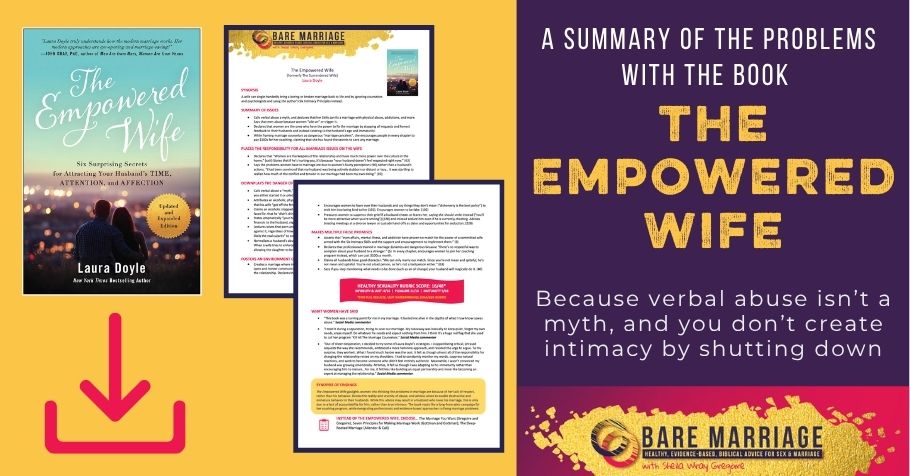
- Download the One-Sheet on The Empowered Wife
- Bare Marriage ToolKit
What do you think? Let us know in the comments below!
Transcript
Sheila
Are women more protected in conservative Christian homes? That’s what we’re going to be talking about today on the Bare Marriage podcast. Hello, I am Sheila Wray Gregoire from baremarriage.com, where we live, talking about healthy, evidence based biblical advice for your sex life and your marriage. And I am joined today by my daughter, Rebecca Lindenbach. And last week’s podcast was epic. It was long. We were looking at the Empowered Wife. I think it may have been the longest podcast we’ve ever done. I don’t know if it wasn’t.
Rebecca
The Power of Praying Wife was also really long.
Sheila
I know, but I think, I think we beat this by like 12 minutes. I’m not sure, but the Empowered Wife, which is such a hot mess, you know, by Laura Doyle. Yeah.
Rebecca
Was she empowered?
Sheila
She was empowered to enable him to be completely emotionally immature and get whatever he wanted so that they didn’t fight. I mean, it’s just it’s insane advice, and it’s.
And even though that one, it’s the first time we looked at a book that was not a Christian book, but it was really big in Christian circles. And what it ended up doing was making women far less safe because they had no way of calling out or getting help when things were going wrong, because everything was their fault, and they were supposed to put all of their trust in this, in this man.
Like giving up all their finances, giving up everything. And that was supposed to magically make him perfect. And that’s a theme that we see a lot. And I want to explore that today by asking the question, you know, complementarians and those who argue for men having authority over women often say they do it to protect women.
But is that what we’re seeing? Yeah. So we’re going to take a look at it. And this got prompted by something in our patron group. So I want to shout out to our patron group who are amazing. And we have, I don’t know how many hundreds like 500 or 600 people in our Facebook group. And not everyone is totally active. It’s not like you get bombarded by posts, but it is a really, really fun one. I run everything by people there first so that I can get feedback on what we’re doing. And it’s a yeah, it’s a great place to go. So check out our page. You can join for as little as $5 a month and be part of our Facebook group.
At higher tiers, you’ll also get access to things like the course that Joanne is going to be running in the winter. On developing a sexual ethic. On our book clubs and so many more things. And of course, when you do give to our patron or to the good faith initiative of the Bosco Foundation, it helps to fund our research and our translation efforts.
And we have lots of Spanish stuff coming up, which is so cool. And our peer reviewed papers, which we hope to have some more news on soon too. So yeah, like this is part of how you can be part of this whole movement that we are growing. Okay, so here’s how this conversation with patrons got started. I don’t know if, you know, because a couple months ago this has been like, I’ve saved this thing where we could fit it in, but we had every now and then the topic of sending nude photos to your spouse comes up again.
For whatever reason, we end up mentioning it on the podcast, or someone brings it up and it starts this whole conversation again because of, this advice that Gary Thomas gave in the book Married Sex, where he, he told women that he praised women for sending nude photos to their husbands because now, neurologically, he will be focused on you and not on other women’s bodies. And he basically demolished all the very legitimate reasons why women might not want to do it.
Rebecca
He didn’t actually demolish them.
Sheila
Yeah. Like he dismissed and he dismissed them. Yeah, that’s a better word.
Rebecca
Like, just got ahead of it. Like. And you might think that this isn’t biblical, but it is. It is not. Not biblical. You okay? But what you’re doing is you’re wearing down her like boundaries. Yeah. Like it’s not acceptable.
Sheila
But one of the things he never really addressed was how inherently dangerous this is. And we had so many messages and we had so many people commenting on how they did this because their ex, who was abusive, really pushed them to do it. And now they’re divorced and he has all these pictures of her. And there was one woman who couldn’t even get promoted in her government job because she worked in the intelligence field, because her ex-husband had these photos of her, because she was potential for blackmail.
Not only that, like, another little thing, too, is I find that whenever, especially evangelical authors, it’s because they don’t like to talk about specifics. If they talk about like, nude photos. But what does that mean? Yeah. Are you talking to a woman whose husband has specific fetishes that he’s requesting that she do photos of are really degrading.? Actually nude or a picture of you in a bra.
Sheila
Or something. Yeah, like a boudoir photo.
Rebecca
Or like, you know, if you show your friends and they look so good, like. Yeah, a wide range and they don’t even, they just say, just do it.
Sheila
Yeah.
Rebecca
And it’s like that is not healthy. Yeah. That doesn’t help. People have conversations about like, even if you are someone who was like, oh, what am I like a sexy photo? But what does sexy mean to you? Are you taking a picture in the dress you’re wearing to dinner off your shoulder? That’s what some people mean.. People have different definitions. You have to be clear with what you’re talking about. People say nude photos when they have clothes on.
Sheila
Yeah, I know.
Rebecca
It’s bizarre. People, you have to think. Think about what your audience actually might take away from this. Yeah. Making it over and over again, I was like, well, you should be watching porn. Why don’t you just make it better? Porn is not a good solution, and it’s incredibly dangerous for her.
Sheila
Yeah. And even and even if you don’t have a divorce or abusive situation, your kids could see it, you could die, and someone goes through your computer like it’s just not. Anyway, here’s what the person posted as a patron, which I want to talk about. So this is what she wrote, and I’ll read her post because it was good.
For me, Gary’s post made me think of the broader issue of the church asking women to make risky choices when they purport that it is the role of men to protect women. Just like having nude photos of yourself out there is risky. If your husband ends up lacking character, becoming a stay at home mom or tradwife is economically risky, and women often take both of these risks, in part for the happiness and comfort of men under pressure by the culture of the church.
Personally, I’m in a stage of life where I’m seeing multiple friends trapped in bad marriages are unable to divorce easily because of the economic risks they took. So this is where my mind ended up going. And while I’m not in a bad marriage, I took the same risks, in part because the church led me to believe it was my role.
I’m currently struggling with owning what I made my choices and my mistakes are mine, while also acknowledging I gave others the power to speak into my life because I believed they were speaking for God, but now I think differently. What I was taught was more about what was best for the hierarchy in our church than about what God asks of me.
And in the life of my friend, I see the church struggling to help a woman who made the same choices I did. She became a stay at home homeschooling mom who submitted to her husband. But unlike my husband, her husband is a coercively, controlling monster who drained their bank account so she wouldn’t have the money to hire a lawyer during their divorce. Should the church have a moral obligation to teach women to protect themselves when they enter marriage, in case their husband isn’t who he said he would be? How do we make it harder for abusive men in our church to control their wives? When men like Gary are suggesting risky choices?
Rebecca
A lot of the protection discussion that they talk about, it’s about protecting them and letting them have a soft life. That’s what I see. It’s okay to have a soft life, to not have to go to work. But like being solely responsible for the mental load in your family is not a soft life.
Sheila
No. It isn’t.
Rebecca
What’s so silly is that they don’t have to choose. You still have this view that men are responsible for protecting and caring for their wives as gentle fawn deer things. You can have that vibe and still have her have a job? Yeah. You’re waking up early and bringing her breakfast in bed on the weekends. And you’re taking care of the laundry while she sits and reads a book. Because you’re her hero. Like, yeah, you can do stuff to help her have a soft life. That doesn’t mean she has to be fully dependent on you.
Sheila
Well, the other thing is wives don’t have soft lives. It’s all a lie. But they’re selling it that way in order to give you know, to put men having more freedom and more privilege than women and putting women in more inherently risky positions. So I was thinking about several ways that evangelical advice often does lead women to have more inherently risky lives. And sure, we like the nude photos thing. Okay. Or anything sex related, anything sex related at all.
Rebecca
Literally none of it is make sure the woman is protected and happy
Sheila
This is different because this isn’t actually advice on like what you should do, but just the whole culture of like not challenging men and following authority does put women, especially young women, at risk of sexual assault within the church.
So we know that. But then there’s other things. There’s things like you should share bank accounts okay. Which and we’re we’ll, we’ll talk about how this can be. The problem with it is that a lot of this stuff is actually good advice and protective in a safe marriage, and it actually does help you get ahead financially, but it also does leave people more vulnerable when things go badly.
Don’t go to college. Don’t work outside the home. You know, be a tradwife. And now we’re even saying, don’t vote. So, you know, all of these things are coming up, and all of these things are inherently risky. And the problem is that divorce, infidelity, and abuse are not actually that much lower in evangelical circles and in some subgroups of evangelicalism, like abuse especially, is higher than in the general population.
Like in your hyper conservative where men really have privilege and women basically are erased like you think your independent fundamental Baptist, your Duggar type family is all, John MacArthur type places. Those places seem to have higher rates of abuse than the general population.
Rebecca
And what I understand from the data, it’s that it’s because women are less likely to leave. Yeah. So whereas in the general population, Brad may have abused Carol and then Carol says, heck no, I’m out of this. In the church that relationship lasts for 27 years. I’ll see if I can find that study that said that. Yeah. The problem with these circles is that women don’t leave, and so they’ll end up being in these marriages for like 30 years.
Rebecca
These men who otherwise maybe actually ended up in a long term relationship are married.
Sheila
Right? Right, exactly. So I want to play a TikTok that’s been making the rounds. It’s on a channel called Courtney Gets Fit. And I’ll link it so that you can find her. She’s processing a lot of this in real time, and she needs encouragement, and she seems to be really hurting, but she’s trying very hard. But this is what she had to say last fall, and so let’s just listen in.
Courtney
I mean, I feel like a little girl who needs their mommy because I don’t know how to take care of myself. I have no income. I have no money. I use my husband’s credit card and I use my husband’s money. And, two weeks ago, he told me that he wants to move forward with divorce. I don’t know what to do? It’s just terrifying. I’m 37. And I’m scared. I have no idea what to do or what I’m doing or how to take care of myself. Thank God he’s letting me live in his house. And I’m saying his house because it is his house because when we got married he told me that my name isn’t going to go on the deed because he doesn’t want to put that debt on me.
But I’m getting it. I’m going to stay in his house, thank God. Other than that, like, I get to. Yeah, I have somewhere to sleep. Like, how do I feed my kids? How do I feed myself? Oh my gosh, I need my mom. I need my mommy to come and take care of me. That’s it, that’s what is terrifying. As a 30 year old, like in your 30s, you’re a mother. Like I have two kids to take care of, and I don’t even know how I should take care of that. It’s terrifying.
Sheila
Now, for context, I don’t know if I don’t think it was in this video, but in other ones, her husband is 20 years older than she is. Oh, so she got married in her early 20s.
Rebecca
To someone in their 40’s
Sheila
In their 40s, they were financially stable, who already had a house, etc. and he’s saying, well, I don’t want to put your name on the deed because I don’t want you to go into debt. You know, I don’t want you to have debt associated, and I don’t want you to have your name on our bank account. Yeah. You don’t need your names on our bank, as you can just use my credit cards. And now they’re divorcing and she has nothing. Yeah, she has absolutely nothing. What we see a lot is these women who have had the eight kids, and they’re homeschooling all eight kids. And this is often a part of the things that make women actually more vulnerable to having this many kids, you know, and then you have no money to your name. You have no way of making a living. You haven’t been in the workforce since you were like 17 years old and you did a McDonald’s shift. Like, what are you supposed to do when you find out that your husband is finally admitting to yourself that he’s really abusive or he just leaves you, like, what are you supposed to do? And that’s something that the evangelical church hasn’t grappled with and seems to refuse to grapple with, because they keep talking about how all of this stuff just protects women.
Rebecca
It’s because they see these things as a false dichotomy, right? So either you homeschool your kids and you have kids, and so therefore you don’t have a job and you’re completely reliant on your husband or you’re a godless socialist who doesn’t have babies and works as CEO for seven different companies. Like, there’s no in between, right? Right. If people live in the in between, like, the majority of people have normal jobs and have kids, and love their kids and yeah, to figure things out. And it is bizarre that there doesn’t seem to be a recognition of the fact that you can be in the middle there, like, that’s what I see anyway, where they don’t take family seriously. We do. So therefore you have to be home. Yeah, all the time. And you’re not allowed to have a job and you have to submit to your husband. Or you can love your family and figure out what works for you.
And I’m saying that as someone for whom our family, both of us work from home. We homeschool our kids. That’s a huge value of mine. And a lot of that is context specific. You know, like I’m saying that as someone who is kind of the dream for these guys.
Sheila
I know.
Rebecca
But I also still do work and Connor works and we are able to make it happen.
Sheila
I often think that if these guys knew how we really lived, like, like we’re super into gardening and canning.
Rebecca
I had the neighborhood boys over just a half an hour ago, and they were helping me harvest cucumber and tomatoes, and it was very exciting for them.
Sheila
Yes, like I knit, I knit constantly. I made your kids a whole wardrobe of socks recently. Like we knit, we can, we garden.
Rebecca
I mean, starting when we have a little more free time, I’m going to go back to baking bread. I like to bake bread.
Sheila
Yes, I love to bake. One of my favorite things to do is cook. I was a stay at home mom. Like, we sound like we’re these hyper conservative dreams.
Rebecca
It’s very funny. It’s like the majority of my wardrobe. Not today, obviously, but the majority of my wardrobe is like peasant blouses and long skirts like that’s my vibe.
.
This is what’s so funny is they preach this protecting women and having a soft life. And I’m like, I have a soft life. Because that’s a huge priority of mine. A lot of that for me because I find life stressful not realizing because of ADHD. And so I need to have a soft life or I can’t function. And my husband doesn’t do it by being like you can’t do things. You don’t have choices. Yeah. Soft life doesn’t mean a lack of choices. It means you have a partner. Yeah. That’s what actually gives a soft life. So with these women, the men are not willing to be a partner. And so what they do is like well autonomy is stressful. And so we’ll remove autonomy, and convince women that it’s softness. It’s not soft. Yeah. It’s like a trap. It’s not good. And you can be a stay at home mom and be protected. You can not work and be protected. Absolutely. Lots of people do it. Yeah it’s possible. But this is actually where the joint accounts are really helpful. Yeah. It’s like if you are not working and not bringing in your own money and you don’t have your name on a bank account.
Sheila
Yeah. That is huge. That is huge. Yeah.
Rebecca
They’ll say oh we have joint bank accounts. We need separate bank accounts but he just gives me money. But no, because now you have access to all of the investments to the RRSP’s or whatever it is in the US. You don’t have access to all the money. You only have your spending money – that is not appropriate. You need to have your name on everything that is an asset, everything is legally both of yours. And if he baulks at that, that’s a problem. It’s a serious problem. And so that’s the thing where it’s like a joint account – that’s incredibly protective actually.
Sheila
Yeah. Yeah. But then there’s times where it’s not like there’s times where if, you know, you’re in an abusive relationship, it’s actually a good idea as you’re getting ready to leave, to get your own account so that you can start to squirrel money away to, to be safe.
Rebecca
Like massive overspending or like gambling issues. They should be on a spending account. Yeah. And that’s it. Yeah. 100%. Yeah. But like that’s different. But that’s an aberration.
Sheila
Yeah. But you should definitely have your name on all the deeds. And I think another way that you can be protected even as a stay at home mom. And this is something that I really, I really told you and Katie is I just want you to always have skills that you can sell and work from home in some way, or work part time if you want to be home with your kids. If that’s a value you have, that you want to be home with your kids, you still have to have a way to earn money if you need to. And even during high school, you guys both got your lifeguarding certifications, which actually gave you decent part time jobs. You know, more money than most people were making at the time. And then, yeah, just having things that you can do from home if that’s what you want to do, if you want to stay home, you still have to have skills and that way, because even if you were in a good marriage, you never know when your husband’s going to, like, be in a car accident or have a health issue. Or maybe he’s in a job he absolutely hates and he didn’t know he was going to hate it when he went to university. But it’s like not a match for him at all. And he really, really wants to retrain, you know, because he doesn’t want to hate his life for the next 30 years. So then you have to have a way to pick up the slack while he’s retraining, right? Like you should never be in a situation where one person is incapable of making any kind of money. Yeah.
Rebecca
But I think, like when we were talking about this topic, though, about this idea of like, like, oh, but like we have to protect women. Protect women. We protect our women from having stressful lives. We protect our women from the horrors of jobs and things like that. Right. Or even just materialism in general. Like the vibe is because he’s a man, he has a gun, but he’s a good guy because he won’t shoot her. Yes. And egalitarianism says, why does he have a gun? No one needs a gun. Right. And this is the difference here where it’s like, well, we protect our women. Until you don’t. Yeah, but why are you in the position to dictate her future? Why are you so insecure that you can’t have her also be able to be standing on her own for you to feel like you have anything to offer? Because when I hear this, I think, oh, that’s incredibly insecure masculinity. Yeah, right. It’s. I can only be a protector and provider and good husband if she is, in essence, a dependent.
That is not healthy, you know. And again, don’t hear what I’m not saying. What I’m not saying is if you’re a stay at home mom who doesn’t work, you’re a dependent. And he’s. No, no, no, no. I have lots of friends who are full stay at home moms and they’re crushing it. And it’s great.
And it’s the right choice for their families because he’s just making a crap ton of money and she’s just really, really good at this and really enjoys it. And they’re both really happy and everything is safe and they’re equal partners. And it’s not that he works and she doesn’t, it’s that they just fulfill different roles. Yeah, absolutely. You can do it.
What I’m saying is there’s a difference here where it’s like it’s my role as a man. It’s your role as a woman. And if you start making more money, I feel insecure. I feel like I’m not doing my job. I feel like you’re stepping outside of what you’re allowed to do. I feel like, or something.
Sheila
This was bizarre. There’s this bizarre thing in love and respect where he says that, like, it’s essential to a man’s identity to provide for his wife. And so even if she is working outside the home and Shante Feldhahn says this too, even if she is working outside the home, she’s never going to feel that need to provide in the same way that he does. And so even if she’s making more money, he is still feeling the need to provide in a way that she isn’t.
Rebecca
And not only that if she’s making more money, she has to be careful because that in itself is disrespectful. Yeah, I’m like, yeah, like I’m sorry, but just the only thing I can think of is like, this is the Christian equivalent of those cars with the super loud motors.
Sheila
Yeah. Are you compensating for something? No, but you know, my husband works in a very female dominated profession. He’s a pediatrician. And most pediatricians graduating today are female. And a lot of his colleagues have stay at home husbands, you know, because that’s worked better for them. Like pediatrics, it would have been very difficult for you guys growing up if I also had to have worked outside the home just because of the nature of dad’s hours, right? Like he was often gone all weekend. He was gone at night, like the house was very like. He was absent a lot. And so having one person at home, you know, for stability.
Rebecca
And it enabled him to do his job.
Sheila
It did. And there’s a lot of professions that are like that.
Rebecca
That’s also one of the reasons pediatricians get paid so much. Yeah. There is the training.
Sheila
They are the lowest paying specialty next to psychiatry in Canada. In Ontario. I don’t know if that’s true anywhere else.
Rebecca
Yeah. It’s true but compared to everyone else in the country . It does impact the family. Like you understand that if you’re someone who has kids your spouse cannot work a typical job. Yeah. You are in medicine in this way. It’s very difficult.
You’re hiring nannies. Yeah. Overnight nurses you’re, you’re hiring out a bunch of stuff. Yeah. This is the thing. Like it is how this works. Right? This profession is like stay at home dads. That’s a great idea.
Sheila
Yeah. And this is what we found in our research too. Is it that people fulfilling traditional gender roles didn’t do worse than people who like this idea that being a stay at home mom is bad for your old traditional gender roles are somehow bad for marriage. That’s never been what we were arguing. Well, but what it did, what our research did show, is that if you feel that she is supposed to stay at home because she’s a woman, then those roles are bad for you.
Rebecca
Because then we’re in the situation where he has a gun, but he’s a good guy, so he won’t shoot it versus me and Connor, where I’ve been the primary parent for many of our years because it just made sense. Yeah, there wasn’t a gun.
Sheila
And now when two people are able to get together and say, hey, what do we want to do? What works best for our family, and you figure out, you know what, right now, how about you stay at home? And we’ve done everything. Like Keith and I have done everything for years. I stayed at home, I did nothing. Then I started to write, and speak. So I was working from home and dad was still working, and now he has really cut back on work, and he doesn’t work that much anymore because he’s helping.
Rebecca
He’s watching the kids right now.
Sheila
He’s watching the kids right now. Yeah, he actually does a lot of babysitting. He does more of the grandparenting role than I do, which is kind of fun.
Rebecca
He’s doing Lego and crafts with the kids upstairs
Sheila
Kind of fun because I did more of the parenting role than he did. Yeah, but so we’ve done everything over the course of our lives, but we’ve done it. What works, you know, and that’s the key thing is that when the evangelical church says there’s only one way to do this, it does put women at a disadvantage.
But when you say, hey, you guys are partners and you can work this out, however works for you, like, that’s great.
Rebecca
It doesn’t mean you can’t have eight kids and homeschool and be a stay at home mom. Yeah, it’s a decision and you are protected because you’re an equal part in the marriage. No. Someone who’s there to fulfill the role and fantasy of the person who has all the power.
Sheila
There’s an interesting study that I read. It’s an international study. They looked at the topic of economic abuse in the context of other types of abusive relationships and what are the specific economic things. And they found a bunch of things, that as soon as a woman gets together with a man who’s eventually going to become physically abusive, when she starts co-habiting with him, her income falls pretty much automatically and the household income falls right away.
That this isn’t necessarily- like it’s a complicated relationship, and they’re trying to tease out what are the different aspects of this. But I just want to read one thing they said. Abusive men impose economic costs on all their female partners, even those who do not report physical violence. And they developed a model of abusive relationships where women do not perfectly observe their partner’s type. And abusive men have an incentive to use coercive control to sabotage women’s outside options and their ability to later exit the relationship. So basically, when you’re in an abusive relationship, economic abuse will be part of it, because by controlling a woman economically, it makes it harder for her to leave.
It’s often a part of it. And they gave a bunch of different examples of this, like how abusive men will start calling the workplace. We’ll just, we’ll make it really hard for her to work there, right, and, and derail her chances of promotion, etc. So they will target her economically because it makes it harder for her to leave.
And so I just find it so interesting- that a feature of abuse is to make sure that women aren’t economically independent. Why is it also a feature of evangelical churches to discourage women getting education, you know, to discourage women working outside the home, etc.?
Rebecca
It’s because they don’t have anything that they are actually offering. Yeah, yeah. Like if you’re in a good marriage, there’s not a reason to not have an escape route. Right? Like, yeah. Like we said, lots of other people aren’t stupid like people. Yeah, people aren’t dumb. Like, they want things that are good for them. This is the only way that you can get people to stay in your kind of marriage is to remove their ability to leave, it probably means your marriage isn’t good. It probably means there’s something else like people who want to be married, even people who don’t get married because they’re like they can’t find anyone. They typically want to get married. Not everyone obviously. Yeah. We’re looking at population statistics. Yes. People want long term committed happy marriages. That’s what they want. So we’re not going to sit around and be like hey see this perfectly fine marriage I’m going to destroy it for no reason like these churches seem to think that women like to do. That’s not what happens. So if the only way that you can get people to stay in marriage is not to get divorced from the men in your congregations is by being like, you don’t have any money, you have too many kids to support. You don’t have anything on your resume. And like that’s a red flag that your marriage is just kind of soft. Yeah. Like your marriages aren’t marketable.
No one wants it. It sucks and there are so many other options. And that’s what I hope people start to understand, is that you don’t have to, you know, if you’re someone who you just want to do mud kitchens with your toddler and be home with them all the time. And there’s like you, you also can figure out if that’s within your capacity to figure out how to do that without it being like where you have to give up rights, autonomy, options, financial freedom in order to do that.
Sheila
And of course, we are very aware that lots of people would love to do that. And financially, financially, that’s not an option for them.
Rebecca
That’s not an option for them. That also is just reality. That’s but there’s a lot of people who seem to think that, like, well, if your husband is making it sound like you have enough money to do this, but the only way that like, you guys be able to do what you both want to do is for you to give up rights.
Holy. That’s a red flag. Yeah. Like, don’t buy into this idea that, like, you have to be a submissive tradwife in order to be like a stay at home mom.
Sheila
No, no.
Rebecca
My very, you know, non traditional homeschooling friends would smack you upside the head for saying that. Yeah.
Sheila
And also, when churches say that there’s only one way to live out God’s purposes in your family, and that that way is for the man to earn the income and the woman to be a stay at home wife. And economically, that is only possible for like 2% of the world’s population. That is not God’s will. Okay, like if you can do it and you want to, more power to you. But just remember that the goal is not to be dependent on your husband. The goal is to be a partner with your husband, and to find the combination of childcare and paid work that works best for your family at each point in your marriage. And that may shift. And when the church tries to control women in the name of protecting women, that just isn’t safe. And we need to stop doing it.
Rebecca
Absolutely.
Sheila
Stop telling women to do risky things and start just teaching how people can be partners. Okay, so I have a great interview with the woman from Britain now who is doing some work with churches, educating them on how to identify abuse and helping churches run groups that can help women recover from abuse. And I want to talk to her right now. Well, this is going to be a great conversation that I think a lot of people, unfortunately, are going to need. I am talking with Sally Hope today about her new book, No Visible Scars.
Hello, Sally.
Sally
Hi. Thanks for having me.
Sheila
Yeah. Now, you have started a recovery program that can be used in churches, for women coming out of abusive situations. Right? What was it called?
Sally
Always Hopeful.
Sheila
Always Hopeful, I love that. Is that actually your last name? Hope.
Sally
No.
Sheila
I was going to say, because that’s like an awesome name for that.
Sally
It’s a great name, isn’t it? Yeah. No, it’s a pen name. So because I was writing when I started off writing about abuse, I was writing about my own situation and my own story. So I wanted to have a pseudonym. To protect me for my own ex-husband. But it serves to protect somebody else’s as well now, so that’s good.
Sheila
Yes. And I love that. I think that’s a brilliant pen name. And you are coming to us from the northwest of England today. So, great to have another Commonwealth person on the podcast. And this is a different book. We feel we featured a lot of books on the podcast, you know, explaining about what abuse is, how to identify abuse, how to get out of abusive situations. This book does that, but it’s much more of like a Bible study, devotional and workbook that can help women process what happened to them. And I think it is so needed and so helpful. So thank you for writing it.
Sally
Oh, thanks. I think a lot of, and a lot of books about abuse aimed at the church in general to kind of raise awareness and let people know what abuses are. But I wanted something specifically for the survivors of abuse to help with recovery because when I was in that situation myself, I kind of felt like I went to it all alone. And as a Christian, I had all these extra questions that women who aren’t Christians don’t have to ask and don’t have to work through. And I found that the church wasn’t great at helping me figure that stuff out. So I kind of did it all. And so I wanted that to be a resource for women who were in that same situation so they don’t have to go through it on their own.
Sheila
Yeah. That’s great. And this is a great book to work through as a study group. Yeah, just really good. So let’s talk about some of the things that are in it, because you have several different specific Bible studies that women can do that I thought were so excellent they weren’t overly long. But the one on easier connector, what that actually means, the one on what submission actually means, like all these big, big things that we talk about all the time that gets so misunderstood and are so wrapped up in abuse in the church because they’re misused. And so you do that and then you also explain what abuse is.
Sally
Yeah. Yeah, absolutely. And it was really important to me with those Bible studies that I didn’t want to tell people what they should believe, because when we experienced domestic abuse and there’s a spiritual side to that, the perpetrator will tell us what to believe. So people who are coming out of that, they need to figure stuff out on their own. They don’t need to be told this is what you should believe. But we need some pointers. We need to understand that there’s more than one Christian perspective, and Christianity’s so broad, isn’t it? And I wanted my book to be useful for everybody, no matter what tradition they come from. So when I go to my programs, which is the same material, I have women there who are evangelical, women who are Catholics, women who are Methodists. You know, it’s such a broad, you know, such a broad range of Christians And I wanted the book to have the same appeal. So it needed to be a kind of guide rather than tell.
Sheila
Yeah. And I thought that was a real difference. I noticed it was like, hey, we can discover this together because, you know, as you’re looking at these are connected. You know, you talk about, okay, here’s all the different ways that this is used by God. This word is used by God. What does this convey to you? And then what does that make you think of if it’s also used by women? Like I thought that was great because you weren’t you weren’t telling you were inviting us in.
Sally
Yeah, absolutely. So here’s a little bit of information. And what questions does that make us think about and where can we go with that.
Sheila
Yeah. And then there is like a bit of a teaching component to where you help women overcome some of the big hurdles that we have in healing from abuse. And one of them is I just need to read this quote because I thought it was so good, about how abuse isn’t a mistake or them losing control, and you said this. “We know these excuses aren’t valid because most abusive people manage to control themselves in other situations. They don’t behave abusively toward their boss and they don’t behave abusively towards us in front of others. In most cases, if your minister knocked on the door in the middle of your abuser’s rage, he would immediately calm down. Why? Because he is in full control. Abuse is always a choice. As adults, we know the difference between right and wrong. And if we use abuse, we are making a choice to exert power over another person to control them.” I think someone needs to hear that today. I think there’s people listening who need to hear that today.
Sally
Yeah, we’re so often told that men struggle to control themselves, aren’t we? You know, in terms of sexually, but also in terms of their temper. You know, men, it’s so hard for men, they can’t control themselves. But I don’t buy that. Yeah. No, I don’t like that. They absolutely cannot control themselves because they control themselves when it matters, when they want to control themselves. Yeah. You know, they don’t like I said, they don’t lose their temper in front of the boss. Yeah. Because they know that they would get sacked. Yeah. So when they want to, they can control themselves.
Sheila
We look at abuse in the church, there’s this there’s this other layer. Right. Because abuse happens in all marriages. It can happen outside the church. It can happen inside the church, but inside the church, this is another layer because often Scripture has been misused or religion has been misused to make women feel like it’s their fault or that they have to stay, or that they shouldn’t speak up and as someone who’s who tried to navigate this in the church yourself, how did that affect you?
Sally
It almost made me lose my faith. If it wasn’t for Jesus, I would have lost my faith. So when I first left, I was so angry with God because I, you know, I had this whole, you know, God first. I felt God was disappointed in me because I had not managed to hold my marriage together because I had got divorced, and had not been a good enough wife. God hates divorce, so I thought, God must hate me. But then it went from that to being angry with God, because I couldn’t understand why God had let this happen, and why God had allowed me to be abused and then demanded I forgive. You know, it felt like God placed all these demands on me, but didn’t actually do anything to help me. So it. Yeah, I was really, really angry. And it took me a while. I said, I don’t believe in God anymore, which was a lie, because once you believe in God, you can’t not believe in God. It doesn’t work like that. But I decided I was going to not believe in God anymore. And so I stopped reading my Bible. I stopped going to church. I stopped engaging with God. Full stop. But God wasn’t having any of that. So wherever, wherever I went, you know, I just was maybe scrolling through my Facebook feed or even watching kids TV with my children, and there would just be the message that I needed to hear that week. And, you know, I’m sure an atheist would say, well, that’s just coincidence. But it was more than a coincidence. Whatever I needed to hear, I heard, and it was always, you loved. I love you, I don’t hate you. This is not your fault. It was all nice. Good stuff. The gentle stuff, God was gentle with me.
Sheila
Yeah, yeah. That’s beautiful. And, as you’ve been working with women to help them heal from abuse and to try to educate the church on what’s happening. Can you give me some examples of how, like, religion can actually be used to control women or to use the simple example of Ann and the crossbody purse? So I think a lot of us can relate to it.
Sally
Yeah. So, in my church, we were always encouraged as older women to kind of mentor younger women and have that relationship. So, you know, I was in my 30s and Ann was in her early 20s, and she used to babysit for me and we used her, you know, I kind of feel that she used to kind of look to me for wisdom and spend time spending time with the family. And I remember she once told me that she hadn’t realized that if she wore her bag with the strap across her body going between her breasts, men like that. And she hadn’t realized this until a male friend in the church told her that he liked that he could see the outline of her breasts when she wore her bag like that. And so now she always carries her bag differently because she didn’t want to be a temptress to her brothers in Christ. Right. I was in an abusive relationship, and I, you know, congratulated her on this. But, you know, now, looking back, I realized that the responsibilities always put on women, isn’t it to make sure we change, to take responsibility for men’s sin. But actually, it was really inappropriate of that friend to be talking about her body to her like that. You know, this is a young man from church. It shouldn’t have been. He shouldn’t have been talking to her like that, and she shouldn’t have felt that she couldn’t do something as simple as carrying a bag in a way that’s comfortable and doesn’t give you backache.
Sheila
Right? It’s also safer like that. It’s safer to carry your bag like that and much harder to steal.
Sally
Like exactly the many benefits to cross body bags. Yeah, I got one shoulder. It’s really uncomfortable isn’t it. But there’s this whole responsibility placed on her for his sin. And that gets amplified in abusive marriages. You know the responsibility gets put on the, on the wife for the, for the sin of the husband and in so many other ways too. Yeah.
Sheila
Yeah. You talked about all the different ways that abuse can impact a person’s faith. And you used the examples from three different couples. But how you know, sometimes if the husband doesn’t believe and he’s abusive, you know, he can pressure her to stop going to church. Or, he can make it go to a church that she doesn’t agree with that is really misogynistic.
Sally
Yeah. Absolutely. So you know my husband did that. He told me that the Church of England and the Methodist Church is that, you know, I preferred to go too wooly and liberal and we used to go to churches that were very complementarian and, and because, because that’s helpful. So for him, to achieve what he wants because then he can say, well, I’m the head of the household I lead. You have to do what I say. You have to submit if you have a better wife, a new woman, a godly wife, I wouldn’t be behaving like this. I have to behave like this to keep you in check.
Sheila
Right. Oh my goodness. Yeah. And have you, have you found that in your work that complementarism goes hand in hand with abuse often in churches.
Sally
I think it’s probably more complicated than that, to be honest. Because, you know, we see there’s been surveys about abuse in churches and they’ve looked in a whole range of churches, and they found that abuse happens across denominations. Yeah, domestic abuse happens in egalitarian churches as well. Absolutely. Well, with complementarians, I think you’ve got that weapon already there, haven’t you. And I think many abusers, they’ll use whatever tools they’ve got or whatever weapons they’ve got. So a Christian man will use Christianity, a Muslim man will use Islam. A secular man who’s not got any religion will just find other ways to abuse. So a complementarian man will use the whole idea of headship and submission because it’s there on a plate ready to go, isn’t it?
Sheila
Yeah. Yeah. And so then when you’re, when you’re trying to heal from abuse, you also have to heal from all of these messages that you’ve been given about what it means to be a woman.
Sally
Yeah.
Sheila
And that’s really hard. There’s another layer to that then.
Sally
Yeah. So I’ve tried to kind of cover that in the book and talk about what it means to be a good Christian woman, because we have the stereotype dealing with the good Christian woman who’s quiet and peaceful and beautiful and, you know.
Sheila
Who doesn’t match up to any actual woman in the Bible.
Sally
No, no. You know, she keeps the house nice and clean. And she always looks beautiful, but demure. We have this idea of what we should be as a woman and a lot of it is, we must never be angry. But, you know, anger’s a feeling, and it’s a perfectly legitimate feeling, and there’s no reason why we shouldn’t feel angry.
Sheila
That was something that I really found helpful in reading No Visible Scars is that you really spent a lot of time on a lot of these emotions that women have to work through, and I haven’t. I haven’t seen that in a lot of other books that I’ve read. You’re focusing so much on anger because, yeah, women coming out of an abusive relationship, you’ve got the grief, you’ve got the fear over your kids. But there must be so much anger at everything, at your husband, at God, at everything.
Sally
Yeah. And I remember the first person who told me that I was allowed to be angry was a counselor, just an NHS counselor. And I’d always said, oh, if I have counseling, I want Christian counseling. But that wasn’t available. So I just went, by my doctors, to just a regular counselor. And as I remember saying to him, I’m just so angry. And he said, well, you should be angry. You’ve been abused. It’s not okay. Thank you. And if you weren’t angry, then I would be worried about you and worried that you had some kind of mental health problem because you should be angry. If you’ve been abused, it’s normal. It’s not anger that’s sin. It’s what we do with anger, that’s sin. So in the Bible it says, in your anger do not sin. So the Bible assumes we’re going to be angry. It doesn’t say, if you get angry, it essentially says in your anger. So when you get angry, do not sin. So it’s not saying that we’re not allowed to feel angry. It’s about how we deal with that anger. It’s okay to express anger. It’s okay to say, I’m really angry. This is not okay. What’s happening to me? What’s not okay is to sin when we are angry .
Sheila
Yeah, I think it’s I’ve seen in scripture, too, how often anger is the motivator to work towards justice. Like we looked at in the prophets, especially in the Old Testament, we see anger over and over again. The prophets are expressing and that moves them towards calling out for justice and especially for the marginalized, the poor and the oppressed. And often that’s widows and orphans who are being mistreated by the powerful. And then we see that in Jesus, too, like how he, how anger motivates him to stand up for justice, you know, in the temple or against the Pharisees who are piling on burdens on people. And I see that in what you’ve done as well is, you know, you had this anger coming out of your own abusive relationship, but then that anger kind of lit a fire in you.
Sally
Absolutely.
Sheila
To do something.
Sally
Yeah, yeah. And I’m still angry. I’m not angry at my ex-husband anymore, it was years and years and years ago. But I’m angry that this is happening in the church. And I’m angry that it happens in the church as much as it happens outside the church. Because we’re supposed to be different. We’re supposed to be a city on a hill, like the world.
And we’re not. We’re the same. We’re doing the same things. And that makes me so angry. And it makes me angry when the church is complicit in abuse, when religion is used to hurt people. So, you know, I wake up every morning angry, and that’s what motivates me. That’s why I wrote this book. Yeah. So it’s about using anger, isn’t it, to do good, to call for justice, not just to get revenge. Because that doesn’t help anyone, does it?
Sheila
And I think, I mean, God shows every emotion in the Bible, like our emotions. We’re made in the image of God. And I think our emotions are also in the image of God. Like just as in just as God feels every emotion, he feels joy, he feels happiness, he feels anger, he feels love, like he feels all the things that we do.
But you know, in those emotions it motivates, it moves him to act. And we see this throughout Scripture and we see this with Jesus too. And so I think, yeah, when these emotions that we are feeling in similar ways move us to be part of what we pray for in the Lord’s Prayer, right that thy kingdom come, thy will be done on earth as it is in heaven.
And like it is God’s will that there be justice. It is God’s will that the oppressed are no longer oppressed, that abuse stops. Yeah. And so, yeah, our anger can work, and can lead us towards the kingdom of God if we channel it correctly. And I really like that part of your book, especially. So what is the reception like? Tell me about the groups that you do.
Sally
So, No Visible Scars grew out of my Always Hopeful program. So I originally when I used to work in a refuge and I used to run support groups, just general secular support groups for women, how to recover from abuse, and had a lot of Christian women that would come because, you know, lots of Christian women experienced abuse and because they knew I was a Christian, they would ask me questions. So, you know, we’d maybe cover anger in the group. And then the Christian women would come up to me afterwards and say, yeah, but are we supposed to be angry as Christians? And so they would ask me questions about faith. And I thought, that really needs to be a program like this for Christian women.
So I will Always Hopeful and Always Hopeful is an 11 week recovery program. And churches can run that program within their churches, or any Christian ministry can run it. Just like churches run, I don’t know if you have Alpha programs over there, but, you know, 12 step programs and things like that. They can run this as a recovery program for women and I train them in how to support victims of domestic abuse, to help them. But sometimes I found that women were contacting me saying there isn’t a program running near me. I can join an online one, but the time is not working, that kind of thing. So there were lots of women who weren’t getting to go on the Always Hopeful program. Sometimes women aren’t ready to join a group. It can be a bit scary, can’t it? Walk into a room full of other people for the first time. So I wrote No Visible Scars so that women could access the same material that’s in the Always Hopeful program from the comfort of their own home without having to join a group? But I really think there’s no substitute for group work. So I always kind of say if you can join a group. So, it’s so beautiful to watch women take that, make that journey together and support one another. And I think women get as much from being in a room with other people who get it as they do from the actual material itself. So it’s so lovely. You know, women come in in late one and they’re a different woman when they finish in week 11. You know, we watch this, this really remarkable healing journey. And it’s, you know, it’s great. It’s kind of like, there’s a feminist called Chimamanda Ngozi Adichie. And she wrote that for too long, women have had to fold themselves into shapes to make themselves acceptable to other people.
And it’s like women come into our Always Hopeful program all folded up, like they’ve been folded up and stuffed into a shape, and you’ve watched them unfold throughout the course of the program and then spread the wings. And it’s just beautiful, beautiful, I love it.
Sheila
That is lovely. And I think there’s so much in trauma work now that shows that community is so important for healing. And I think that’s how God made us too, you know, you think about the impact of God being a triune God, how God exists eternally in relationship. And yeah, I think our healing needs to be at least partly in relationship to, because it is in other people that, yeah, that we can get that affirmation and that and that love.
And yes, I think that’s beautiful. So, I would just encourage everybody I’m going to put a link to your Always Hopeful program, in the podcast notes and of course, to everywhere you can get the book, No Visible Scars so that people can check it out. Can people run it all over the world, or is it just in England?
Sally
All over the world. Any training from me because of the wonderful power of Zoom. Yes. You know, honestly, if it wasn’t for Covid 19 that made this, you know, a thing that we do. I don’t know, but certainly something’s good is quite a bit. So I can do training via Zoom.
And I run training workshops to train facilitators. It’s a three day training. It’s really comprehensive. So often, church leaders will say to me, well, I don’t know anything about abuse, and, and I don’t know how to help people with trauma, that’s so big. And it is. But what’s the alternative? Do nothing and leave them in the trauma. We can’t do anything. We have to do something. So, so. But, I give you all the training to do that. You know, I’m, I’m a trained professional in looking after abuse victims so I can help train you on how to do that. So we have a day learning what abuse is and how it impacts Christian women and how to support survivors.
Then we have a day learning how to run a group program and how to run an effective group program. And then we have another day looking specifically at the content of the Always Hopeful program. So it’s really comprehensive. Anyone can run it. You just once you’ve had the training, you just need to buy the materials for the books and then you, you off, then you and you can go.
Sheila
That’s lovely. Now, I ask this to a lot of women who do work in this space because it’s hard to get actual numbers, but what is your best guess as to the incidence of abuse in marriages, in pews, in the church?
Sally
But so we have a charity in England called Restored, and they’ve done some research into this and in their research they found that 25% of church goers reported experiencing at least one abusive incident in their current relationship. Yeah, and they looked at past relationships. That number went up to 42%, which is terrifying. And then there’s this other research as well that kind of backs up the Evangelical Alliance did some research and the Methodist Church has done some research, and it usually comes up with very similar numbers to the national sort of statistics, which are usually reporting one in four or one in three women. Right. So it’s very prevalent.
Sheila
Yeah. And I know that I’ve seen several studies that show that among the most conservative Christians, it isn’t necessarily that abuse is higher, although it might be slightly higher, but it’s that women stay much longer.
Sally
Yeah. It can be harder to leave. So, there’s this, really great study from I think it’s from Melbourne, and it looks at what churches can do to help women in those situations, what sort of things churches do when they get it right. But it also looks at what things are factors within, it looks at all faith communities actually. What things are factors in faith communities that make it harder for women. And it’s often teaching about divorce that makes it harder for them to leave. Teaching about gender roles that makes it harder for them to speak up and seek help, and protecting, protecting reputations. So often women will speak up, but the church will try and keep everything hush hush. And that silence and that shame and that stigma then goes onto the victim, which makes it harder for people to speak out and seek help. So it’s often seeking help that is the difficulty and that often comes around notions of gender, which is what we see in more conservative churches.
Sheila
Right? So we can do better than this. And here we’ve got some resources to help you out. So check them out in the podcast notes and think about that like 1 in 4 women. So when you’re at church, the next time you’re at church, look around and just realize that 1 in 4 women and you, you probably don’t know who they are. Like, it’s probably not even who you think, like, you know, 1 in 4 women, that’s what’s going on in their relationship. And what are we back to?
Sally
Yeah. When I left my husband, and told people why several older women in church came up to me and said, that happened to me, I know where you’re coming from. That happened to me too. And I couldn’t believe the amount of people that I’ve known for years and years and years who said, yeah, I went through that because we just don’t talk about it and we need to talk about it.
Sheila
Because how are we going to be a healthy church if, when, if this is happening in 1 in 4 marriages in the pews. So let’s be a place of healing and help rather than a place that prolongs the problem. So I love what you’ve done. I really and really want to say again, like this is a book that it’s unlike other books I’ve read because while there’s a ton of information in it, it really invites women. It empowers women to learn and to and to make those connections themselves. And I really thought that was well done.
Sally
Yeah. And I’ve tried to make it gentle and not too difficult. Not to, you know, I don’t want women to feel like, oh, this is arduous. Yes. It’s like I don’t want it to be like an academic text. I want it to feel more like sitting down for a cup of tea with a friend and talking.
Sheila
Yeah. It’s not like you have to read 400 dense pages or nothing. Nothing like that at all. This is. Yeah, this is really, really helpful. So thank you for creating this resource. I’ll put a link in the podcast notes. And where can people find you, Sally.
Sally
And you can find me on Facebook, Instagram, and LinkedIn. Sally Hope Always Hopeful. Sally a website as well www.alwayshopeful.org.uk
Sheila
Awesome. Thank you so much.
Sally
Thanks for having me
Sheila
You know, it’s always fun to talk to people from across the pond and not just because I love the accents. Although I do. I always feel like I’m going home. Like we have such roots in England. So one of these days I want to go visit all my UK people.
But I love what she’s doing. And I love the fact that when, you know, she was in an abusive relationship, she realized that there were so many people in the same situation. And so she got herself trained, she figured out how to help people. And now this has become her mission. And so I love how it’s kind of one of those ways that God takes the negative stuff in our lives, and he uses it for good. Not that that negative stuff ever was good.
Rebecca
Or that it was something that was orchestrated in order that you might do something else. Yes. But it’s just redemption.
Sheila
Which is, I think, so beautiful. Remember, October 2nd and 3rd is our simulcast. We are doing an event on Friday night. I’m giving my sex talk to women, and Saturday is an all day marriage conference with Keith and me. And your church can still get in on it. You. It’s one of those really cool simulcast things. I don’t know how it works.
Rebecca
But we hired someone who does.
Sheila
Yeah, I’m not running the technical part. So we have people who can get you set up and we’ll get everything working for you. I just can’t explain how it is done, but the time zones can be amended so you can still watch it at that time, but in your own time zone or like a few hours delayed or something like that. Or you can get access to the recordings and watch at any time in the next 30 days. So if October 2nd and 3rd doesn’t work for your church, but like three weeks later does. Yeah, then you can do it then. So, you still have time. It’s really inexpensive. It’s a way to bring me to your church and Keith to your church at a really inexpensive rate, so they’ll check for that.
Rebecca
For so long we’ve been asking people, some really need your message in our church, but like, we can’t afford a whole conference, right? Like it’s a big thing, especially small churches that are doing their best. But the cheap resources are the toxic ones we want to be able to offer. Yes, that was really affordable and wasn’t toxic.
Sheila
So here it is. The marriage conference. We’re going to have handouts. We’re going to have applications that people can put in place right now. So go check that out. The link is in the podcast notes. Check out No Visible Scars, by Sally Hope. The link is in the podcast notes to that too, and the other links that we mentioned.
And thank you for joining us on the Bare Marriage Podcast.
If you missed last week’s podcast and you didn’t get our one sheet on all the problems with The Empowered Wife by Laura Doyle or any of our one sheets like Powerful Praying Wife, love and respect for women only lives. Women believe every man’s battle. All kinds of them that we’ve done. I’ll put the links to those too.
And they are also all in our toolkit. So our toolkit is super inexpensive. You just pay whatever you want to pay. Like we don’t even have a set price for it. But we have downloads that you can bring to your church to your pastor, to women’s ministry leaders, to your sister, whatever. The downloads are all on specific topics like modesty messages or the idea that women are methadone for their husband’s porn addictions, or the idea that all men struggle with lust. We have a sheet for all of these toxic messages and, what our surveys say about them, what our studies say, and better ways to reframe and talk about these issues. So I’ll put a link to that too. And thank you for joining us on the Bare Marriage podcast.
Rebecca
Bye.
Sheila
We’ll see you again next week. Bye bye!


For women doing risky things… to expand on my original thought I had in the postpartum post, men forget how dangerous pregnancy is sometimes. That is why a lot of women tend to give more thought into wanting children than men do in addition to being expected to do most of the raising of them because it completely alters their body and carries a lot of risk especially if you have your own health issues.
Yet churches often expect women to have lots and lots of kids and each time it carries risk especially the more kids one has.