


Evangelicals have a horrible history of blaming rape victims.
We saw it during purity culture where losing your virginity–whether consensually or non-consensually–was lumped into the same category as being “impure.” We saw it in Eric and Leslie Ludy’s book When God Writes Your Love Story when they wrote a chapter on shame equating an 11-year-old who was raped having the same shame as a college student who had consensual sex and regretted it (put a pin in that; we’re coming back to it later). We see it in how pastors who sexually abuse are excused while girls are told that they led him on.
And this week, I saw it on Facebook when I was talking about trauma and the Cornell rape victim. Many people, including women, pointed to her texts in the days afterwards to show that it was consensual.
The broader point I was making was that people who had consensual sex they regret do not exhibit the kinds of trauma afterwards that sexual assault survivors do–where they leave their university, give up their career, become housebound, give up their friends, etc.
For the last year or so I’ve been up to my eyeballs researching and writing about trauma for our upcoming book Fawn: How a Trauma Response Became Biblical Womanhood.

Today I’d like to share some stories and some explanations about trauma, in the hopes that people will understand that sexual assault victims do not always behave afterwards as we think they should–and that this is totally and completely normal, and in line with how God created us to survive.
Let me tell you about Vera.
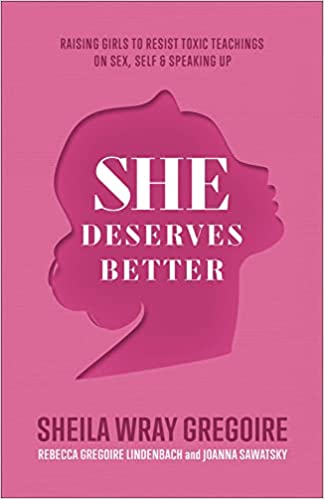
We featured Vera’s story (not her real name) in our book She Deserves Better, and she came on the podcast shortly after it came out to share what happened to her (you can listen here).
Vera was a dedicated youth group member and a committed Christian, though her parents were not. She attended youth group because friends brought her, and she loved it.
Early in her high school years she was dating a guy who wasn’t that great, while also dealing with major migraines. One day, when a migraine came on, she had to leave school, and he took her home, got a cold cloth for her head, and lay her down. She woke up to him raping her.
She didn’t understand what was happening, and was really confused. She continued to date him, but told the Christian worker at her high school what happened in vague terms, hoping that he could tell her it was wrong. Instead, he told her she shouldn’t be dating non-Christians. So she talked to the youth pastor and his wife. They similarly told her (separately) that this was her fault for dating a non-Christian, and that the reason she was upset was that the Holy Spirit was convicting her of sin.
She and her boyfriend eventually broke up, but it was years later before she could name what was done to her.
To recap Vera’s story, after the assault:
- She kept seeing her boyfriend
- She did not directly accuse him or call him out
- She sought help, but the help was confusing and blamed her
She did not name it as rape; she did not report anything to the police; she did not even realize it was sexual assault. She did, however, show signs of trauma.
Let’s dissect how this can play out to show why Vera’s story is actually quite typical. And it comes from three things that we are hard wired for: We are wired to survive, even in the face of threats; we are hard wired to be accepted by a group; and hard wiring can cause us to stay in a trauma state even after the trauma has passed.
We are hard wired to survive
God created us with our primary instinct to be survival. That’s kind of important, right? And because survival is so important, we’re highly, highly sensitive to threats. When we feel as if we’re in danger, we can flip into fight, flight, freeze or fawn mode where we do what we can to survive an assault. In the case of sexual assault, it’s very common to freeze, for instance. This does not mean in any way that you consented (and many sexual assault victims have berated themselves afterwards, wondering, “why didn’t I fight back”?). But our threat responses can hijack the thinking part of our brain and even paralyze us, because that’s often the best way to survive.
We can also “fawn”, where we survive by becoming attractive to the threat. We praise them, we’re affectionate, we laugh, we look like we’re having a good time, etc. When we fawn, it also does not mean that we consented. It’s just that in the moment, we’re afraid to become assertive. You’ve likely been in a situation where someone says something sexually suggestive that’s totally unwanted, and you giggled or laughed along because you didn’t want them to be upset. But afterwards, you wonder, “what does it matter if they were upset? They were upsetting me!” Right there, though, in the moment, that part of your brain that wants to get along hijacked you.
We are hard wired to be part of a group
Humans live with predators–other humans and big animals. The best way to survive is to be part of a group that can protect you, especially for women who are doubly vulnerable, or who are caring for children. Thus, we yearn for the acceptance of the group and to be included.
When we are treated badly, then, instead of standing up for ourselves, we often take it. We may not like that about ourselves; we often go to therapy to figure out how to override that automatic part of us that doesn’t speak up in the moment. But it’s very normal, even after someone has hurt you or abused you, to turn around and be nice to that person if that person was part of the group that protected you.
Our brains and bodies keep trying to protect us, even after the fact
When we’ve been through a trauma, our brains and bodies often remain “stuck”, unable to get past that trauma. We remain hypervigilant, on edge, as if we’re scared that it will happen again. We have a hard time trusting other people. The tiniest thing that reminds us of the incident can trigger us so that we feel as if we’re right back there. We have a very difficult time going on with normal life because the trauma is still present in our bodies.
At the same time, when we desperately need to be part of a group, and a sexual assault may mean that we’re ostracized from that group, admitting the reality of what happened may be too difficult. So our brains often protect us from realizing the reality of what was done to us, because in the immediate aftermath the goal is still to survive.
In groups that view women as “impure” if they have been assaulted, or that value virginity above all, this looks like not telling anyone what happened. When the assault took place within the group, it often looks like pretending everything is normal, even when it isn’t. To admit that your group is that dangerous is often too difficult in the immediate aftermath.


What does all of this mean for how victims respond in the aftermath of an attack?
Consider that most sexual assaults happen within groups, not outside the group. Most are not stranger rapes; they are date rapes or acquaintance rapes. Often they involve alcohol or other substances which already adds a layer of confusion to figuring out what happened.
It is normal, then, for sexual assault survivors to act like Vera:
- They fawn after the attack, reaching out to the attacker or continuing to act like all is normal, to convince themselves they are safe
- When they talk about it, the story is often confused and jumbled, with details missing or obscured, because they are still trying to make sense of something that their body and mind are still trying to protect them from
- In the immediate aftermath they don’t have words for what happened
- Their bodies, though, exhibit signs of trauma
This is absolutely normal and typical. This is often how sexual assault plays out. Yet these very same responses that are rooted in trauma are often used as proof that the assault didn’t happen–when instead we should see them as confirmation that something likely did.
A response to sex you regret does not look like trauma
The assumption in our culture is that women have this sex they regret, and then weeks later they cry rape. If it was really rape, why didn’t they say something sooner? Why didn’t they go to the police?
But women who have sex they regret often have a different trajectory.
- They are less likely to fawn after the incident, and often break off the relationship
- They usually want as little to do with the people/group as possible
- They don’t show signs of trauma later
People who have sex they regret, or sex they feel guilty for, usually do not blow up their whole lives over it. They don’t leave educational institutions or change career paths. They don’t risk ruining their relationships or reputation. They just change course.
Okay, I hope that makes some sense. I want to touch on two thorny issues that pertain especially to evangelicals.
What if we’ve mistaken “bitterness and shame” for trauma?
I remember as an evangelical young person hearing about how badly shame and regret and guilt can eat you up, and how it can ruin your life, and how we need to understand that Jesus paid for our sin. That was seen as the cure for this absolutely debilitating guilt that people would feel if they had sex before they were married–you had to realize that Jesus already paid the price.
Now, I don’t mean to minimize the amount of shame and guilt that people can feel for this, especially growing up in purity culture where one’s worth was equated with one’s virginity.
But the explanations of what guilt and shame looked like were actually over the top, and resembled trauma much more than any experience with guilt that I have ever had.
I wonder if youth pastors were looking at people like Vera, who were absolutely beside themselves and acting out and crying, and seemingly unable to function, and were assuming this was due to guilt rather than understanding this was trauma.
Think back to the Ludys book When God Writes Your Love Story again for a second, and how they equated the guilt and shame that Kathy, a college student, felt over consensual sex, with the guilt and shame that 11-year-old Rebecca felt from being raped. This is disgusting on so many levels.
But perhaps what’s going on is that they assumed Kathy had consensual sex when she did not? If Kathy was behaving like a traumatized rape victim, perhaps the issue is that she is actually a victim of trauma, but evangelicals don’t have a category for that. Biblical counselors, for instance, aren’t often trained in trauma, and the founding of biblical counseling didn’t believe in it. They saw everything in terms of understanding your own sin or lack of faith. In this vin, If someone is acting traumatized, it must be because sin itself is traumatizing–not that something was done to that person and they are a victim.
I believe that far too much of evangelicalism has put an emphasis on getting forgiveness for sins committed as being the answer to all our problems, rather than understanding that trauma has real effects on the body and brain, and that people can actually be victims.
Think about how this plays out with marital rape
Everything I’ve said applies exponentially more to marital rape.
It is confusing, because we’re not even sure if rape can happen in marriage (it can, and in most places it is illegal! In Canada it is even illegal to have sex with someone who is sleeping).
It is swept under the rug, because the drive to be part of a group and to be accepted applies to an enormous degree within marriage. To admit that you are being raped means admitting that the marriage is not safe and you may have to leave, which is huge to contemplate. It also means that your support system likely won’t believe you and may abandon you, and God may even be angry at you. It is so much easier to pretend it didn’t happen.
It triggers fawning, because being nice to someone may make it less likely that it happens again.
It has long-term physical consequences. Yet the more the trauma is denied and pushed under the rug, the more the trauma will show up in other ways because it isn’t being dealt with. Women in abusive relationships develop more autoimmune disorders; they get more migraines and headaches and pain; they often have hair fall out, weight gain, or arthritis. Many women report that after divorce, many health problems disappear (I would love to see more studies done on this, because I hear this over and over again from women and I’d like to put more numbers to it.)
Download Our Marriage Survey
Join 40,00 others and let's change the evangelical conversation about sex
We need to stop expecting sexual assault victims to react rationally.
Trauma hijacks the rational parts of our brain and flips us into survival mode, where the emphasis is on keeping yourself emotionally and physicaly safe. That means, in the case of sexual trauma, that most sexual assault victims won’t act perfectly. They won’t immediately call the police. They won’t be able to name what happened, because they’re still in the fog and they’re trying to deny it. They often won’t cut off contact with the perpetrator, because to do so makes them feel even less safe, since they lose their group and they have to admit the reality of what happened.
The fact that someone doesn’t behave perfectly does not mean that they didn’t endure trauma.
Our court system is set up so that the defense is able to use what are actually trauma responses as “proof” that nothing happened.
And evangelicals are often quick to go along with it, because of what we’ve been taught about guilt and sin, and our readiness to see women as “sluts.” But perhaps if we better understood what trauma looked like, we would start being able to help girls like Vera, and read between the lines when they came to us, confused. We would stop blaming the 17-year-old for seducing the youth pastor. We would stop assuming that women are crazy and divorce for no reason, and realize that trauma makes women hide the reality of what is happening behind closed doors, often for years, before it all snaps one day.
That’s my hope: that we will better understand trauma so that we can better help and protect victims. That’s what Jesus would want us to do.
Have you seen these things at play, where rape is excused because she wasn’t the perfect victim? Why don’t evangelicals understand trauma? Let’s talk in the comments!
All About She Deserves Better!
Podcasts about She Deserves Better:
- Do Girls Talk Too Much?
- Should We Kiss Dating Goodbye? What Dating Rules Work Best
- How Did Modesty Messages Affect Teen Girls Long Term?
- Why Are Women Supporting the Modesty Messages? Plus How Youth Groups Handle Date Rape
- Trauma, EMDR, and "Himpathy" (and why we sympathize with abusers)
- "Nice Guy Syndrome" and Boundaries
- What We're Fighting For: A Glimpse 20 Years Down the Road
- Pink and Blue Faith: Plus We Take a Submission Quiz!
Posts about She Deserves Better:
- 10 Defining Features of Purity Culture We Need to Eliminate
- How did we think calling 8-year-old girls' bellies "intoxicating" was okay?
- The data on why we need to stop calling girls "stumbling blocks"
- Feeling responsible for her own Sexual Assault: A Youth Group Case Study
- What do the toxic teachings have in common?
- Are we giving our daughters only half the gospel?
- 32 Things Your Daughter Deserves to Know
- 3 Things That Make it More Likely Your Daughter Will Marry an Abuser
Get She Deserves Better in paperback or ebook, or listen on audio!





0 Comments